
Last updated November 18, 2026
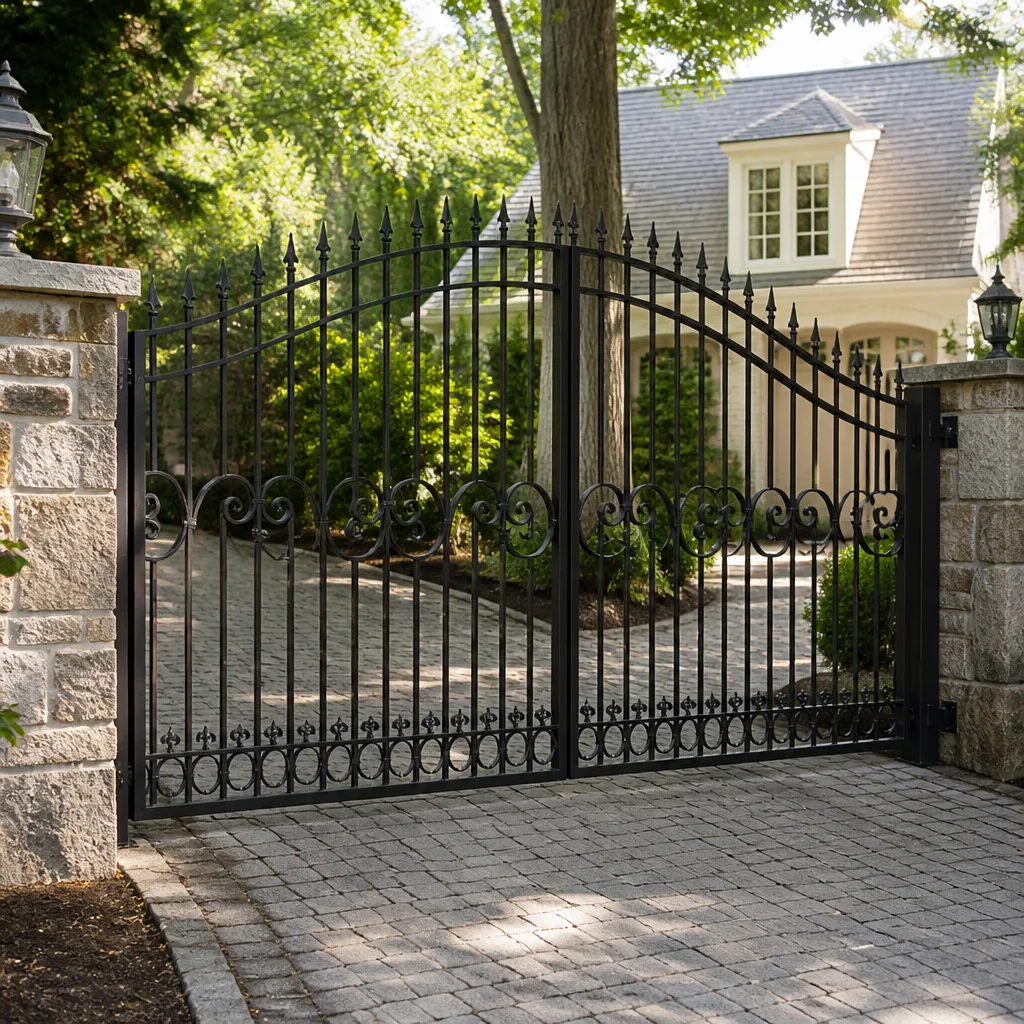 Wrought iron
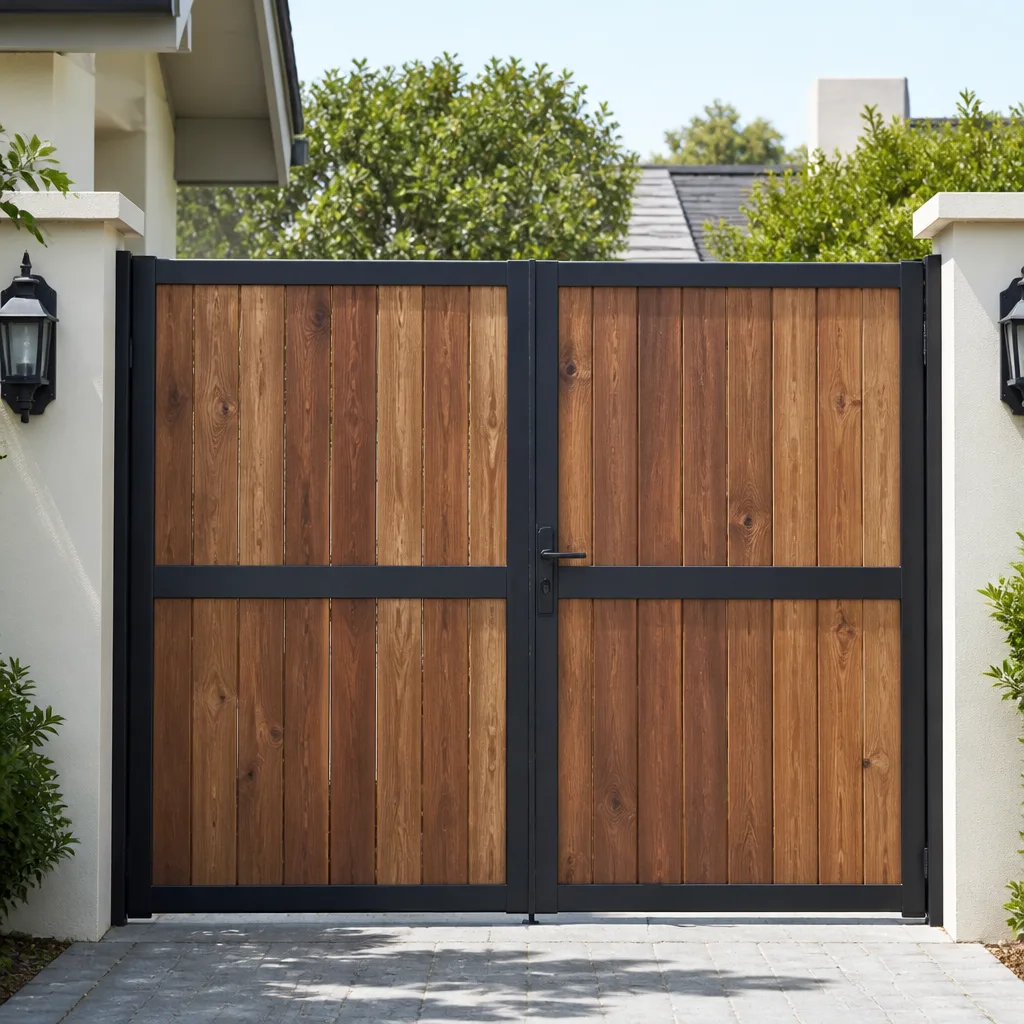 Wood & steel frame
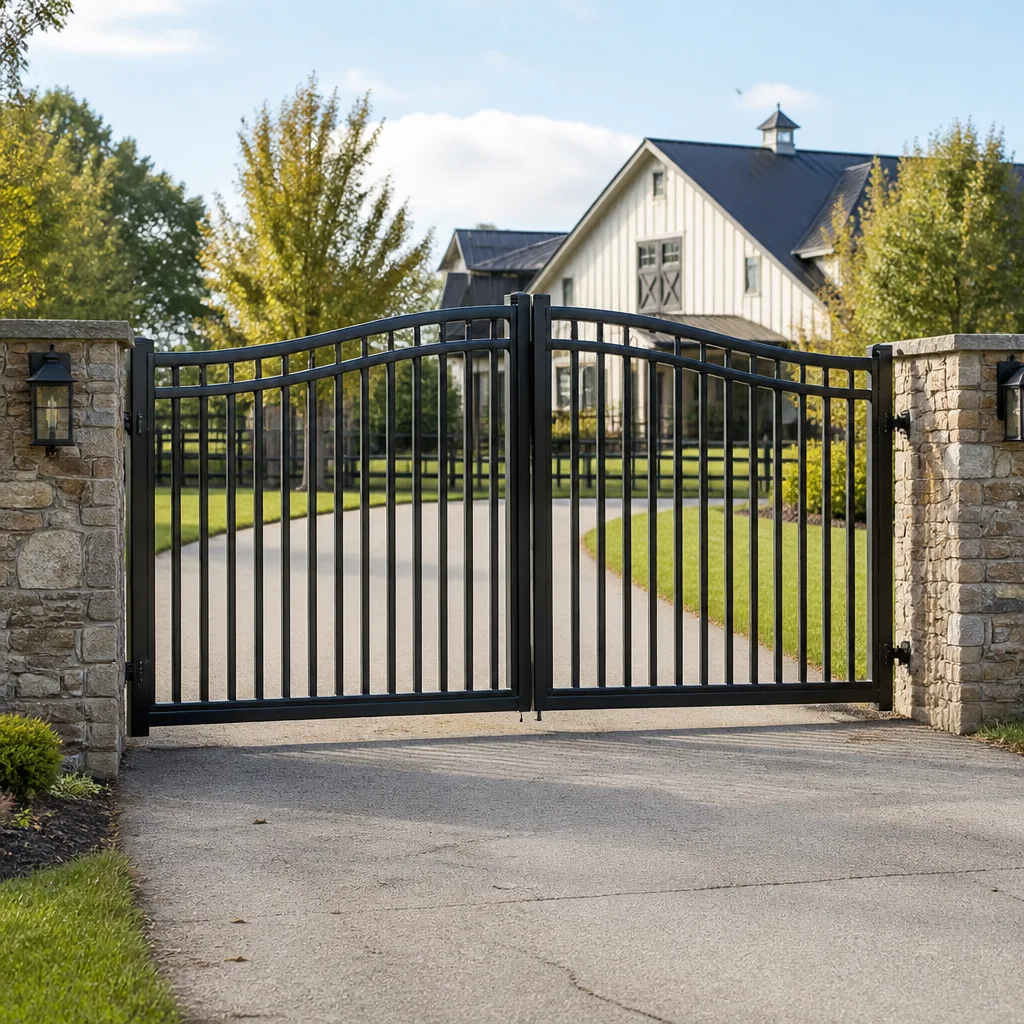 Farm & ranch
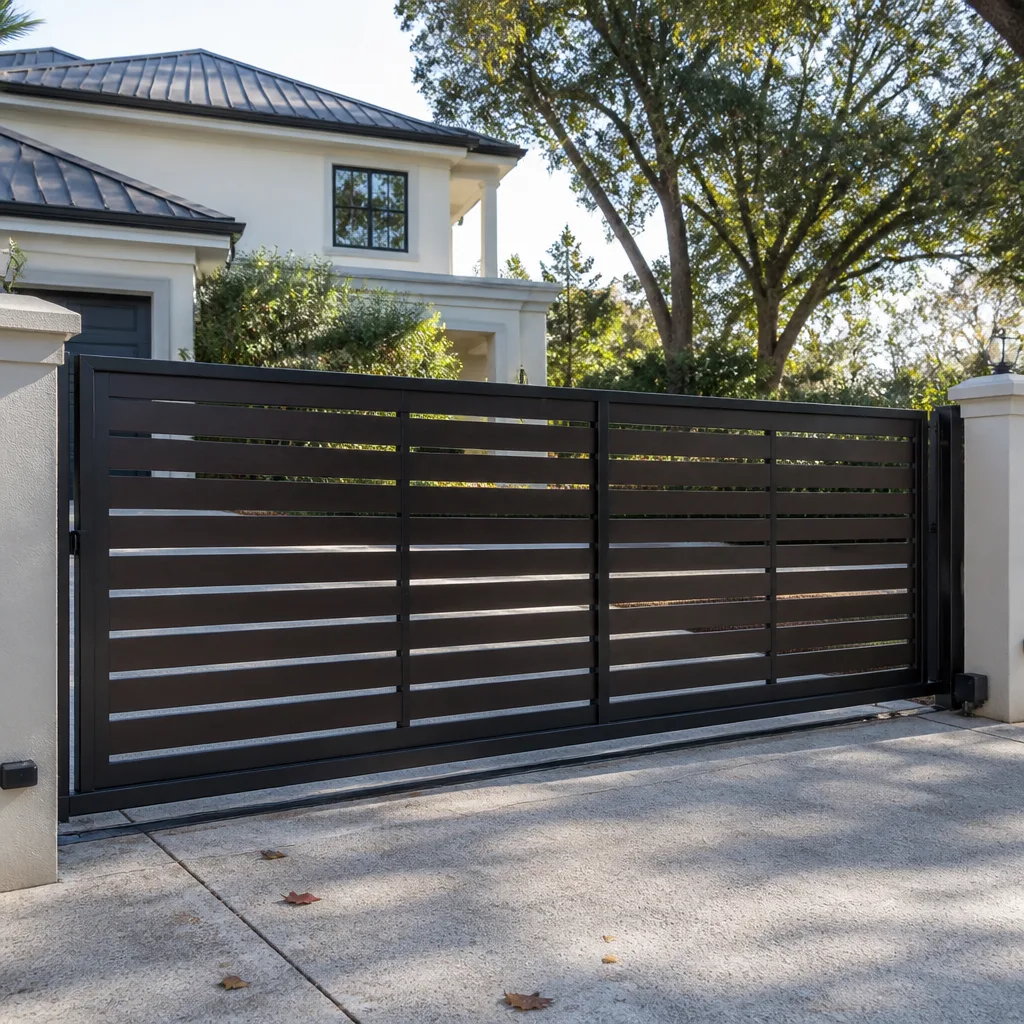 Sliding driveway gates
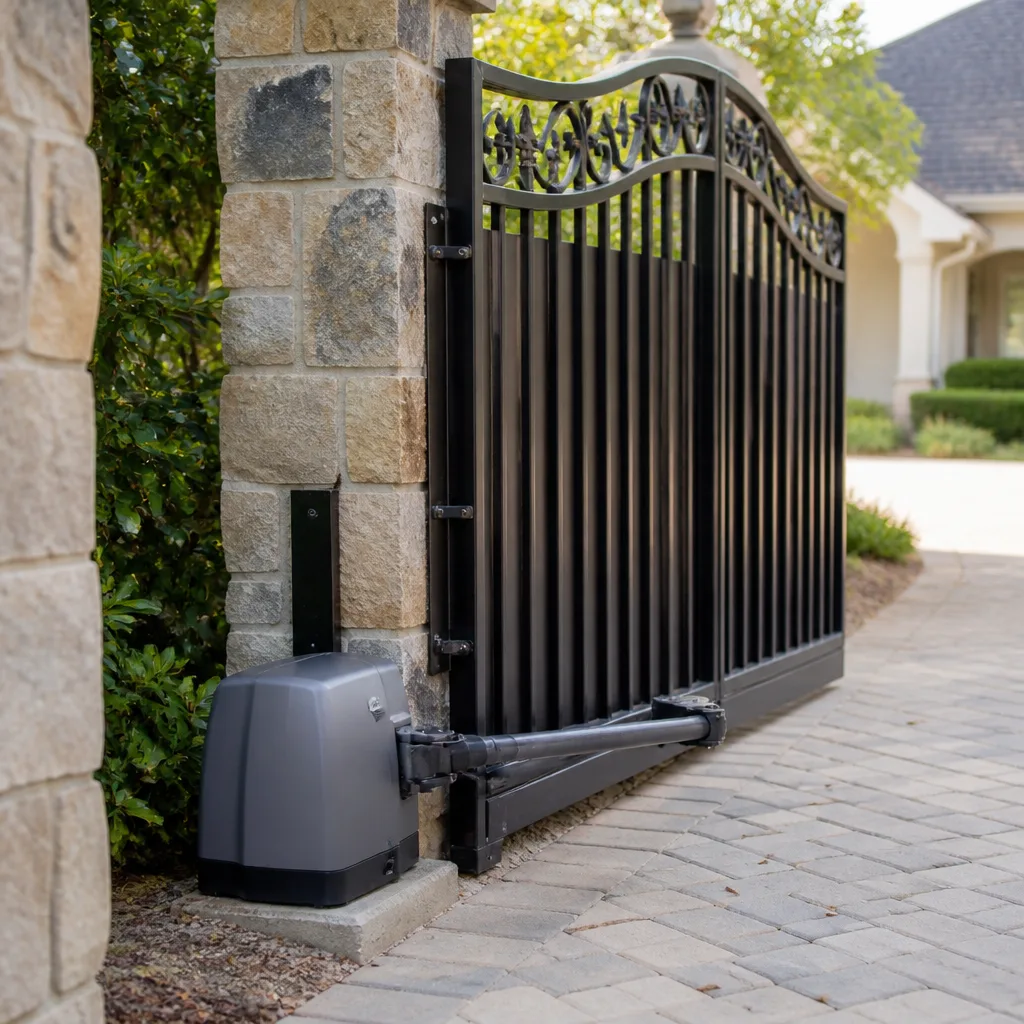 LiftMaster operators
Free on-site gate assessment - hinges, posts, and your LiftMaster or Nice gate operator checked before anything is quoted
The assessment is free and the quote is the invoice.
Get your free estimateGate Parts & Welding Troubleshooting: Common Problems and How to Fix Them
A sagging gate isn’t automatically a hinge problem. We’ve pulled up to jobs where someone had already replaced both hinges, the gate still dragged, and the real culprit was the upright post quietly rotating inside a cracked footer. That’s the thing about gate failures in Sunrise Manor: five different root causes can throw the exact same symptom at you. This guide works backward from what your gate is doing wrong to the part that actually failed, so you spend money on the fix that holds instead of the one that lasts a month.
Quick Answer
Most gate problems that look like hinge or latch trouble are really one of five things: a cracked footer letting the post rotate, a weld that failed at the joint instead of the metal, ground movement from soil and heat, a loose or misaligned latch, or the gate settling under its own weight after the posts shifted. Diagnose by symptom, not by parts list, because fixing the wrong component is the most common way homeowners pay twice for the same gate.
Styles & brands we work with
- Wrought iron
- Wood & steel frame
- Farm & ranch
- Sliding driveway gates
- LiftMaster operators
Table of Contents
- Start With the Symptom, Not the Parts List
- The Five Most Misdiagnosed Gate Problems
- How to Tell a Weld Failure From a Base Metal Failure
- Temporary Stabilization: What’s Safe and What Isn’t
- True Repair vs. Stacking Fixes on a Gate That Needs Rebuilding
- Why Sunrise Manor Conditions Wreck Gate Parts Faster
- Common Mistakes to Avoid
- Frequently Asked Questions
Start With the Symptom, Not the Parts List
Most people call us with a diagnosis already in hand. “The hinges are shot,” they’ll say, or “I think it’s the latch.” We appreciate the honesty, but a diagnosis made from the driveway is usually wrong, and here’s why: gates have only a few ways to show distress, and almost every one of those symptoms has multiple possible causes.
A gate that sags at the free end can be a worn hinge, a bent hinge post, a footer that’s cracked and letting the post rotate, or the gate frame itself twisting. Same symptom, four completely different fixes, and only one of them is the actual problem. Fix the hinge when the footer is the issue and the new hinge fails inside a season.
So we work symptom-first. That means walking up to the gate and asking three questions before touching anything:
- Where does the movement start? Watch the gap between the hinge and the post while someone pushes the gate. If the hinge stays put and the post moves, the problem isn’t the hinge.
- Is the symptom constant or intermittent? A gate that drags only in the afternoon heat is telling you something different than one that drags every time.
- What was the last repair? A gate repaired in the last year that’s failing again is almost always a misdiagnosis the first time, not a bad part.
This is the honest approach when you’re thinking about Gate Repair in Sunrise Manor, and it’s how we start every job. Find the real failure first, then fix it once.
The Five Most Misdiagnosed Gate Problems
These five show up repeatedly across Sunrise Manor, and each gets blamed on the wrong part about half the time. Match your symptom to the actual cause before you spend anything.
1. Sagging Gate: Almost Never the Hinges First
Sag at the free end usually starts at the hinge post, not the hinge. We check whether the post is plumb by watching the top of the post against a fixed reference while the gate is loaded. If the post leans or rotates under weight, the footer has failed and new hinges will just wear out. On older Sunrise Manor properties with shallow footers poured decades ago into expanding soil, the post rotation is the failure, not the hardware. Fix the post and the original hinges often still work fine.
2. Dragging Gate: Ground Movement, Not a Bent Frame
A gate that scrapes the ground is usually a gate whose post has settled or shifted, not a frame that bent. The frame itself is often straight when we check it. The tell is a consistent drag across a wide arc versus a single catching spot; a single catch points to one bent component, a wide drag points to post movement. We’ve seen it repeatedly on gates set close to a curb in Sunrise Manor where soil shifts with irrigation and summer heat.
3. Gap at the Latch: Alignment, Not the Latch
A gap at the latch is usually the gate frame drifting out of alignment, not a worn latch mechanism. A latch is a dumb piece of hardware – it can’t create a gap. If the gate isn’t square with the strike post, the latch has nothing to catch. Realigning the gate or shimming the hinge side solves it; replacing the latch never does. That’s a common expense you can skip.
4. Rattling: Loose Welds or Worn Bushings
Rattling usually traces to a loose weld at a corner joint or worn bushings at the hinge pin. A quick test: with the gate closed, push the frame side to side. Movement at a corner joint points to a failed weld. Movement along the hinge line points to bushing wear. Worn bushings on a Linear or Viking operator setup are common and cheap to fix; a crack in the weld is a structural issue that has to be welded on site.
5. Corrosion at Welds: Time and Desert Grit
Rust clustered at the welds, not across the flat panels, points to a break in the weld’s protective finish. Weathered welds in the dry Sunrise Manor air hold up better than coastal metal, but windblown sand grinds the coating off welds faster than rain ever would. Once the weld is exposed, corrosion starts in a razor-thin area and becomes a real structural weakness over a few seasons.
How to Tell a Weld Failure From a Base Metal Failure
This distinction matters more than any other in the guide, because the two look almost identical at a glance and have completely different urgency. A failed weld is a joint that came apart. A base metal failure is the metal itself cracked or fatigued. One often means stopping use of the gate; the other is usually a routine repair.
Here’s how to tell them apart:
- Failed weld: the crack runs along the seam line between two pieces. You can see a clean edge on both sides of the split. The parent metal around it is often intact. This is a fixable joint, usually welded on site.
- Base metal failure: the crack runs through the flat of the metal, not the seam. It often starts at a hole, an old weld edge, or a stress point. This is a structural emergency: the metal has lost its strength and can fail catastrophically under load.
A driver can’t always tell them apart in the driveway. If you see a crack anywhere on a load-bearing member, treat it as structural until someone qualified looks at it. Don’t keep operating the gate and don’t overload it. This is real safety territory. We weld on site, which is also why we’d rather look before you keep swinging that gate.
Temporary Stabilization: What’s Safe and What Isn’t
While you wait for a professional, there are a few things you can safely do to reduce risk without making the eventual repair harder or more expensive. And there are a few things you should never do, no matter how tempting.
Safe temporary steps:
- Open the gate fully and lock it in the open position if you can, keeping it out of the path of vehicles and children.
- Disconnect the operator from the gate so automatic cycling stops. On most LiftMaster and FAAC units this means the manual release.
- Block the gate with a solid object so it can’t swing on its own if a wind gust catches it.
- Photograph the failure from a few angles so the diagnosis doesn’t start over when someone arrives.
What not to do: don’t wrap ratchet straps around the gate frame to “pull it back into shape.” We’ve seen that go badly. A strap transfers the load to whatever it’s hooked to and can bend the frame, pull out a hinge, or snap the strap with enough force to hurt someone. Don’t drill extra holes or pile weight on the gate to level it either. If the gate can’t be safely stabilized, keep it out of use and call. A live person answers 24/7 at (844) 761-8729.
True Repair vs. Stacking Fixes on a Gate That Needs Rebuilding
Some calls are simple repairs: a worn bushing, a loose latch, a weld that needs redoing. Others are what we call stacking fixes, where every new repair sits on a structure that’s already failing underneath, and the gate never really gets well again. Telling them apart is the biggest decision in the whole troubleshooting process.
A gate is a good candidate for a true repair when the posts are plumb and solid, the frame is true, and a single component has failed. A gate is a candidate for rebuild or replacement when the posts are moving or the footers are compromised, the frame is out of square in more than one direction, and previous “repairs” keep failing at the same joints. Fix the panel without the post and you’ll fix it twice.
Rebuilding doesn’t always mean starting over. Often we can pull and reset the posts, replace a couple of structural members, and re-weld the joints on site so the gate keeps its original look. If it does come to a new gate, that’s a different conversation, and you can read more about Gate Installation in Sunrise Manor when you’re ready. Either way, we quote it upfront before a tool comes out.
Why Sunrise Manor Conditions Wreck Gate Parts Faster
Sunrise Manor sits in the Mojave, and the dry heat and expanding soil do a number on gate components that would hold up for years elsewhere. The summer heat alone expands metal joints noticeably, and a weld that was tight in winter can crack loose by August. Expanding and contracting soil works the footers loose, which is why post rotation is so common here.
Windblown grit is the other culprit. Sand sprayed across welds removes the protective coating in a way rain never does, exposing bare metal at the joints first. That’s why we inspect and re-coat welds on gate hardware here more often than a homeowner in a wetter climate would expect. If your gate lives on an exposed lot in Sunrise Manor, it’s worth a look at least once a year, ideally before the summer heat sets in. We mention all this because it’s the reason our diagnostic visit is free inside the county – the problem here is often structural, and it’s worth a second opinion before you commit to a repair.
Operator brands come up here too. Linear and Viking units installed a few years back in Sunrise Manor are showing hinge and arm wear now from the heat cycles, and they’re worth servicing alongside the gate itself. If automation’s part of the picture, our Gate Motor & Opener in Sunrise Manor page covers the common failures and the repair-first approach.
Common Mistakes to Avoid
- Replacing hinges when the post is rotating. The new hinge fails in a season because the real failure, the footer, was never fixed. This is the single most expensive misdiagnosis we see.
- Ratchet-strapping the frame back into shape. A strap can bend the frame, snap a hinge, or injure someone when it lets go. We’ve seen it end badly.
- Drilling new latch holes instead of realigning the gate. Every new hole weakens the post, and the latch still won’t catch if the gate isn’t square.
- Ignoring a crack until the gate drops. A base metal failure hides behind paint or rust until it fails under load. Don’t keep running a gate you know is cracked.
- Letting the operator keep cycling a failing gate. A motor will happily push a failing gate into more damage, including stripped gears and a bent arm.
- Assuming an estimate is final. The estimate should be a written number agreed before work starts, not a ballpark. Ours always is.
- Paying for a rebuild when a repair would hold. If the posts and frame are sound, a targeted repair does the job. A company that wants to replace everything should explain why.
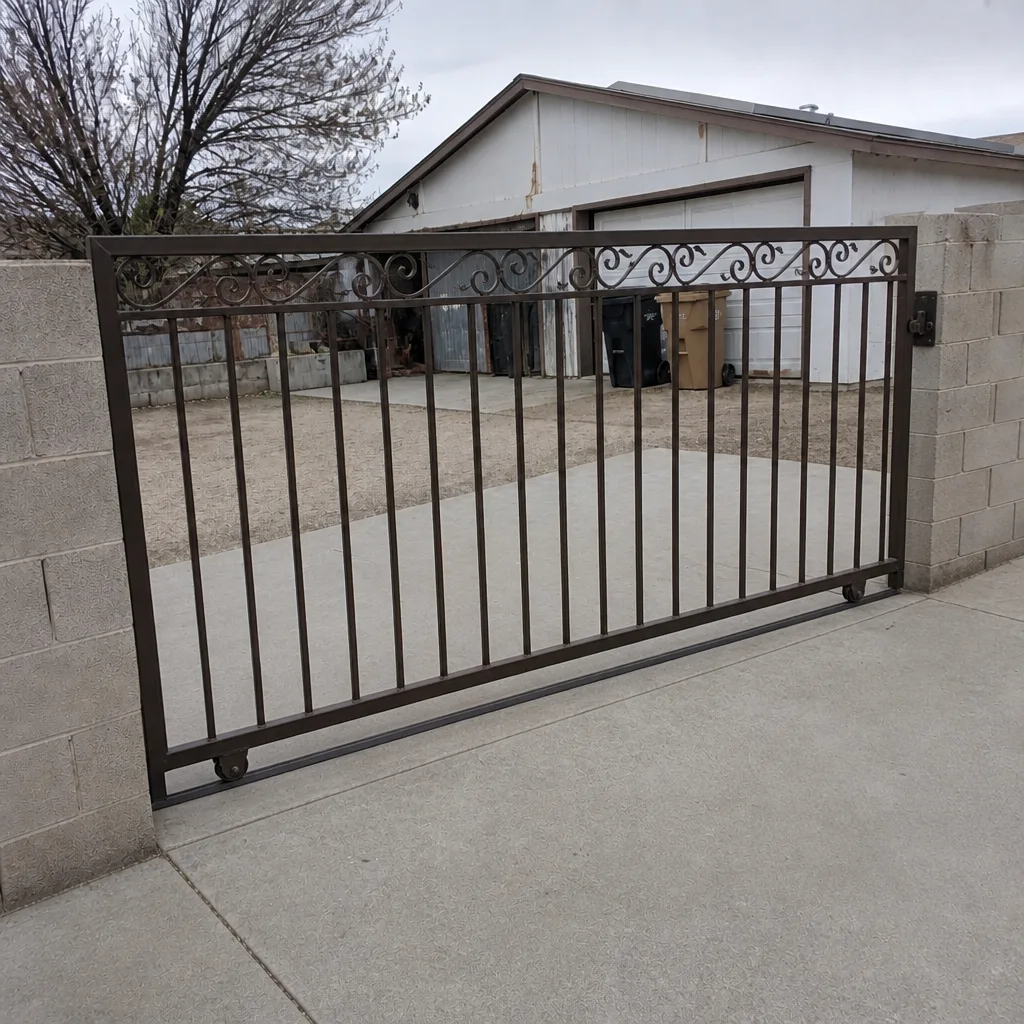
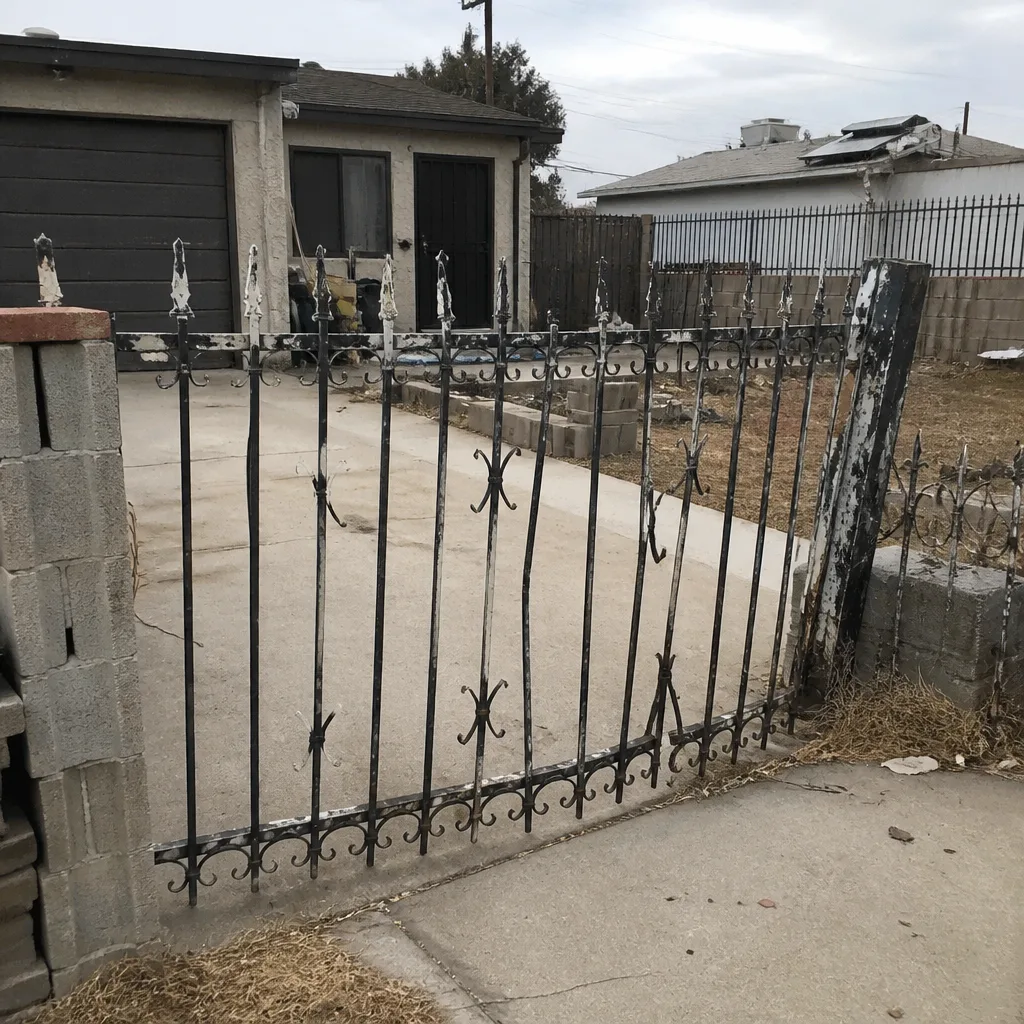
See the difference
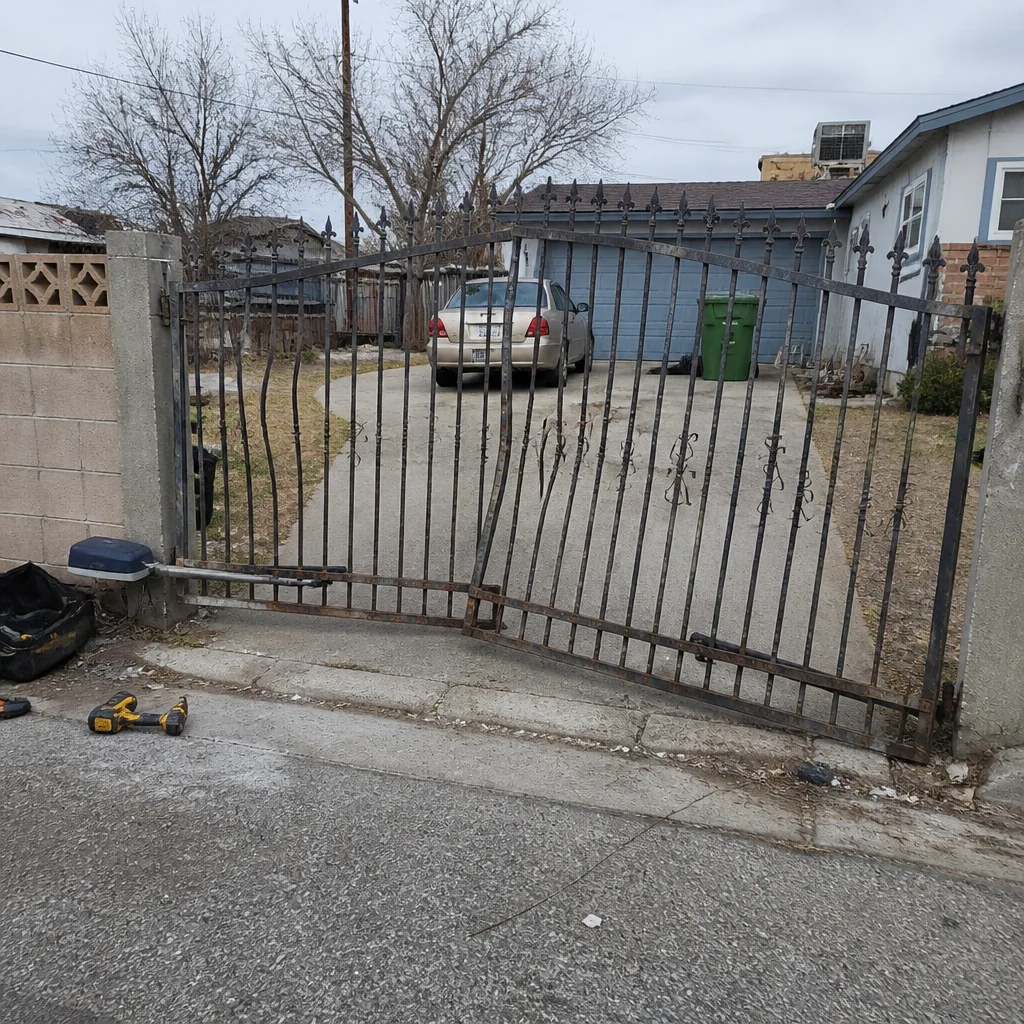 Before
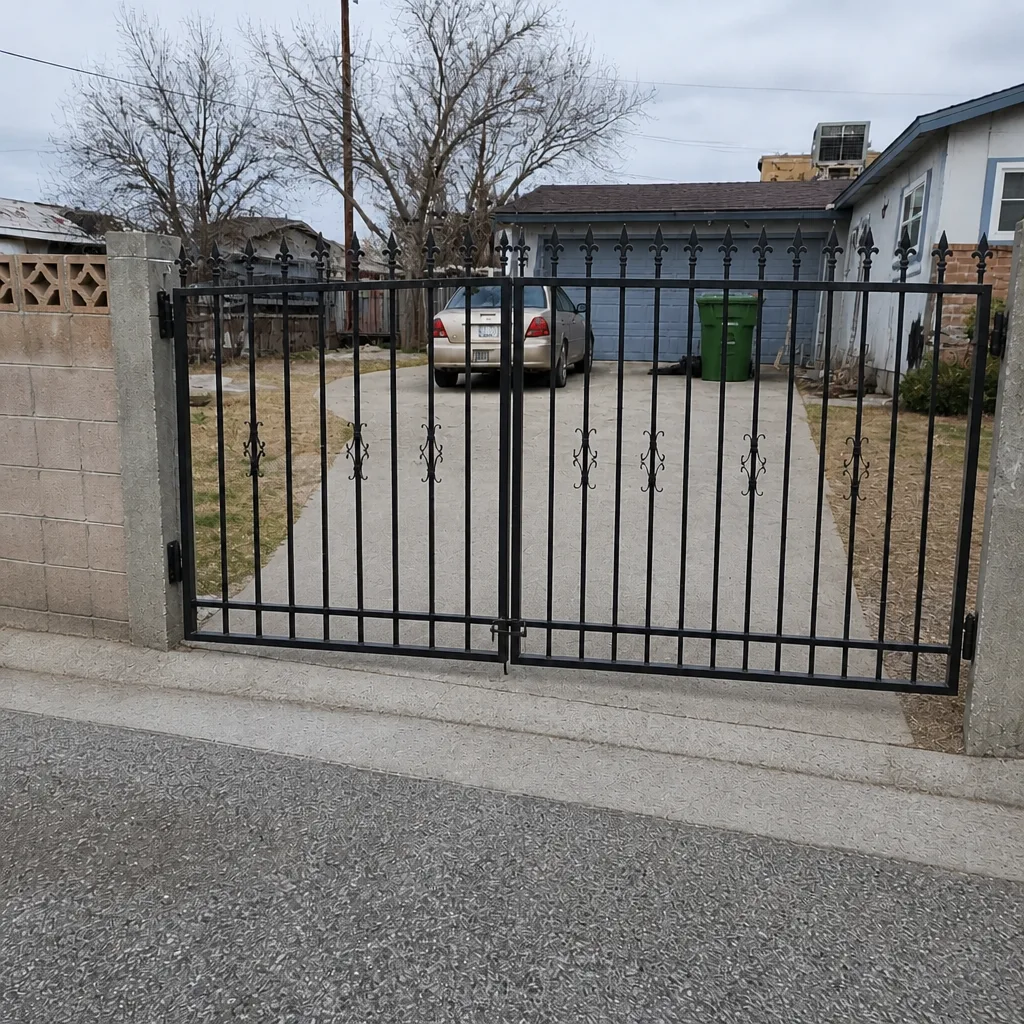 After
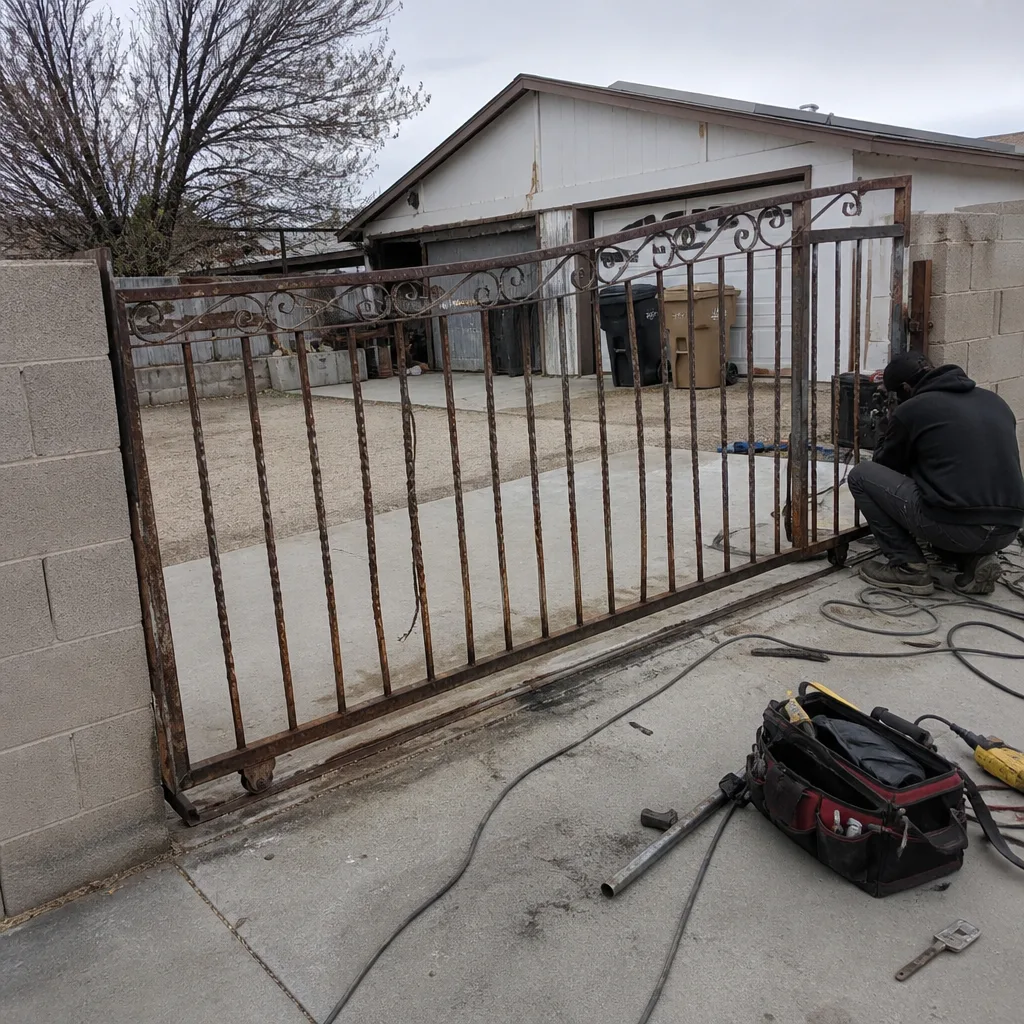 Before
 After
 Before
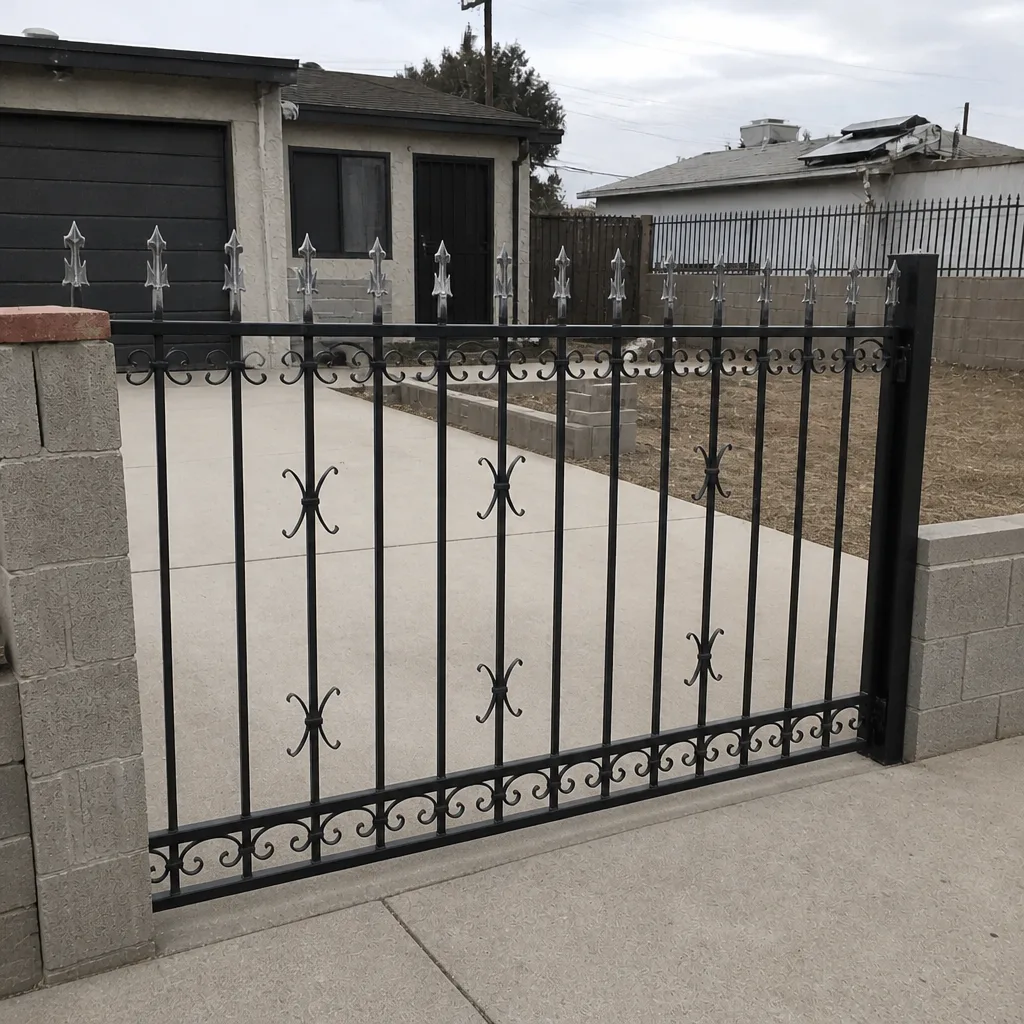 After
When to Call a Professional
Call when the gate is cracked, dragging hard, or not latching reliably, and especially when the gate moves or wobbles at the post. Structural looks and safety are the calls a pro has to make. If you can see a crack anywhere on a load-bearing member, stop using the gate before anyone else is in the driveway. If it’s automated and the operator keeps cycling, disconnect the gate and leave it disconnected. Sunset Manor gate repair is what we do, and a skilled set of hands is the only way to weld it right on site. Gatewood Fence & Gate Sunrise Manor offers free estimates in Sunrise Manor – call (844) 761-8729. Prefer to look us up first? The name is on the shop, and the shop is down the road – that’s the oldest accountability there is.
Frequently Asked Questions
The upright post is almost certainly rotating in a cracked or loose footer, so replacing the hinges fixes a symptom instead of the cause. Check whether the post leans or shifts under load; if it does, the footer needs attention before the hinges will stay true. Call (844) 761-8729 for a free second opinion on any written estimate.
A weld failure runs along the seam between two pieces and looks like a clean split, while a base metal crack runs through the flat of the metal, often from a hole or stress point. The second is a structural emergency and the gate shouldn’t be used until it’s inspected. A trained eye can tell you which one you have. Call us and we’ll take a look.
Don’t wrap ratchet straps around the gate frame; the load can bend the frame or snap the strap and hurt someone. Safer options are locking the gate open, disconnecting the operator, and blocking it so it can’t swing. Then call for a real fix. We answer live around the clock at (844) 761-8729.
Dry Mojave heat, expanding soil, and windblown grit work on gate parts year-round, loosening footers and wearing coatings off welds faster than in wetter climates. Annual inspections before the summer heat keep small failures from becoming big ones. If your gate lives on an exposed Sunrise Manor lot, it’s worth a look each year.
Most gate repairs can be welded on site by a single skilled welder, which keeps the gate in your driveway instead of hauling it off. We fix the failed component rather than swapping parts that don’t need swapping. If the posts are compromised too, we’ll tell you honestly what a true fix involves.
Not necessarily. If the posts are solid and the frame is true, a targeted weld repair handles most cracks. If the frame is out of square in more than one direction and previous repairs keep failing, a rebuild may be the better spend. We quote it upfront before any work starts – call (844) 761-8729.
The Bottom Line
Start with the symptom, not the parts list. A sagging gate usually points to a rotating post, a dragging gate to ground movement, a gap at the latch to alignment, rattling to a loose weld or worn bushing, and corrosion at the welds to a worn protective coating. Knowing the difference between a failed weld and a base metal failure keeps you safe, and knowing when a repair is a true repair versus a set of stacking fixes saves you from paying twice. Fix the right component once, and the gate holds.
If you’d rather have someone who knows tell you straight, we’re happy to look. Call (844) 761-8729 for a free estimate, a free second opinion on any written estimate, and upfront pricing you agree to before we start. Every job gets our 90-Day Done Right Promise in writing, and a live person answers the phone around the clock. If it’s within the county, there’s no trip charge. For general gate repair help, you’ll find it on the Gatewood home page – Gatewood Fence & Gate Sunrise Manor home.
Written by the team at Gatewood Fence & Gate Sunrise Manor.