
Last updated November 18, 2026
 Wrought iron
 Wood & steel frame
 Farm & ranch
 Sliding driveway gates
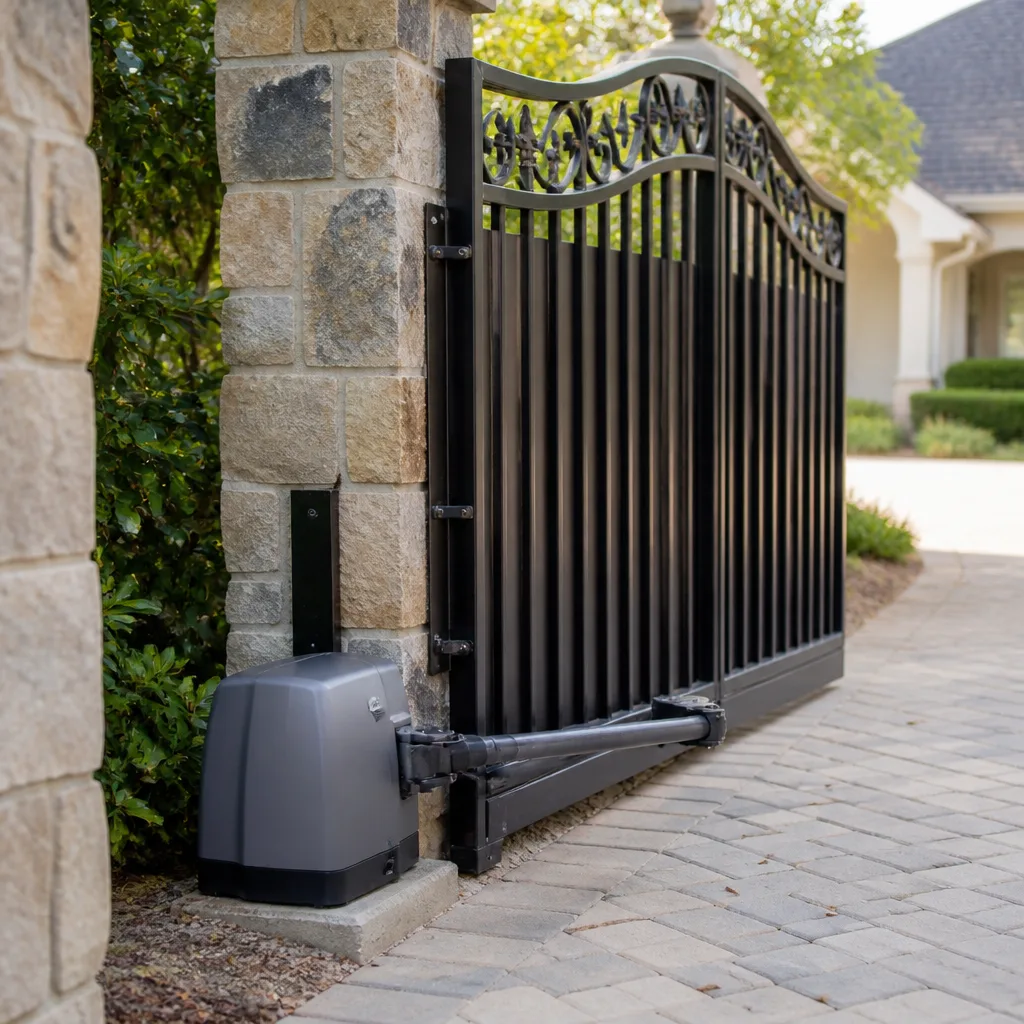 LiftMaster operators
Free on-site gate assessment - hinges, posts, and your LiftMaster or Nice gate operator checked before anything is quoted
The assessment is free and the quote is the invoice.
Get your free estimateGate Parts & Welding Warning Signs Every Homeowner Should Know
A gate that swings fine but makes a low metallic tick when it hits the stop is not normal settling. That tick is a hinge or a weld transferring stress to a point it was never designed to carry, and in our experience it gets louder right before it goes. Most structural gate failures we look at in Sunrise Manor gave the homeowner months of quiet warnings first: a seam that started weeping orange, a latch that needed a lift to close, a post that moved a quarter inch at the ground. The gate didn’t fail all at once. It failed on a schedule nobody read. This guide names each signal, separates the cosmetic ones from the ones that mean stop using the gate today, and gives you a five-minute monthly check that catches most structural problems while they are still cheap.
Quick Answer
The warning signs that matter on a gate are rust streaking out of a weld seam, a change in gate height or squareness at the latch side, movement of the post at ground level, new sounds during operation, and finish bubbling over a seam. Rust that only sits on the surface is a paint job. Rust that has eaten into the base metal, or any post movement at grade, is a structural problem and should be inspected before the gate is used again. A gate that ticks, grinds, or drags did not do that last month.
Styles & brands we work with
- Wrought iron
- Wood & steel frame
- Farm & ranch
- Sliding driveway gates
- LiftMaster operators
Table of Contents
- The Five Physical Warning Signs of a Failing Gate
- Surface Rust vs. Rust That Has Reached the Base Metal
- Cosmetic vs. Structural: Which Warnings Mean Stop Using the Gate
- How Sunrise Manor Soil Movement Shows Up as a Gate Problem
- What the Sounds Are Telling You
- The Five-Minute Monthly Check
- When a Weld Can Be Fixed On-Site (and When It Can’t)
- What Your Opener Is Trying to Tell You
The Five Physical Warning Signs of a Failing Gate
Every structural gate problem we are called out to in Sunrise Manor is one of five things, or a combination of them. None of these are hard to see once you know what you are looking at. The trick is that they show up slowly and in the wrong place: a hinge going bad makes the latch side of the gate drop, so the homeowner blames the latch.
- Rust streaking from a weld seam. A weld is a heat-affected zone. The steel around it is slightly different from the steel next to it, and that is where moisture gets a foothold first. Orange trails running down from a joint mean the seam is holding water.
- A change in gate height at the latch side. Measure it. On a swing gate, mark the latch side of the gate frame and the fixed post at the same height with a pencil. Two months later, do it again. If the gap has moved even a quarter inch, the hinge, the frame, or the hinge post is moving.
- Post movement at ground level. Put a hand flat on the post about chest high and push. A post that rocks even slightly at the base is a footing problem, and it will only get worse.
- New sounds during operation. A tick at the stop, a grind mid-swing, a pop when the gate starts to move. Gates don’t develop new noises for good reasons.
- Finish bubbling over a seam. Paint and powder coat bubble over rust, never over bare steel. A blister along a weld line is a rust spot you can’t see the bottom of yet.
Any one of these is worth a look. Two or more on the same gate is a call.
Surface Rust vs. Rust That Has Reached the Base Metal
Not all rust is the same, and the inspection method is different for each. This is where a lot of homeowners either panic over a cosmetic spot or ignore a seam that is already losing section thickness.
Surface rust is a bloom on top of the steel. It is orange, it comes off on your finger, and underneath it the metal is still sound and still square. It usually starts in scratches, around fasteners, and on the bottom rail where irrigation spray hits. You check surface rust by wiping it. If the rust transfers to a rag and the metal under it feels smooth with a screwdriver tip, that’s cosmetic. It’s a sand and repaint job.
Penetrating rust has gone into the base metal. The tell is texture: pitting, flaking, or a seam that looks like it has a gap that wasn’t there before. On a weld seam, run a screwdriver along the joint. If the tip catches in a groove or the seam feels soft or spongy, the weld has lost section. That is not a repaint. That’s a weld repair, and it needs to be done by someone who can see the joint, which is exactly why we weld on-site rather than hauling your gate away.
- Surface rust: wipes off, metal underneath is smooth and hard. Cosmetic.
- Penetrating rust: pitted, flaky, soft at the seam, screwdriver catches. Structural.
- Rust bleeding from inside a hollow post: usually visible as a streak running down from a cap or a fastener, with the post looking fine on the outside. Structural, and it fails from the inside out.
Cosmetic vs. Structural: Which Warnings Mean Stop Using the Gate
Here is the line we draw when we walk up to a gate in Sunrise Manor. Cosmetic problems make the gate look tired. Structural problems make the gate unpredictable, and an unpredictable gate is a hazard to the person, the vehicle, and anything the gate can fall on.
Cosmetic, in our book: faded paint, surface rust with sound metal underneath, a loose decorative finial, a sagging gate that closes fine once you lift it a half inch with the opener, a scratch on the powder coat. These are maintenance. They can wait for a scheduled visit.
Stop using the gate today if you see any of these:
- A post that rocks when you push on it at chest height, or cracks in the concrete around the base.
- A weld seam that has visibly separated, is flaking, or shows daylight through it.
- The gate dragging on the ground through more than a half inch of its swing.
- A gate that has dropped off square enough that the latch no longer lines up at all.
- Any gate that has changed how it moves in the last week, not the last year.
If two or more of those are true, use the walk gate or the driveway and call someone today. The gate itself doesn’t know it’s dangerous, but a weld that has lost section will let go the first time the wind catches the panel.
How Sunrise Manor Soil Movement Shows Up as a Gate Problem
Sunrise Manor sits on ground that behaves differently from one block to the next. Some lots drain well and the footings sit dry most of the year. Others hold water near the surface and swell after a heavy rain, then shrink back in the heat. A gate footing set two feet into that soil will move with it, and the gate is the first thing that shows you.
After a monsoon cell rolls through and drops an inch in an hour, we get a run of calls that all sound the same: the gate was fine yesterday and today it drags. What happened is the footing on the hinge post lifted or tilted a fraction, the gate followed, and the latch side caught the ground. The footer problem isn’t visible yet. It’s under the slab. The symptom is out front where you can see it.
The same thing happens slowly in the dry months. Soil contracts, the footing loses its grip, and a gate that was rock solid starts to drift off square over a season. If you’ve noticed a gate in Sunrise Manor starting to drop in spring, it is often a footing that shifted through the winter, not a hinge wearing out. We see it in the older developments where footings were poured shallow and the concrete has had years to work loose around the post.
This is why we start every structural inspection at the hinge post and the footer, not at the hinge. A gate sags in the hinge post, not in the middle, and that is where we start. Fix the panel without the post and you’ll fix it twice.
What the Sounds Are Telling You
Sound is the earliest warning a gate gives, and the one most people train themselves to ignore. A gate that runs smooth sounds like nothing. When it starts to make a noise, something has changed.
The low tick at the stop is the one to take seriously. It means the gate is reaching the end of its swing and something in the hinge, the frame, or the weld is unloading stress at that exact point. It’s the sound of a joint carrying load it wasn’t built to carry, and it gets louder before it goes.
A grind mid-swing is usually a worn hinge, a dry pivot, or a roller that is running flat. A pop when the gate starts to move can be the opener chain, a chain sprocket, or a weld cracking under load. A scrape along the bottom through part of the arc is a sag, which means the hinge post or the frame is moving.
The sound test is easy: open and close the gate by hand (if it’s manual) or disconnect the opener (if you know how and it’s safe to do so) and listen through the full swing. Any tick, pop, grind, or scrape you didn’t hear six months ago is worth a look. Don’t climb on the gate or reach into a moving unit to investigate; that’s what the professional is for.
The Five-Minute Monthly Check
This is the check we teach homeowners in Sunrise Manor, and it catches most structural problems before they turn into a failure. Do it on the first weekend of the month. It takes less than five minutes, and it is the cheapest insurance you’ll ever put on a gate.
- Walk the gate by hand through its full arc, slowly. Listen for anything new. Note where it drags, if it drags.
- Push the hinge post at chest height. No rock. Check the concrete around the base for cracks that weren’t there last month.
- Look at every weld seam on the top rail, bottom rail, and hinge mounts. Any orange streak, blister, or gap is a note.
- Measure the latch side. Mark the gate frame and the fixed post at the same height. Compare to last month. A quarter inch of drift is a flag.
- Run the opener (if you have one) and watch the gate start and stop. Any hesitation, pop, or tick at the stop is a note.
- Take a photo of the hinge post base and the weld seams. Your phone is your record. It makes a small change visible before it becomes a big one.
Write down what you find. A note that says “tick at stop, hinge side, louder than last month” is worth more than a memory. When you call, that note gets you an accurate visit instead of a guess.
When a Weld Can Be Fixed On-Site (and When It Can’t)
Most people assume a failed weld means a new gate, and it rarely does. On-site welding exists for exactly this problem. We bring the welding rig to your driveway in Sunrise Manor, cut out the failed section, prep the joint, and weld it back to full section. The gate never leaves the property. That matters because a gate that gets hauled off comes back with a new price tag and often a new set of problems from being moved.
What we can fix on-site: a failed hinge weld, a cracked frame at the corner, a separated top or bottom rail, a hinge that has torn the tube, and a rusted seam that has lost section but the parent steel is still sound. Most hinge-post problems and most panel problems are on-site repairs with on-site welding.
What we can’t honestly fix on-site: a hollow post that has rusted from the inside out past the point of sound steel, a footing that has moved so far the post has to be reset in new concrete, and any gate that has lost so much section it isn’t safe to weld (you can’t weld onto metal that isn’t there). Those are replacement conversations. We’ll tell you which one you’re having before we start, and you get a written price before any work begins. Upfront means upfront.
On brands we see a lot in Sunrise Manor, LiftMaster and Linear operators, the gate hardware itself is usually the thing that’s tired, not the operator. A grinding gate with a good operator is still a grinding gate. If the motor’s the problem, that’s Gate Motor & Opener in Sunrise Manor territory, and we service all nine major brands.
What Your Opener Is Trying to Tell You
An automated gate tells you about structural problems through the operator before you’d ever notice them by hand. The opener is the most honest diagnostic tool on the property because it feels the load and reacts to it.
- The gate reverses on closing. Usually a safety sensor or an obstruction, but on a gate that used to close clean, it can be the panel binding on a frame that has moved.
- The opener stalls or strains at the same point in the cycle. That’s a mechanical bind, not an electrical fault. The gate is fighting itself.
- The opener cycles but the gate doesn’t move. Usually a chain, a sprocket, or a shear pin, but it can also be a gate that has dropped off square enough to jam the mechanism.
- The opener runs slower than it used to. Rising load from a dragging gate, a failing hinge, or a rusted pivot.
None of that should be investigated by reaching into a moving gate or opener. Call someone. We’re certified to service DoorKing, Ghost Controls, Viking, and the rest of the major brands, and we’ll tell you whether the problem is the operator or the gate it’s trying to move. A lot of the time it’s the gate.
If you’re not sure whether you’re looking at a gate repair or a bigger job, that’s the call to make. We’d rather look at a small problem than quote you for a new gate.
Common Mistakes to Avoid
- Painting over rust. A coat of paint over a seam that is holding water makes the problem invisible and keeps the moisture in. The rust keeps eating from the inside.
- Tightening the hinges when the post is moving. A hinge can’t be tight if the post it bolts to is rocking. You’ll tighten it again in a month, and the post will be worse.
- Assuming a dragging gate is “just settling.” Gates don’t settle. Footings move, frames sag, and hinges wear. “Settling” is what a homeowner says right before the gate falls off the track.
- Using a national outfit that quoted one price on the phone. We hear the same story over and over in Sunrise Manor: a phone quote that nearly doubled at the door. Get a written price before anyone starts work.
- Ignoring the tick at the stop. It’s the earliest, cheapest warning your gate will give you. It’s also the one most often ignored until the joint fails.
- Welding over rust instead of cutting it out. A weld on top of rust doesn’t hold. The proper repair removes the failed section, preps the metal, and welds sound steel to sound steel.
- Treating a post problem as a panel problem. Fix the panel without the post and you’ll fix it twice. The footing comes first.
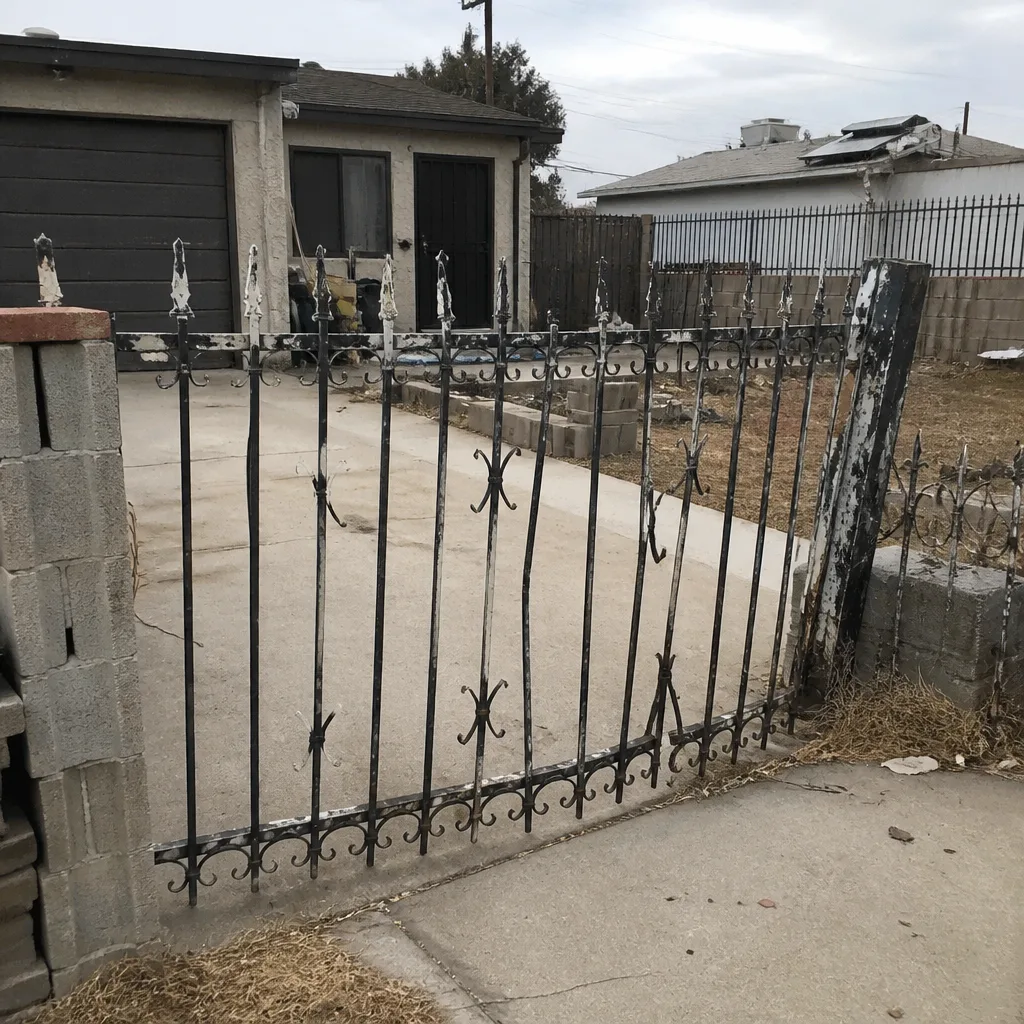
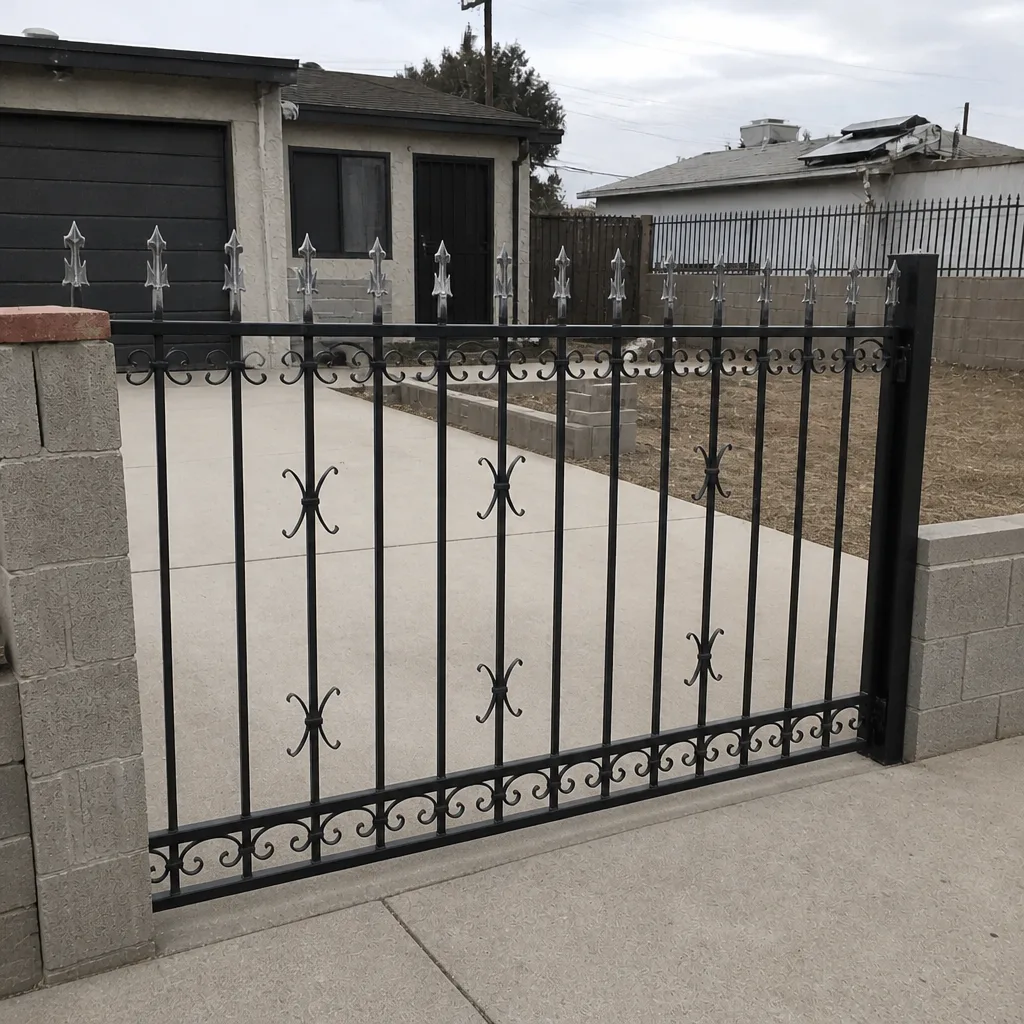
See the difference
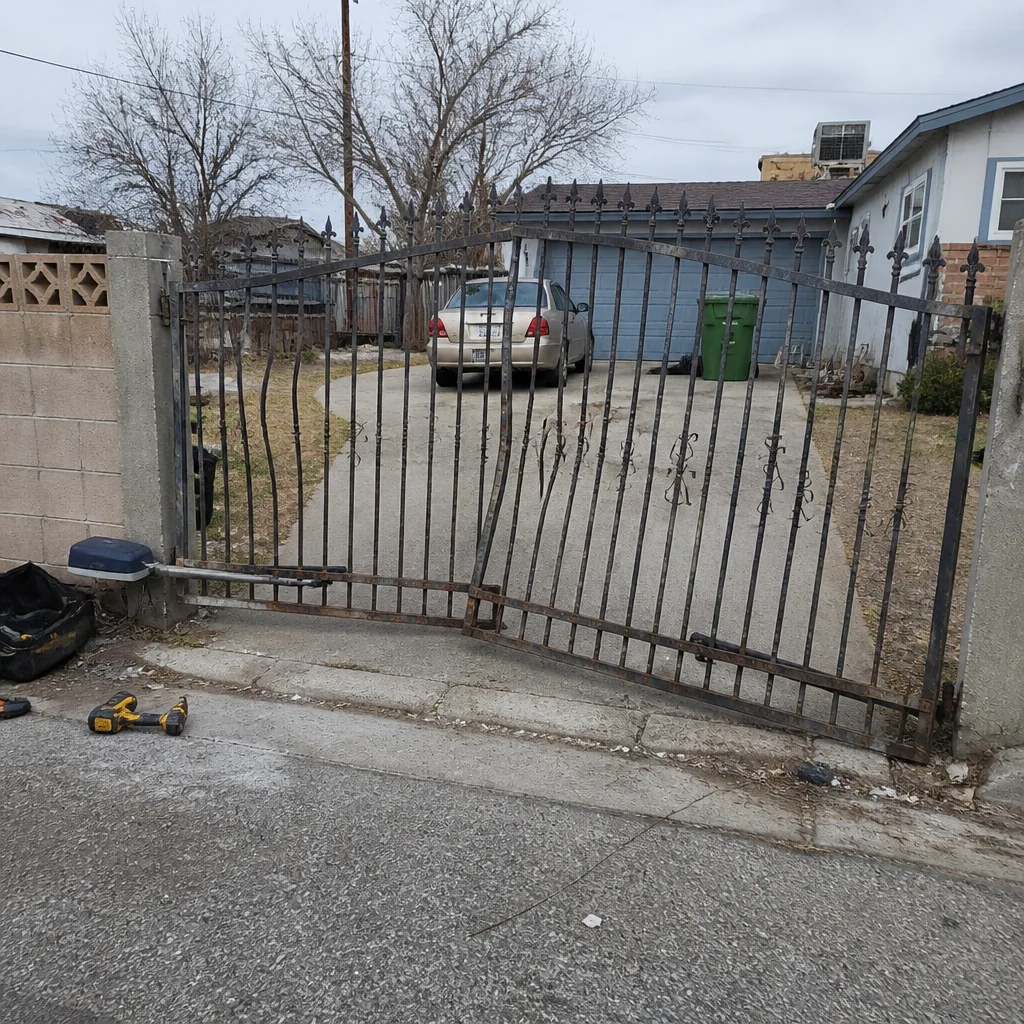 Before
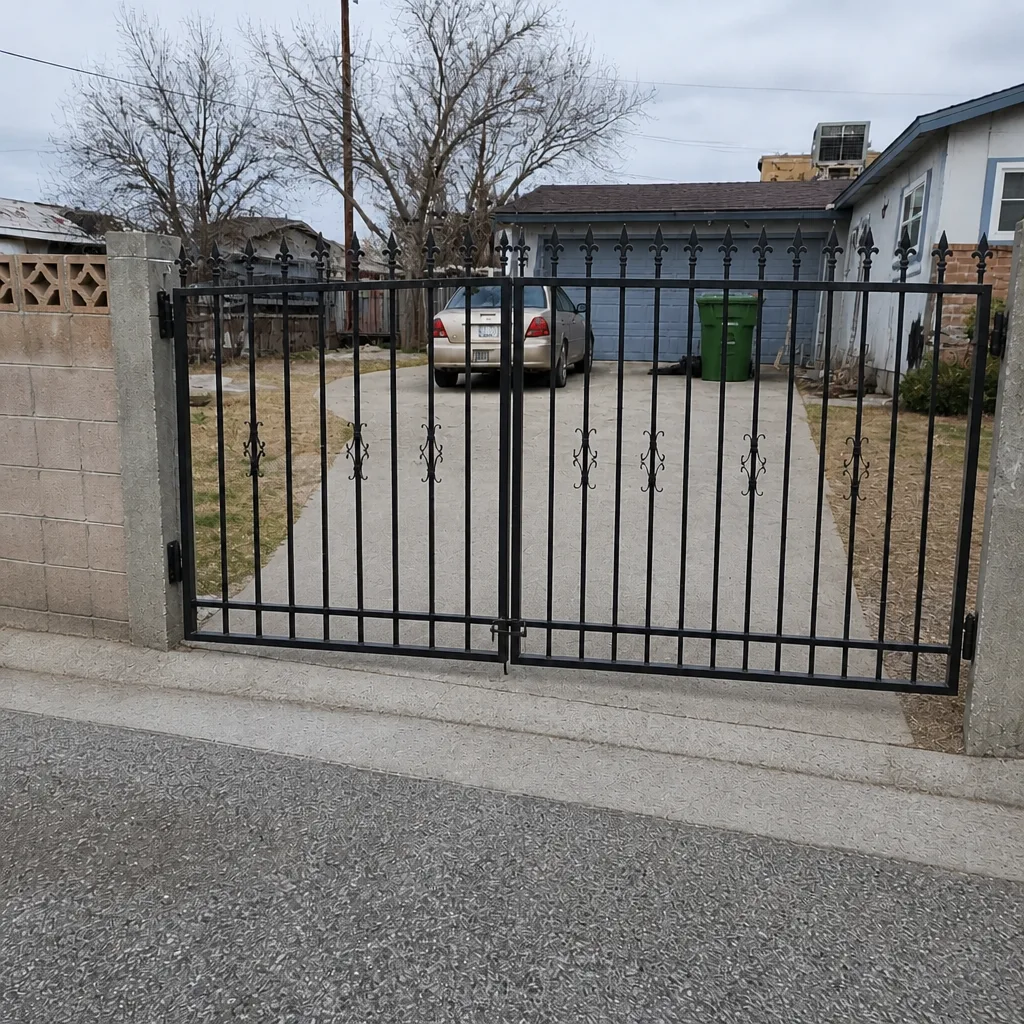 After
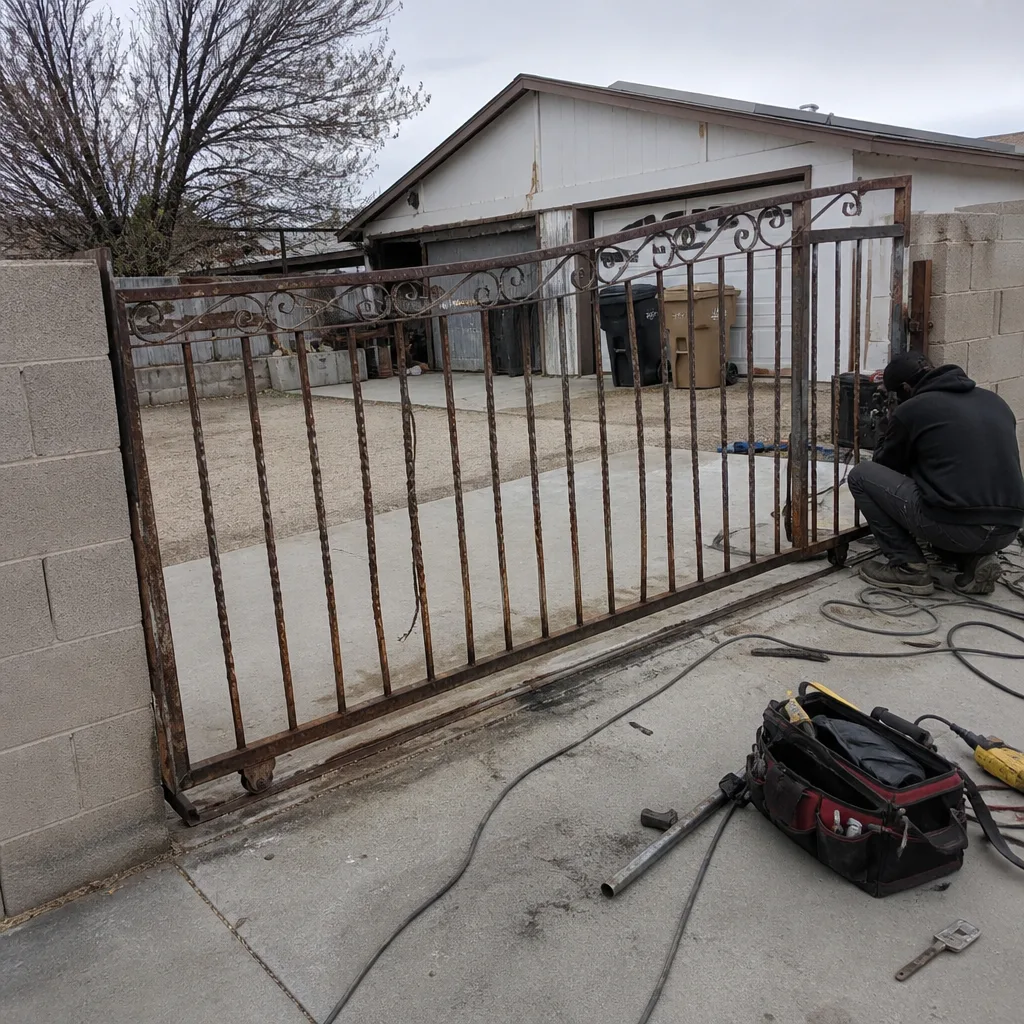 Before
 After
 Before
 After
When to Call a Professional
Call when you find a post that rocks, a weld seam with visible separation, a gate that has dropped off square at the latch, or any change in the last week rather than the last year. Call if the gate has started making a new sound, dragging on the ground, or if the opener is straining at the same point in the cycle. And call if you’re simply not sure – the cost of a look is a lot less than the cost of a fall. Gatewood Fence & Gate Sunrise Manor offers free estimates in Sunrise Manor. Call (844) 761-8729. Every job comes with our 90-Day Done Right Promise in writing, and if it’s not done right, we make it right. A live person answers, 24/7, not a voicemail.
Frequently Asked Questions
Look for rust streaks coming out of the seam, finish bubbling along the joint, or a gap that wasn’t there before; run a screwdriver tip along the weld and if it catches in a groove or feels soft, the weld has lost section and needs a professional look. A visual check takes a minute. A physical check that feels for a soft seam is the one most people skip, and it’s the one that finds real failures before the gate shows it by falling.
Surface rust is cosmetic if the metal underneath is still smooth and sound; if it wipes off and the steel is hard underneath, it’s a sand-and-repaint job, not a structural repair. The difference in Sunrise Manor is that our dry months followed by monsoon rain are hard on any seam that holds water, so a spot that would be cosmetic in a wetter climate can go deeper faster. Check it every month.
A moving post is almost always a footing problem, and it can usually be reset or replaced without replacing the gate; the panel is usually fine and it’s the post or the footer that has to be made right. In Sunrise Manor’s soil, we see this after heavy rain and in older developments where footings were shallow. The repair depends on how far the post has moved and how sound the steel still is.
On-site welding means we bring the welding rig to your driveway and repair the joint where the gate hangs, so the gate never leaves your property; it matters because a gate that gets hauled off comes back with a new price and often a new set of handling problems. It is the right call for most failed hinges, cracked frames, and rusted seams with sound parent steel. Call (844) 761-8729 for a free estimate – we’ll tell you on the phone whether it’s an on-site job or a replacement conversation.
For genuinely unsafe conditions we’ll get someone out as soon as we can; a live person answers at (844) 761-8729 around the clock, and we’ll tell you straight whether it’s a today problem or a scheduled job. If the gate is unsafe, use the walk gate or the driveway until we’ve looked at it. Don’t try to weld, prop, or “make do” with a gate that has a failed structural weld with it still hanging over a driveway.
Look for a published physical address and a license number you can look up, an upfront written price before work starts, and a name you can find in the community; locally owned and owner-operated is the oldest accountability there is, and it beats any phone number in a national ad. Ask for the estimate in writing, ask who is coming, and ask what the guarantee covers. Gatewood Fence & Gate has been at it since 2001, the name is on the shop, and the shop is down the road.
The Bottom Line
Structural gate problems in Sunrise Manor almost always announce themselves months ahead – a tick at the stop, a rust streak from a seam, a post that rocks, a latch side that drifts off square. The trouble is these look like normal wear to a homeowner who doesn’t know what they’re seeing. Now you do. The five-minute monthly check catches most of them while the fix is cheap, and the difference between cosmetic and structural is the difference between a repaint and a five-minute call. If you’re not sure which one you’re looking at, that’s the call to make. A gate that’s moving isn’t a gate that will wait.
For gate repair, gate installation, and gate motor and opener work in Sunrise Manor, Gatewood Fence & Gate has been locally owned and owner-operated since 2001. A live person answers every call, 24 hours a day, 7 days a week. The 90-Day Done Right Promise is stamped in writing on every job, and the estimate is upfront and agreed before any work starts. Standing offers include $40 off any repair over $200, no trip charge inside the county, a free second opinion on any written estimate, and a permanent 10% discount for seniors and veterans. For new gates and automation, we measure, order, and schedule – so you get a written price, not a same-day promise. Call (844) 761-8729 for a free estimate, or start at our Gatewood Fence & Gate Sunrise Manor home page to see everything we do.
Written by the team at Gatewood Fence & Gate Sunrise Manor.