
Last updated November 18, 2026
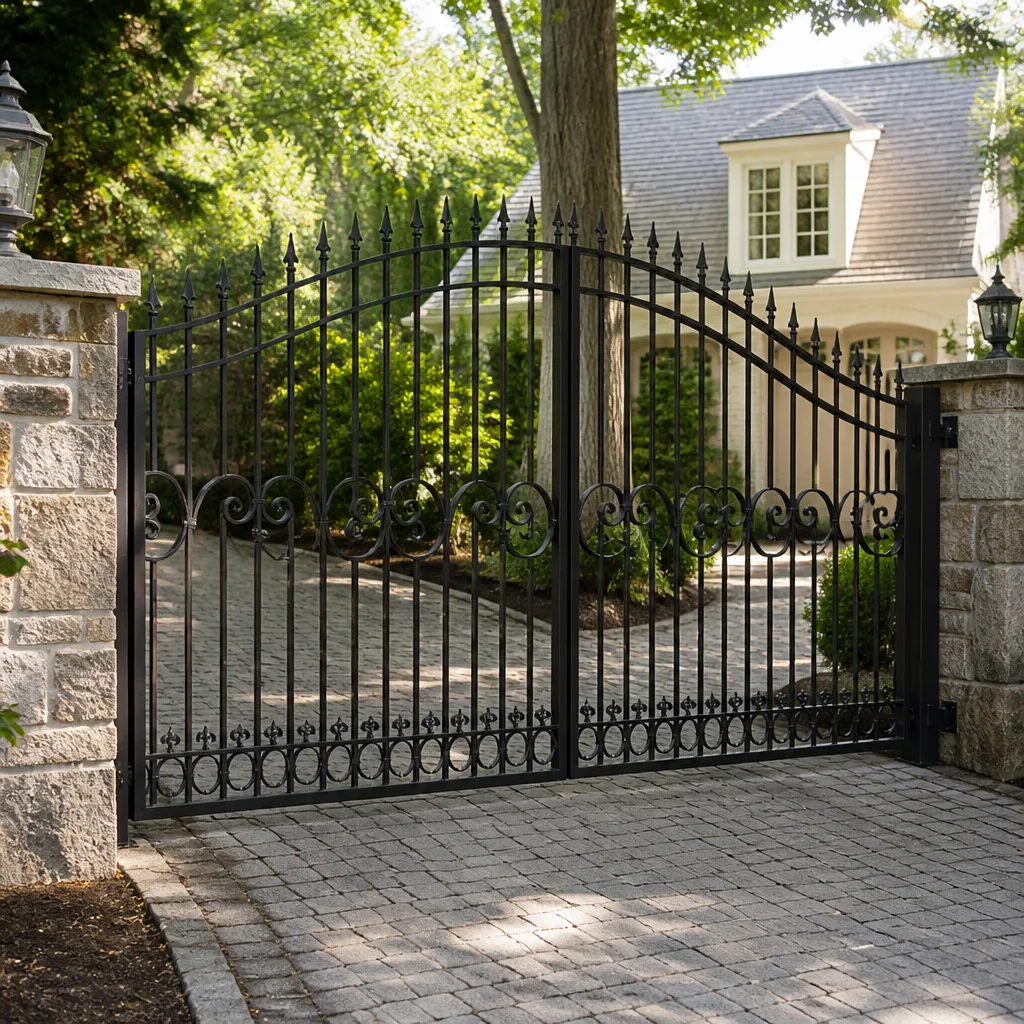 Wrought iron
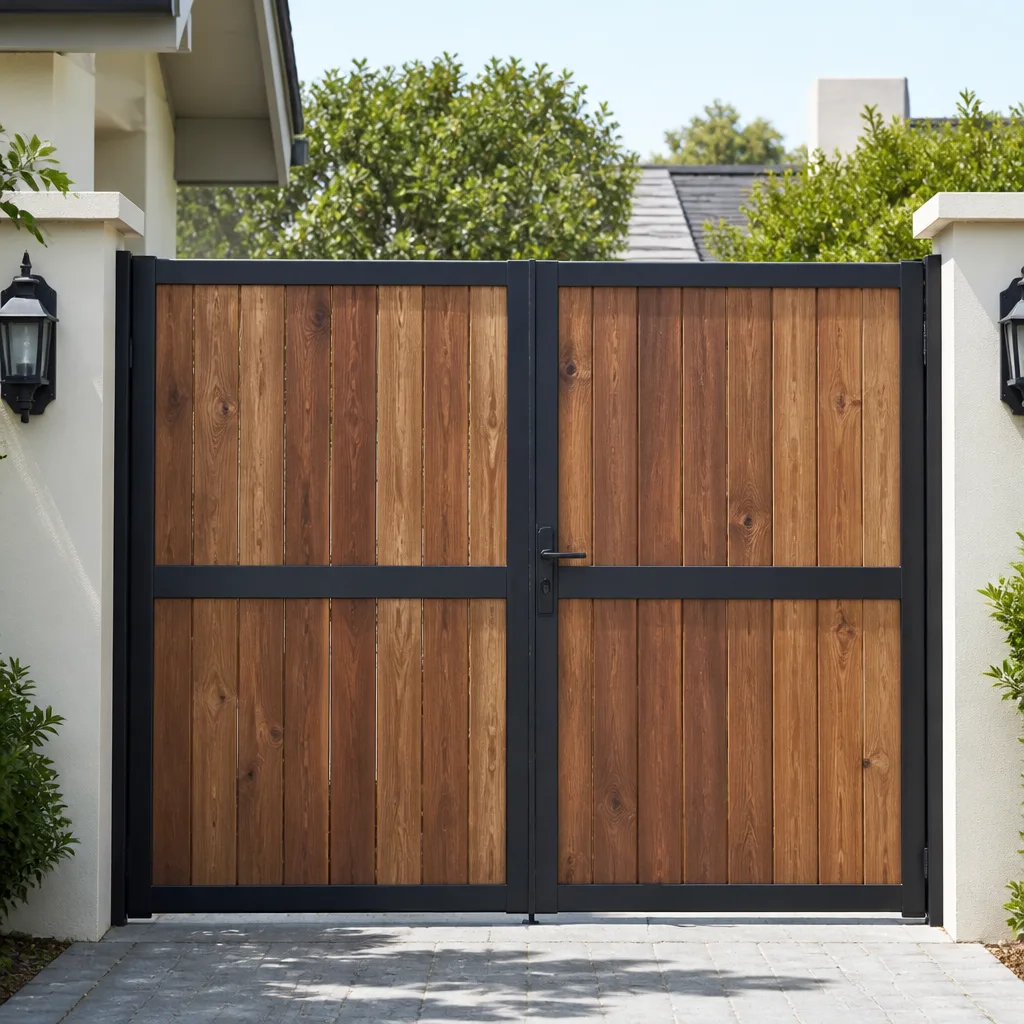 Wood & steel frame
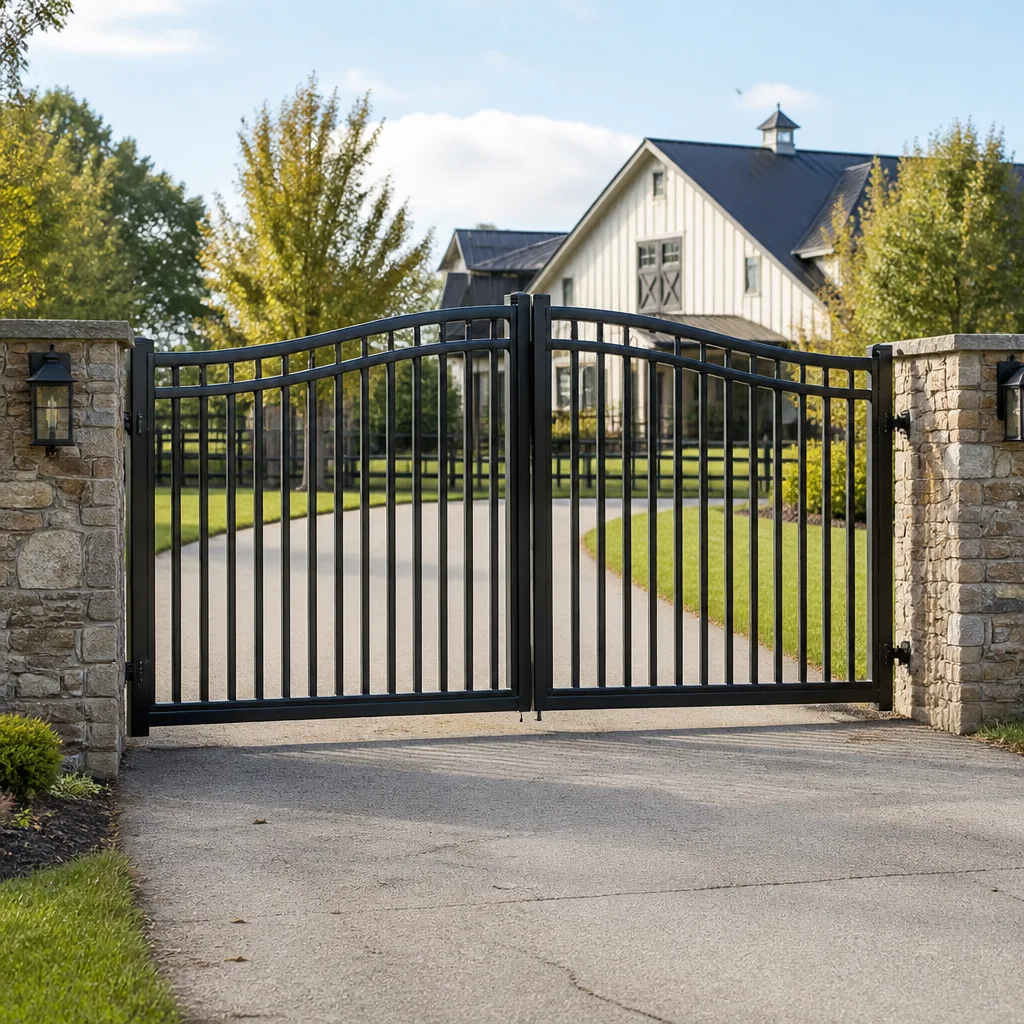 Farm & ranch
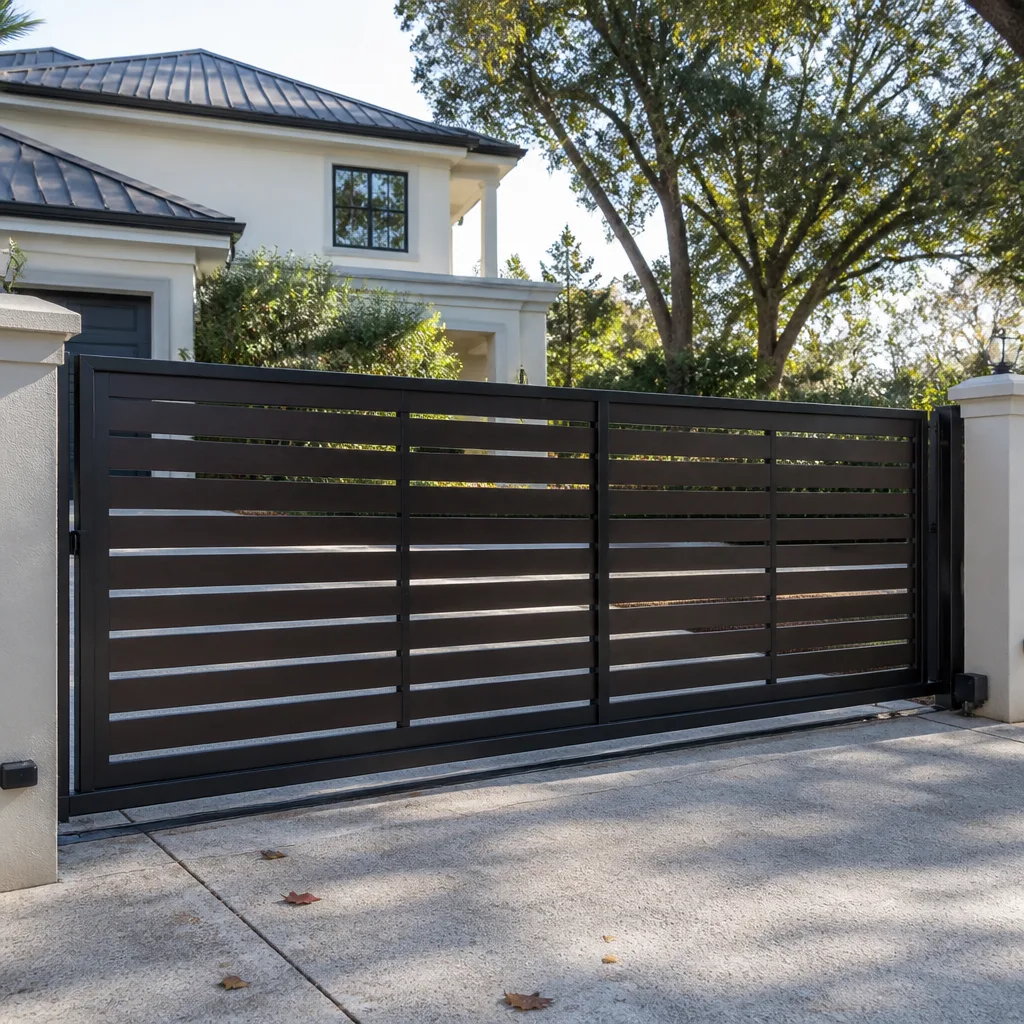 Sliding driveway gates
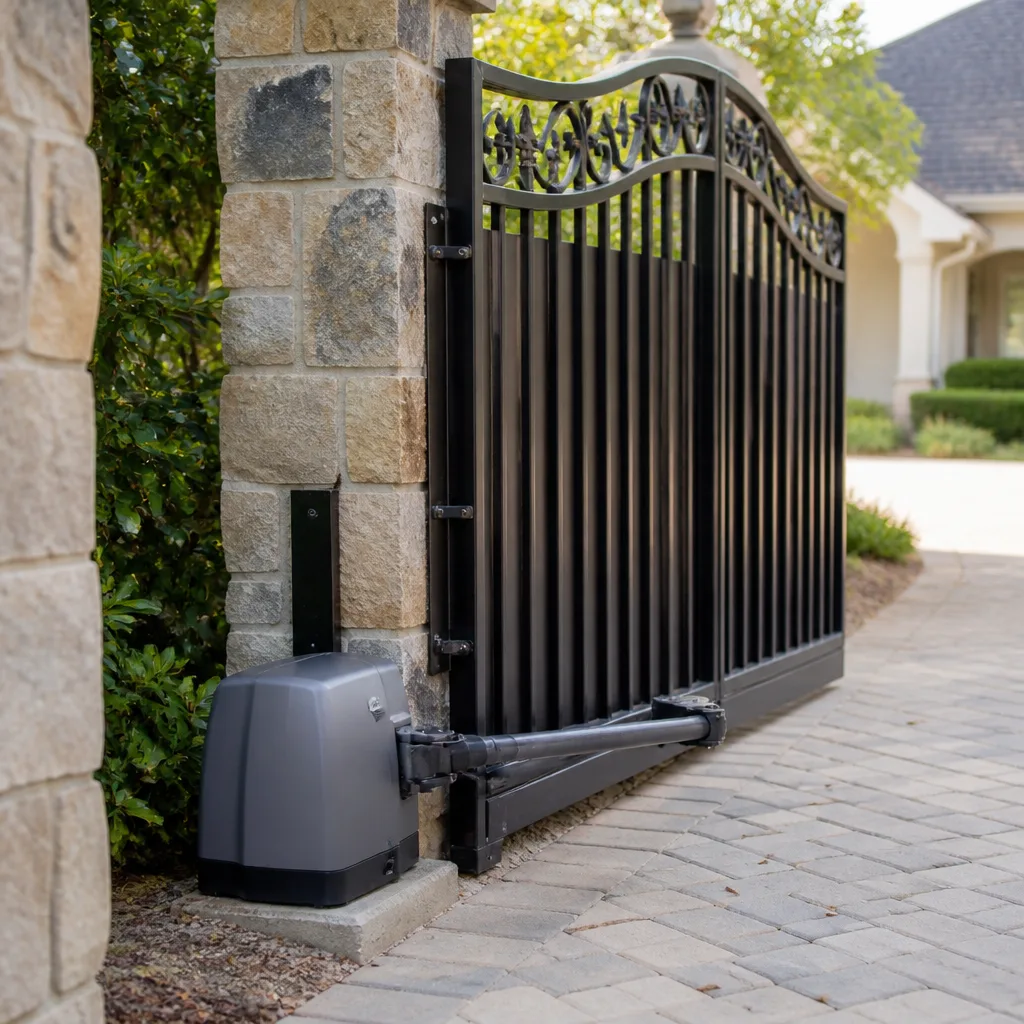 LiftMaster operators
Free on-site gate assessment - hinges, posts, and your LiftMaster or Nice gate operator checked before anything is quoted
The assessment is free and the quote is the invoice.
Get your free estimateThe Complete Gate Installation Guide for Sunrise Manor Homeowners
Three neighbors on the same Sunrise Manor street put up gates the same year. Two of them skipped a soil check. Two years later, their hinge posts were leaning a few degrees off plumb and their gates dragged on the concrete every time they swung. The third paid for a proper footing evaluation and her gate still closes square. The difference wasn’t the gate. It was what happened under it.
This guide covers what those national installation PDFs leave out: how caliche layers change footing depth, which decisions Clark County and your HOA actually care about, how the desert heat treats each gate material, and how to size an opening correctly the first time. We’ve watched these problems play out across Sunrise Manor, and we’d rather you avoid them than call us to fix them.
Quick Answer
Gate installation in Sunrise Manor starts with two jobs before any steel goes in the ground: a footing dug below the caliche layer (often 30 to 42 inches, deeper than the 24-inch national default) and a check on your HOA rules and Clark County permit threshold. Choose a material for heat and low maintenance, size the opening at least 4 feet wider than your widest vehicle, and budget for the final adjustment pass that separates a gate that’s installed from a gate that’s done.
Styles & brands we work with
- Wrought iron
- Wood & steel frame
- Farm & ranch
- Sliding driveway gates
- LiftMaster operators
Table of Contents
- Why Sunrise Manor Soil Changes the Footing Plan
- HOA Rules and Clark County Permits
- Choosing a Material for Desert Heat
- Sizing the Gate Opening Correctly the First Time
- How Deep Do Footings Actually Need to Go?
- Done vs. Looks Done: The Final Adjustment Checks
- What Gate Installation Costs in Sunrise Manor
Why Sunrise Manor Soil Changes the Footing Plan
Most installation guides assume you’re digging into soft, uniform topsoil. In Sunrise Manor, you’re often digging into caliche – a cemented layer of calcium carbonate that behaves more like soft rock than dirt. It doesn’t drain the same way, and it doesn’t compress the same way. A post set in a shallow hole above a caliche shelf will hold for a season and then start to work loose as water pools on top of that shelf and the surrounding fill settles unevenly.
What matters is where the caliche sits on your property. On some Sunrise Manor lots it’s within a foot of the surface. On others you’ll hit it closer to three feet down. You don’t know until someone probes the hole. That’s why we start every installation by digging a test hole at the actual post location rather than guessing from the address.
Several fixes are common once we know what’s underneath:
- Break through the caliche layer so the footing bears on stable material below it.
- Widen the footing if the caliche is too thick to break through cleanly, giving the concrete more bearing surface.
- Add a compacted gravel base under the concrete so water has somewhere to move instead of sitting against the post.
This is the single biggest reason a gate in Sunrise Manor outlives its neighbor’s. Concrete in a hole is easy. Concrete in the right hole, at the right depth, on the right material, is the whole job. If you want to understand how a failing footing shows up later, our guide to Gate Repair in Sunrise Manor covers the symptoms.
HOA Rules and Clark County Permits
Before you order a gate, find out two things: what Clark County requires for a permit, and what your HOA’s architectural review committee will approve. Skipping either one is how homeowners end up tearing out a gate they just paid for.
On the county side, a simple pedestrian gate on private residential property often falls under a permit exemption, but anything that touches the public right-of-way, changes a fence line visible from the street, or involves electrical work for an automatic opener usually needs a permit and an inspection. The rules shift by zone, and Sunrise Manor has a mix of them. A quick call to Clark County Development Services with your parcel number settles it – don’t take a neighbor’s word for it, because your lot may be zoned differently than theirs.
On the HOA side, expect to submit:
- A site plan showing the gate location relative to the property line and setbacks.
- The material, color, and height, matched against the community’s approved palette.
- The style of the gate, especially if it’s visible from the street.
- Details on any automatic opener and where the control box will sit.
Setbacks are where most denials happen. An HOA may require the gate to sit a specific distance back from the sidewalk, and that distance changes the footing layout. Get the approval in writing before you dig. It’s the cheapest step in the whole project.
Choosing a Material for Desert Heat
Sunrise Manor summers push past 110 degrees, and that heat does different things to different materials. It also drives a maintenance load that most homeowners in their 50s and 60s would rather not carry. Here’s how the four common choices hold up.
- Wrought iron: Heavy, long-lasting, and classic. The trade-off is rust – the desert’s dry air helps, but monsoon moisture and irrigation overspray still find the welds. Plan on touch-up painting every few years. It’s the strongest choice for a wide driveway gate.
- Steel (tubular or ornamental): Lighter than wrought iron and usually cheaper. Heat expansion is manageable, but cheap powder coating can chalk and peel after a few summers. Buy from a supplier with a real coating warranty, not the thinnest gauge on the shelf.
- Aluminum: The best low-maintenance pick for the climate. It won’t rust, handles heat without warping, and holds paint well. It’s lighter, so it needs a properly sized opener – something like a LiftMaster or Linear unit rated for the gate’s weight and length.
- Vinyl: Good for privacy and zero painting, but the desert sun makes cheap vinyl brittle over time. High-quality vinyl rated for UV exposure lasts; bargain panels fade and crack. Also check your HOA – some Sunrise Manor communities restrict vinyl on street-facing gates.
Our practical recommendation: aluminum for anything you want to stop thinking about, wrought iron or heavy steel for a driveway gate where security and weight matter, vinyl only where the HOA allows it and the grade is UV-rated. Match the material to the opener, not the other way around, or you’ll burn out a motor early.
Sizing the Gate Opening Correctly the First Time
This is where more installs go wrong than anywhere else, and it’s entirely avoidable. The gate is measured once and lives with that measurement forever. Get it wrong and you’re either widening concrete or living with a gate your truck can’t clear.
Start with the widest thing that will ever pass through it – not your daily driver, but the delivery truck, the RV, the trailer, the moving van. Then add clearance on both sides. A safe rule is a clear opening at least 4 feet wider than your widest vehicle, with the posts set back so they don’t intrude on the swing path.
- Measure the full clear opening between finished posts, not the fence line.
- Account for the thickness of hinges, the opener arm, and any decorative hardware – these eat into clearance.
- Check the gate’s swing arc against your driveway slope and any planter boxes or utility meters.
- Confirm the post location doesn’t block your garage apron or the pedestrian path to the door.
- Leave room behind the gate for it to swing fully open, including the opener’s travel.
One more Sunrise Manor note: if your driveway has a slope, the gate needs clearance underneath at the low side and swing room at the high side. A gate built for flat ground will scrape on a sloped drive the day it’s hung. If you’re planning an automatic opener, our Gate Motor & Opener in Sunrise Manor page explains how the opener’s torque and the gate’s weight have to match.
How Deep Do Footings Actually Need to Go?
The national default of 24 inches is a starting point, not a finish line. In Sunrise Manor, footings for a driveway gate commonly need to reach 30 to 42 inches to get below the caliche and bear on stable soil, depending on what the test hole reveals. A pedestrian gate can sometimes run shallower, but only after the same check.
Depth is only half the equation. The footing also needs:
- Diameter: roughly three times the post’s width for a solid base, wider for a heavy driveway gate.
- Concrete: a proper mix, poured in one pass, with the post plumb and braced while it cures.
- Drainage: a compacted base and, on some lots, a shallow gravel trench to move water away from the post.
Don’t rush the cure. Concrete needs a few days to reach working strength before you hang a gate or bolt on an opener, and heavy gates need longer. We’ve seen homeowners hang a gate the next morning and wonder why the post moved by summer. The gate sags in the hinge post, not in the middle – the middle is just where you notice it. That’s the first place we look on any repair call, and it’s the same place we put the effort on a new install. When you’re ready to plan the whole project, our Gate Installation in Sunrise Manor page lays out the steps start to finish.
Done vs. Looks Done: The Final Adjustment Checks
A gate can look finished and still be wrong. The final quarter-inch of adjustment is where a good installation separates from a rushed one. Here’s what we check before we call a gate finished – ask your installer for the same.
- Latch alignment: the gate should latch with a light push, not a slam or a shove.
- Vertical plumb: a level on the post and on the gate itself, checked at several points along the swing.
- Clearance underneath: no scrape at the low end of the drive, enough gap at the high end for the gate to swing without binding.
- Hinge adjustment: if the gate doesn’t sit level, adjust the hinges before touching anything else.
- Opener travel and stops: the opener should stop the gate before it hits the post, with the safety reverse tested and working.
- Self-closing check: a manual gate should swing closed on its own when released from half-open – if it doesn’t, the post or hinge alignment is off.
- Safety devices: for automatic gates, confirm the safety edges and photo-eye sensors trip the reverse correctly. If it runs on power, the controls and safety devices have to be right.
That safety point deserves emphasis. Automatic gate openers generate real force, and a gate that closes on a child or a pet without reversing is a serious hazard. The electrical side – running power, mounting the control box, wiring the safety edges – is work for a trained professional, not a weekend project. If your gate ever closes on its own when it shouldn’t, stop using it and get it checked. We handle those controls and match them to the major brands, including LiftMaster, FAAC, BFT, and Linear.
What Gate Installation Costs in Sunrise Manor
Prices vary with material, size, and whether you’re adding an automatic opener. Here’s the range we see across Sunrise Manor for a residential installation, quoted upfront before any work starts.
- Pedestrian gate (walk-through, aluminum): $900 to $2,200 installed, depending on width and finish.
- Driveway gate (steel or wrought iron, manual): $2,500 to $6,500 installed, based on size and complexity.
- Automatic opener, added to an existing gate: $1,200 to $3,200 for the unit, controls, and installation, including safety devices.
- Footing and post work: usually built into the gate price, but deeper caliche work can add $300 to $800.
One thing to be clear about: on installation and opener work, the price is quoted and agreed in writing before anyone digs a hole. That’s the whole point of a written estimate. If a bid comes in by phone with no site visit, treat it as a starting guess, not a price. We offer free second opinions on any written estimate, and our standing offers – a free second opinion, no trip charge inside the county, $40 off any repair over $200, and a permanent 10% discount for seniors and veterans – don’t require haggling. Installation work is measured, ordered, and scheduled, so plan on a few days to a couple of weeks rather than a same-day visit.
Common Mistakes to Avoid
- Digging the national-default 24-inch footing. In Sunrise Manor caliche, that’s often not deep enough, and the post leans within a couple of seasons.
- Ordering the gate before confirming HOA approval. A denial after the gate is built means eating the cost or fighting the committee.
- Sizing the opening to the daily driver. The delivery truck and the moving van are the ones that find your gate too narrow.
- Mismatching the opener to the gate weight. An undersized motor burns out early; an oversized one is wasted money.
- Skipping the safety devices on an automatic gate. No reverse and no photo eye is a genuine hazard, not a shortcut.
- Going by the address to predict the soil. Two Sunrise Manor lots on the same street can have caliche at very different depths. Probe the actual hole.
- Hanging the gate before the concrete cures. A day of patience saves a summer of sagging.
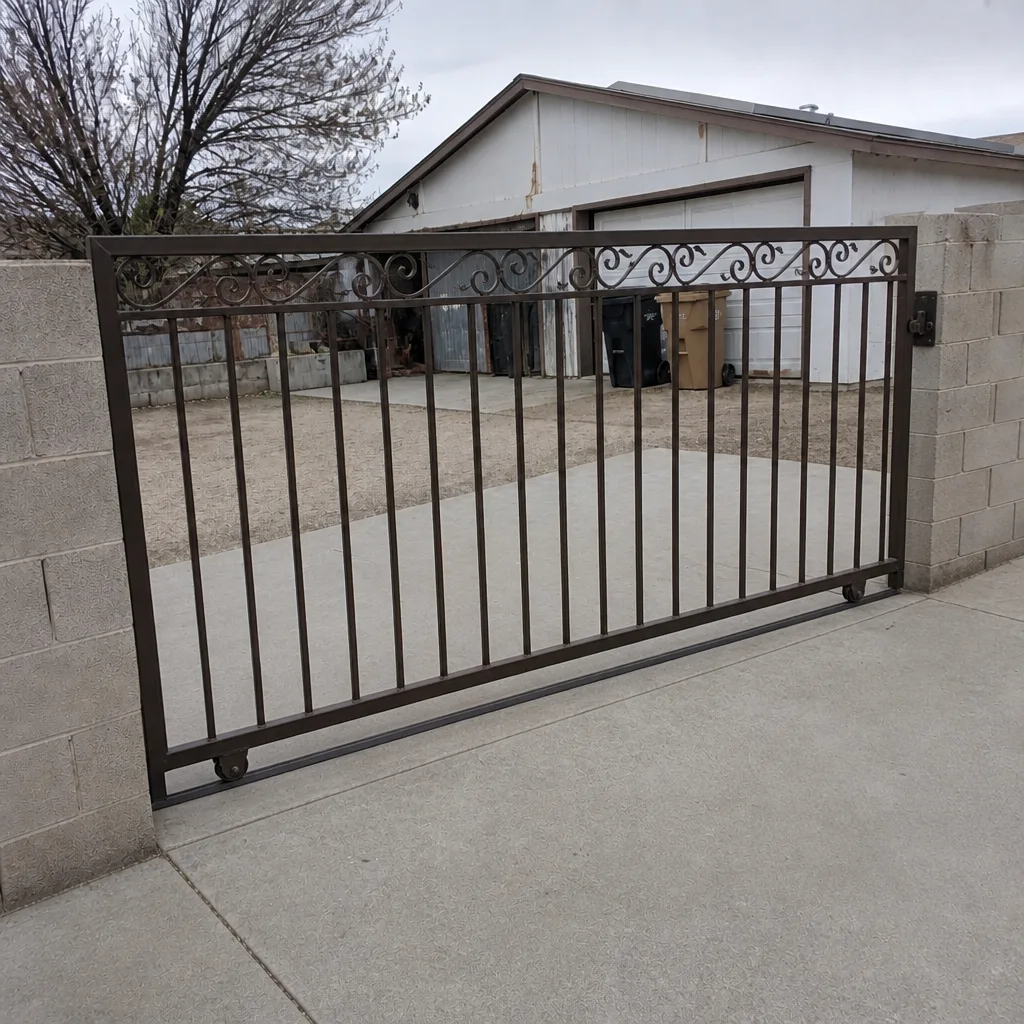
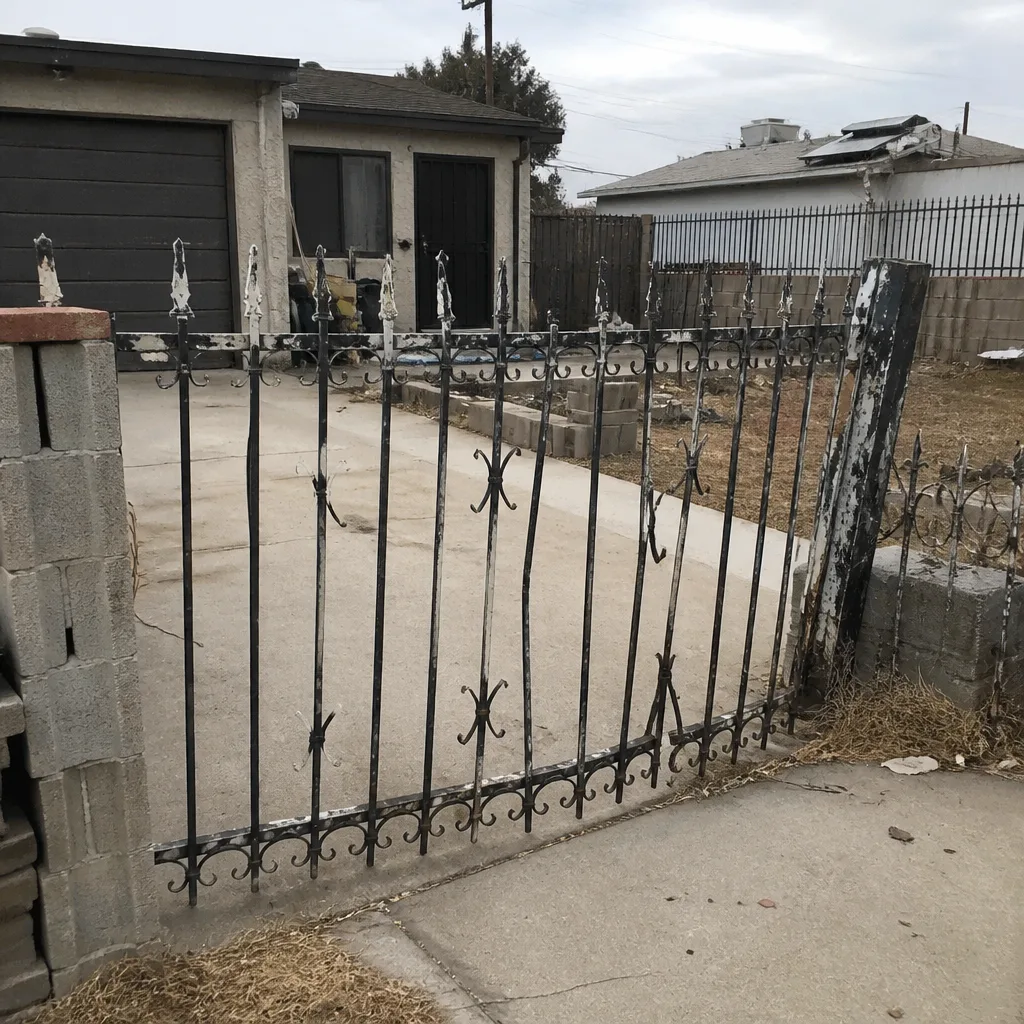
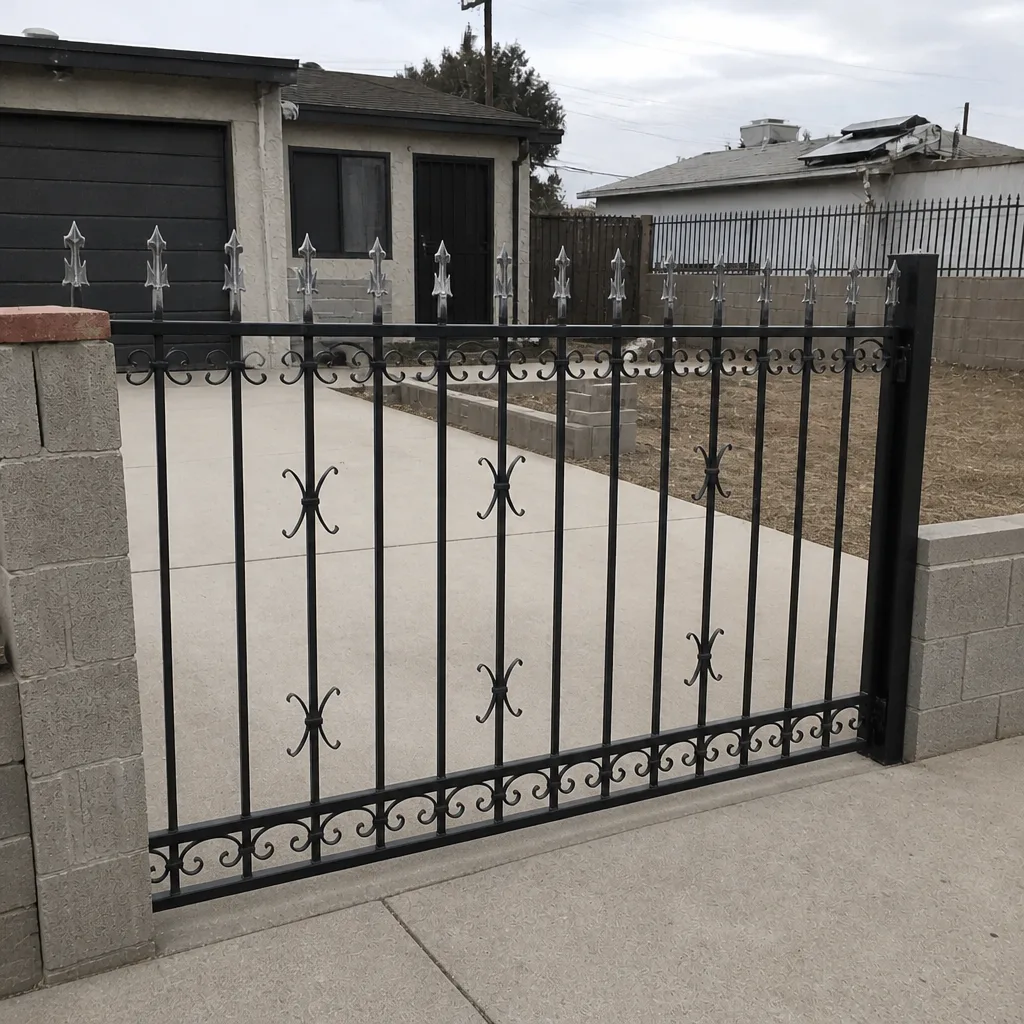
See the difference
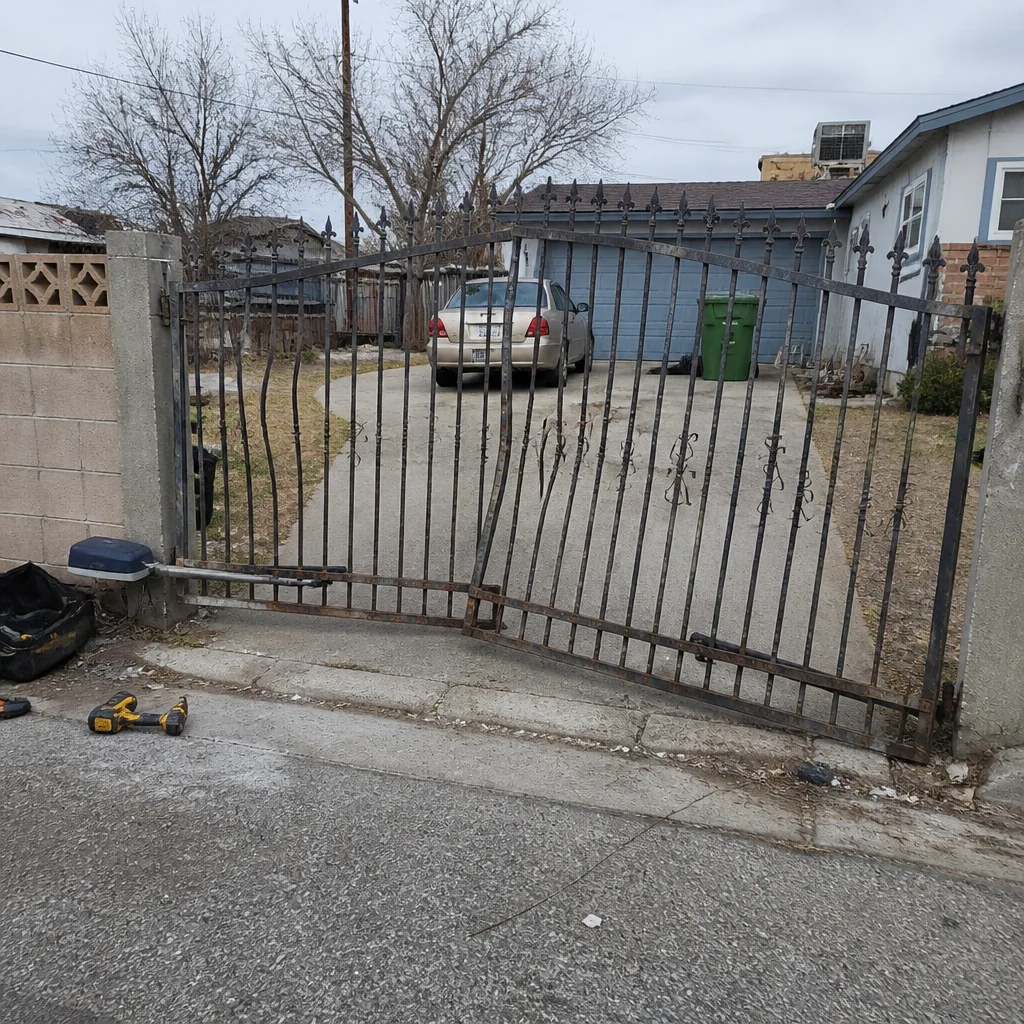 Before
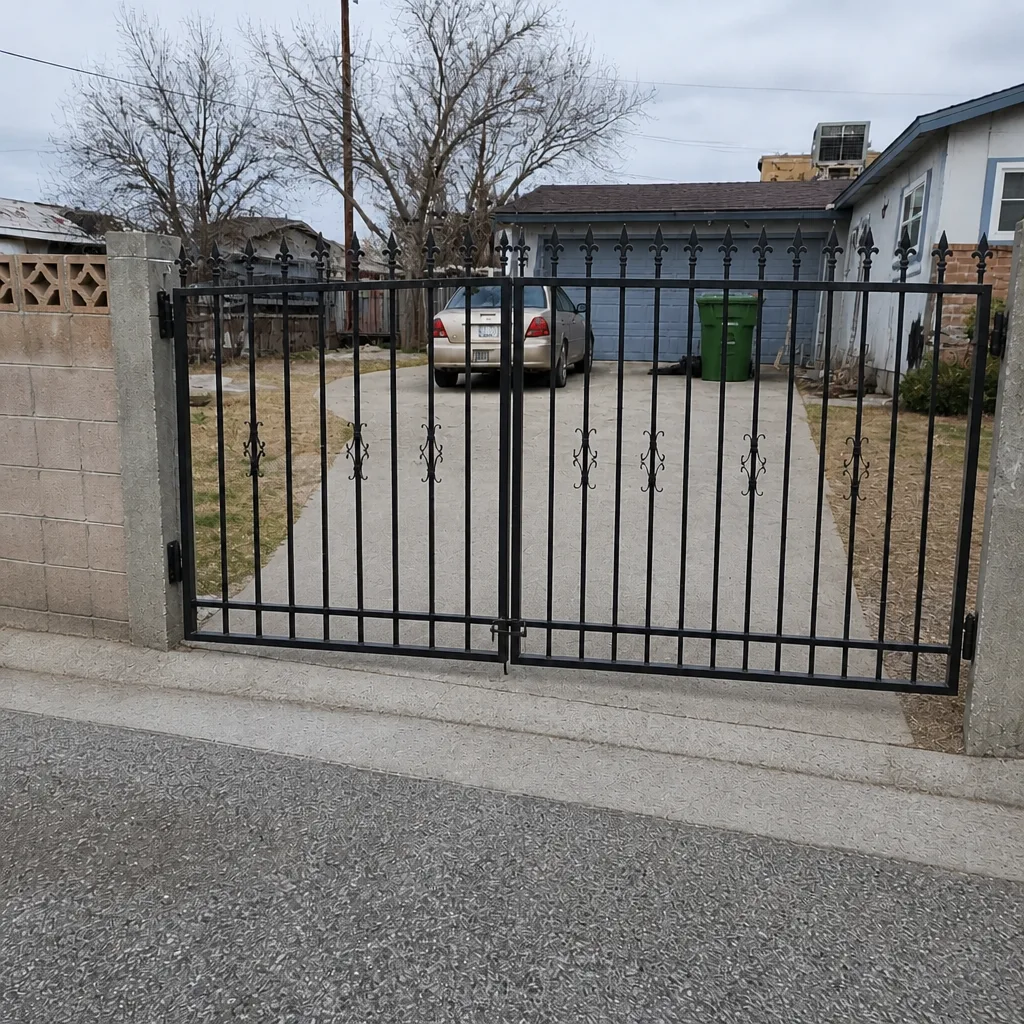 After
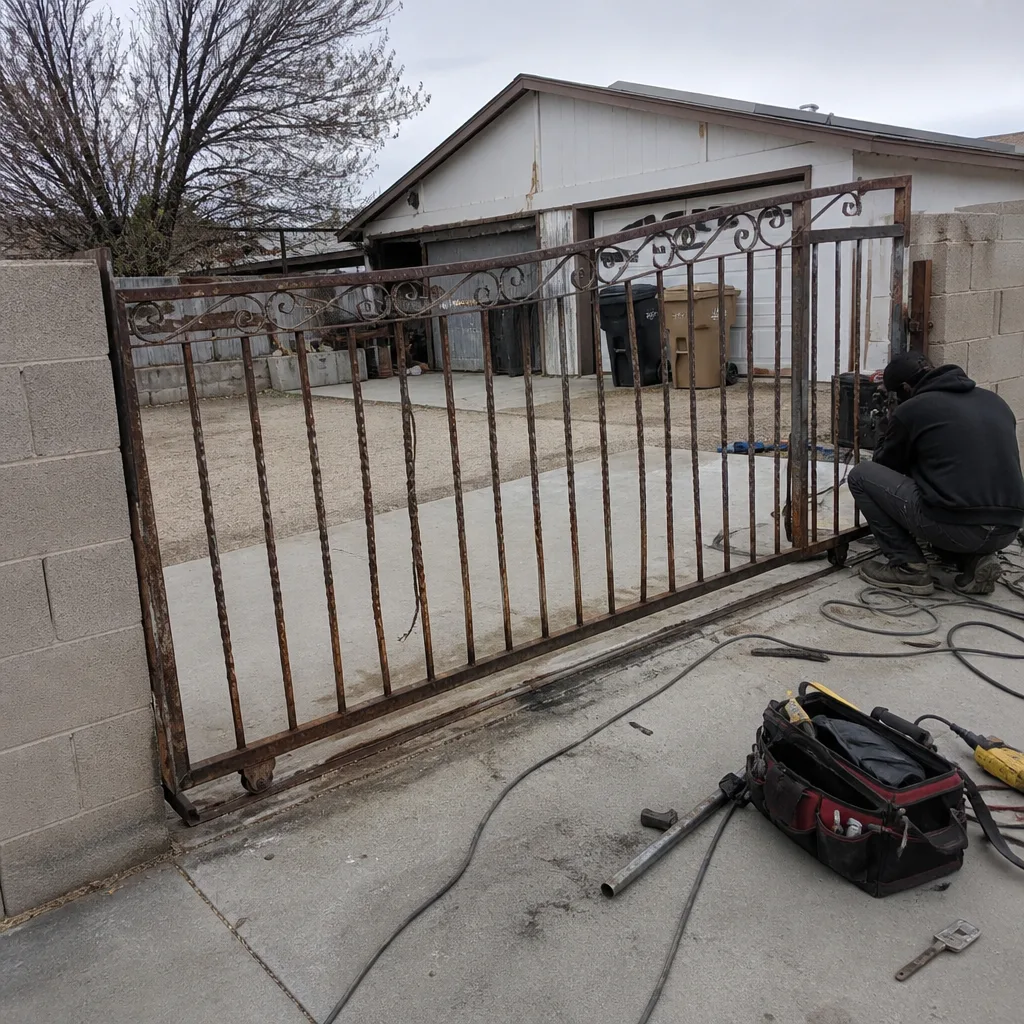 Before
 After
 Before
 After
When to Call a Professional
Some jobs are fine to think about and not fine to attempt. If your ground hits caliche, if you’re installing an automatic opener, if the gate involves electrical work or safety devices, or if the opening needs to clear a wide vehicle, that’s a job for someone who has dug these holes before. The same goes for any post that’s already leaning, any gate that scrapes or drags, and any opener whose safety reverse doesn’t trip on command. A leaning post is a footing problem, not a hinge problem, and fixing one without the other just means paying twice. Gatewood Fence & Gate Sunrise Manor offers free estimates in Sunrise Manor – call (844) 761-8729. You’ll get a live person, a straight answer, and a written price before any work starts.
Frequently Asked Questions
Most residential gate installations in Sunrise Manor run $900 to $2,200 for a pedestrian gate and $2,500 to $6,500 for a manual driveway gate, with automatic openers adding $1,200 to $3,200. Deeper caliche excavation can add $300 to $800. Call (844) 761-8729 for an exact quote – estimates are free.
It depends on the gate. A simple pedestrian gate on private residential property often falls under a permit exemption, but anything touching the public right-of-way, changing a street-visible fence line, or involving an automatic opener usually needs a permit and inspection. Confirm with Clark County Development Services using your parcel number before you build.
Footings for a driveway gate typically need to reach 30 to 42 inches in Sunrise Manor to get below the caliche layer, versus the 24-inch national default. A pedestrian gate can sometimes run shallower, but only after a test hole confirms what’s under the surface. The soil, not the address, sets the number.
Aluminum is the lowest-maintenance choice for Sunrise Manor’s climate – it won’t rust, handles heat without warping, and holds paint well. Wrought iron and heavy steel are stronger for a driveway gate where security matters, but need periodic rust touch-ups. Only choose vinyl if your HOA allows it and the panels are UV-rated.
No – installation is measured, ordered, and scheduled, usually within a few days to a couple of weeks depending on material and any opener. We give you a free measure and a written price upfront, then book the work. Same-day service applies to repairs and emergencies, not new installations.
Yes. Wiring the control box, running power, mounting the safety edges, and testing the reverse are all part of an automatic gate installation, and they belong to a trained professional because of the force involved. We service the major opener brands, including LiftMaster, FAAC, BFT, and Linear.
The Bottom Line
The gate itself is the easy part. What makes it last in Sunrise Manor is everything under it and around it: a footing dug past the caliche, HOA and county sign-off before you build, a material chosen for desert heat rather than a showroom floor, an opening sized for the widest vehicle that will ever come through, and a final adjustment pass that separates done from looks done. Get those right and your gate closes square for years. Skip them and you’ll rejoin the leaning-post club by the next monsoon. Start with your Gatewood Fence & Gate Sunrise Manor home page for how we approach the whole job, then call for a free estimate.
Ready to plan your gate? Call Gatewood Fence & Gate Sunrise Manor at (844) 761-8729 for a free estimate. A live person answers around the clock, the price is quoted and agreed before any work starts, and every job carries the 90-Day Done Right Promise in writing.
Written by the team at Gatewood Fence & Gate Sunrise Manor.