
Last updated November 18, 2026
 Wrought iron
 Wood & steel frame
 Farm & ranch
 Sliding driveway gates
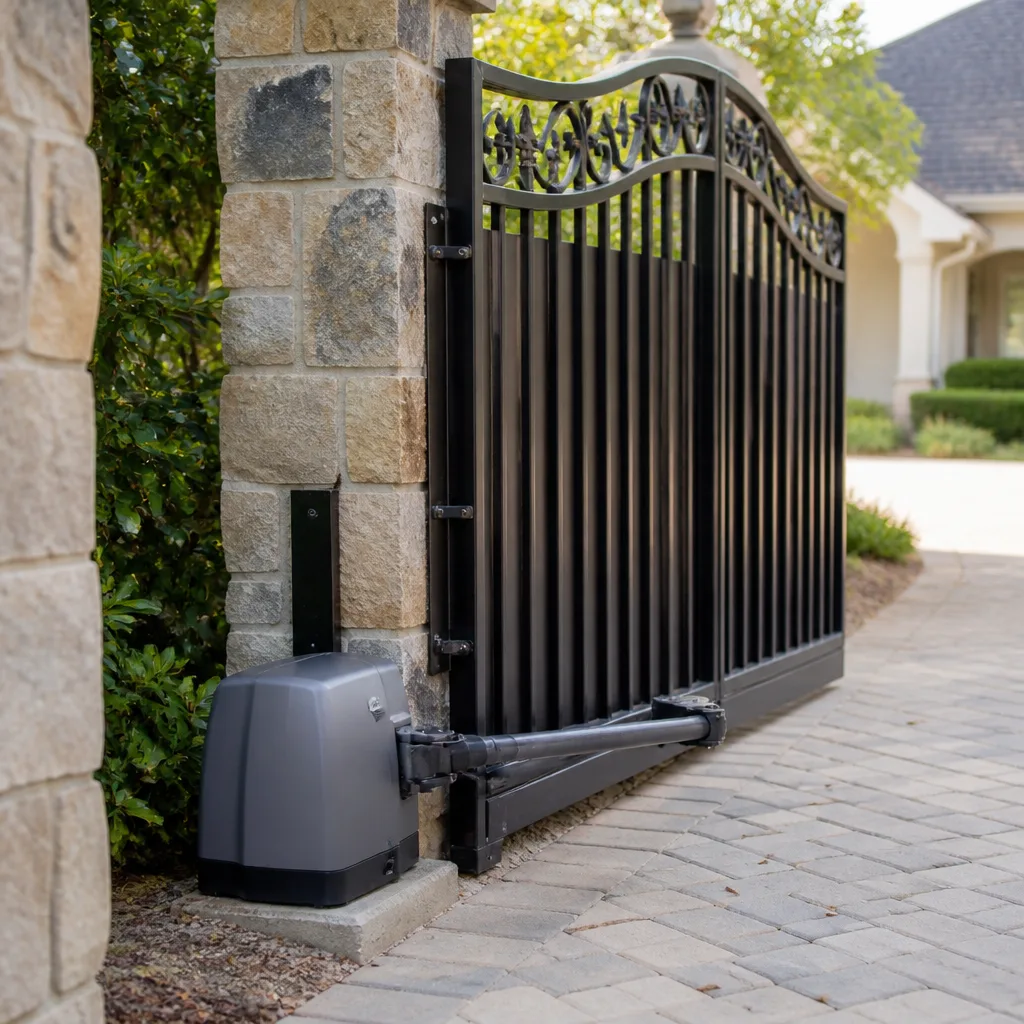 LiftMaster operators
Free on-site gate assessment - hinges, posts, and your LiftMaster or Nice gate operator checked before anything is quoted
The assessment is free and the quote is the invoice.
Get your free estimateGate Parts & Welding Maintenance Schedule: What to Do and When
Here’s a thing that catches people off guard: a gate can look perfectly fine for years while the welds underneath it are quietly giving up. Paint fades slowly and evenly, so it flatters a gate that’s actually in trouble. By the time most folks notice, a stress crack has already worked its way through the hinge plate. In Sunrise Manor, where summer heat pushes metal through daily expansion and contraction, that timeline runs faster than most homeowners expect. This guide breaks a gate into its three separate aging systems – structural welds, moving hardware, and finish coat – so you inspect each on its own clock and nothing slips through.
Quick Answer
Inspect structural welds and posts every spring before summer heat stress, lubricate hinges, latches, and rollers every October after monsoon season, and touch up the finish coat whenever you see rust starting. A gate is a machine with three parts that age at different rates. Treat each one on its own schedule and it will outlast a gate that only ever gets painted.
Styles & brands we work with
- Wrought iron
- Wood & steel frame
- Farm & ranch
- Sliding driveway gates
- LiftMaster operators
Table of Contents
- Why a Gate Needs Three Separate Maintenance Tracks
- The Structural Track: Welds, Posts, and Footings
- How to Read a Weld: Stress Crack vs. Surface Rust vs. Pitting
- The Mechanical Track: Hinges, Rollers, Latches, and Springs
- The Right Lubricant for Extreme-Heat Hardware
- The Finish Track: Coating, Rust Inhibitor, and Caulking at Welds
- The Ten-Minute Homeowner Inspection Sheet
- The Full-Year Sunrise Manor Calendar
Why a Gate Needs Three Separate Maintenance Tracks
Most maintenance advice treats “the gate” as one object. That’s the mistake. A gate is really three machines bolted together: the structure that holds its shape, the hardware that lets it move, and the coating that keeps rust off both. Each one fails at a different speed, and each needs attention on a different timeline.
The structural welds holding your hinge plate to the frame work hard every time the gate swings. They flex with heat and cold. The hinges, rollers, and latches wear a little every single day the gate opens. The finish coat sits out in the sun and takes the beating of UV, dust, and monsoon grit. Miss one track and the others get stressed trying to compensate. A gate with a failing weld will chew through hinges because it’s moving out of true. A gate with a bad finish coat lets rust creep under a weld and weaken it from within.
Here in Sunrise Manor, all three tracks run hot. Summer temperatures push metal to expand during the day and contract at night, which is relentless on welds. Monsoon season in late summer throws dust and moisture at every hinge. Keeping the tracks separate – and inspecting each on its own season – is how you stay ahead of a repair instead of chasing one. If a component has already gone, there’s a reason we treat gate repair in Sunrise Manor as a repair-first job, not a replace-first one: an honest inspection tells you which track actually failed.
The Structural Track: Welds, Posts, and Footings
This is the track that gets skipped, because it’s the one you can’t fix with a spray can. Structural inspection means checking the welds, the posts they attach to, and the footings in the ground. It belongs on the calendar once a year, every spring, before the heat stress of summer starts working on already-weakened metal.
What we look for on the structural track:
- Hinge and latch plate welds. These carry the most load and fail first. A gate sags in the hinge post, not in the middle – and that’s where inspection starts.
- Post level and lean. A post that’s leaned a quarter inch this year will lean further next year. Check with a level or just sight down the line.
- Footing stability. Push the post near the base and watch for movement or a widening crack in the concrete around it.
- Frame square. Open the gate halfway and look for a diagonal gap that shouldn’t be there. A racked frame means the structure is carrying stress it shouldn’t.
The sequence matters. Fix the panel without the post and you’ll fix it twice – welding a fresh hinge plate to a post that’s still moving just delays the next failure. In Sunrise Manor, spring inspection has one extra job: catching the winter’s worth of wind and temperature damage before June turns up the dial. On-site welding is often the difference between a repair and a replacement, because a cracked weld can be built back up in your driveway with the gate still hanging where it belongs. Sunrise Manor homeowners who want the whole picture on how that works – including new builds and replacements – can see it laid out on our gate installation in Sunrise Manor page.
How to Read a Weld: Stress Crack vs. Surface Rust vs. Pitting
“Check for cracks” is useless advice if you don’t know what a crack looks like next to a little surface rust. On the structural track, telling these three apart is the whole game. Here’s what each one actually is.
- A stress crack. Look for a thin, sharp line that starts at the edge of a weld and runs into the base metal, often at an angle. It’s narrow and dark, and it doesn’t rub off with a thumb. On a hinge weld, it usually starts where the weld meets the plate, because that’s where the flexing concentrates. A stress crack is the real thing – it needs welding, not paint.
- Surface rust. A soft orange-brown bloom sitting on top of the metal. It flakes or wipes and doesn’t have a sharp edge. Surface rust is cosmetic until it’s left long enough to pit underneath, so it’s a warning, not a failure.
- Cosmetic pitting. Small shallow craters where a bit of moisture sat on the surface. Superficial on a thick frame, more serious on thin tube stock or near a weld toe. Pitting near a weld is the one to watch, because that’s where a crack like to start.
Run a fingernail across anything suspicious. A crack catches the nail like a seam. Rust and pitting let it slide over. If the nail catches on a weld, get it looked at before you swing that gate a few hundred more times. That single test is the most useful thing you can do on the structural track without a toolbox.
The Mechanical Track: Hinges, Rollers, Latches, and Springs
Mechanical parts wear every day the gate moves, so they need attention on a shorter cycle than the structure. The calendar here is simple: check monthly by eye and ear, and lubricate everything once a year in October, right after monsoon season closes out. That timing isn’t arbitrary – late summer is when dust, grit, and moisture have done their worst to every moving joint, and clearing it out before winter keeps parts from seizing.
The mechanical track covers:
- Hinges and pivot points. Listen for a squeak and watch for a wobble. Wear here is the most common cause of a gate that drops and drags.
- Rollers and tracks on sliding gates – check for flat spots, grit buildup, and anything that makes the gate jump.
- Latches and catches. A latch that needs a shove to close is telling you the gate or the post has shifted.
- Springs and cables on self-closing gates. These are under real tension and are genuinely dangerous. Do not adjust, tighten, or replace a tensioned spring or cable yourself – that’s a trained-professional job, every time. Flag a weak or noisy spring and let someone who knows the tension do the work.
On an automated gate, the same annual pass should include the operator. Brands like Linear, Viking, and Ghost Controls all have their own service intervals for arms, chains, and limits, and ignoring them is how a small adjustment turns into a motor replacement. Our gate motor & opener in Sunrise Manor page covers that side in more detail.
The Right Lubricant for Extreme-Heat Hardware
In Sunrise Manor heat, the wrong lubricant is worse than none. A light oil that feels fine in a milder climate turns to gum in a hundred-plus-degree summer, trapping grit and turning your hinges into grinding paste. What works here is a heavy, tacky lubricant that stays put and resists washout.
- Hinges and pivot pins: a lithium or moly grease, applied with a brush or grease gun. It stays where you put it and handles heat without running off.
- Rollers and tracks: a dry-film or PTFE spray, so grit doesn’t stick. Wet grease on a track collects dust and makes a roller slide instead of roll.
- Latches and catches: a light grease on the moving face, nothing on the striker, so it engages cleanly.
- Operator chains and arms: the manufacturer’s specified lubricant. Linear and Viking both publish a recommendation, and it’s worth following rather than guessing.
Skip the two shortcuts people reach for. WD-40-style penetrating spray is a cleaner, not a lubricant – it flashes off and leaves the joint drier than before. And cooking oil or engine oil draws dust and gums up in the heat. Either substitute causes damage over a season or two that a proper grease would have prevented. What we’ve seen all over Sunrise Manor is good hardware ruined by the wrong can in the shed.
The Finish Track: Coating, Rust Inhibitor, and Caulking at Welds
The finish track is the one people think of as “painting the gate,” and that’s exactly why it gets done at the wrong time. Paint looks fine for months after the structure underneath has started to go, so a fresh coat can hide a problem instead of fixing one. Finish maintenance runs on its own clock: touch up the moment you see rust, and do a full coating review once a year.
Where the finish fails first, in order:
- Weld toes and seams. Coating is thinnest where a weld meets the frame, and that’s where moisture collects. Rust here is a structural warning, not a cosmetic one.
- Bottom rails and feet. Splash and standing water rust a gate from the ground up.
- Around hinge and latch plates. Movement wears the coating away and lets water in behind the plate.
The right move is to clean back any rust to bare metal, prime it, and topcoat it – and to caulk the seams at the weld toes where water sits. Painting over rust seals the moisture in and speeds the corrosion. On the finish track, timing beats effort every time: catch it at the first rust bloom and a touch-up costs you an afternoon. Let it pit for two seasons and you’re into structural welding work.
The Ten-Minute Homeowner Inspection Sheet
This is the walk-around we do on every job, scaled down so you can do it yourself in about ten minutes with no tools. Do it twice a year – spring for the structure, October for the mechanical and finish – and write down the date so you have a record.
- Sight down the gate from the latch end. Look for a sag or a lean. A gate that’s dropped at the latch is telling you the hinges or the post have moved.
- Open and close it fully by hand. Listen. Any squeak, grind, or shove needed to close points to a wear spot.
- Run a fingernail along the hinge and latch welds. If the nail catches a sharp line, flag it for welding.
- Push the post near the base. Any movement or a fresh crack in the concrete means a footing check.
- Look at the weld toes and bottom rail for rust. First sign of a bloom means it’s a touch-up week.
- Check the latch engagement. If it needs a lift or a shove, the gate or post has shifted.
- On an automated gate, watch the full cycle once. Any stutter, hard stop, or reverse is an operator adjustment, not a mystery.
Anything that fails, write down where. Then decide what to fix yourself and what to leave alone. A rust touch-up is a homeowner job. A catch on the fingernail is one to hand to someone who can weld it properly – in Sunrise Manor that’s often the difference between a fixed gate and a replaced one. Homeowners who want to see how a small shop handles all of this can find the full picture on the Gatewood Fence & Gate Sunrise Manor home page.
The Full-Year Sunrise Manor Calendar
Here’s the whole thing on one page. This is the schedule we hold to in Sunrise Manor, and it lines up with how the desert climate actually behaves rather than a generic four-season template.
- March to April (spring, before summer heat): structural track. Inspect welds and posts, check footings, run the fingernail test, sight for sag and lean. Schedule any welding now, before thermal stress builds.
- Monthly, all year: the two-minute walk-around. Open and close, listen for noise, glance at the finish. This catches the little stuff early.
- October (after monsoon season): mechanical track and the big lubrication pass. Grease hinges, clean and dry-lube rollers and tracks, check latches, and flag any tensioned spring for a professional.
- Once a year, and on any rust sighting: the finish track. Clean and touch up rust at weld toes and bottom rails, prime and paint, caulk the seams.
- On an automated gate: add an annual operator check every fall, and any time the motor’s behavior changes, following the service interval for your brand and operator.
That’s the schedule. The point of separating the three tracks is that no single month carries everything, so nothing gets dropped. Fix the structure in spring, feed the moving parts in fall, and keep the finish caught up all year. A gate that follows this calendar in Sunrise Manor stays square, opens clean, and doesn’t surprise you with a welding bill.
Common Mistakes to Avoid
- Painting a gate with cracks in it. A fresh coat hides a stress crack for a season, and that’s a season the weld spends getting worse.
- Greasing a sliding track. Wet grease in Sunrise Manor dust makes a roller drag and wear faster than a dry film ever would.
- Replacing hardware that just needs adjustment. A squeaky hinge or a dragging gate is usually a loose socket or a slid latch, not a part ready for the scrap bin.
- Welding a plate to a post that’s already moving. The weld fails again within a year because the real problem was the footing, not the plate.
- Using WD-40 as a lubricant. It cleans and displaces water, then leaves the joint dry – so the wear gets worse, not better.
- Adjusting a tensioned spring yourself. That’s the one item on this list nobody should touch without the training. Call a professional; a spring under load can injure you badly.
- Letting rust pit for a couple of seasons. What starts as a touch-up becomes structural welding work by the time the pitting reaches the weld toe.
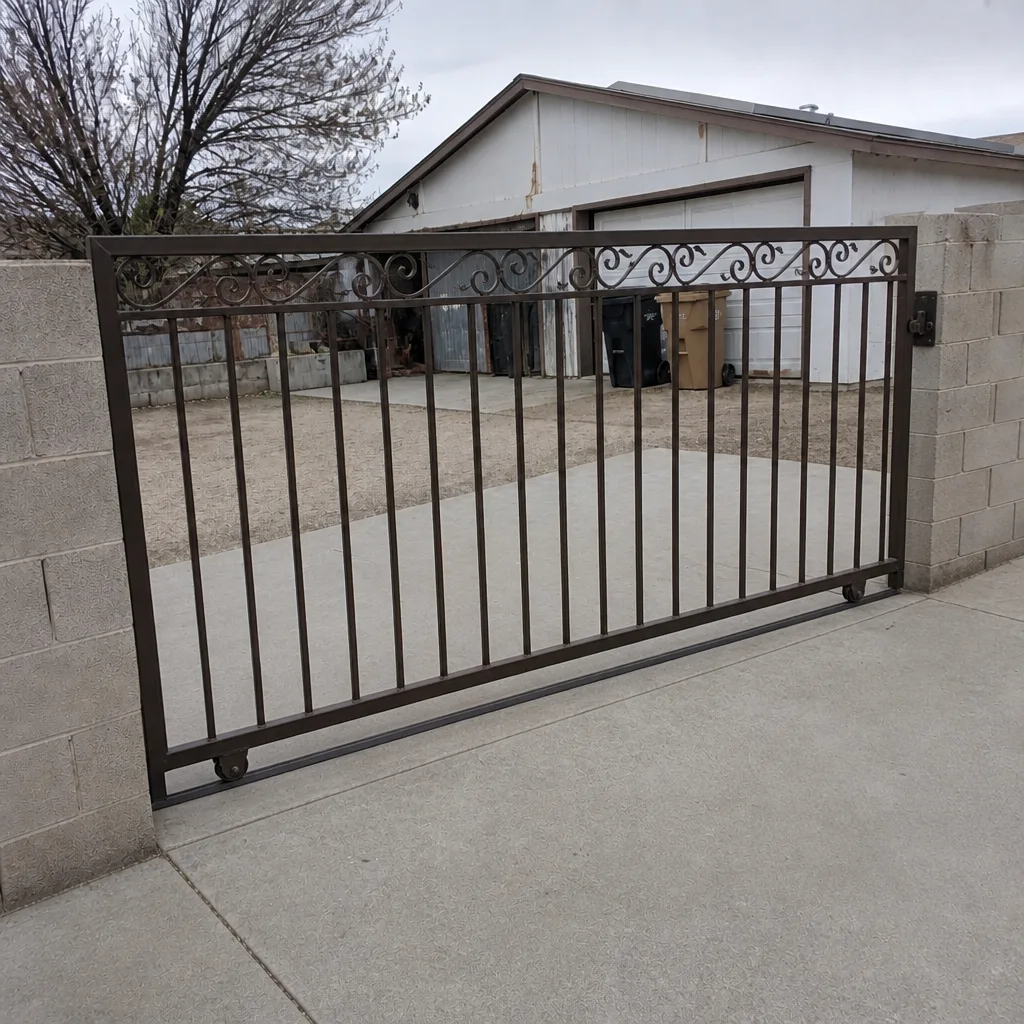
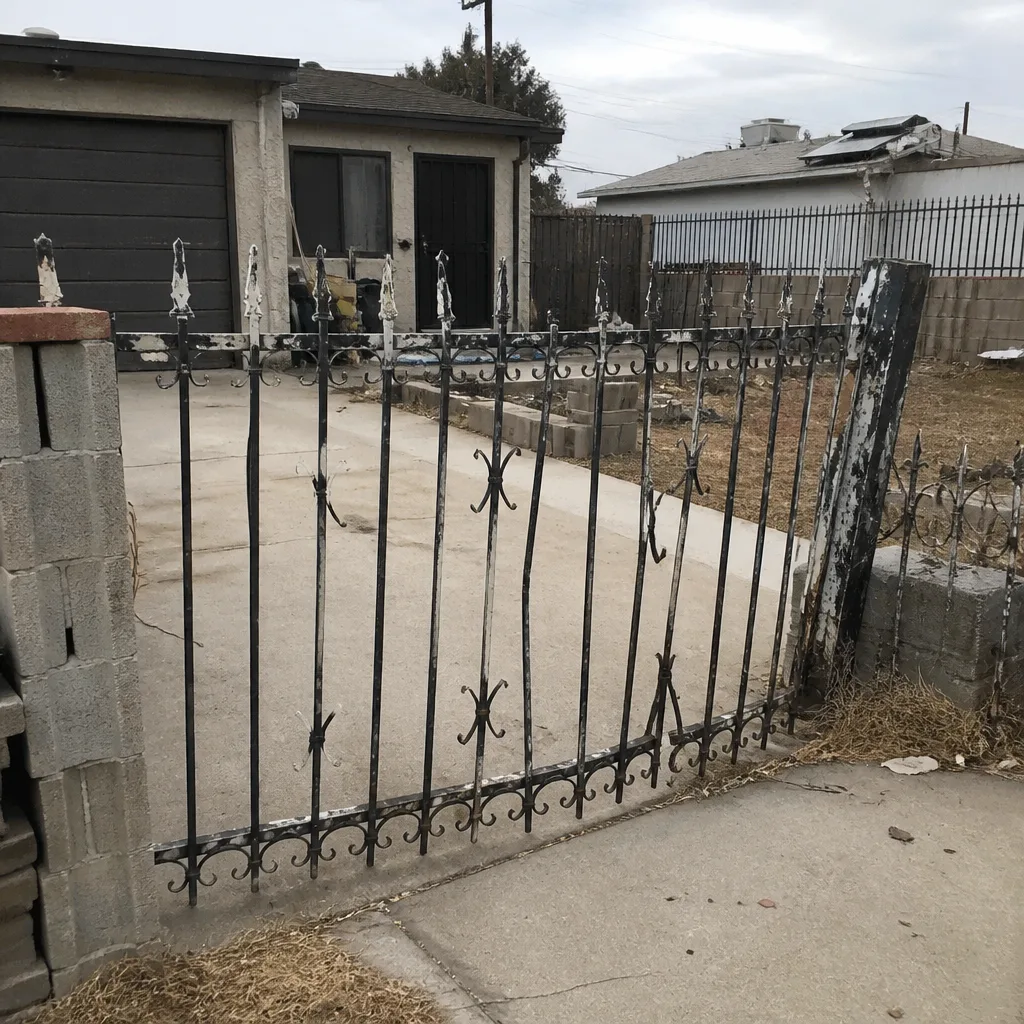
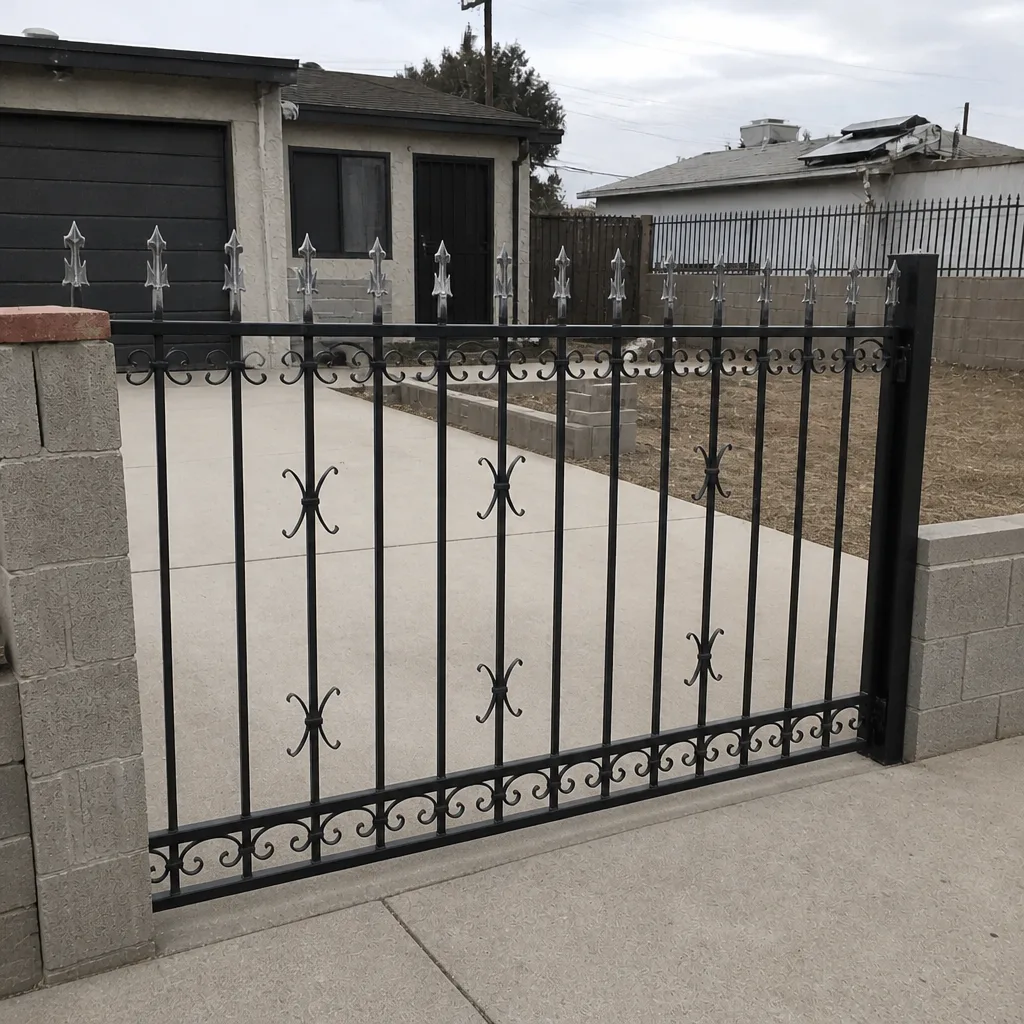
See the difference
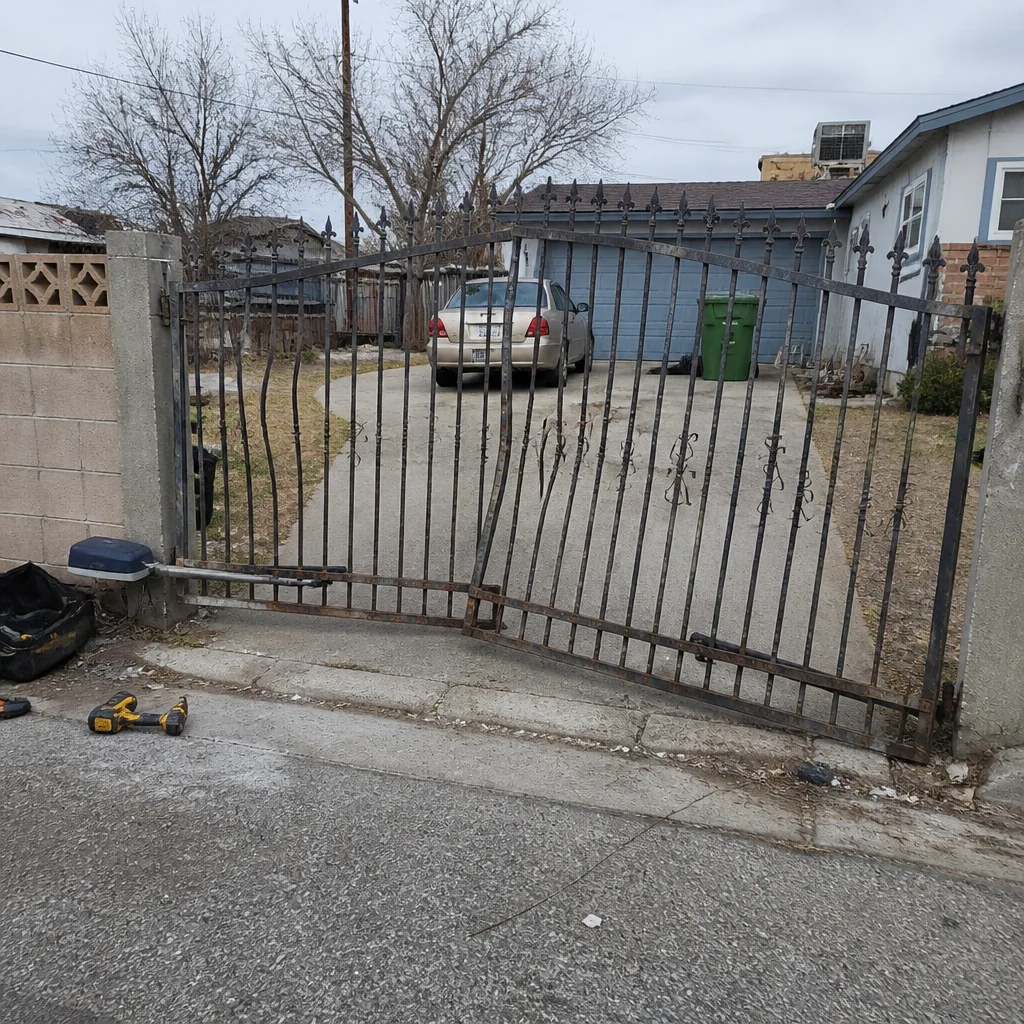 Before
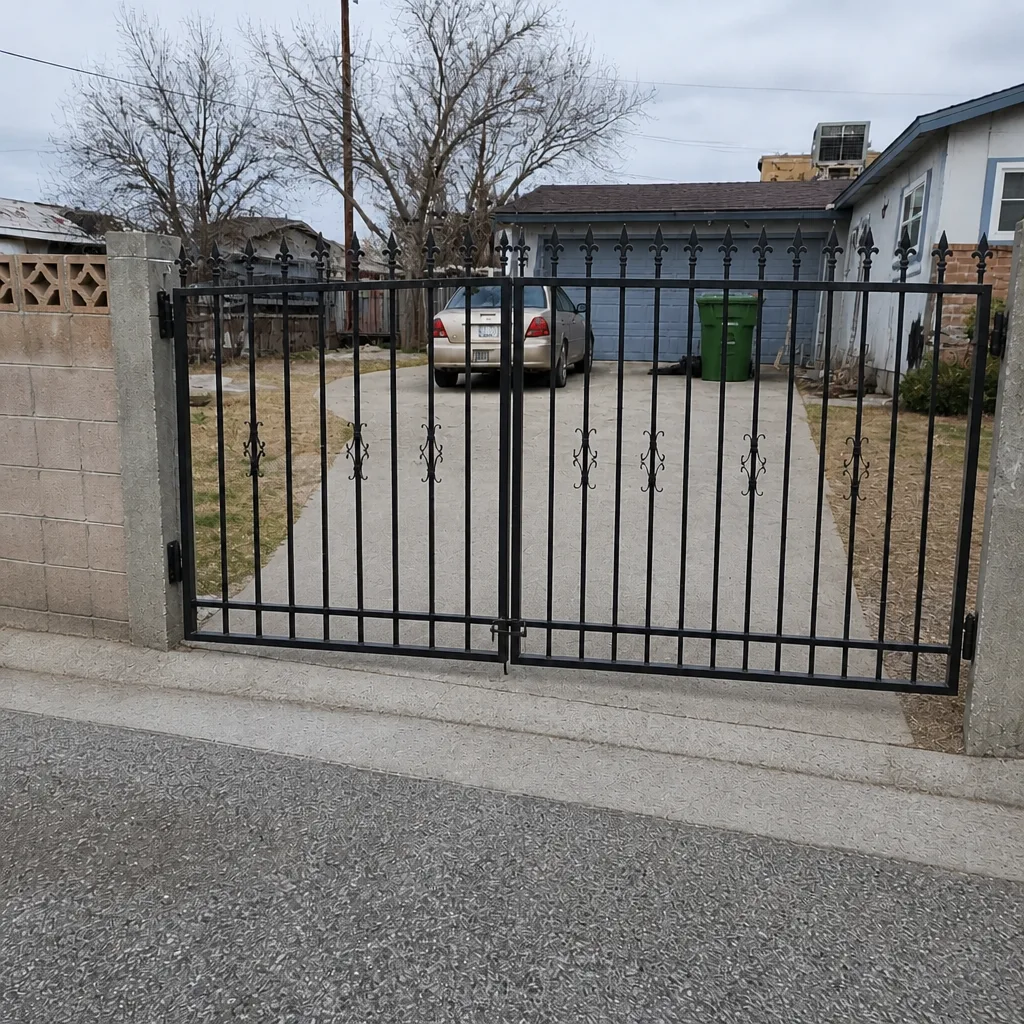 After
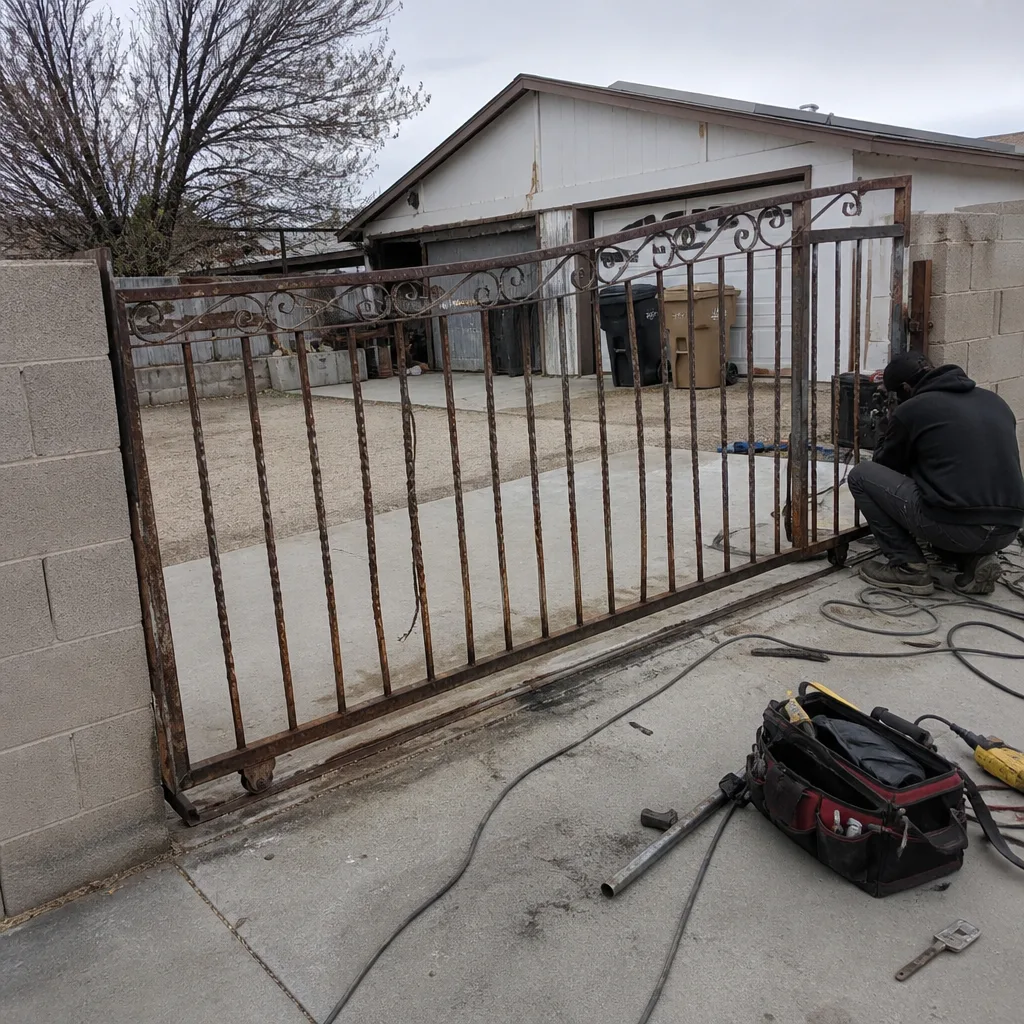 Before
 After
 Before
 After
When to Call a Professional
Some of this you can do yourself, and we’d rather you did. But a few things are worth a trained hand. Call us if a weld shows a stress crack the fingernail catches on, if a post or footing has moved, if a gate has dropped and drags, if a tensioned spring or cable is weak or noisy, or if a brand-name operator is stuttering or reversing mid-cycle. On-site welding is where we keep gates in their own driveway instead of hauling them off for the shop. Gatewood Fence & Gate Sunrise Manor offers free estimates in Sunrise Manor – call (844) 761-8729. Every job comes with the 90-Day Done Right Promise in writing, and we’re honest when a repair is the right call and a replacement is.
Frequently Asked Questions
Two full inspections a year: structural in spring before summer heat stress, and mechanical plus finish in October after monsoon season. Add a two-minute walk-around monthly to catch small wear early. The heat and dust in Sunrise Manor make that late-summer and early-fall timing important, because the moving parts take the most abuse from grit and moisture.
No. Painting over rust seals moisture in and speeds the corrosion underneath. Rust at a weld toe or bottom rail needs to be cleaned back to bare metal, primed, and topcoated, with the seam caulked. If the rust is pitting near a weld, it’s worth having it looked at rather than painting over a structural warning.
Use a heavy lithium or moly grease on hinges and pivots, and a dry-film or PTFE spray on rollers and tracks so grit doesn’t stick. Avoid penetrating sprays and cooking or engine oil, all of which gum up or attract dust in hot weather and damage moving parts over time.
We weld on site whenever we can, which keeps you from being without your gate and lets us build the repair on the actual post it has to fit. A cracked hinge plate gets built back up in your driveway with the gate still hanging where it belongs.
Yes, and that’s the whole point of a proper inspection. A stress crack is a thin sharp line the fingernail catches; surface rust and cosmetic pitting are soft and let the nail slide over. That one test is how we decide whether a weld needs repair or just a touch-up coat.
Yes. We’re certified to service those and several other major brands, and the annual fall pass on an automated gate includes checking arms, chains, limits, and any service interval the manufacturer specifies. It’s worth keeping up with rather than waiting for a stutter to become a motor replacement.
The Bottom Line
A gate is three machines in one coat of paint, and the key is to treat each on its own schedule. Structural welds and posts get your attention every spring, before summer heat stress has a chance to work. Moving hardware gets lubricated and checked every October, after monsoon season grinds it down. The finish coat gets touched up at the first rust bloom, not once a decade. The folding test on a weld – fingernail catches, it’s a repair; nail slides, it’s cosmetic – is the single most useful check you can do yourself. Separate the tracks, keep the calendar, and a gate stays square and opens clean for a long time. If any of it looks past a touch-up, call Gatewood Fence & Gate Sunset Manor at (844) 761-8729 for a free estimate. A live person answers, day or night, and every job carries the 90-Day Done Right Promise in writing.
Written by the team at Gatewood Fence & Gate Sunrise Manor.