
Last updated November 18, 2026
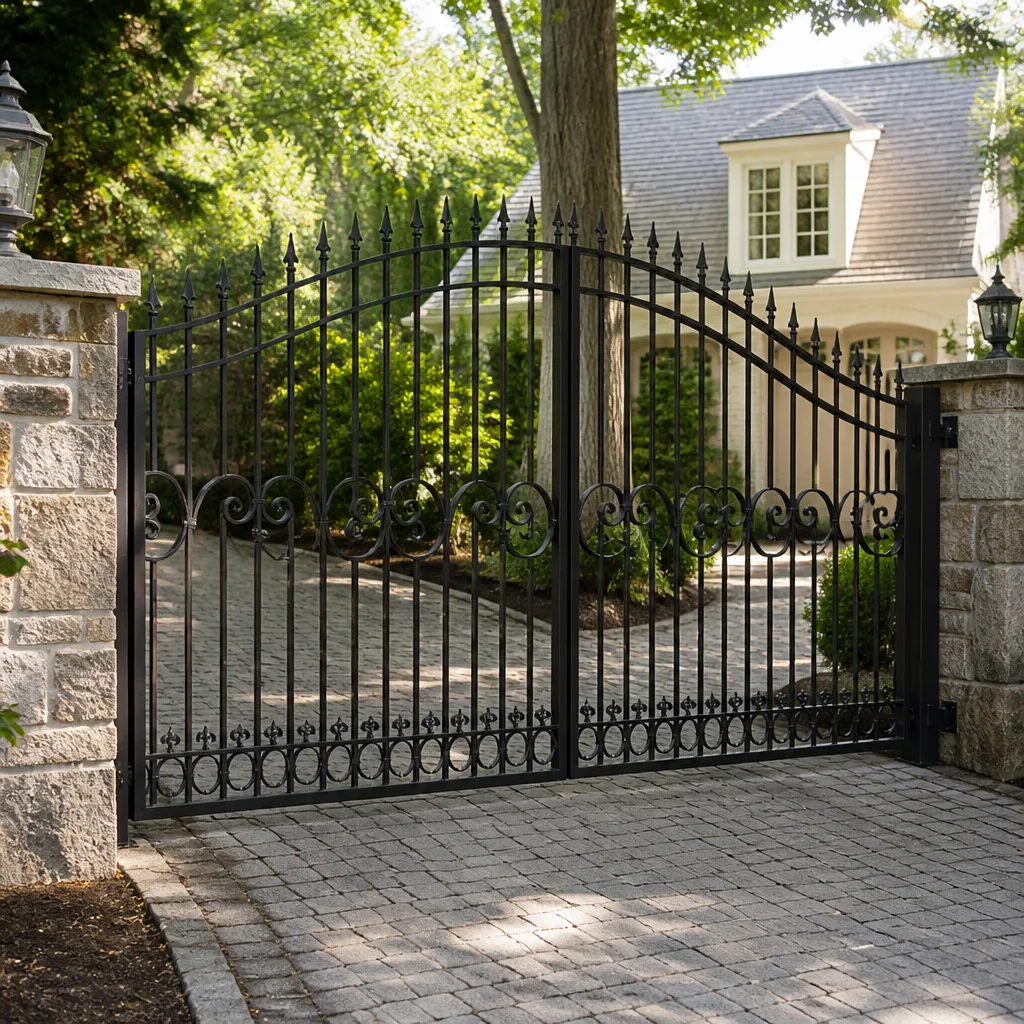 Wrought iron
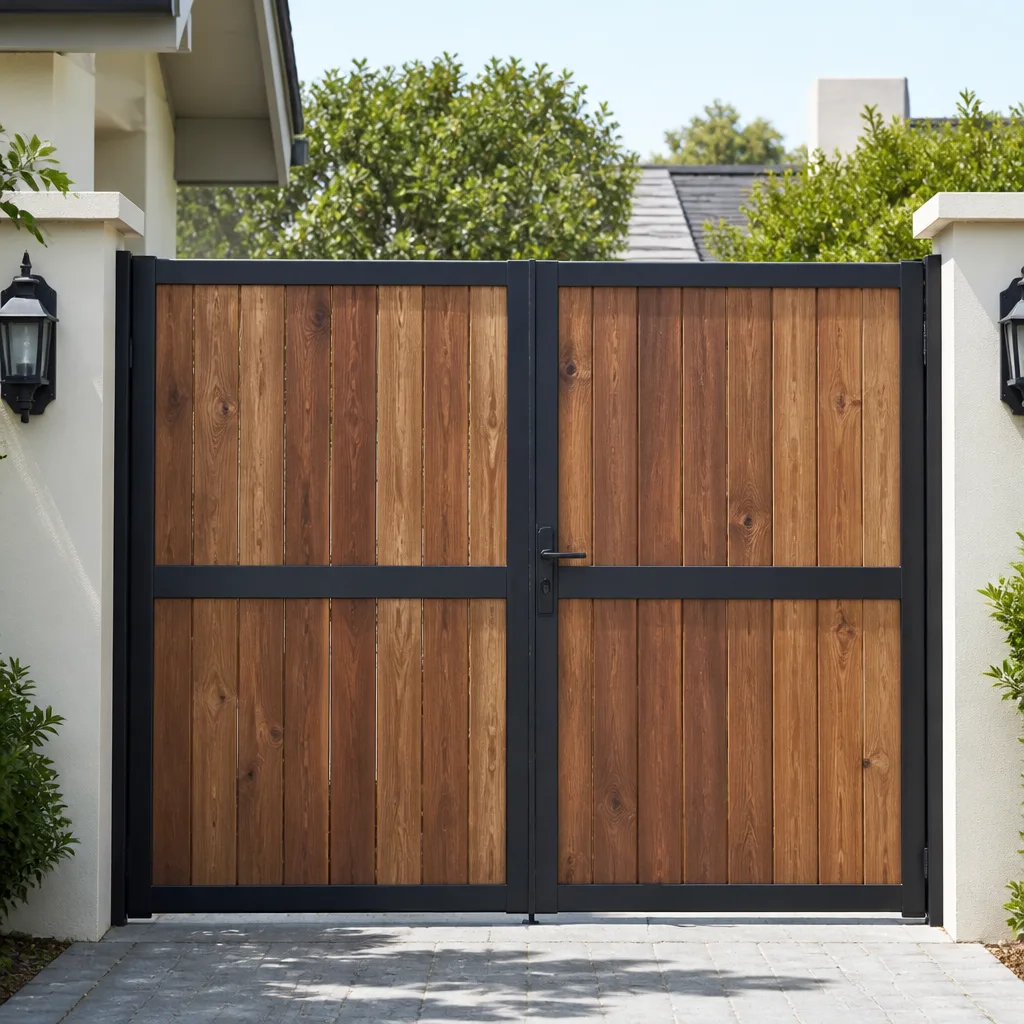 Wood & steel frame
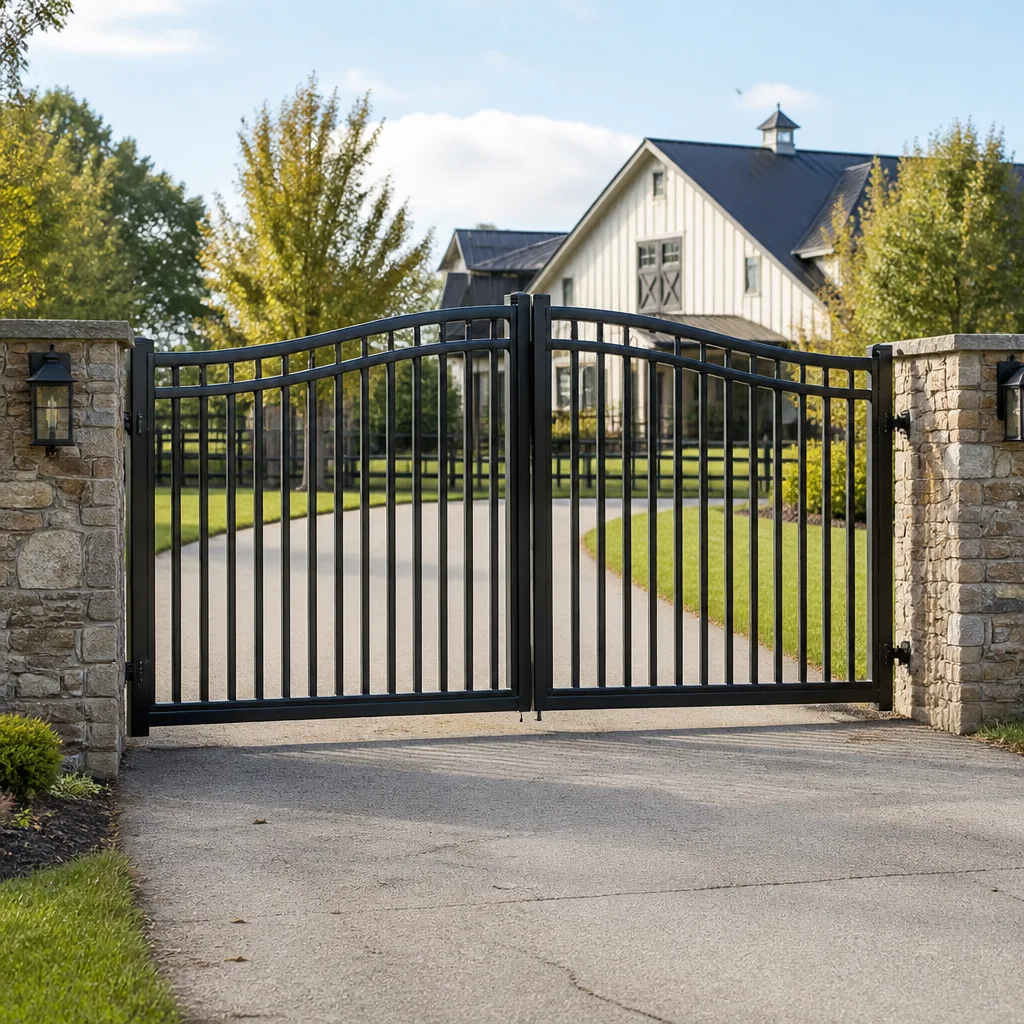 Farm & ranch
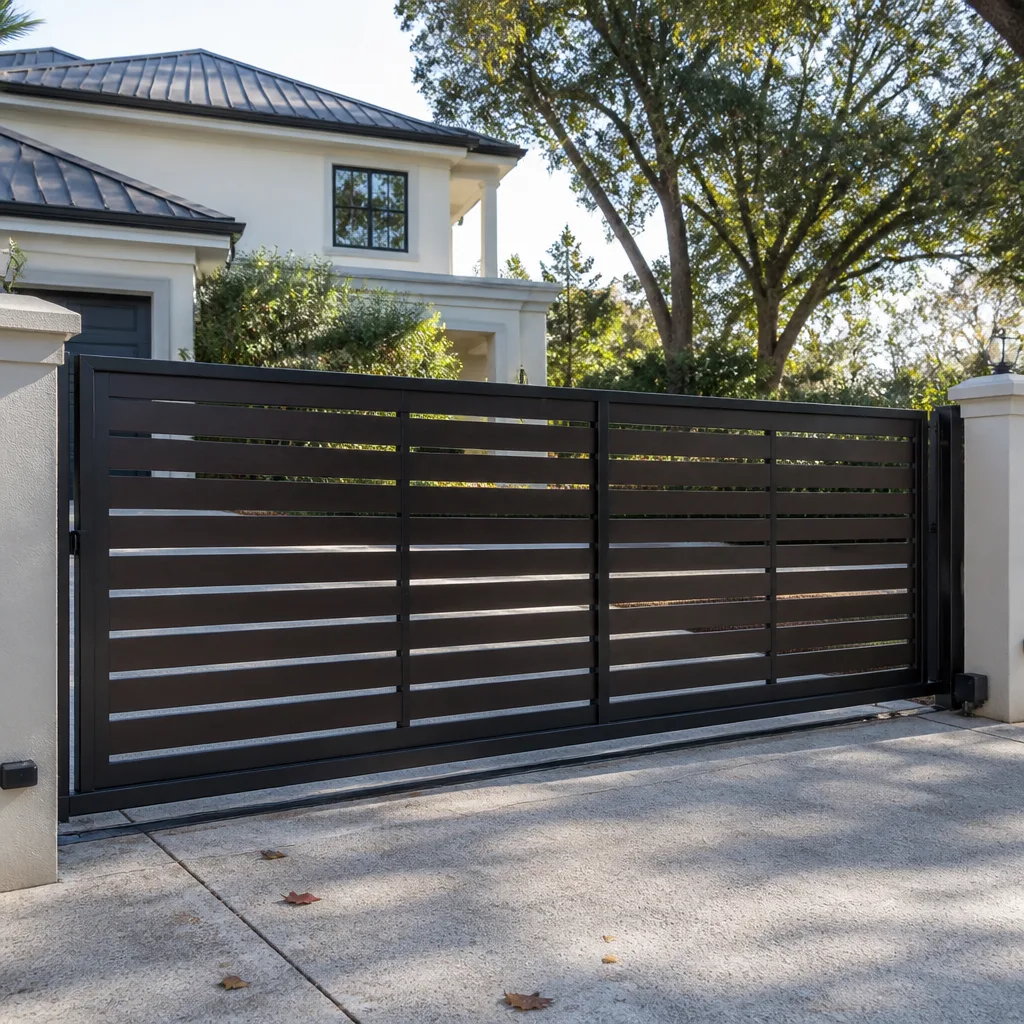 Sliding driveway gates
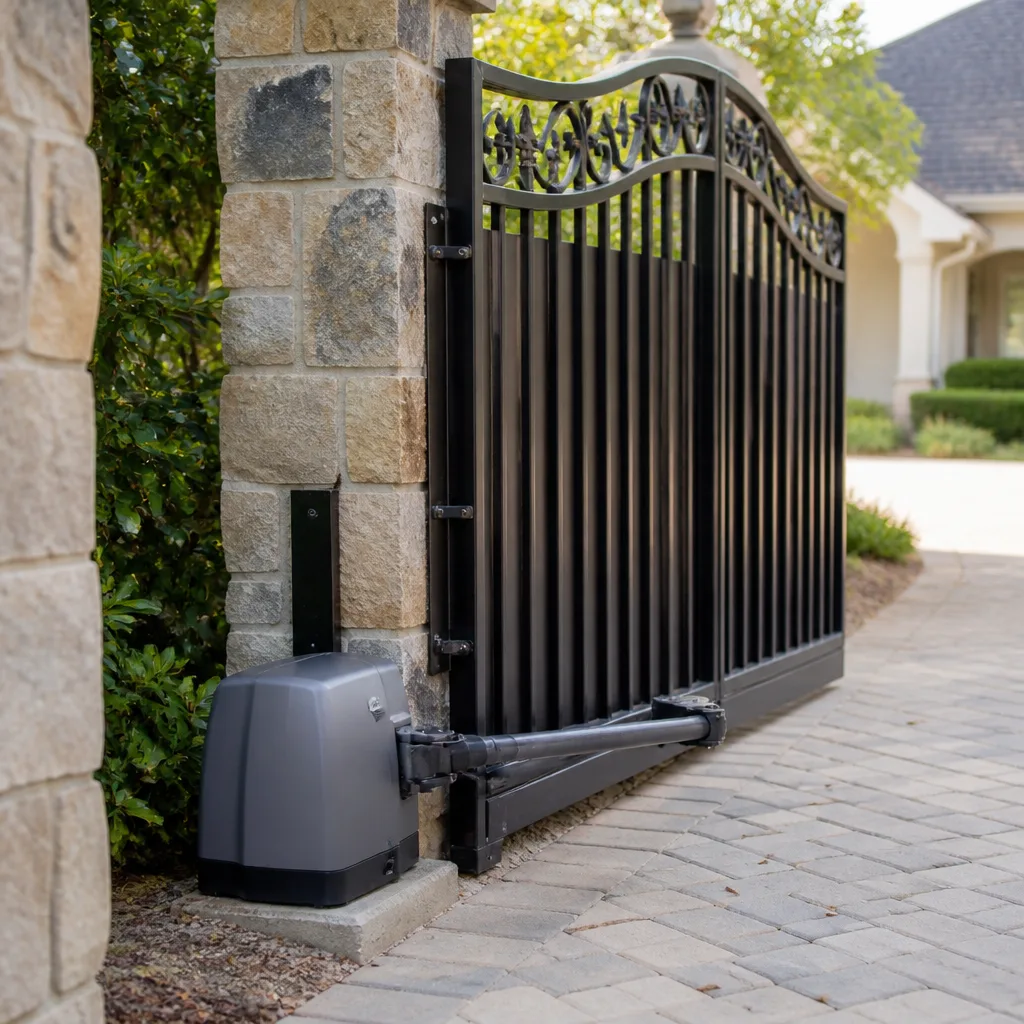 LiftMaster operators
Free on-site gate assessment - hinges, posts, and your LiftMaster or Nice gate operator checked before anything is quoted
The assessment is free and the quote is the invoice.
Get your free estimateHow Long Does Gate Installation Take? Timelines and What to Expect
The gate itself might go in on a Tuesday, but if the concrete footer isn’t cured, you’re staring at a propped-open entry for another 72 hours whether you like it or not. That’s the part most timeline guides skip. They hand you a single number – “a day,” “a week” – and leave out the measure visit, the fabrication lead time, the Clark County permit pull, and the cure window that actually controls your schedule. In Sunrise Manor, where summer heat can bake a footer fast but also warp a steel panel if the crew isn’t watching thermal expansion, those phases matter more than the install itself. This guide works backward from your move-in date or HOA deadline so you know what to plan for and what to ask.
Quick Answer
A standard residential gate installation takes 2 to 6 weeks from the first measure visit to final programming, with the actual on-site install usually taking 1 to 2 days. The single biggest variable isn’t labor – it’s the concrete footer cure time (typically 48 to 72 hours) and, for permitted jobs, the Clark County inspection window. If you’re working backward from a deadline, count six weeks and you’ll rarely be surprised.
Styles & brands we work with
- Wrought iron
- Wood & steel frame
- Farm & ranch
- Sliding driveway gates
- LiftMaster operators
Table of Contents
- The Five Phases of a Gate Installation
- Phase 1: Measure, Order, and Lead Time
- Phase 2: Footer Pour and Cure (The Real Bottleneck)
- Clark County Permits and Inspections
- How Sunrise Manor Heat Affects the Schedule
- Operator Rough-In and Final Programming
- Legitimate Hold-Ups vs. a Contractor Dragging His Feet
- Why Rushing the Footer Cure Causes Sagging
The Five Phases of a Gate Installation
Most guides collapse a gate installation into one vague number. In our experience, a clean installation breaks into five distinct phases, and each one has its own clock. Understanding them separately is what lets you spot a realistic schedule from a fantasy one.
- Measure and order. The site visit, the fabrication order, and the delivery wait for the gate panel and hardware. This is where lead times hide.
- Footer pour and cure. Digging the footer, pouring concrete, and letting it reach sufficient strength before anything heavy is mounted. This is the phase that gets rushed and shouldn’t.
- Panel hang and alignment. Setting posts, hanging the gate, adjusting hinges and latches so it swings true and closes on its own weight.
- Operator rough-in. Running power, mounting the opener arm or slide track, installing safety edges and photo-eyes if the gate is automated.
- Final programming and walkthrough. Dialing in the limit switches, testing the safety reverse, programming remotes or keypads, and showing you how it all works.
For a gate in Sunrise Manor, a straightforward side-yard swing gate with no automation can move through phases 1 through 3 in about a week and a half once materials land. Add an operator and access control, and phases 4 and 5 stretch it out. The Gate Installation in Sunrise Manor page covers what each type of installation includes, but the timing below is where the surprises live.
Phase 1: Measure, Order, and Lead Time
The measure visit is quick – usually under an hour. What takes time is what happens after it. If your gate is a standard size in a common style, the fabricator can often turn it around fast. If it’s a custom width, a specific metal gauge, or a style that has to be built to order, you’re looking at a longer lead time, and that number can swing widely depending on the shop and the season.
Two things drive the wait here:
- Custom vs. stock sizing. A gate that matches an existing opening and a common hinge setup moves faster than one built to a nonstandard width.
- Automation hardware. If you’re adding an opener from Linear, Viking, or Ghost Controls, confirm the specific model is in stock before you commit to a date. A backordered operator can add a week or more on its own.
This is also the phase where we ask about access. If the gate is your only way in and out of the driveway, the schedule has to account for a temporary solution during cure. A homeowner in Sunrise Manor who works from home has a very different tolerance for a propped-open entry than someone who leaves at 6 a.m. and gets back at 7 p.m.
One thing to insist on: get the lead time in writing, tied to a specific model and size. “About a week” from a phone call and “the Viking model you picked ships in nine days” are not the same promise.
Phase 2: Footer Pour and Cure (The Real Bottleneck)
Here’s where a lot of timelines go wrong. The gate panel gets hung, the crew leaves, and the homeowner is told the gate is “done” – but the concrete footer under the posts hasn’t reached full strength. Concrete doesn’t hit its design strength overnight. It cures over days and weeks, and mounting heavy hardware onto a footer that’s still green is the single most common reason gates start to sag within a year or two.
A typical residential footer needs 48 to 72 hours before you should hang serious weight on it, and it keeps gaining strength for weeks after that. In practice, that means:
- Day 1: Dig the footer, set the post anchors or post bases in the forms, pour concrete.
- Days 2 through 4: Cure window. No hanging the gate, no mounting the operator. This is non-negotiable on a footer that’s going to carry a swinging gate.
- Day 4 or 5: Hang the panel, align the hinges, check the swing.
This is why a gate that “goes in on Tuesday” can leave you looking at a propped-open entry for another 72 hours. The crew isn’t dragging its feet. It’s waiting on physics. If someone tells you they’ll pour the footer and hang the gate the same afternoon, ask them how they plan to keep that gate from sagging in eighteen months. The honest answer is they can’t.
The post is everything. A gate sags in the hinge post, not in the middle, and if the post isn’t sitting on a cured footer, the whole assembly is working against itself from day one. Fix the panel without the post – or hang the panel before the post is ready – and you’ll fix it twice.
Clark County Permits and Inspections
A simple residential side gate often doesn’t need a permit. But “often” is doing a lot of work in that sentence. The moment you’re adding an automatic operator, running a new dedicated power circuit, or touching the property line in certain ways, the picture changes, and Clark County can require an inspection that adds days or longer to the schedule.
What to check before you assume you’re in the clear:
- Is the gate automated? Operators that tie into household power and include safety devices frequently pull the job into permit territory.
- Are you running new electrical? A new circuit to a gate operator is electrical work, and electrical work has its own inspection clock.
- Is this a shared or property-line gate? Anything that touches a boundary or a shared access point is worth a call to the county before you pour.
- Are you in an HOA? The HOA’s architectural review can add its own approval window on top of the county’s.
Permit pulls don’t move at your pace. They move at the county’s, and the inspection has to be scheduled in a window, not on demand. A “simple” automated gate in Sunrise Manor can still lose three to seven days to the permit and inspection process alone. Build that into your backward plan rather than discovering it the week of the install.
How Sunrise Manor Heat Affects the Schedule
Concrete cured in Sunrise Manor summer heat is a different animal than concrete cured in a mild spring. Heat accelerates the early cure, which can be good – the footer reaches handling strength faster – but it also means the concrete can set too fast and crack if it isn’t finished and covered properly. A crew that knows the local climate adjusts the mix and the finish; a crew that doesn’t can leave you with a footer that looks fine and fails early.
Steel behaves the same way. A black steel gate panel dropped onto a hot driveway in July will expand, and if it’s hung tight while it’s expanded, it’ll bind when it cools later in the evening. The gap you set at 2 p.m. isn’t the gap you have at 9 p.m. A crew that accounts for thermal expansion sets the hinges and clearances with that swing in mind. A crew that doesn’t hands you a gate that grinds every evening.
This is one of those local realities that doesn’t show up in a generic installation guide. The heat here doesn’t just make the job uncomfortable – it changes how you pour, how you hang, and how you program the limits on an automatic operator. We’ve seen a gate that worked perfectly at install bind two days later because nobody accounted for the afternoon temperature swing. The word “sunrise” is in the name of this town for a reason; the cool hours are early, and the install schedule should respect that.
Operator Rough-In and Final Programming
If your gate is going to open by itself, phases 4 and 5 are where the real finish work happens. Rough-in means the power run, the mounting of the operator arm or slide track, and the safety devices. Final programming is the limit switches, the safety reverse test, the remote and keypad setup.
Where the schedule can stretch here:
- The power run. If there’s no existing circuit at the gate location, running power is its own job and may need its own inspection. Confirm this before the pour, not after.
- Safety edges and photo-eyes. An automated gate needs working safety devices, and they have to be tested and tuned. Budget an hour minimum for that on its own.
- Brand-specific setup. A DoorKing access controller, a Linear operator, a LiftMaster unit – each has its own programming flow. A crew that knows the brand moves faster than one reading the manual for the first time.
This is the phase where a shop that services the major brands pays off. We’re certified to service nine major gate brands, including DoorKing, Linear, Viking, and Ghost Controls, and that means the programming step is a known quantity rather than an experiment. Final programming and walkthrough on a single automated swing gate is usually a couple of hours. On a more complex access-control setup, plan for the better part of a day.
One more note: don’t schedule the final programming for the same day as the footer pour. Chain those steps correctly and the whole job runs clean. Compress them and you’re asking for a callback.
Legitimate Hold-Ups vs. a Contractor Dragging His Feet
Not every delay is a bad sign, and not every “we’re waiting on materials” is honest. The trick is knowing which is which and asking the right questions before you sign.
Legitimate hold-ups look like this:
- The fabricator’s lead time on a custom panel is genuinely longer than expected, and the contractor can name the shop and the reason.
- The county inspection window is a specific date, not “sometime next week.”
- The concrete cure needs its full window, and the contractor tells you why rather than hanging early.
- A backordered operator model from a specific brand, with a ship date attached.
A contractor dragging his feet looks like this:
- “We’ll get to it when we get to it” with no date.
- The same vague excuse two weeks running with no new information.
- A footer poured and the gate hung the same afternoon – that’s the opposite of a hold-up, and it’s worse.
- No written schedule at all, just a verbal “about a week.”
Questions to ask before you commit:
- What’s the lead time on the specific panel and operator, in days?
- When does the footer get poured, and when does the gate get hung relative to that?
- Does this job need a permit or inspection, and what’s that window?
- Can I get the schedule in writing with dates, not ranges?
If you already have a written estimate from another company and want a second set of eyes on the timeline, bring it by. We give a free second opinion on any written estimate, and a schedule with holes in it usually shows.
Why Rushing the Footer Cure Causes Sagging
This is the heart of the whole thing, so it’s worth slowing down. A gate is a lever. The panel hangs off a hinge post, and every time it swings, it puts a torque on that post. If the post is anchored into concrete that hasn’t reached strength, the concrete deforms under that load, the post shifts slightly, and the gate starts to sag. It doesn’t happen on day one. It happens over the next year or two, which is exactly why it’s easy to get away with and hard to catch.
Show me the gate closing on its own and I’ll show you where it’s failing. A gate that drifts shut or hangs open usually has a post problem, not a hinge problem, and the post problem often traces right back to a footer that was hurried. The fix is to pull the post, re-pour, and reset – which is more work than doing it right the first time ever would have been.
So when a timeline looks long, check where the days are going. If they’re going into cure time, that’s the schedule working correctly. If they’re going into something vague with no explanation, that’s a different problem. A properly built gate in Sunrise Manor should outlast the fence it hangs on. The footer is where that starts.
Common Mistakes to Avoid
- Hanging the gate the same day as the pour. The footer needs its full cure window. A gate hung early will sag within a year or two, and you’ll pay to fix it.
- Ignoring the afternoon heat swing. Hanging a steel panel tight in the middle of a Sunrise Manor July afternoon leaves you with a gate that binds every evening as it cools. Set clearances with expansion in mind.
- Assuming no permit needed because it’s “just a gate.” An automated operator or a new power run frequently pulls the job into Clark County inspection territory. Check before you pour.
- Skipping the lead-time confirmation. “About a week” is not a date. Get the specific model, the specific size, and the ship window in writing.
- Running power after the footer. If there’s no circuit at the gate location, run it before the pour, not after. Doing it backward adds days and mess.
- Letting a contractor swap parts that don’t need swapping. If a hinge or latch is fine, replacing it just adds cost and time. Repair-first saves both.
- Not asking for the schedule in writing. A verbal timeline is a wish. A written one with dates is a plan you can hold someone to.
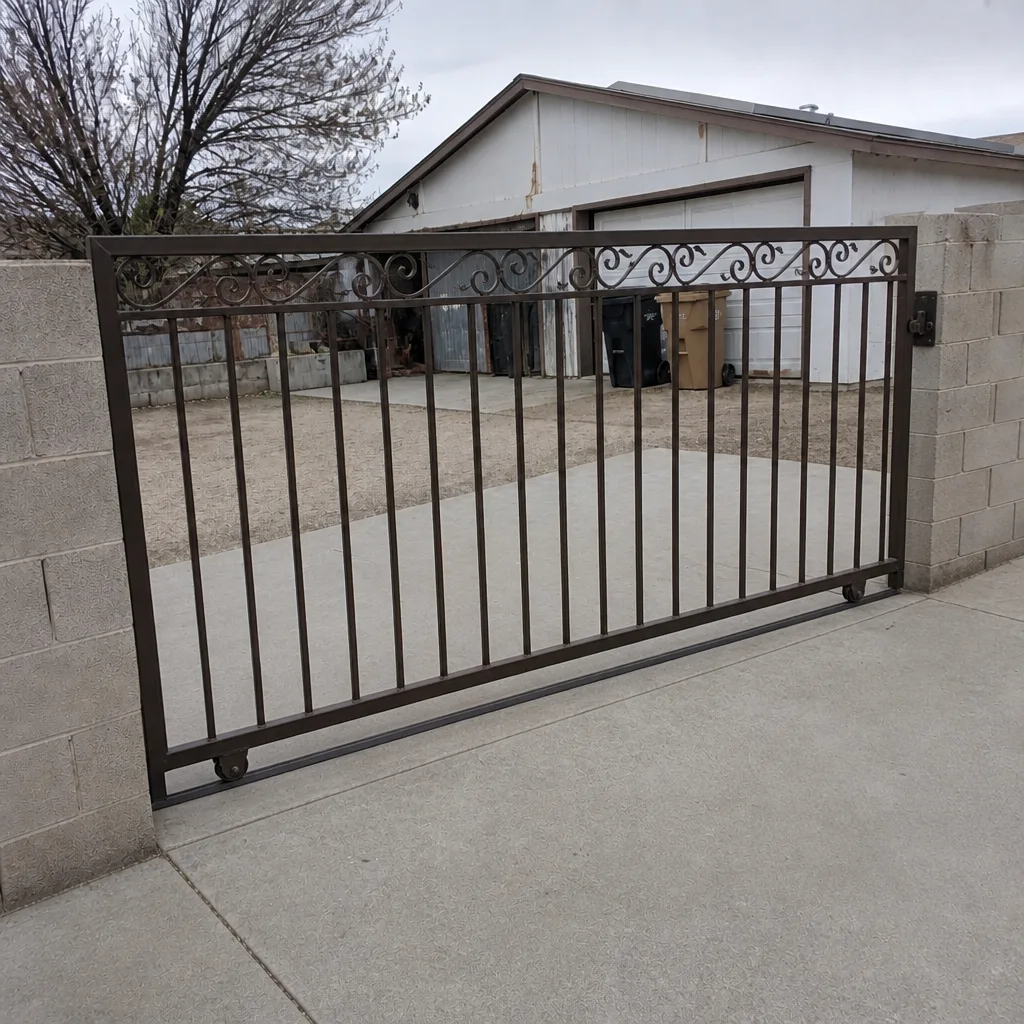
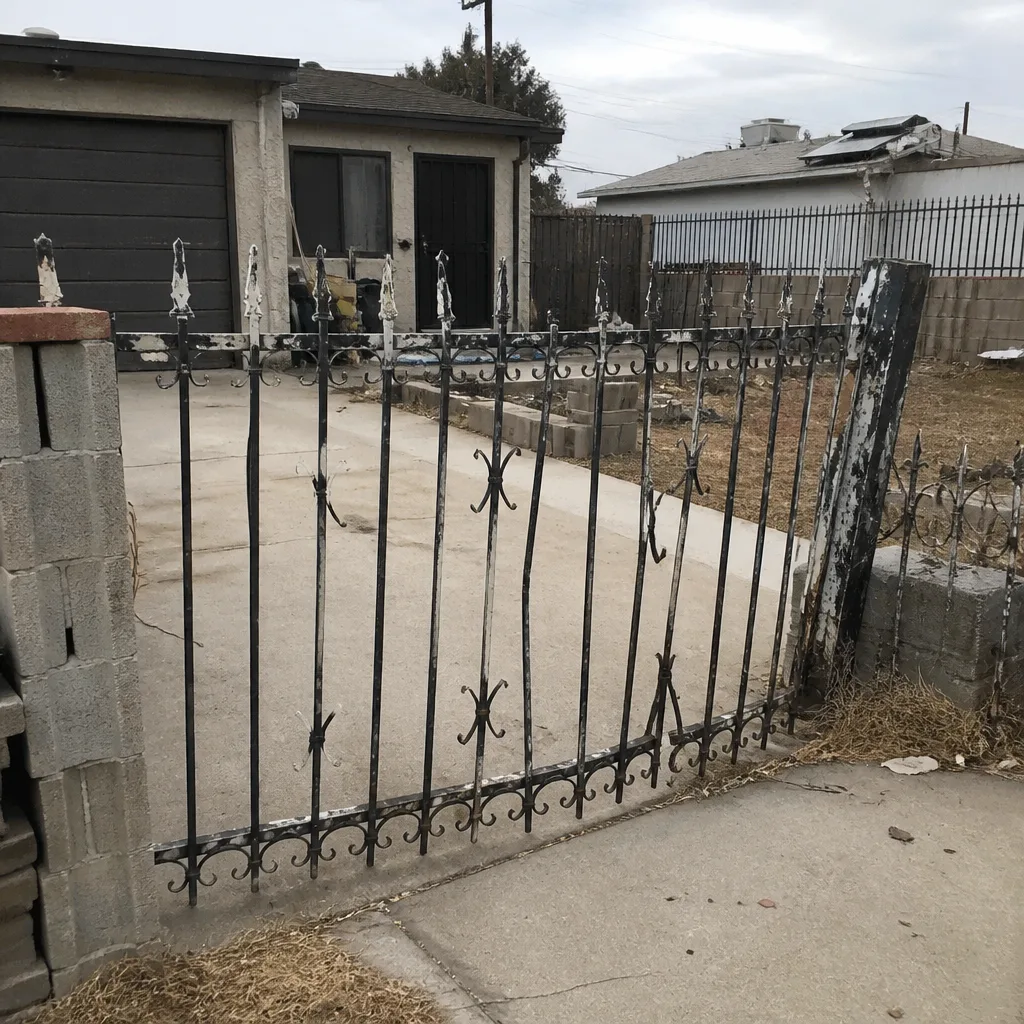
See the difference
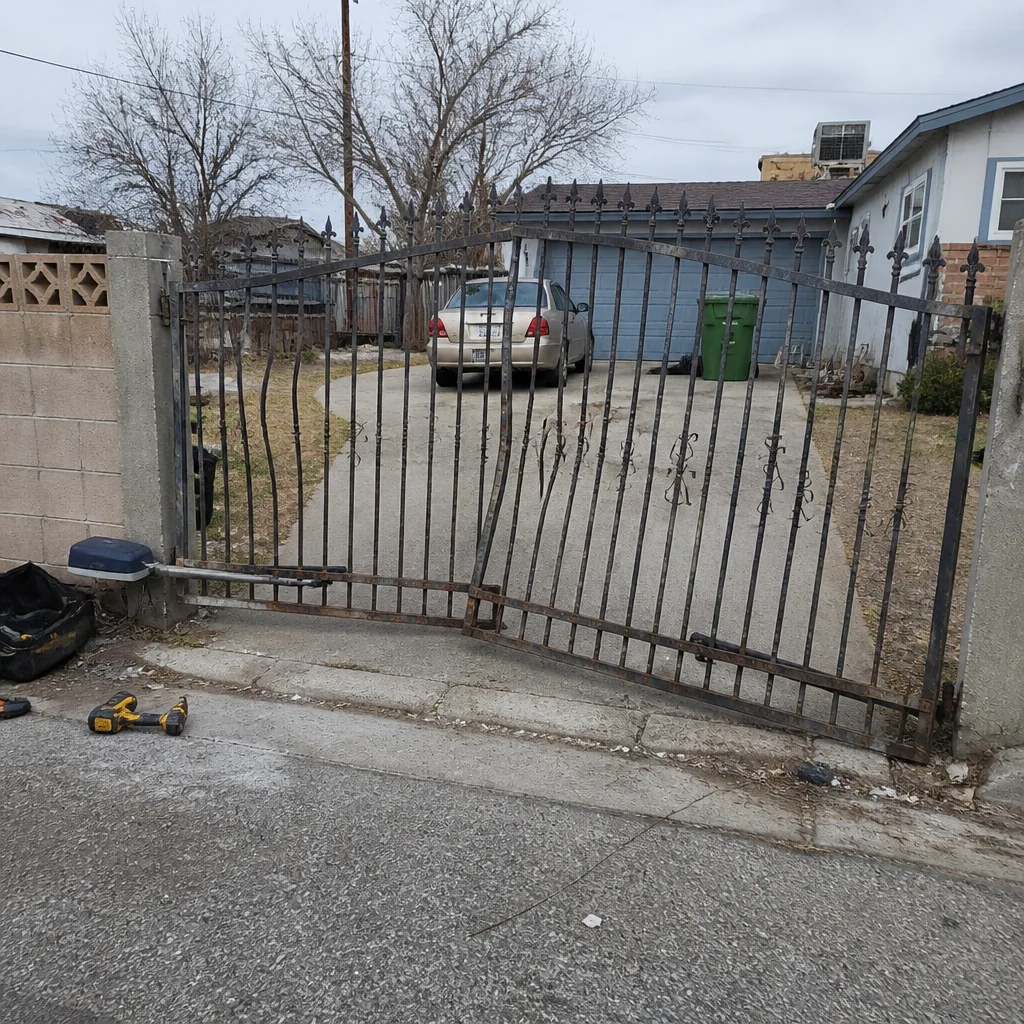 Before
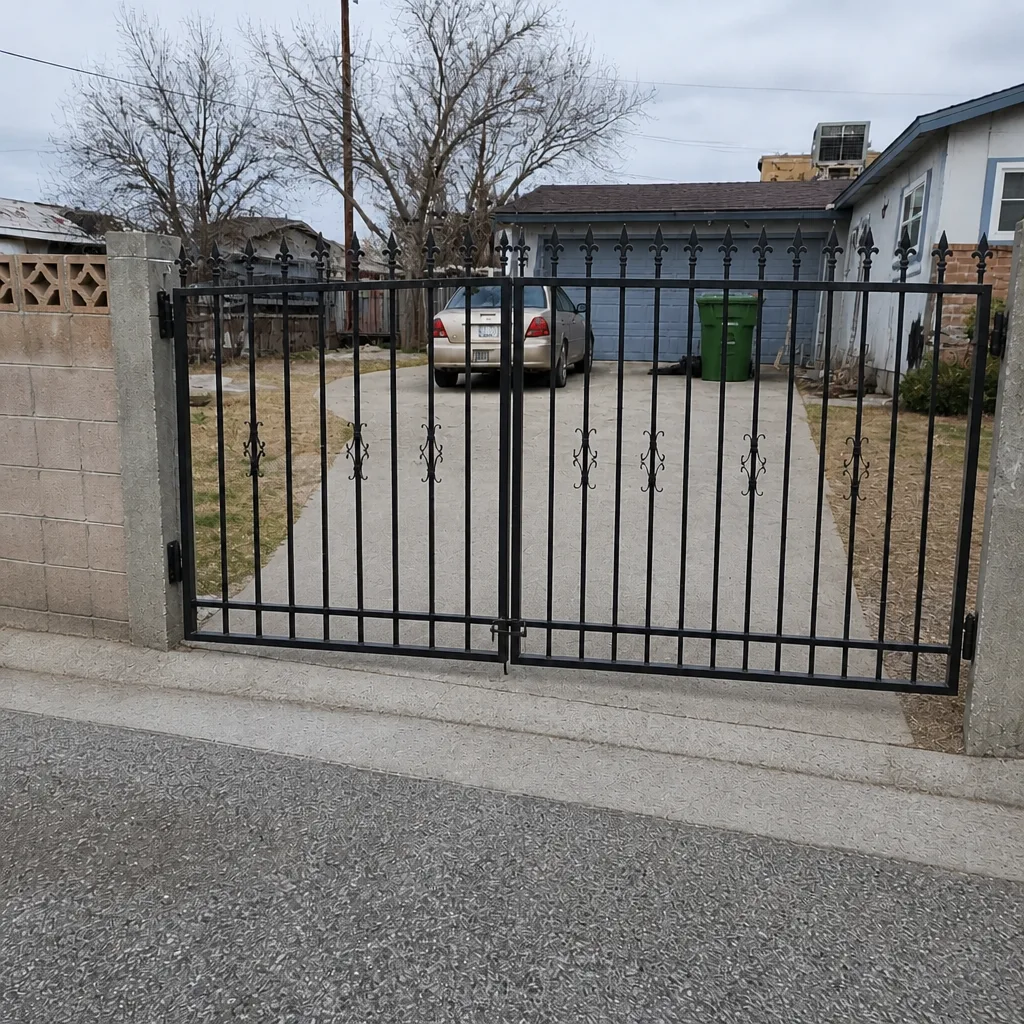 After
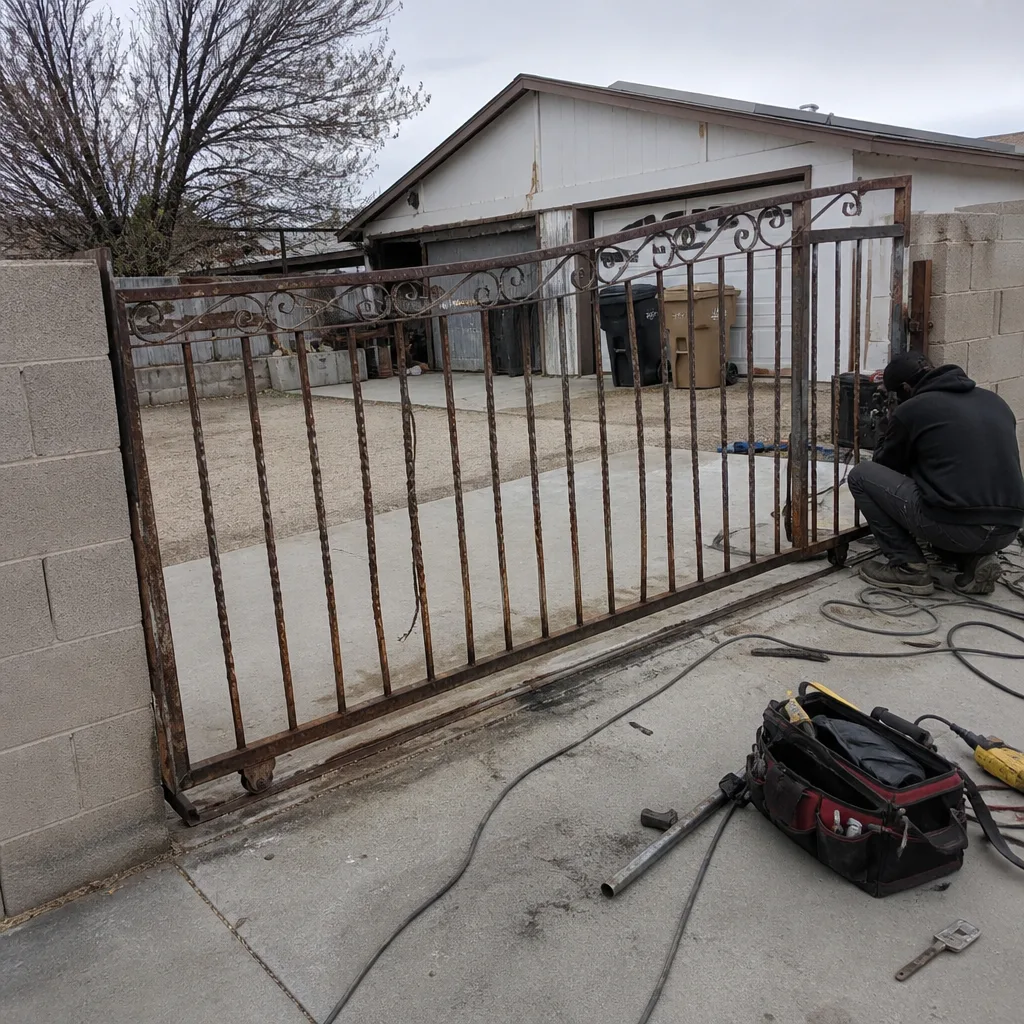 Before
 After
 Before
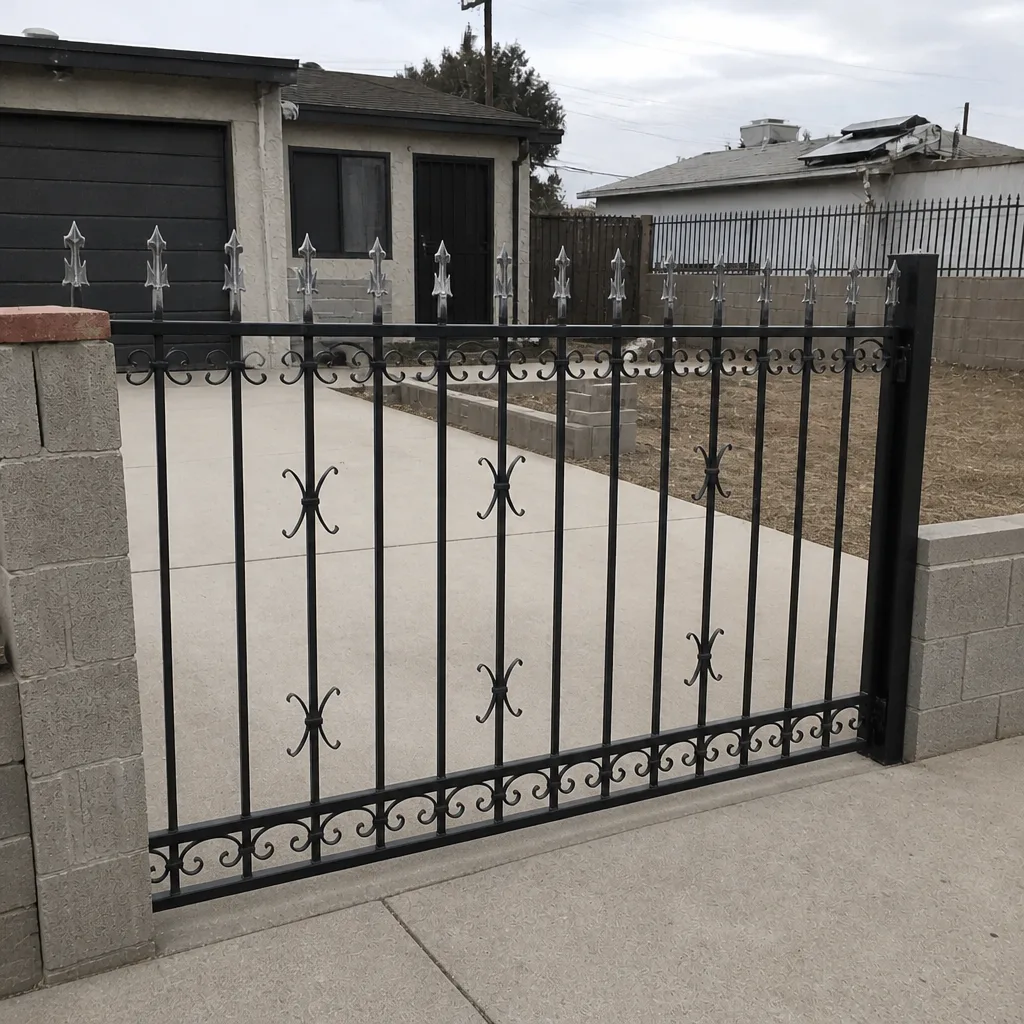 After
When to Call a Professional
Some gate work is genuinely a call-a-pro situation. If the footer needs to be poured, if the gate is heavy steel or automated, if there’s any question of a permit, or if you’re working backward from a firm move-in date or an HOA deadline, get someone who does this every week. The risk isn’t just a crooked gate – it’s a propped-open entry for days and a post that fails in two years. A gate is a structural project, not a weekend project. Gatewood Fence & Gate Sunrise Manor offers free estimates in Sunrise Manor – call (844) 761-8729 and we’ll work backward from your deadline with you.
Frequently Asked Questions
A standard residential gate installation takes 2 to 6 weeks from the first measure visit to final programming, with 1 to 2 days of actual on-site install. The biggest variable is footer cure time, which is 48 to 72 hours, plus any permit and inspection window. Call (844) 761-8729 for a free estimate tied to your specific gate and deadline.
No, not correctly. The footer has to cure for 48 to 72 hours before the gate can be hung, so even a simple swing gate is a multi-day project from pour to usable gate. Anyone promising a one-day install is either skipping the cure or pouring and hanging on the same afternoon, and both lead to a gate that sags. Call us for a realistic schedule instead.
A gate that sags within a year almost always has a footer or post problem, not a hinge problem. The most common cause is a footer that was rushed – the gate was hung before the concrete reached strength, so the post shifted under load. A proper repair means addressing the post, not just adjusting the hinges. Call (844) 761-8729 and we’ll take a look at where it’s actually failing.
It depends on the gate. A simple non-automated residential side gate often doesn’t need one, but an automated operator or a new power run frequently does pull in a Clark County inspection. The safe move is to check before the pour, not after. Call us and we’ll walk through your specific situation.
Heat speeds up the early concrete cure but can also cause the footer to set too fast and crack if it isn’t finished properly. Steel gate panels expand in the afternoon heat, so a crew that sets hinges and clearances without accounting for that swing will hand you a gate that binds every evening. A local crew adjusts the mix, the finish, and the hinge gap for the climate. Call (844) 761-8729 for a free estimate.
A legitimate delay has a specific reason and a date attached – a named fabricator lead time, a scheduled inspection window, a known cure period. Stalling looks like the same vague excuse for two weeks with no date and no written schedule. Ask for the schedule in writing with dates, not ranges, before you commit. And if you already have an estimate from someone else, we’ll give you a free second opinion on it.
The Bottom Line
The honest answer to “how long does gate installation take” is 2 to 6 weeks, and the days that control the schedule are the ones nobody puts in the brochure: the footer cure, the permit window, and the local heat. Work backward from your deadline, count six weeks, and confirm the lead time on your specific panel and operator in writing. Don’t let anyone hang a gate on a green footer – that’s the whole ballgame. If you want a schedule built around your actual move-in date or HOA deadline, we’ll sit down and map it out with you.
For a free estimate on gate installation, repair, or automation in Sunrise Manor, call (844) 761-8729. A live person answers around the clock, and if you already have a written estimate from someone else, bring it by for a free second opinion. You can also start at our Gatewood Fence & Gate Sunrise Manor home page, or jump straight to Gate Repair in Sunrise Manor, Gate Motor & Opener in Sunrise Manor, and the Gate Installation in Sunrise Manor page. Every job carries the 90-Day Done Right Promise in writing, and seniors and veterans get a permanent 10% discount.
Written by the team at Gatewood Fence & Gate Sunrise Manor.