
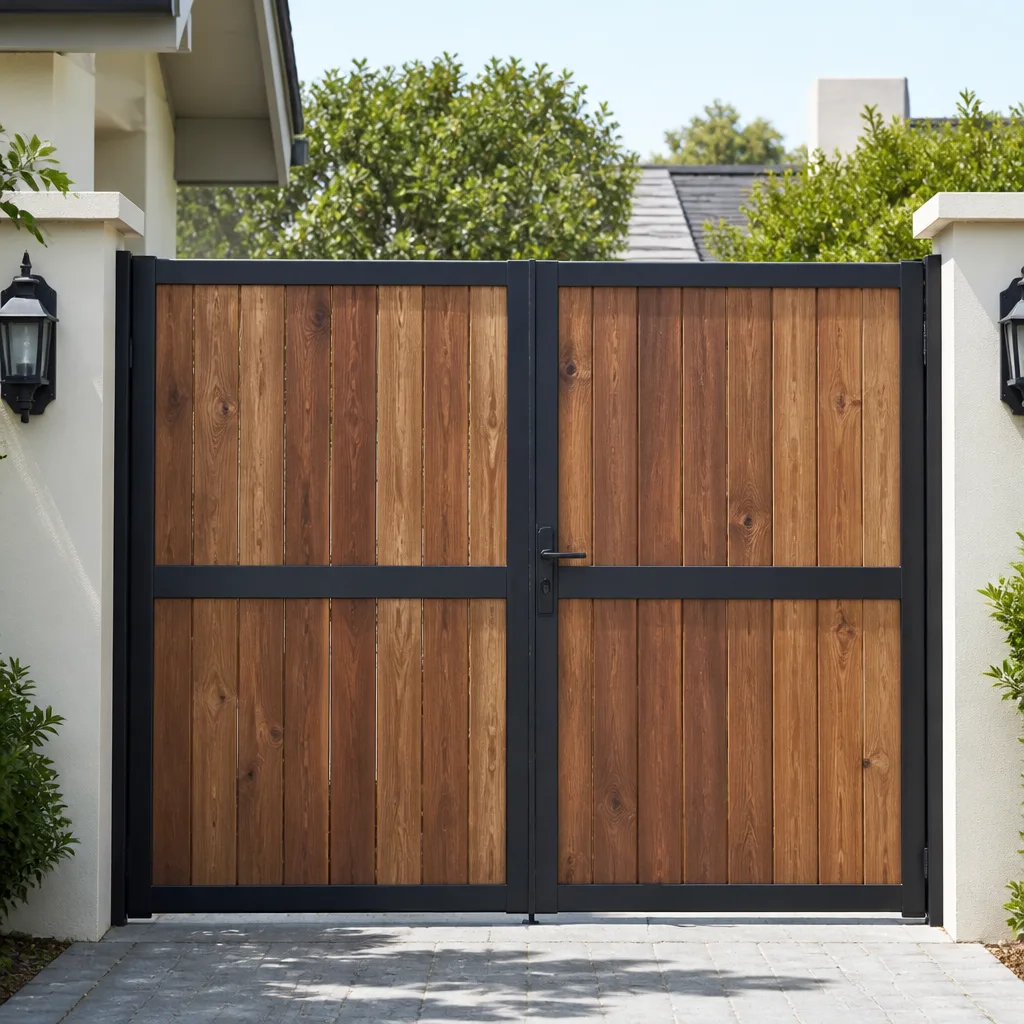
 Wood & steel frame
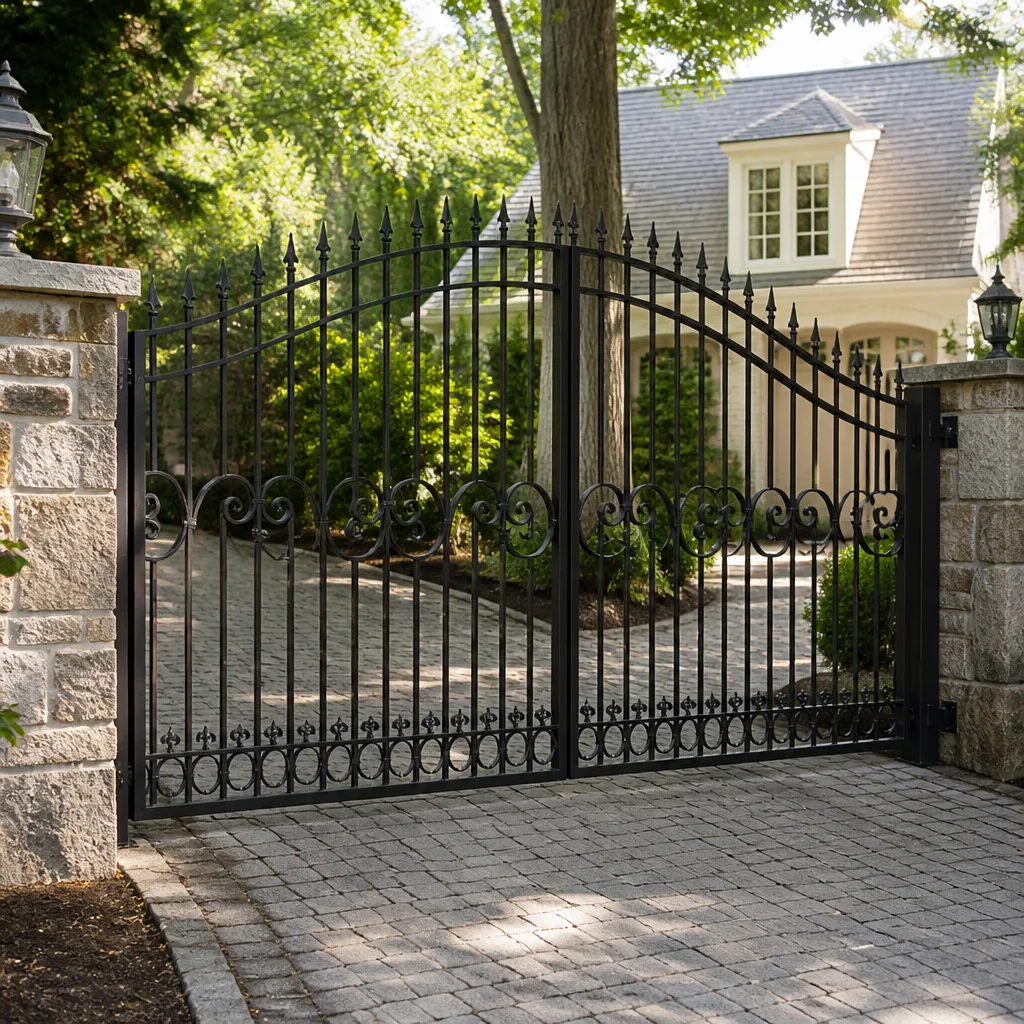 Wrought iron
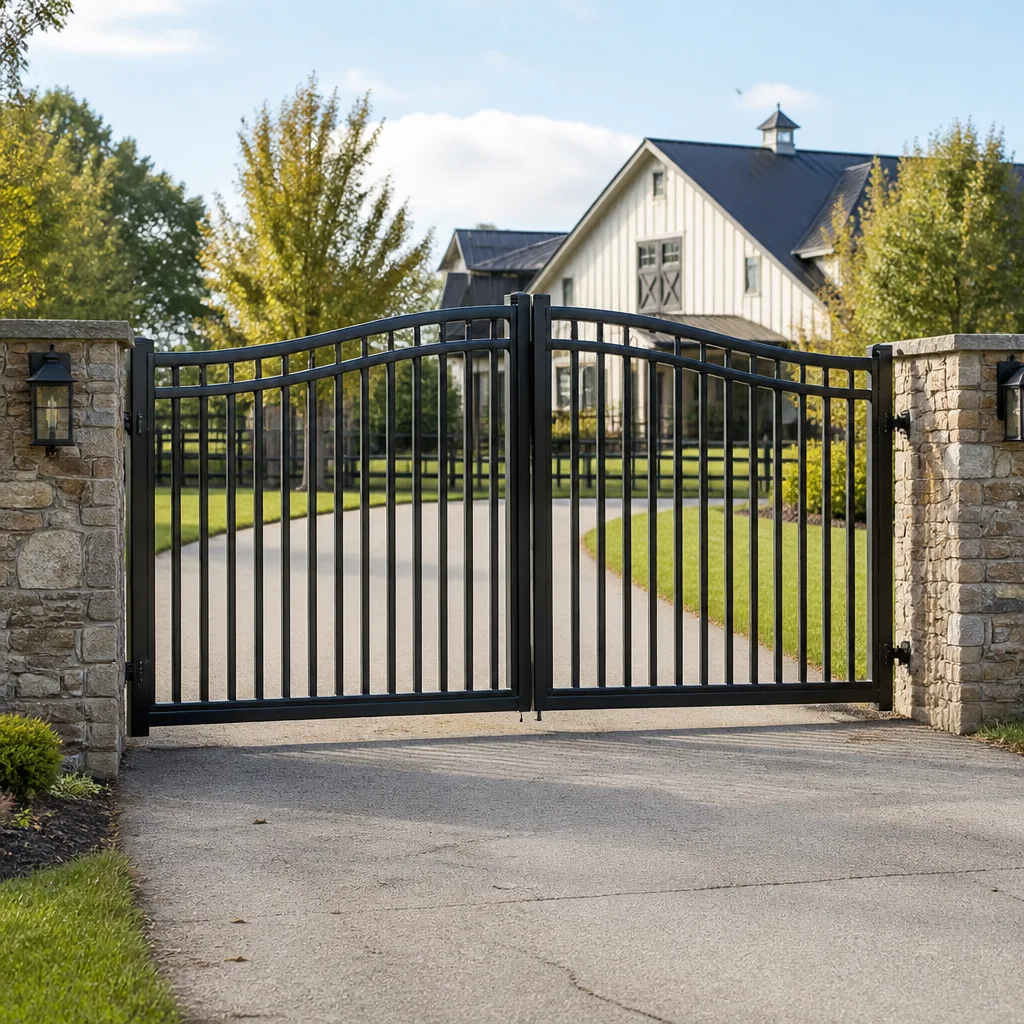 Farm & ranch
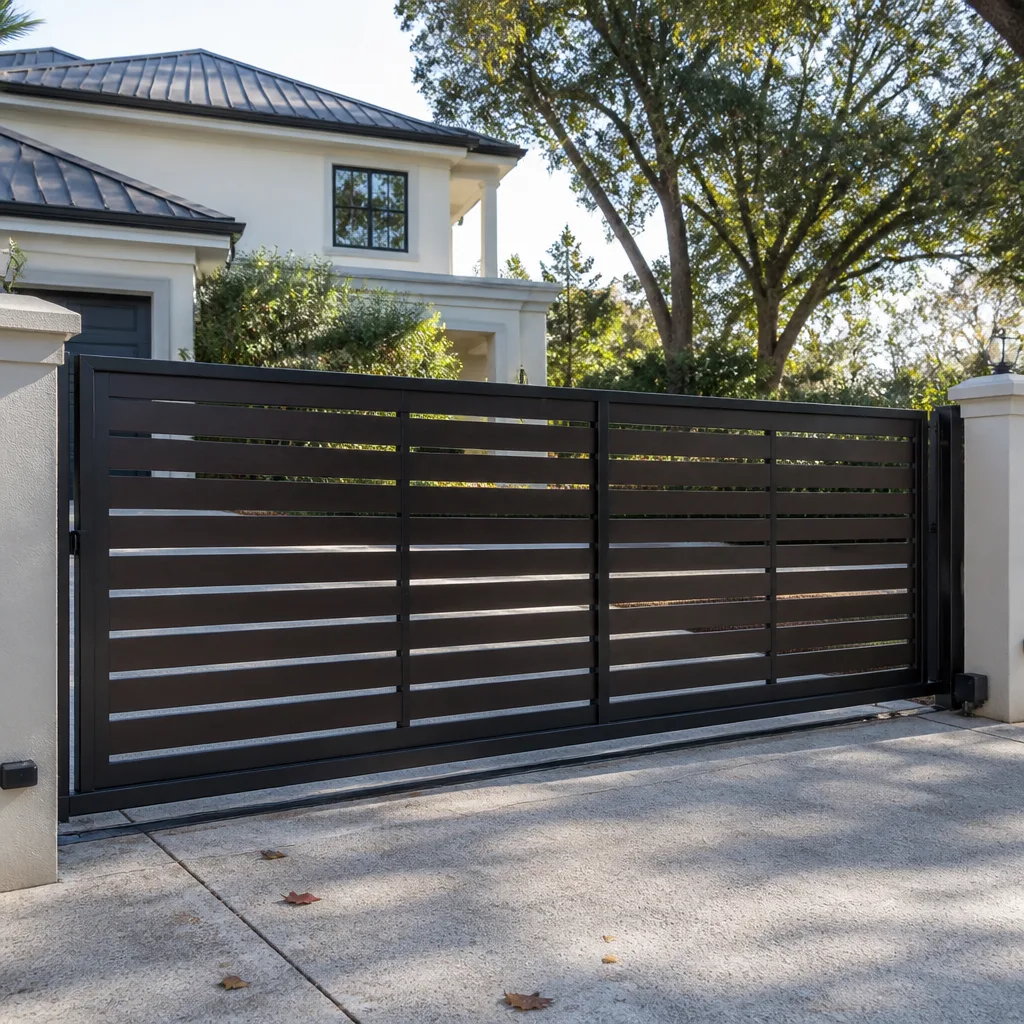 Sliding driveway gates
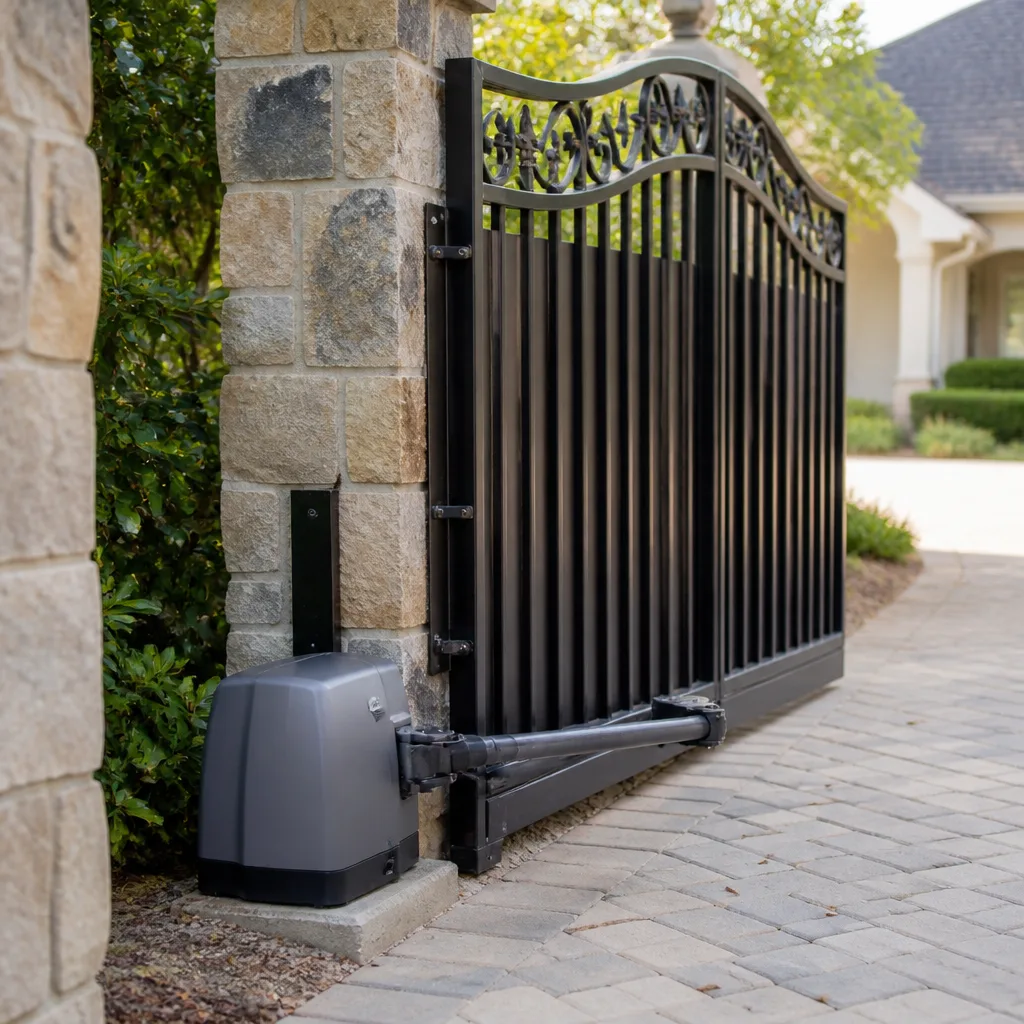 LiftMaster operators
Free on-site gate assessment - hinges, posts, and your LiftMaster or Nice gate operator checked before anything is quoted
The assessment is free and the quote is the invoice.
Get your free estimateStyles & brands we work with
- Wrought iron
- Wood & steel frame
- Farm & ranch
- Sliding driveway gates
- LiftMaster operators
See the difference
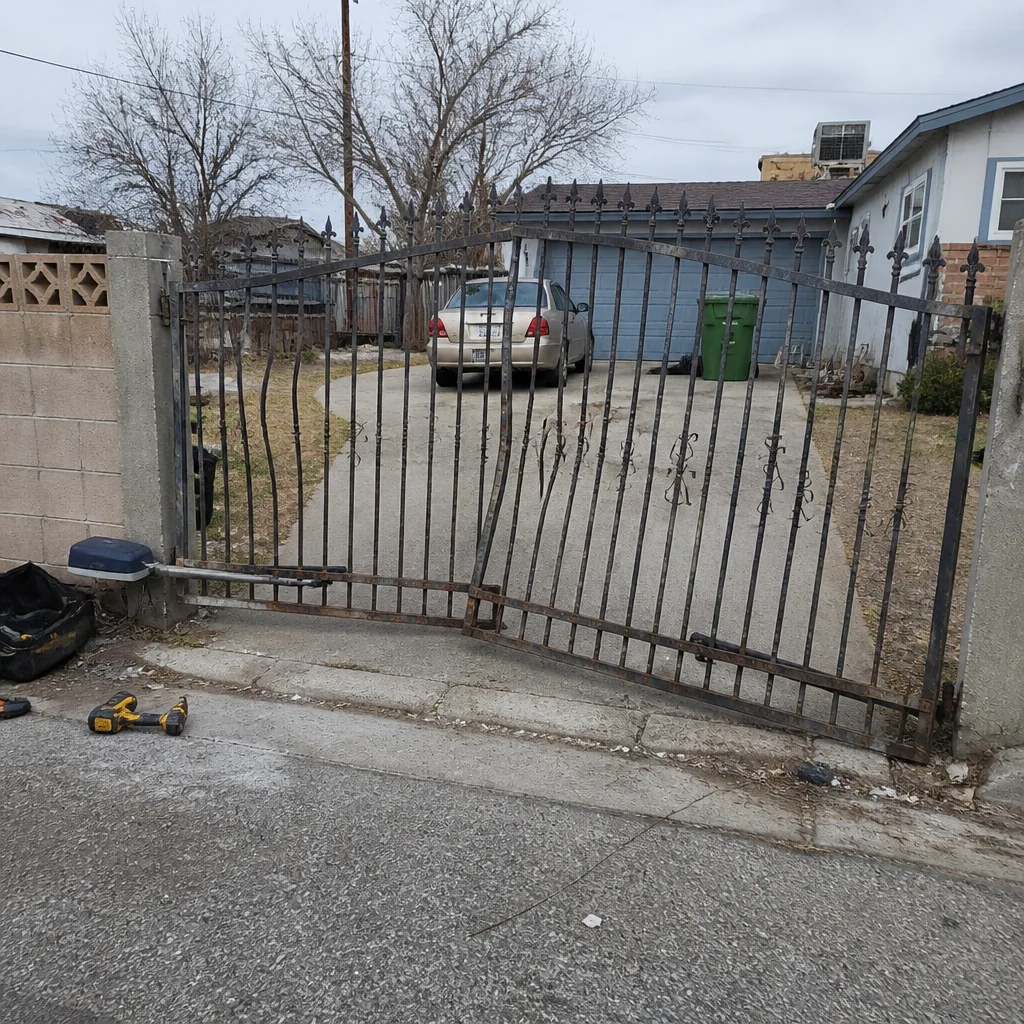 Before
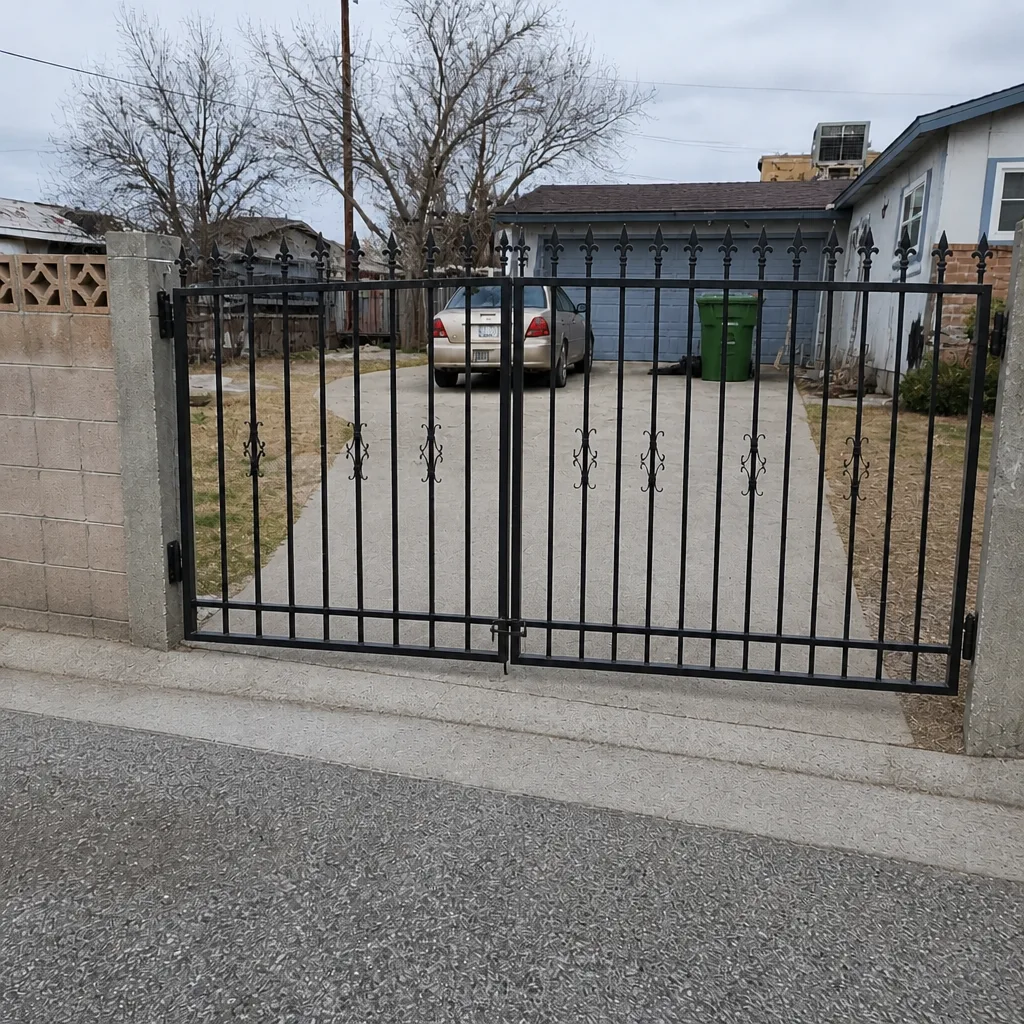 After
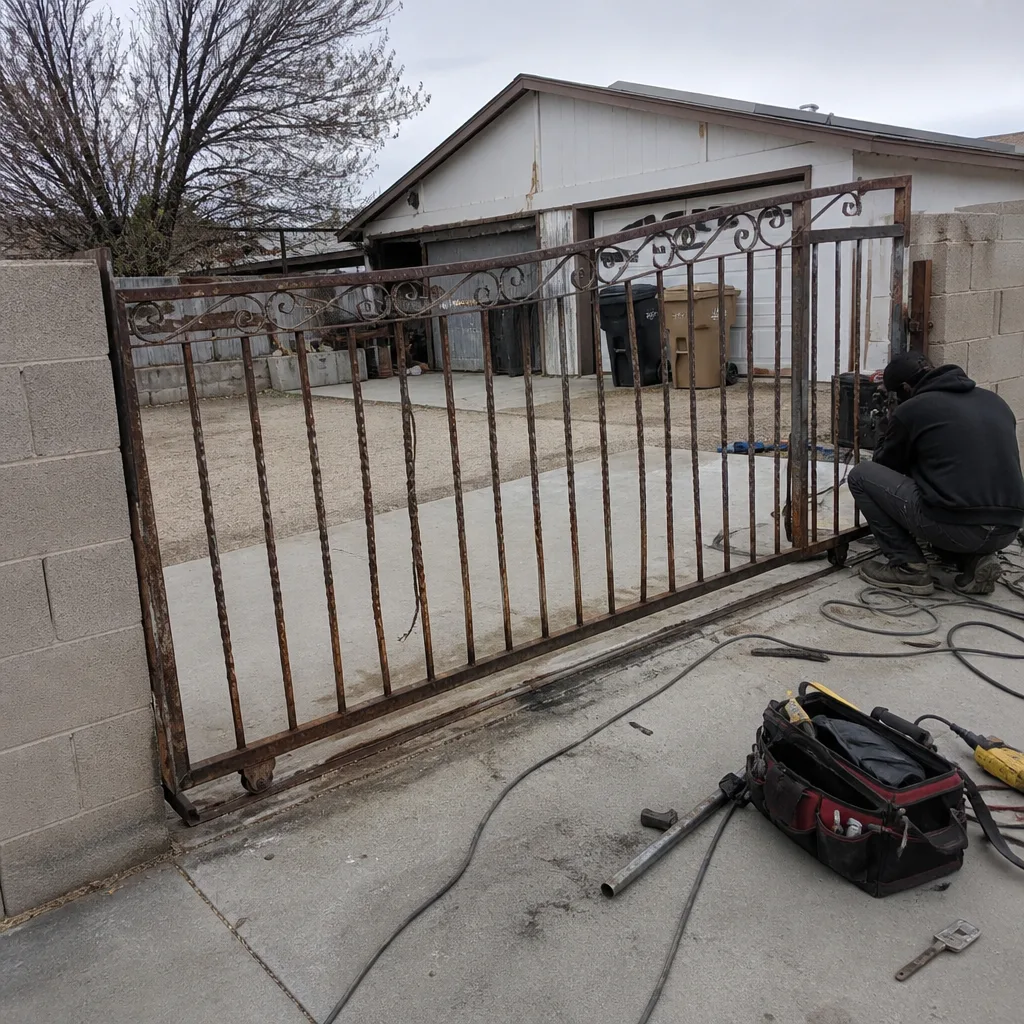 Before
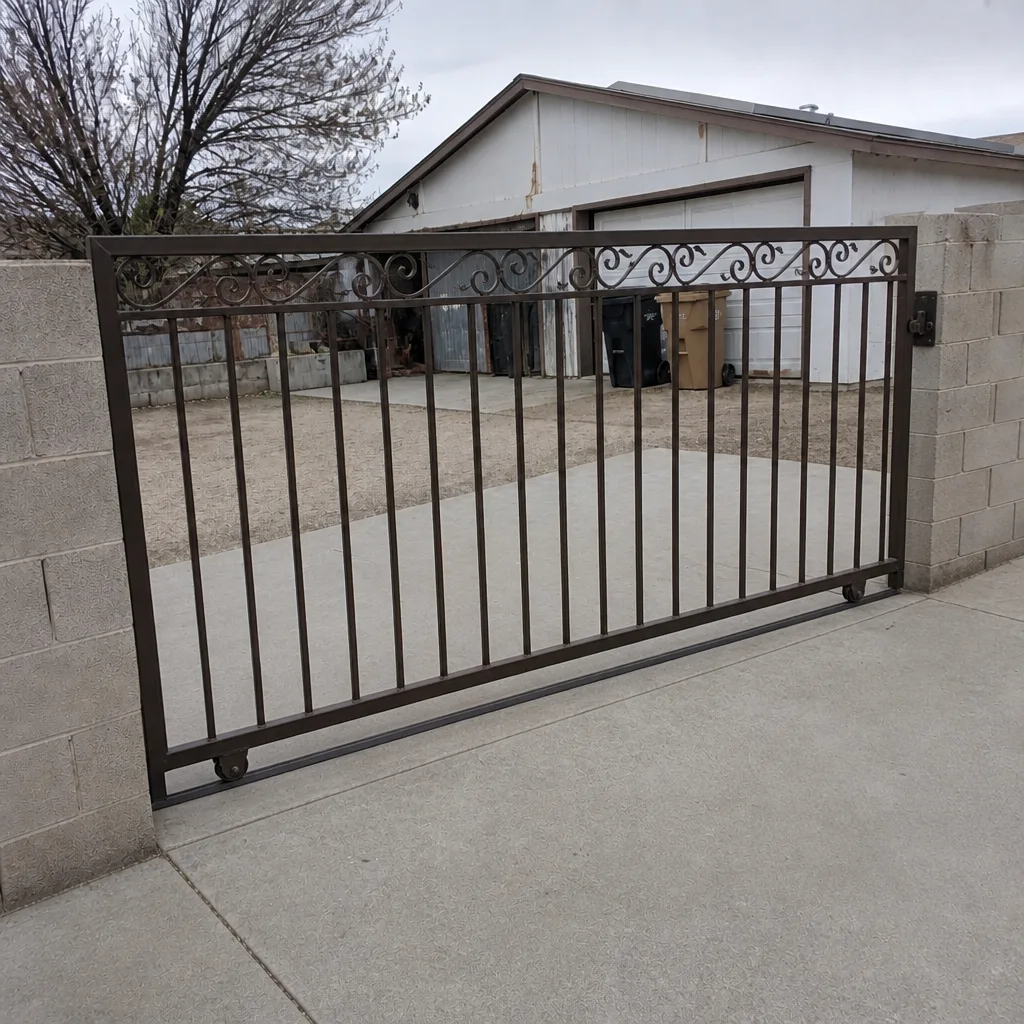 After
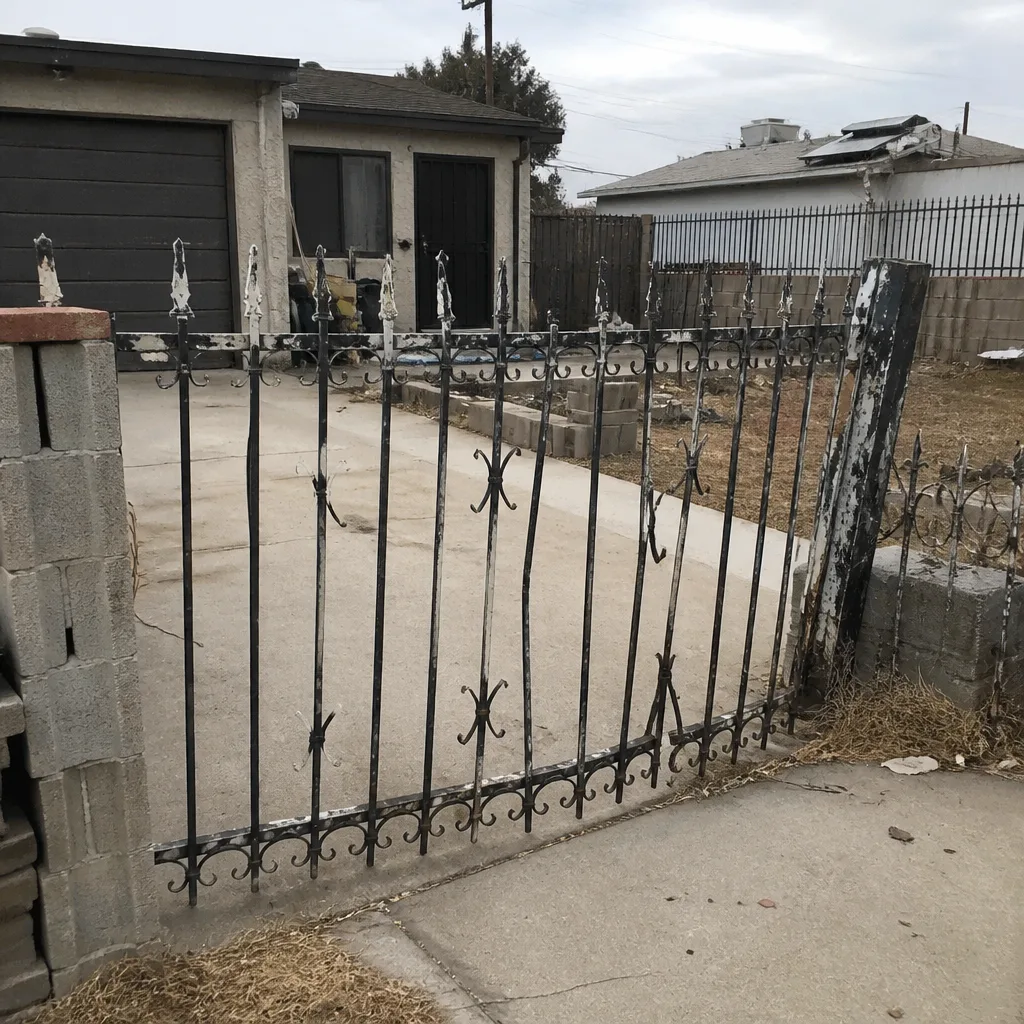 Before
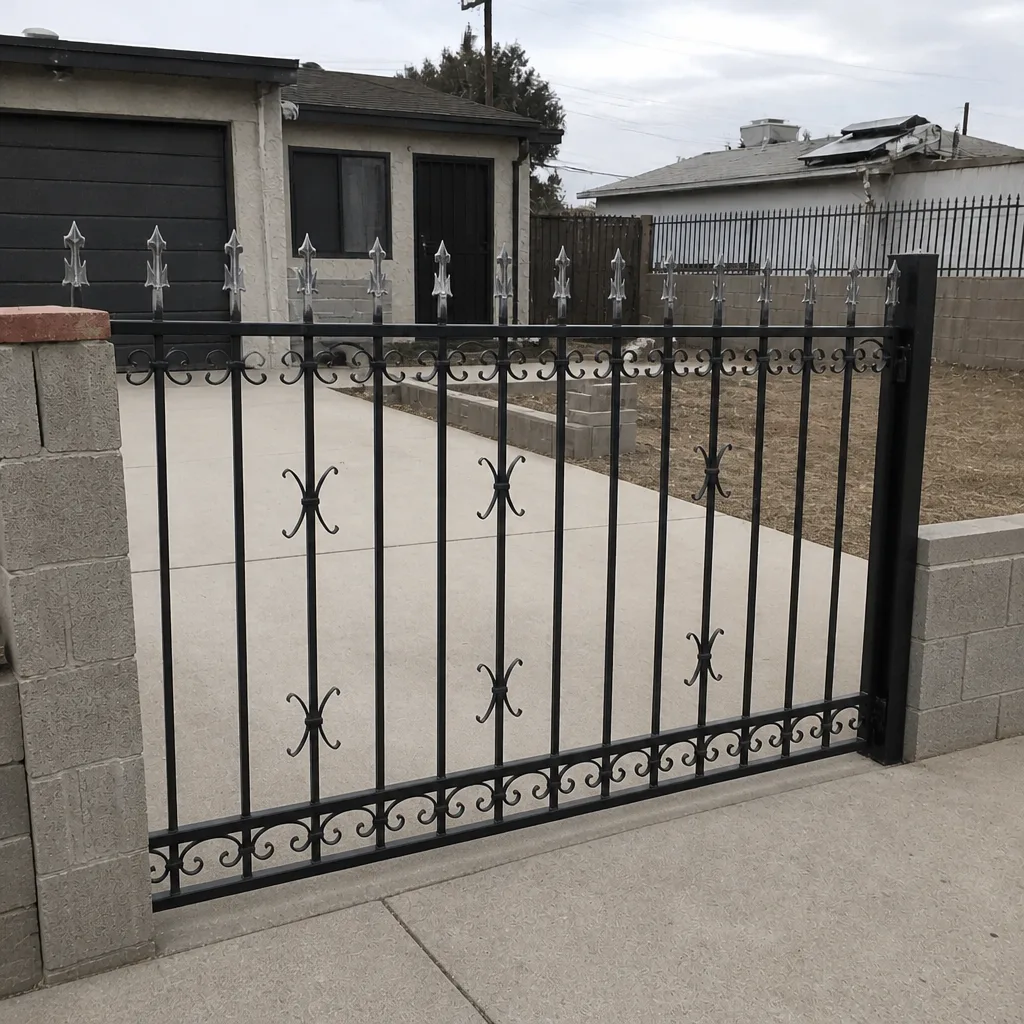 After
How Does an Automatic Gate Opener Work? A Desert-Climate Guide for Sunrise Manor, NV
An automatic gate opener works by turning a small electric motor into controlled gate movement: the motor creates rotation, a drive mechanism converts that rotation into a swing or slide, a control board reads your remote or keypad command and checks the safety sensors, limit switches tell the board when the gate is fully open or closed, and a power supply with battery backup keeps the whole system running. In Sunrise Manor, though, the order in which those parts fail is set less by the brand than by the desert itself – UV, 100°F-plus summers, caliche dust, and monsoon soil movement wear each component on a different clock. If your gate has stopped responding or is acting erratic, call Gatewood Fence & Gate Sunrise Manor at (844) 761-8729 and we’ll help you sort out what’s actually going on.
Here’s the honest version of how these systems work, which parts go first in this valley, and what you can check yourself before anyone touches a wrench.
The Parts, in Plain Language
Every automatic gate opener, whether it’s a DoorKing on a community entrance or a Mighty Mule on a residential driveway, comes down to the same handful of pieces doing the same handful of jobs.
- The motor creates rotation. That’s all it does – spin a shaft at a controlled speed and torque.
- The drive mechanism converts that rotation into gate movement. On a swing gate it’s a swing arm, an articulating arm, or an underground actuator. On a slide gate it’s a rack-and-pinion – a toothed rail bolted along the gate that a gear on the motor walks along.
- The control board is the brain. It reads the remote, keypad, or loop detector, checks every safety input, then tells the motor to go.
- Limit switches tell the board when the gate is fully open or fully closed, so the motor knows when to stop.
- Safety edges and photo eyes stop or reverse the gate if something’s in the way. Photo eyes shoot an invisible beam across the opening; break it and the gate won’t move.
- Power supply and battery backup feed the system and keep it alive when the grid drops.
That’s the whole machine. Nothing mysterious. What gets interesting is which of those pieces gives out first – and in Sunrise Manor, it isn’t random.
Which Parts Fail First in Sunrise Manor’s Climate?
Photo eye housings go first, then limit switches, then the battery. The desert attacks the plastic and the reference points before it ever touches the motor, which is why so many “dead” openers in Sunrise Manor are actually fine motors with baked sensors and lost position flags.
Walk through it part by part:
- Photo eyes and antenna wiring. Sustained UV cracks the plastic housings over a few summers and dries out the insulation on the small antenna wire at the operator. A cracked eye lens or a wire that’s gone brittle is one of the most common no-open calls we get.
- Capacitors and thermal cutouts. Heat above 100°F, day after day, shortens the life of the start capacitor on the motor and trips thermal cutouts that don’t always reset. Same brand, same model, but a unit that lives in full afternoon sun out here ages twice as fast as one in a shaded drive.
- Rack-and-pinion teeth and motor vents. Spring winds drive abrasive dust into the rack teeth and pack it into the motor vents. Grit in the rack grinds; grit in the vent chokes airflow. Both show up as a gate that gets louder and slower before it quits.
- Conduit joints. When a monsoon downpour turns caliche soil into shifting muck, it heaves footings and opens up buried conduit joints. Moisture finds the seam and works into the low-voltage wiring.
- The gate post and its footing. The ground here is hard enough that post holes get dug with a breaker bar and a shop vac, and when that soil shifts the whole gate moves with it – which brings us to the limit switch.
Why Limit Switches Lose Their Mind After a Monsoon
A limit switch doesn’t measure force or time. It reads a physical position flag mounted on the gate or the arm – a little tab of metal that trips the switch when the gate reaches full open or full closed. The board trusts that flag as its reference point. Move the flag and the board is lost.
So when a monsoon shifts the soil and the gate post leans a half inch, the flag moves with it. Now the board thinks the gate is somewhere it isn’t. You get a gate that stops short, reverses for no reason, or runs until it times out. Owners often blame the remote or the board – but the actual fault is a footing that moved underground.
That’s why gates in Sunrise Manor need their limits checked every spring, before monsoon season. It’s a 10-minute check that saves a stuck gate in July. And when the gate itself is sagging, remember: a gate sags in the hinge post, not in the middle – and that is where we start. Whether your gate sags or its limits are off, our Gate Motor & Opener service covers the full system.
Why Battery Backup Matters More Here Than Anywhere
Summer power outages from an overloaded grid are common in the valley, and a gate with a dead backup battery locks in the closed position – with no manual release obvious to a visitor or a delivery driver at the curb. A working backup battery costs a fraction of the headache and keeps the gate cycling for hours or days after the power drops. When we service a system, we check the battery the same way we check the safety edges.
What to Look For When You Have a Gate Installed or Serviced
When you’re comparing bids or deciding who to call, these are the things that separate a gate that keeps working from one that needs a return trip.
- Is the post set in concrete, or just bolted to a block wall? In Sunrise Manor, a gate leaning after its hinge screws pulled out of sun-rotted wood posts is a common sight – and that repair lasts longest when the post is set in concrete, not just bolted to a block wall.
- Will they repair the panel without the post? Fix the panel without the post and you’ll fix it twice.
- Is the price upfront? You want a number on paper before anyone starts, not after. Ours is: $40 off any repair over $200, no trip charge inside the county, and a free second opinion on any written estimate you already have. Seniors and veterans get a permanent 10% discount.
- Who’s coming, and will they stand behind it? The person who shows up at Gatewood is background-checked, and every job carries the 90-Day Done Right Promise in writing.
We can’t speak for every company, but we’re certified on LiftMaster, FAAC, BFT, Linear, Viking, Ghost Controls, DoorKing, Elite, and Mighty Mule, and we’ve been locally owned and owner-operated since 2001. You’ll find our full range on the Gate Motor & Opener in Sunrise Manor page, and if you’re starting from the home page, visit our home first. Here’s a quick range on what common openers in Sunrise Manor cost:
| Equipment | Typical Installed Range |
|---|---|
| Swing gate opener (single arm) | $1,550 – $2,400 |
| Slide gate opener (rack-and-pinion) | $2,100 – $3,200 |
| Replacement control board | $250 – $420 |
| Photo eye or safety edge replacement | $180 – $320 |
| Backup battery + regulator | $150 – $280 |
| Limit switch adjustment or replacement | $120 – $240 |
How We Diagnose an Opener in Sunrise Manor
Show me the gate closing on its own and I’ll show you where it’s failing. Diagnosing starts with what the gate does on its own, without anyone pushing a button.
- Watch the gate run. Does it drift, stop short, or reverse on its own? That tells us whether we’re chasing a limit or a safety input.
- Check the safety chain first. Photo eyes, safety edges, and their wiring get checked before we test the motor – the desert kills the sensors long before the motor.
- Read the board. The board’s fault codes and battery voltage tell us in seconds whether the issue is the motor, the backup battery, or the wiring.
- Walk the gate’s path and the footings. Any lean, any loose hinge, any cracking around the post tells us the gate itself is throwing the limits off. That’s the soil, not the opener.
- Test under load. We cycle the gate several times hot to catch capacitors and thermal cutouts that only fail when the motor’s been running.
Half the calls we get can be sorted with a phone conversation – which is faster than a truck roll for a lot of them. Between vans and appointments, the shop is still the place to ask: the name is on the shop, and the shop is down the road – that is the oldest accountability there is.
A Note on Sunset Manor’s Ground and the Gate
Most of Sunset Manor’s housing is 1960s through 1990s stucco-on-wood-frame tract homes with block-wall and wrought-iron fencing, and many of those gates are original wood or chain-link that have collected decades of deferred maintenance. When an opener gets installed behind a gate that sags, the machine is fighting the gate every cycle – and the machine eventually loses. If your gate is sagging, that’s the first thing we’d want to look at.
Key Takeaways
- An automatic opener is a motor, a drive mechanism, a control board, limit switches, safety sensors, and a power supply.
- In Sunrise Manor, photo eyes, limit switches, capacitors, and backup batteries fail before the motors do, because of UV, heat, dust, and soil movement.
- Limit switches read a physical flag on the gate, so when the footing moves, the board loses its reference.
- Spring isn’t just a season here – it’s the time to check limits before monsoon rain turns caliche soil to muck.
- If something’s wrong, a trained pro should test the whole system; a dead motor that’s actually a cracked eye is one of the most common no-open calls we get.
FAQs
It stops when a limit switch trips on a physical position flag mounted on the gate or the arm. The board uses that flag as its open and closed reference, so it never has to guess based on time or force. If your gate stops short or reverses, the flag has likely moved.
A gate that opens a few inches and reverses is almost always telling you a safety input is blocked or a limit flag has drifted. Start by checking the photo eyes for cracked housings or dirt, then look for any lean in the gate post – soil movement is the usual culprit out here. If the gate looks fine, it’s worth having the board and safety wiring tested. Call Gatewood Fence & Gate Sunrise Manor at (844) 761-8729 for a free second opinion on any written estimate.
Yes, and we’d recommend doing it every spring, before the monsoon rains shift the soil. A limits-and-battery check is quick, catches the two most common desert failures, and costs far less than a failed gate in July. If the check finds something, we’ll show you what we found and quote it upfront.
Repair is usually the right call when the motor and board are fine and only the sensors, limits, or battery have failed – which is most of what we see in Sunrise Manor. Replacement only makes sense if the motor itself is burned out or the drive mechanism is beyond repair. We always look at repair first because that’s the cheaper answer for most homeowners.
Most residential gate openers in Sunrise Manor run $1,550 – $2,400 installed for a swing gate, and $2,100 – $3,200 for a slide gate with rack-and-pinion. Repairs – sensors, limits, boards, batteries – usually fall under $420. Get a free upfront estimate by calling (844) 761-8729.
If you’d rather have it looked at, Gatewood Fence & Gate Sunrise Manor offers a no-pressure assessment in Sunrise Manor – call (844) 761-8729. No trip charge inside the county, a free second opinion on any written estimate, and the 90-Day Done Right Promise on every job.
Written by the team at Gatewood Fence & Gate Sunrise Manor, serving Sunrise Manor, NV.