
Last updated November 18, 2026
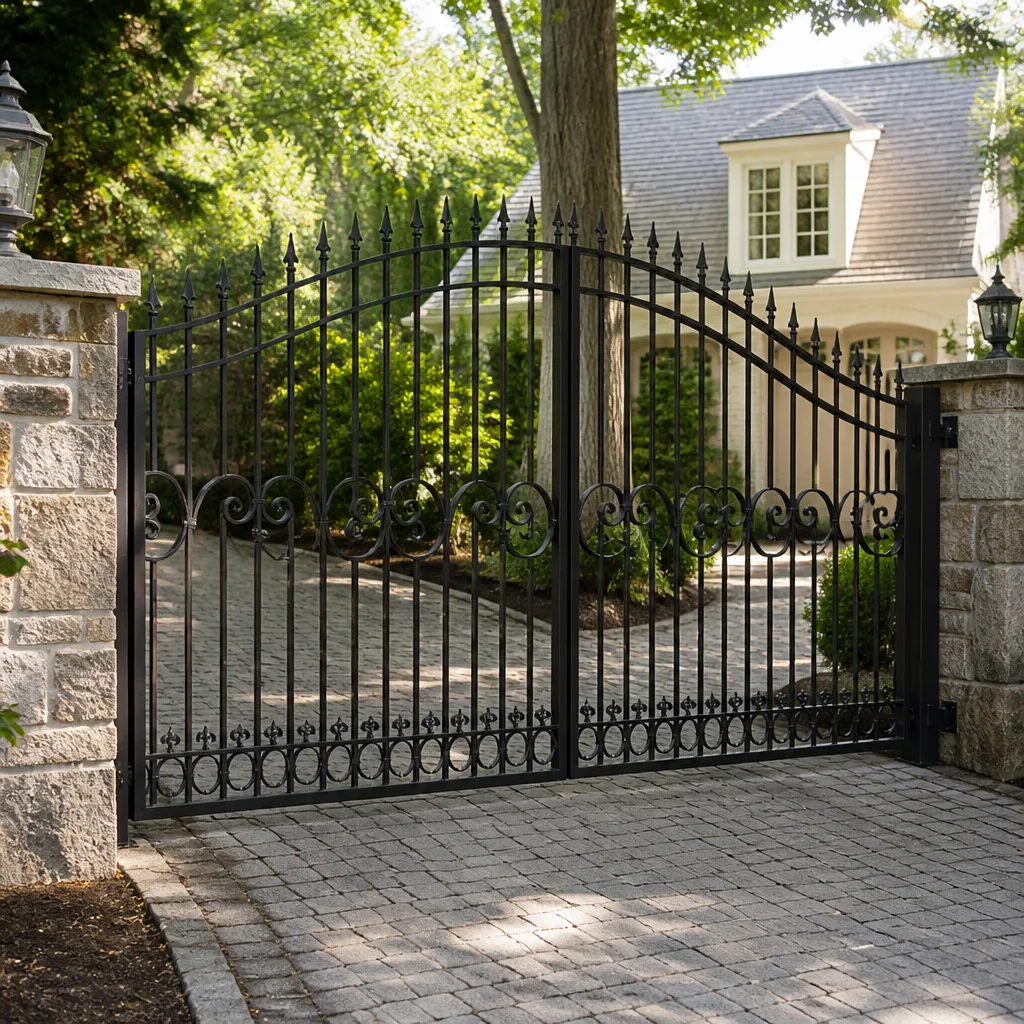 Wrought iron
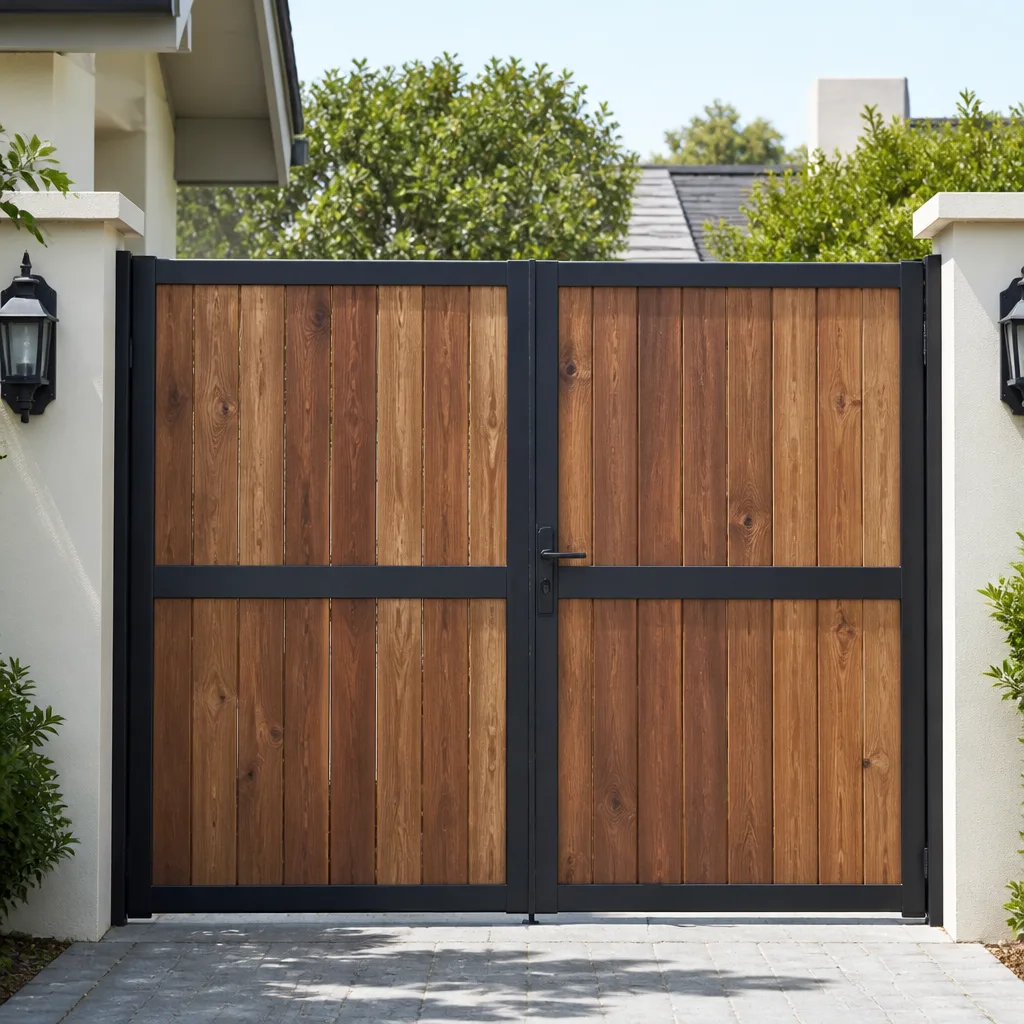 Wood & steel frame
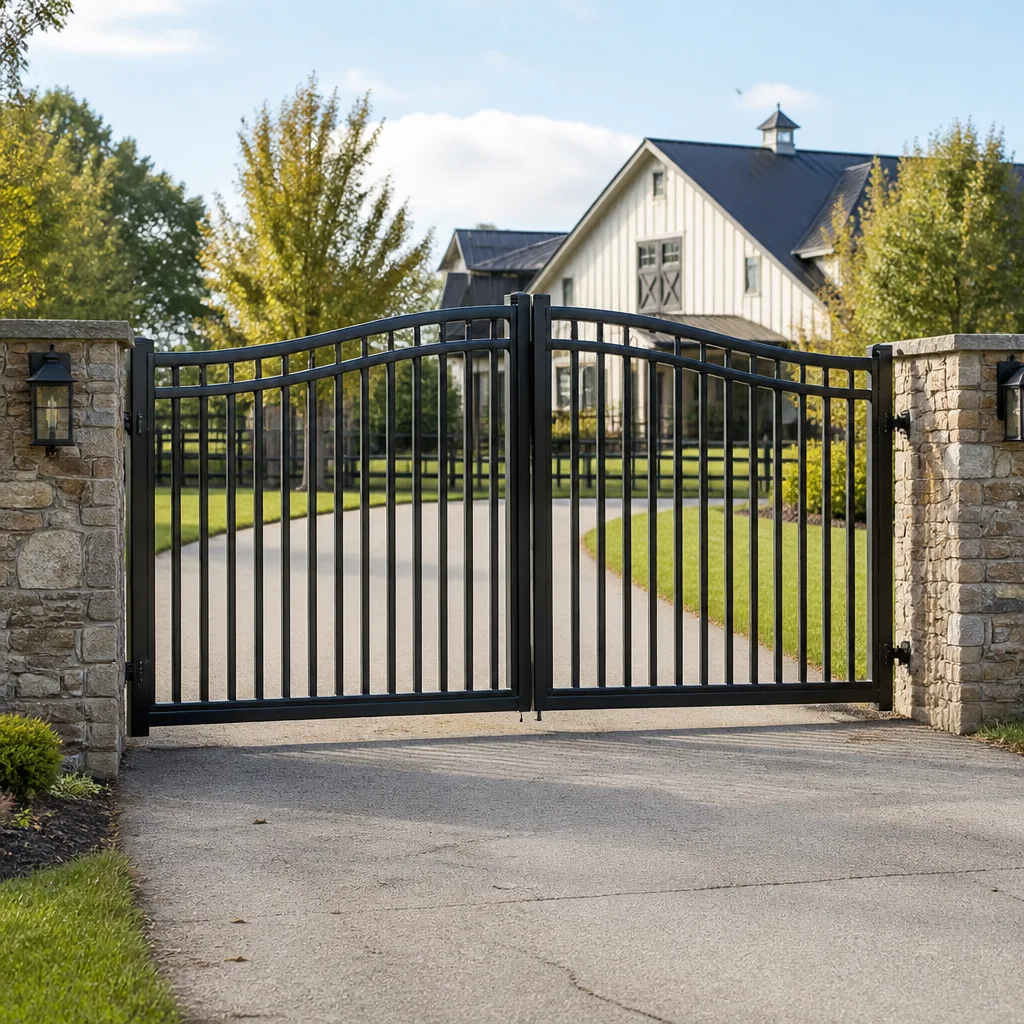 Farm & ranch
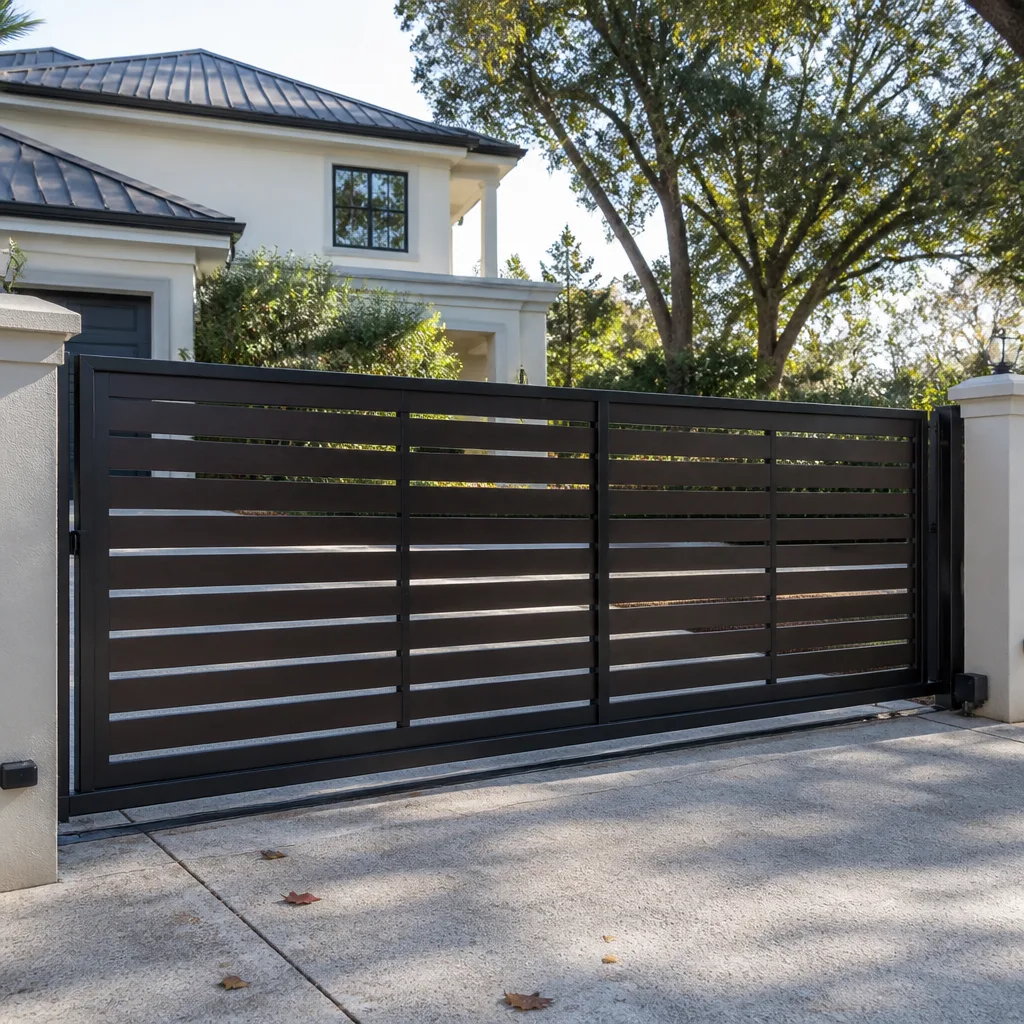 Sliding driveway gates
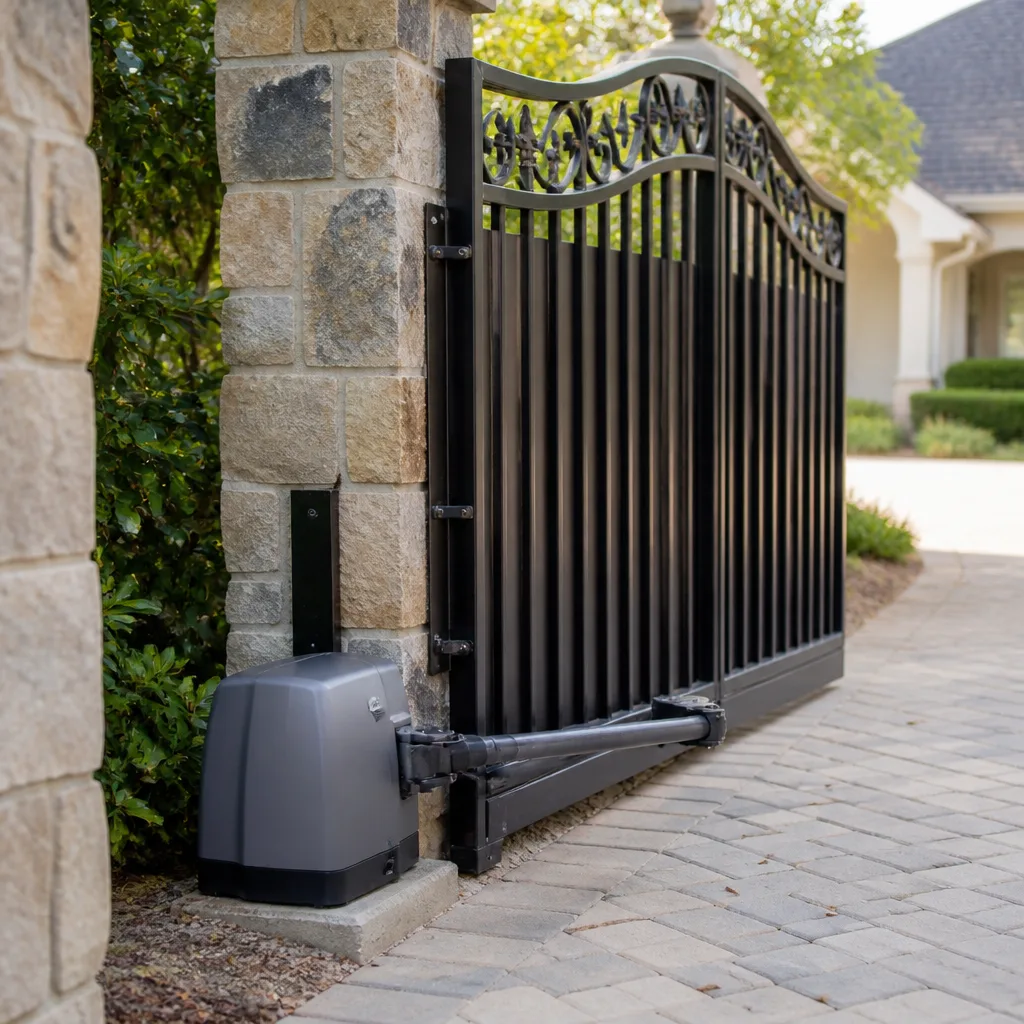 LiftMaster operators
Free on-site gate assessment - hinges, posts, and your LiftMaster or Nice gate operator checked before anything is quoted
The assessment is free and the quote is the invoice.
Get your free estimateGate Repair Warning Signs: A Sunrise Manor Homeowner’s Reference Guide
A gate that squeals once in the morning is annoying; a gate that squeals every morning for a week is telling you the roller bearing is packing with grit and you’ve got maybe three weeks before it seizes against the track. That gap between “annoying” and “expensive” is where most homeowners lose money, because the gate is talking the whole time and nobody translates. Sunrise Manor sits in a stretch of desert that punishes metal and masonry in ways coastal gate guides never mention: blowing caliche dust, 100-plus-degree summers, and winter nights cold enough to shrink a weld. What follows is the reference we wish every homeowner had before something breaks in a way that can’t be walked back.
Quick Answer
Gate repair warning signs in Sunrise Manor show up in three layers: what you hear (grinding, popping, squealing on a schedule), what you see (paint bubbling at the post base, rust bleeding from welds, mortar cracking at column feet), and what the gate does on its own (hesitation, reversing mid-travel, slow open). Catching any one of these in the first week is usually a small repair; waiting a season in desert heat turns it into a big one. The fix and cost depend entirely on whether the problem lives in the operator, the hardware, or the structure underneath.
Styles & brands we work with
- Wrought iron
- Wood & steel frame
- Farm & ranch
- Sliding driveway gates
- LiftMaster operators
Table of Contents
- Sound-Based Warnings, Broken Down by Gate Type
- Desert-Specific Visual Signs Most Guides Miss
- What an Automatic Gate Does That Shouldn’t
- Operator, Hardware, or Structure? How to Tell the Difference
- The Two Warning Signs Homeowners Always Dismiss
- A Walk-Around Checklist You Can Do This Weekend
- Common Mistakes to Avoid
- When to Call a Professional
Sound-Based Warnings, Broken Down by Gate Type
The same noise means completely different things depending on how the gate moves, and that’s the piece most online lists skip. On a sliding gate, a grinding sound is usually the carrier wheels rolling against a track that’s packed with grit; the wheels wear flat on one side and start dragging. On a swing gate, that same grinding tends to live in the hinge or the operator arm, not the track, because there is no track. Diagnosing a swing gate by the sound of a sliding gate is how a homeowner ends up replacing perfectly good hardware. In our experience across Sunrise Manor, wind-blown sand working into exposed moving parts is the single most common cause of early grinding here, and it happens faster than homeowners expect.
Here’s how to read the sounds by type:
- Sliding gate, grinding: Grit in the track or a flat-spotted carrier wheel. Ignore it and the wheel seizes, then the operator motor drags against resistance it wasn’t built for.
- Sliding gate, clanking: Loose roller brackets or a worn guide roller letting the gate rock in the track.
- Swing gate, squealing on a schedule: A hinge pin drying out and packing dust. Consistent squealing means bearing or bushing wear inside the hinge.
- Swing gate, popping or snapping: Hinge post movement or a failing operator arm connection. This one gets serious fast.
- Either gate, a hard stop with a bang: Travel limits out of adjustment, so the gate is hitting its stop instead of slowing into it.
If a gate repair in Sunrise Manor is on your list because of a new noise, write down when it happens: cold mornings, all day, or only when the gate reverses. That single detail tells a trained ear more than the noise itself.
Desert-Specific Visual Signs Most Guides Miss
Coastal and cold-climate gate guides talk about snow load and salt air. Sunrise Manor has its own set of tells, and they show up earlier than the structural problems they predict. Paint bubbling at the base of a steel post means moisture is trapped under the finish, and that’s rust growing from the inside out where the post meets concrete. Rust bleeding in vertical lines below a weld means the weld itself is holding water and beginning to corrode. And mortar cracking at a column base is the one that most often goes unpictured in generic guides: it usually signals the column footing shifting, which is a structure problem, not a paint problem.
The local heat matters. Metal expands and contracts hard through a Sunrise Manor day, from a cool desert morning to an afternoon that can push past 110. That cycle works on every weld, every bolt, and every hinge. Combine it with blowing caliche dust packing into joints and you get a gate that looks fine for years and then tells you everything at once.
Visual signs to walk past and actually look at:
- Paint bubbling at the post base. Trapped moisture. Rust is spreading under the finish.
- Rust bleed lines below welds or bolts. Water sitting in a joint and corroding from within.
- Mortar cracking at the column foot. Potential footing movement. Get it looked at before the gate starts to sag.
- A gap or lean at the top of the post. The post has moved; the gate will follow.
- White chalky residue on aluminum. Oxidation in progress, often from wind-driven dust scouring the surface.
One quiet rule we lean on: a gate sags in the hinge post, not in the middle, and that’s where we start. Fix the panel without the post and you’ll fix it twice.
What an Automatic Gate Does That Shouldn’t
An automatic gate in Sunrise Manor that hesitates before it moves, reverses halfway through travel, or creeps open noticeably slower than it used to is showing you three different problems, and they don’t share a cause. Hesitation usually points to the operator straining against resistance, often the same grit in the track or hinges we mentioned earlier. Reversing mid-travel is the safety system doing its job, but the trigger is almost always a binding hinge, a misaligned track, or a worn roller instead of a real obstruction. A slow open is commonly a motor working harder than it should under tired bearings, or failing travel limits affecting timing.
Operators wear out, and so do the parts around them. The mistake is assuming a reversal or a hesitation is the operator failing when the truth is the gate is binding and the operator is trying to overcome it. If your system is a gate motor & opener in Sunrise Manor setup with years on it, the operator’s behavior is often a mirror of the gate’s mechanical health, not a fault in the electronics at all.
Operational signs worth tracking:
- Hesitation at start or finish. Resistance in the track, hinges, or wheels.
- Reversing mid-travel. A safety trigger from misalignment or binding, not a phantom.
- Slower opening than last season. Motor strain or failing limits.
- Travel limits drifting without anyone adjusting them. Mechanical wear somewhere in the chain.
- Beeps, beeps, beeps. Many operators signal a fault code; check the manual or have the system read before assuming the worst.
Brands matter for parts and diagnostics. Systems built on FAAC or Viking, for example, have specific travel-limit and safety-edge behaviors, and knowing them saves guesswork.
Operator, Hardware, or Structure? How to Tell the Difference
This section is worth the whole guide, because the cost of a repair depends almost entirely on which of three layers is failing, and homeowners routinely pay for the wrong one. The operator is the motor and control system. The hardware is hinges, wheels, tracks, rollers, brackets, and latches. The structure is the posts, footings, and the mounting that holds the whole thing to the ground. When someone tells you “you need a new operator” and the real problem is a binding hinge, that’s money burned on a part you didn’t need.
Here’s a practical way to sort it:
- Hand-move the gate. Disengage the operator and push the gate through its full travel. If it’s stiff or binds at any point, the problem is hardware or structure, not the operator.
- Watch the posts. If a post leans or the top of the gate racks open, that’s structure. Operators and hardware can’t fix a moving post.
- Check the track and hinges for play. Wobble or grinding at the wheels and hinges is hardware.
- Read the operator. If the gate moves freely by hand and the operator still hesitates or reverses, the issue is likely in the operator or its limits and sensors.
When the answer is “structure,” that’s when a gate installation in Sunrise Manor conversation sometimes replaces a repair, because a post that has shifted in the footing can’t be welded back into true. When the answer is hardware, on-site welding and true repair-first work fixes it in your driveway, which is the entire point of how we operate.
Repairing the right layer is the difference between a targeted fix and a guess dressed up as an estimate.
The Two Warning Signs Homeowners Always Dismiss
Of every warning sign we find, two get dismissed most, and they consistently turn into the most expensive jobs. The first is a gate that closes on its own. Homeowners treat it as harmless, but a gate that drifts closed is showing you a failure in the post, hinge, or slope alignment, and that small drift is gravity finding a weak point that gets more expensive every month you ignore it. Show me the gate closing on its own and I’ll show you where it’s failing. The second is a single dropped or grinding bolt at the hinge. That one fastener tells you the mount is losing its grip, and if it’s on a swing gate post, the panel is hanging on the move.
Both signs are easy to live with, and that’s the trap. They don’t stop the gate from working, so they sit. Then a post has to be reset in the concrete or a hinge mount has to be re-welded on site, and a small catch in week one becomes a session in week twelve. The name is on the shop and the shop is down the road, so we hear about these late, more often than not, and the conversation is always the same: you saw it, you just didn’t know it counted.
A Walk-Around Checklist You Can Do This Weekend
You don’t need special tools to catch the early signs. A fifteen-minute walk around your gate in Sunrise Manor, done once a month, catches almost everything. Start at the post that holds the gate and work outward. Listen, look, and then test how the gate moves. Write down what you find with a phone photo; comparing this month to last month tells the real story.
- Listen to a full open and close. Note any grinding, squealing, popping, or bang at the end of travel.
- Look at both posts at the base. Check for paint bubbling, rust bleed, and cracked mortar at the footing.
- Run your hand along the track or the hinge line. Feel for grit, roughness, or wobble.
- Disengage the operator and push the gate by hand. It should move smoothly and stay put when you let go.
- Check every visible bolt at the hinges and brackets. Loose or dropped fasteners are an early flag.
- Watch for the gate drifting on its own. Any movement without a command is structure talking to you.
- Snap a few photos and date them. A visual record makes it easy for anyone who looks at the gate later.
Do this checklist on a mild morning, not the middle of an afternoon in July, so you can focus on the gate instead of the heat.
Common Mistakes to Avoid
- Greasing everything as the first fix. Grease traps grit on an exposed track or hinge pin in a windy Sunrise Manor yard and speeds up the wear. The right repair matters more than any product.
- Assuming a reversing gate needs a new operator. A reversal is usually a safety response to binding hardware. Replacing the operator first is how you pay twice.
- Welding a brace over a cracked post foot without checking the footing. Hiding the crack doesn’t stop the column from moving. Fix the structure, then the cosmetic.
- Waiting for the gate to stop working entirely. The most expensive repairs are the ones that started as a dropped bolt and a small drift months earlier.
- Letting a handyman patch a gate with the wrong metal. Mixing metals in the desert climate accelerates corrosion at the joint, and a repair that doesn’t match the gate is a repair that comes back.
- Skipping the safety edges because they “still work.” On an automatic gate, safety-edge function is a life-safety check, not a nicety, and it should be confirmed, not assumed.
- Reading a national gate guide instead of looking at your own post and track. Sunrise Manor’s dust and heat produce signs a coastal or cold-climate guide will never mention.
When to Call a Professional
Some repairs you can keep an eye on; others need a trained hand before they get worse. Call us if any of these applies: a post is leaning or the gate racks open, a hinge mount is loose or a bolt has dropped, an automatic gate reverses or hesitates after you’ve confirmed it moves freely by hand, or the operator is beeping a fault you can’t read. Structure and welding work need to be done by someone who knows how to check the footing, not just patch the surface. On automatic gates, springs under tension, safety edges, and any electrical connection to the operator are genuinely dangerous and should be handled by a trained professional, never a weekend attempt. Gatewood Fence & Gate Sunrise Manor offers free estimates in Sunrise Manor and answers the phone with a live person, day or night. For any of the above, call (844) 761-8729 and we’ll take a look before you spend on anything.
See the difference
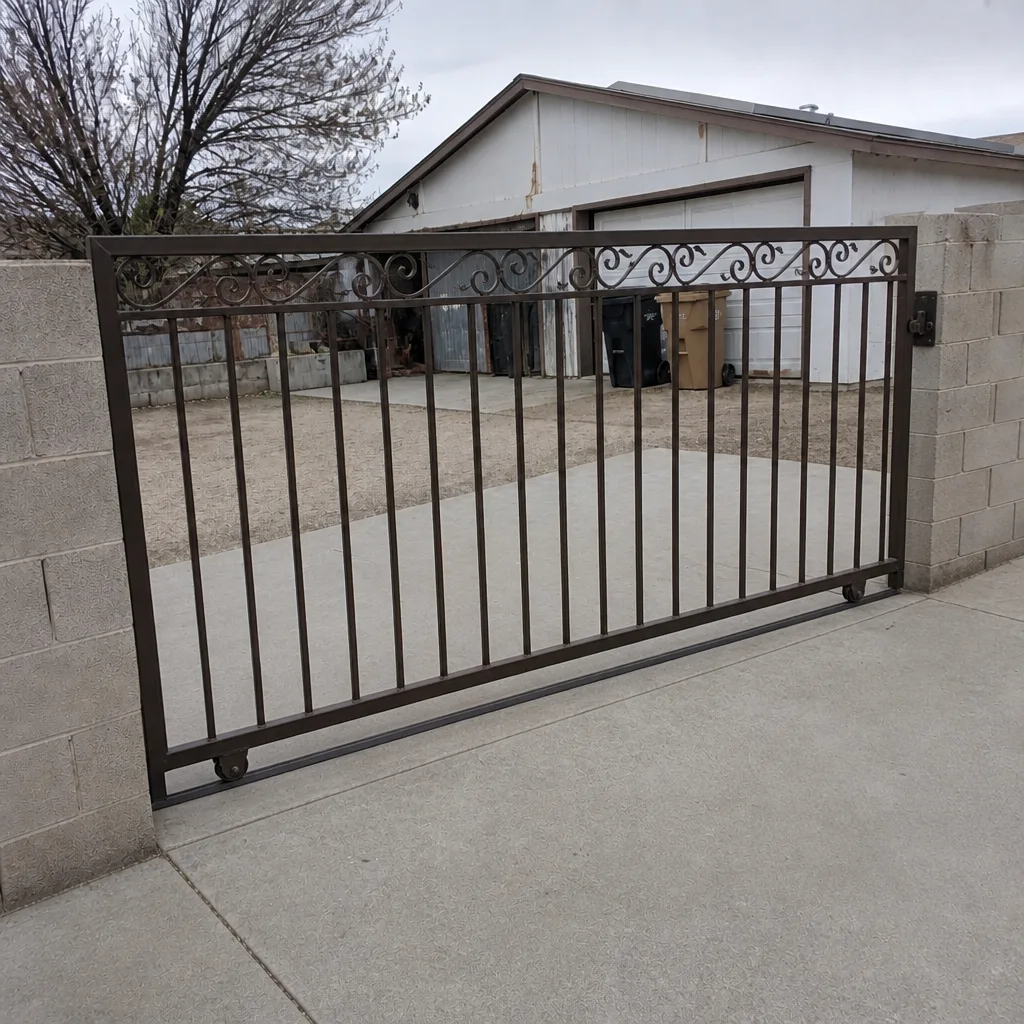
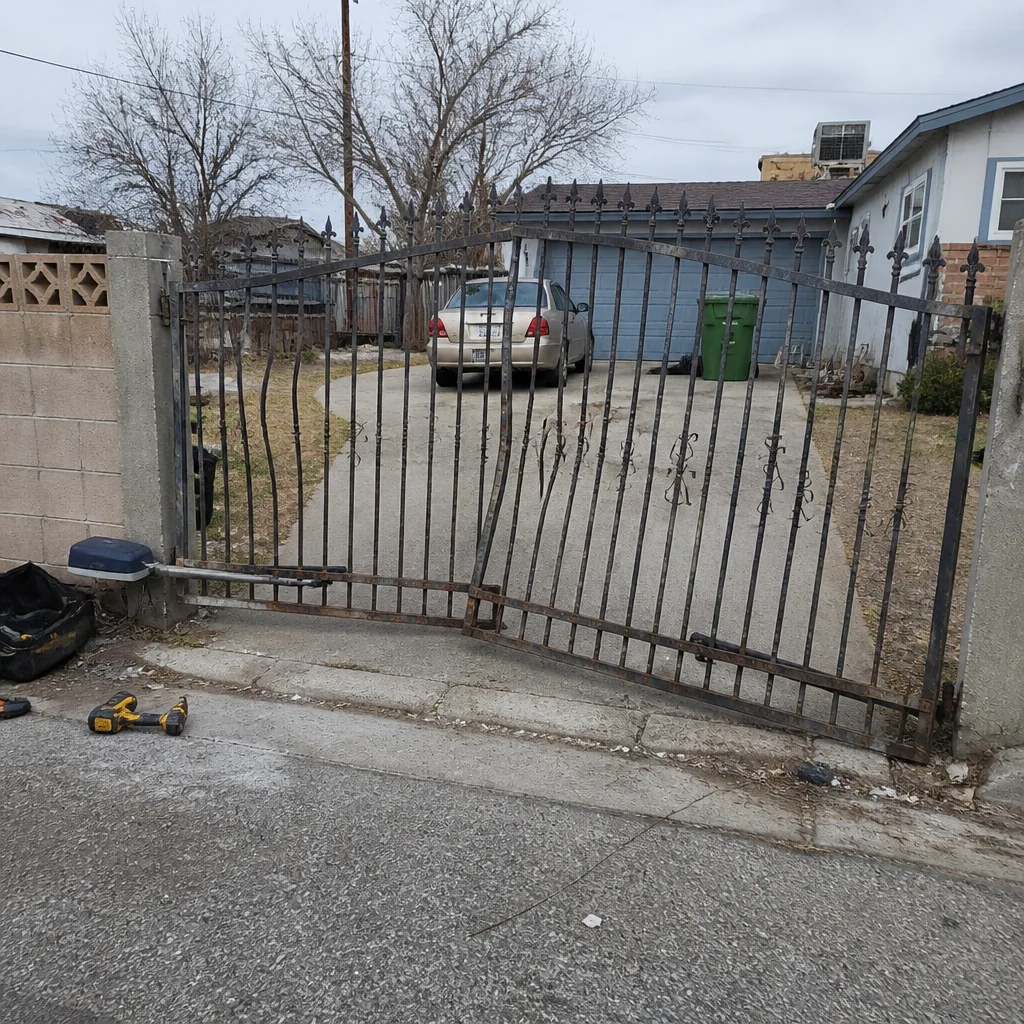 Before
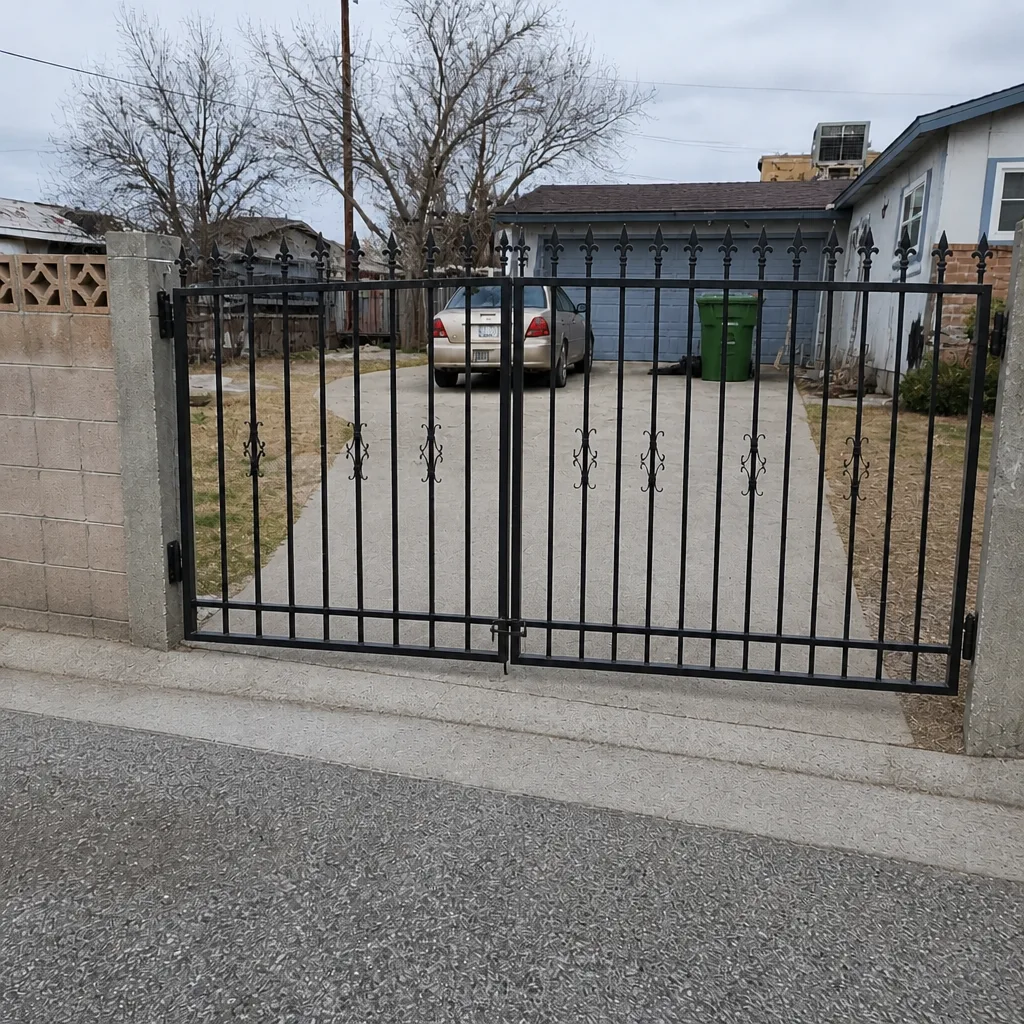 After
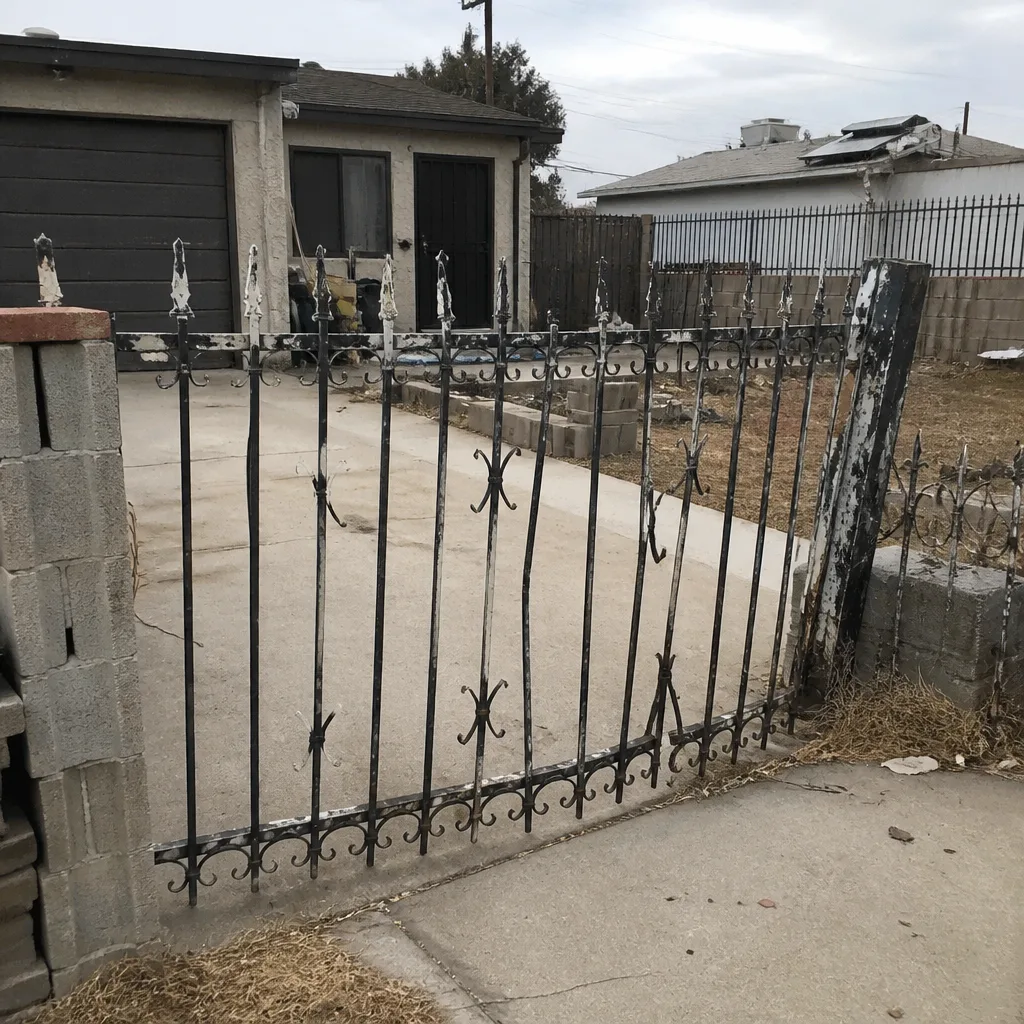
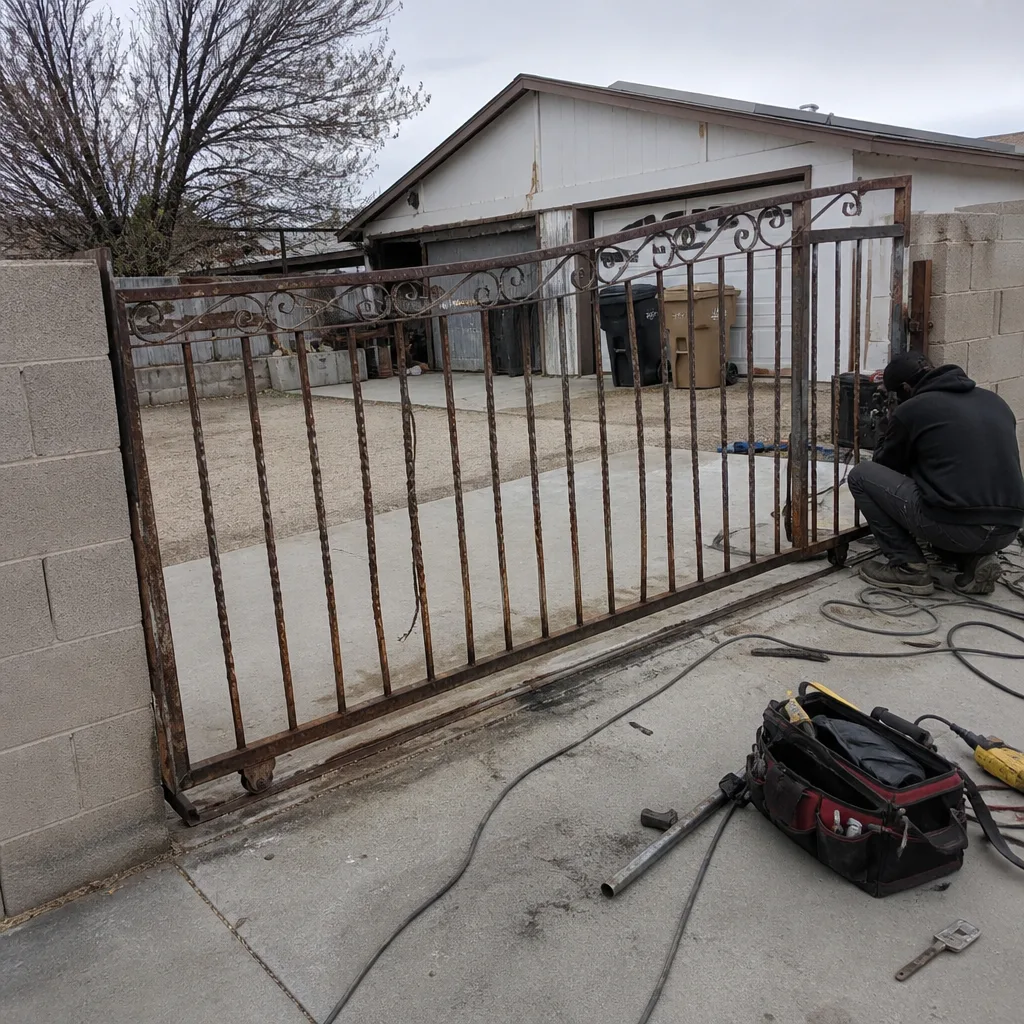 Before
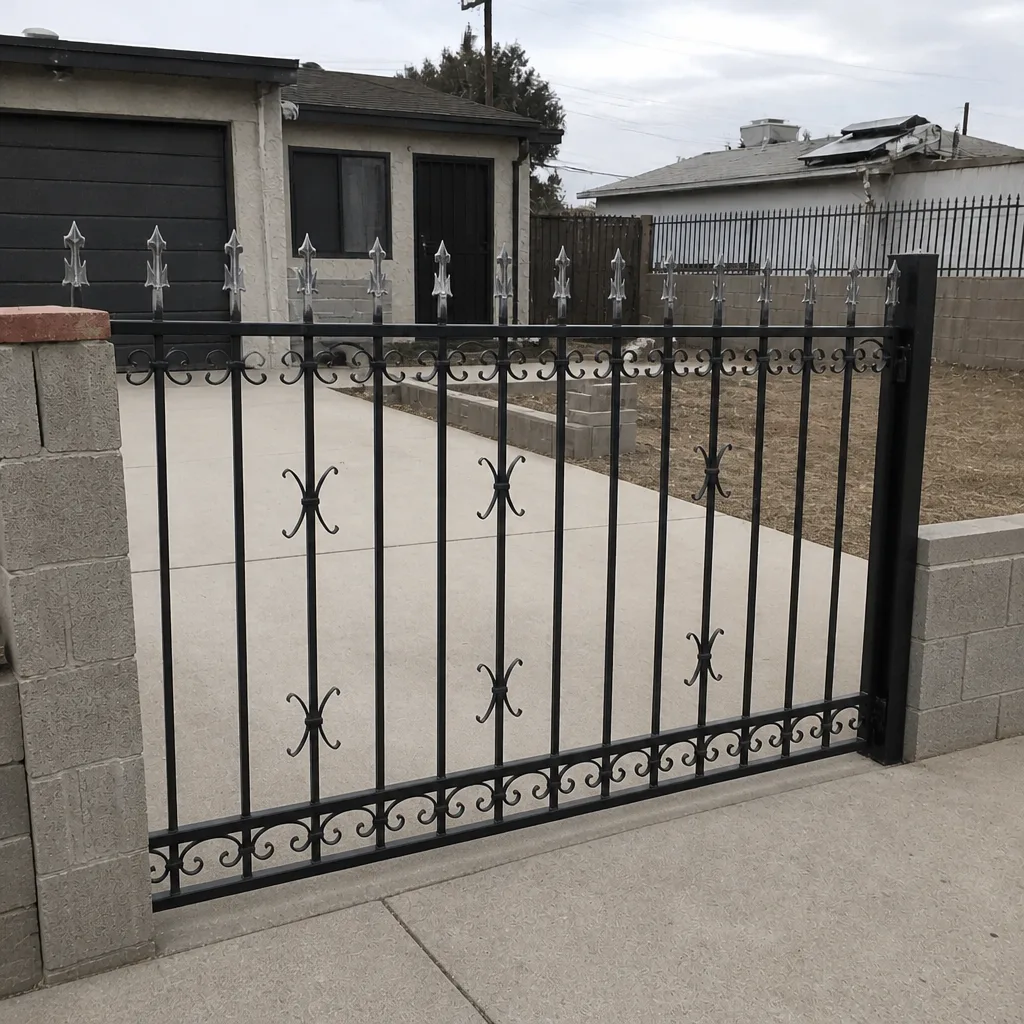
 After
 Before
 After
Frequently Asked Questions
Disengage the operator and push the gate by hand through its full travel. If it grinds or binds while you push it, the problem is in the track, wheels, hinges, or structure, not the operator. If the gate moves smooth by hand and the noise only appears under motor power, the operator and its limits are the place to look.
It’s the safety system doing exactly what it’s built to do, but the trigger is usually a binding hinge, a misaligned track, or a worn roller rather than a real obstruction. That’s a hardware or structure repair, not an operator failure, so it’s worth having someone sort the cause before anyone replaces the motor. Call (844) 761-8729 for a free second opinion on any written estimate.
Paint bubbling at the post base means moisture is trapped under the finish and rust is spreading from the inside, and vertical rust bleed below a weld means water is sitting in the joint. Sunrise Manor’s heat-and-dust cycle works on every weld and bolt, and blowing caliche dust packs into joints and speeds it up. The fix is to chase the rust at the source, not just repaint over it.
No. Springs under tension, the electrical run to an operator, and safety-edge systems are genuinely dangerous and should be handled by a trained professional. Check the gate, listen for warning signs, and let a trained hand do the repair. Our technicians are experienced with systems built by FAAC, BFT, Linear, Viking, and other major brands, and the safety check comes first.
Not long in this climate. A dropped bolt, a gate that drifts closed, or a squeal on a schedule are early-stage signs that often become post or footing work within a season if ignored. Days to weeks is the right window to get a warning sign looked at, not months. Early catches are almost always the cheaper repair.
No trip charge inside the county, and no surprise increase at the door: the price is quoted and agreed before any work starts. Every job carries the 90-Day Done Right Promise in writing, and we give a free second opinion on any written estimate. For a Sunrise Manor gate, call (844) 761-8729 and we’ll get an honest look on the calendar.
The Bottom Line
Every gate gives you warning before it fails, and the warning is in three places: what you hear, what you see, and what the gate does on its own. In Sunrise Manor, dust and heat speed all three up, so a small squeal, a bubbling post base, or a gate that drifts closed is a note to yourself, not a nuisance to live with. Sort the problem to the right layer first, operator, hardware, or structure, and the fix and the cost stay small. Catching early is the whole game, and the walk-around checklist above is the cheapest insurance you’ll ever own.
If a warning sign has your gate on the list, we’re glad to take a look. Gatewood Fence & Gate Sunrise Manor offers free estimates, no trip charge inside the county, $40 off any repair over $200, and a permanent 10% discount for seniors and veterans. A live person answers every call, and you can start at the Gatewood Fence & Gate Sunrise Manor home page. Call (844) 761-8729 for a free estimate today.
Written by the team at Gatewood Fence & Gate Sunrise Manor.