
Last updated November 18, 2026
 Wrought iron
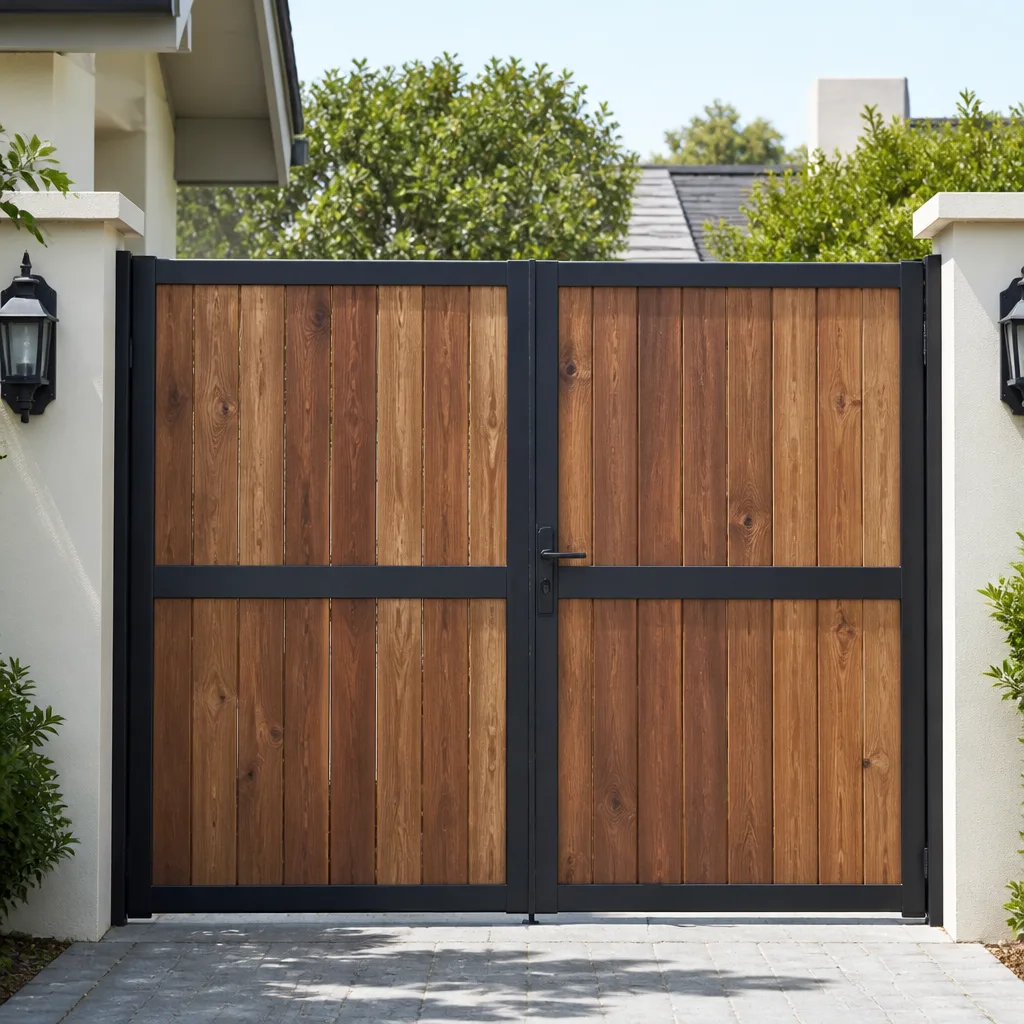 Wood & steel frame
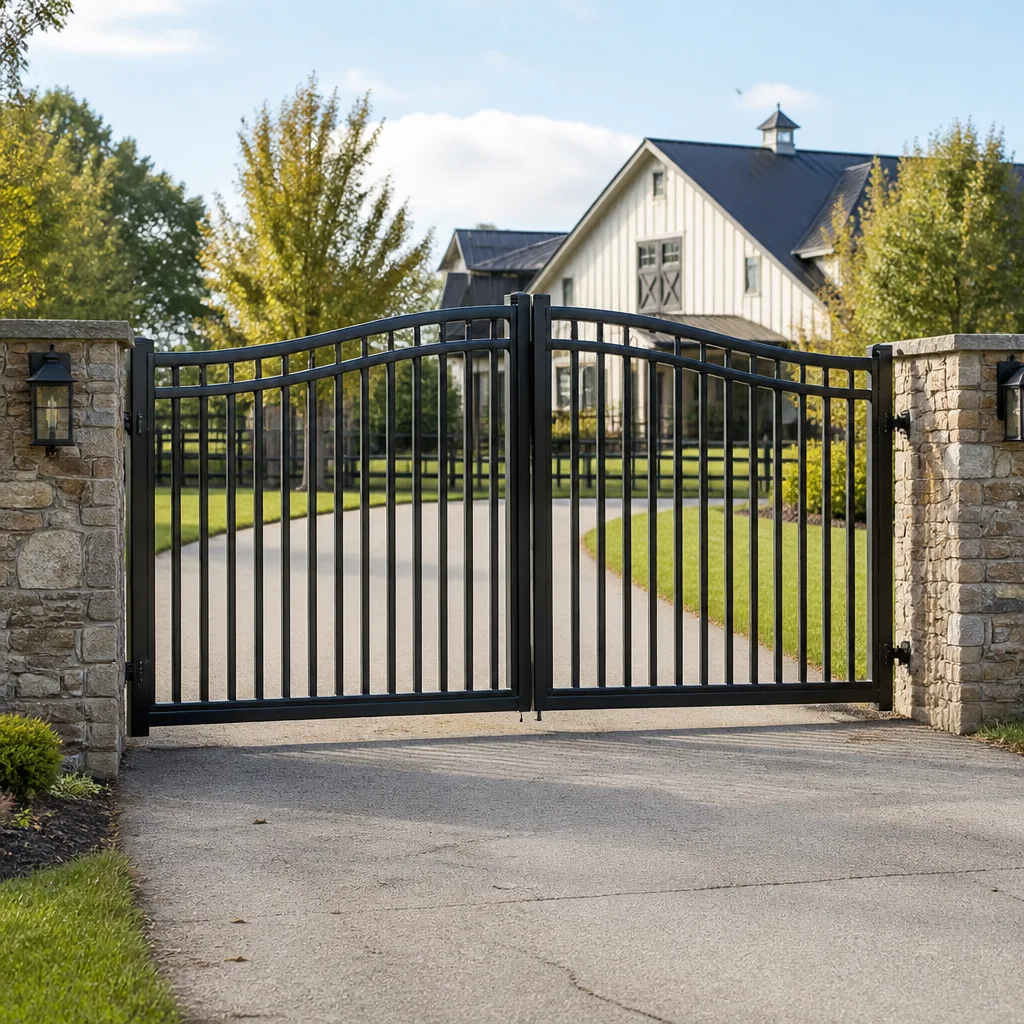 Farm & ranch
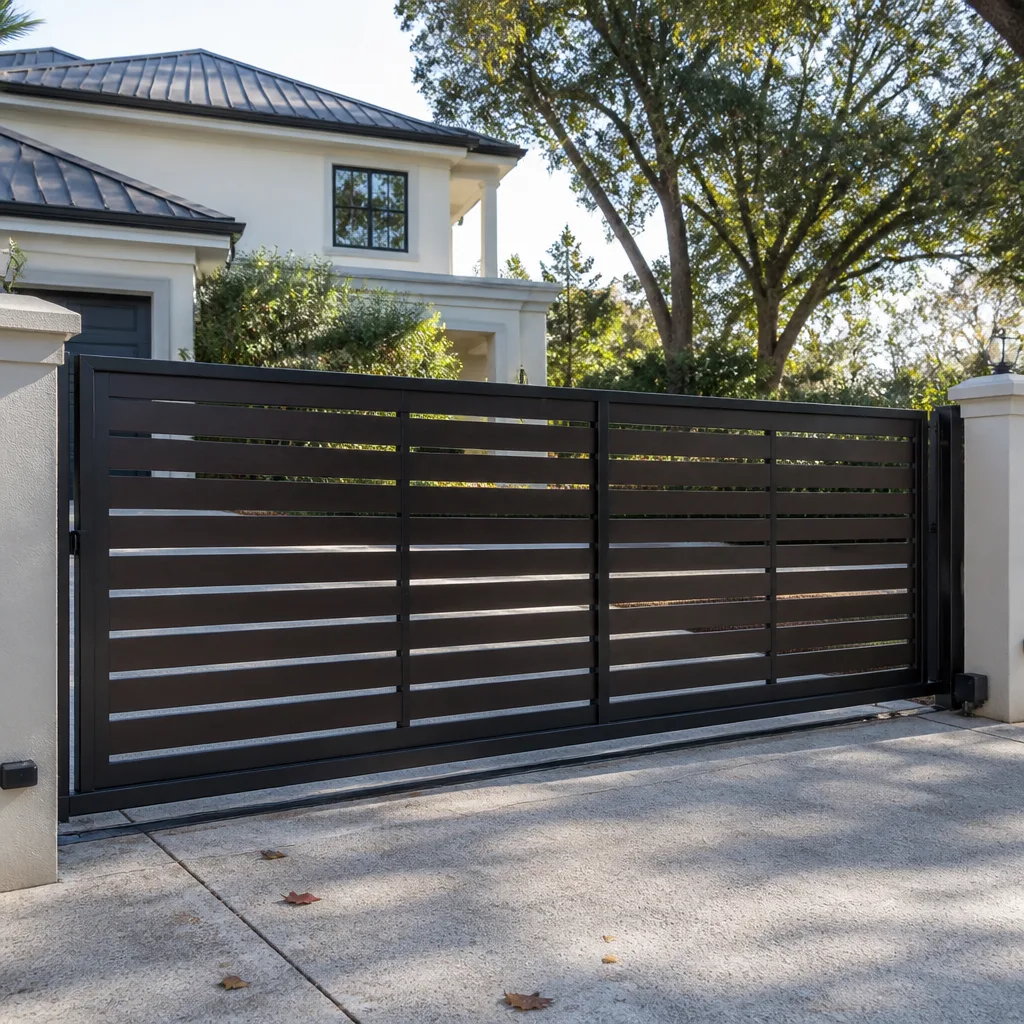 Sliding driveway gates
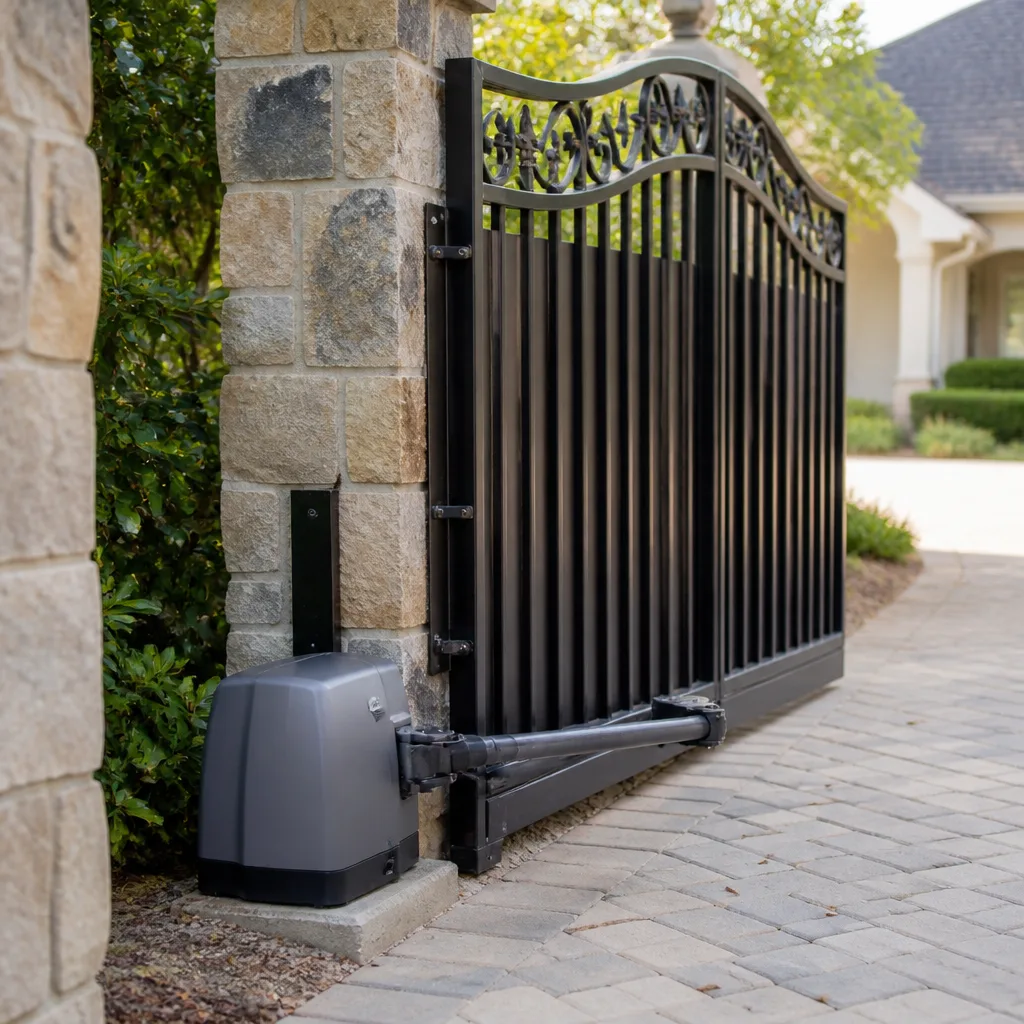 LiftMaster operators
Free on-site gate assessment - hinges, posts, and your LiftMaster or Nice gate operator checked before anything is quoted
The assessment is free and the quote is the invoice.
Get your free estimateGate Repair Emergency Preparedness Guide for Sunrise Manor Homes
The calls that come in after 10 p.m. are almost never the ones about a gate that won’t open. They’re about a gate that failed shut with a family member locked out, or a gate hanging open in the wind that leaves the whole side yard visible from the street. In our experience, most of those midnight emergencies could have been a ten-minute fix earlier in the evening if the homeowner had known one manual release step. This guide walks through what to do before you ever dial a number: how to release each type of gate operator, the first-15-minutes decision tree, how to secure an open gate without wrecking the hardware, what to have ready when you call, and the yearly checks that keep Sunrise Manor homes out of the emergency queue in the first place.
Quick Answer
A gate emergency in Sunrise Manor is either a gate stuck open (a security exposure) or a gate stuck closed (an access trap) – and both are usually solved by knowing where your operator’s manual release lever or key is and how to disengage it. Before calling anyone, release the gate manually, secure it in a safe position, and then call a 24-hour repair line with your operator brand, model, and the exact symptom. Gatewood Fence & Gate Sunrise Manor answers the phone with a live person around the clock at (844) 761-8729.
Styles & brands we work with
- Wrought iron
- Wood & steel frame
- Farm & ranch
- Sliding driveway gates
- LiftMaster operators
Table of Contents
- How to Manually Release Every Common Gate Operator
- The First 15 Minutes of a Gate Failure: A Decision Tree
- How to Secure a Gate Stuck in the Open Position
- What to Have Ready Before You Call a 24-Hour Repair Service
- The Three Yearly Checks That Prevent Emergencies
- Sunrise Manor Conditions That Wear Gates Fast
- Common Mistakes to Avoid
- When to Call a Professional
How to Manually Release Every Common Gate Operator
Almost every residential gate operator on the market has a manual release built into it. The trick is that on sliding gates it’s a lever near the motor housing, and on swing gates it’s usually a keyed release or a bypass arm you flip, and the location changes by brand. Learn yours tonight, in daylight, before you need it. In our experience, the single most useful thing a Sunrise Manor homeowner can do is find the release and practice it once so the darkness and panic don’t get in the way.
Here’s how the release works by the most common brands we service:
- Mighty Mule and Ghost Controls (most common on rural Sunrise Manor properties): Look for the manual release lever on the back of the arm or the operator housing. Pull the lever, then swing the gate by hand. On most models you’ll need to re-engage the lever fully before powering back up.
- LiftMaster swing and slide operators: Open the cover on the operator housing. Most have a keyed manual release. Turn the key, lift the release lever, and the gate will move freely by hand.
- FAAC and BFT (common on heavier driveway gates): These usually use a keyed release either on the operator housing or on the gate leaf itself. Insert the key, turn it, and the gate unlocks.
- DoorKing slide operators: A manual release lever or keyed release is typically under a removable cover plate near the motor. Release it, then push the gate along the track by hand.
If you can’t find the release, look at the sticker on the operator housing – the brand and model number are almost always printed there, and that’s the fastest way to get the right release procedure on the phone. Still struggling, or the gate won’t budge after release? That’s when it’s time to call, and our Sunrise Manor gate motor and opener team can walk you through the exact release for your unit.
The First 15 Minutes of a Gate Failure: A Decision Tree
The first quarter hour after a gate failure matters more than people realize. Panic decisions – ramming the gate, cutting the operator arm, yanking the release while the gate is under tension – usually cost more than the repair would have. Follow this decision tree in order.
- Is anyone trapped inside or outside? If a person or vehicle is trapped, stop and get them out safely first – manual release (see above), then worry about the gate.
- Is the gate moving on its own? If the gate is cycling, grinding, or moving erratically, cut power at the operator’s breaker switch, not the main house panel. Then release manually.
- Is the gate hanging open or shut without slowing traffic? Secure it in place (next section) so it doesn’t become a hazard.
- Is the gate jammed or seized? Do not force it. A seized gate usually means a failed hinge, broken post, or bent track – forcing it makes those worse.
- Is the failure cosmetic – a crooked sag, a slow close, a click? Note it, secure the gate if it’s still safe to operate, and schedule a daytime repair.
Once the immediate danger is handled, you’re ready to call. Our goal for any emergency is to give you a straight answer on the phone and, if it’s a repair, to be there when we said we would. A single after-hours call about a Sunrise Manor driveway gate that locked someone out earlier this year ended with the gate released, the operator re-engaged, and the homeowner back inside in under 40 minutes – because the release had been practiced once, months earlier.
How to Secure a Gate Stuck in the Open Position
A gate stuck open isn’t just an inconvenience – it’s a security exposure, and every hour it stays open is an invitation. But you don’t want to damage the gate trying to force it closed. There’s a safe way to secure it until repairs happen.
The method depends on the gate type:
- Sliding gates: Slide it closed by hand (if released), then drop a cinder block or a wheel chock on each side of the track, tight against the gate leaf. If the track has a lockout tab, engage it.
- Swing gates: Close the gate by hand, then zip-tie or chain the two leaves together through their existing hardware – never drill new holes. A padlock through the latch plate is the strongest temporary hold.
- Any gate with an overhead arm: Release the arm, close the leaf by hand, and padlock or pin it in place. Don’t leave the arm dangling – it can swing with the wind and bend.
One warning from the field: never secure a gate with a rope tied around the operator arm or the motor housing. In a wind event (and Sunrise Manor sees plenty), that rope chafes and the operator arm bends, turning a $200 repair into a $600 one. Secure at the gate leaf, not the hardware. If you’re not sure how to secure it safely, call us – that’s exactly the kind of thing a five-minute phone call solves.
What to Have Ready Before You Call a 24-Hour Repair Service
When you’re calling at midnight, the last thing you want is a ten-minute back-and-forth while the dispatcher asks questions you don’t have answers to. Have this information ready before you dial, and the call is usually over in three minutes.
What to have in hand
- The gate operator brand and model (on the sticker on the housing)
- The gate type – sliding, swing, or overhead arm
- The exact symptom: won’t move, moves on its own, making a noise (grinding, clicking, humming), smells hot, or won’t latch
- Whether the gate is stuck open or stuck closed
- Whether the operator has power (is the LED on the housing lit?)
- Your address and a phone number to call when the tech is 15 minutes out
- Whether a car or person is blocked – that changes the response
Also be ready to say what you already tried. “I released the manual lever and the gate swings freely, but the operator won’t engage” tells the person on the phone exactly which part of the system is likely at fault. “I don’t know what I did” tells them nothing. Calling our Gate Repair in Sunrise Manor line with even half of that in hand cuts the diagnosis time dramatically.
The Three Yearly Checks That Prevent Emergencies
Most gate emergencies we see in Sunrise Manor started as small problems that were ignored for months. None of these three checks take more than ten minutes, and doing them yearly can head off the failure that lands you in the emergency queue.
1. Exercise the manual release (5 minutes, twice a year)
Release the operator and swing or slide the gate by hand. It should move freely with light pressure. If it’s stiff, grinding, or needs force, the release is starting to seize – and so is the gate. Fix it before it fails. Twice a year is better than once for the same reason you change the oil twice a year in the desert.
2. Check the hinges and posts (5 minutes)
A gate sags in the hinge post, not in the middle – and that’s where we start every sag call. Grab the gate at the far end from the hinge and gently lift up. If there’s more than half an inch of play, the hinge or the post is failing. On Sunrise Manor properties with older tube-steel gates, a wobbly post is almost always the beginning of a much bigger repair.
3. Walk the safety edges and photo eyes (3 minutes)
Every automatic gate has safety edges or photo-eye sensors. Wave your hand in front of the photo eye, or push lightly on the safety edge, while the gate is closing. It should stop and reverse. If it doesn’t, the gate is a hazard, not just an inconvenience – and that’s a same-week call, not a someday call.
Add a fourth if you want it: pour a cup of water on the track or hinge points once a month in summer. Sunrise Manor’s dust and heat are hard on gate hardware, and a little lubrication goes a long way.
Sunrise Manor Conditions That Wear Gates Fast
Sunrise Manor sits in the middle of the Mojave’s high-desert climate, and that shapes what fails and when. We’ve learned to look at a few things other repair shops miss because they’re not local.
Heat expansion. Summer temperatures push 110°F plus for weeks. Steel and aluminum gate frames expand, hinge pins swell, and gates that fit fine in spring start dragging in July. If your gate suddenly starts binding in the heat, that’s what’s happening – and it’s a hinge and post adjustment, not a replacement.
Dust in the track. Sunrise Manor properties sit close to open desert. Wind-blown dust packs into slide tracks and photo-eye housings. A slide gate that stops halfway through its cycle in late spring is usually a dust-bound track, not a failed motor.
Wind events. Spring and fall wind gusts turn a loose gate into a pendulum, and a gate acting as a sail will bend hinges and twist posts. If your gate has any play at all, tighten it before wind season.
Older neighborhoods. Much of Sunrise Manor’s housing stock went up in the 1980s and ’90s, and those original tube-steel gates and operators are now 30+ years old. When we see an original operator from that era still running, we know it’s living on borrowed time.
Common Mistakes to Avoid
- Ramming or forcing a stuck gate. If the gate won’t move freely by hand after release, something mechanical is broken. Forcing it bends the leaf or the track, and that turns a hinge job into a rebuild.
- Calling without the operator brand and model. The brand is on the housing sticker. Without it, the person on the phone is guessing – LiftMaster, FAAC, and BFT releases all work differently.
- Tying a stuck-open gate with rope around the operator arm. It looks secure until the wind catches it and the arm bends. Secure at the gate leaf or latch, never at the motor.
- Cutting or drilling to “make it work.” Every hole you add is one the repair tech now has to patch. We repair what others want to replace, but even we can’t undo a sliced operator arm.
- Ignoring a warning sign – slow close, grinding, a click. A gate that gets “a little slow” in spring is telling you the operator or the hinges are on their way out. Fix it in daylight, not at midnight.
- Using a call center that has never seen a Sunrise Manor gate. A dispatcher three states away will quote a phone price that changes at the door. Ask for a published address and a license you can look up before you commit.
- Running a gate with a failing safety edge. Photo eyes and safety edges exist for a reason. A gate that won’t reverse is a hazard to anyone walking through it, and it’s a same-week repair – not a someday one.
See the difference
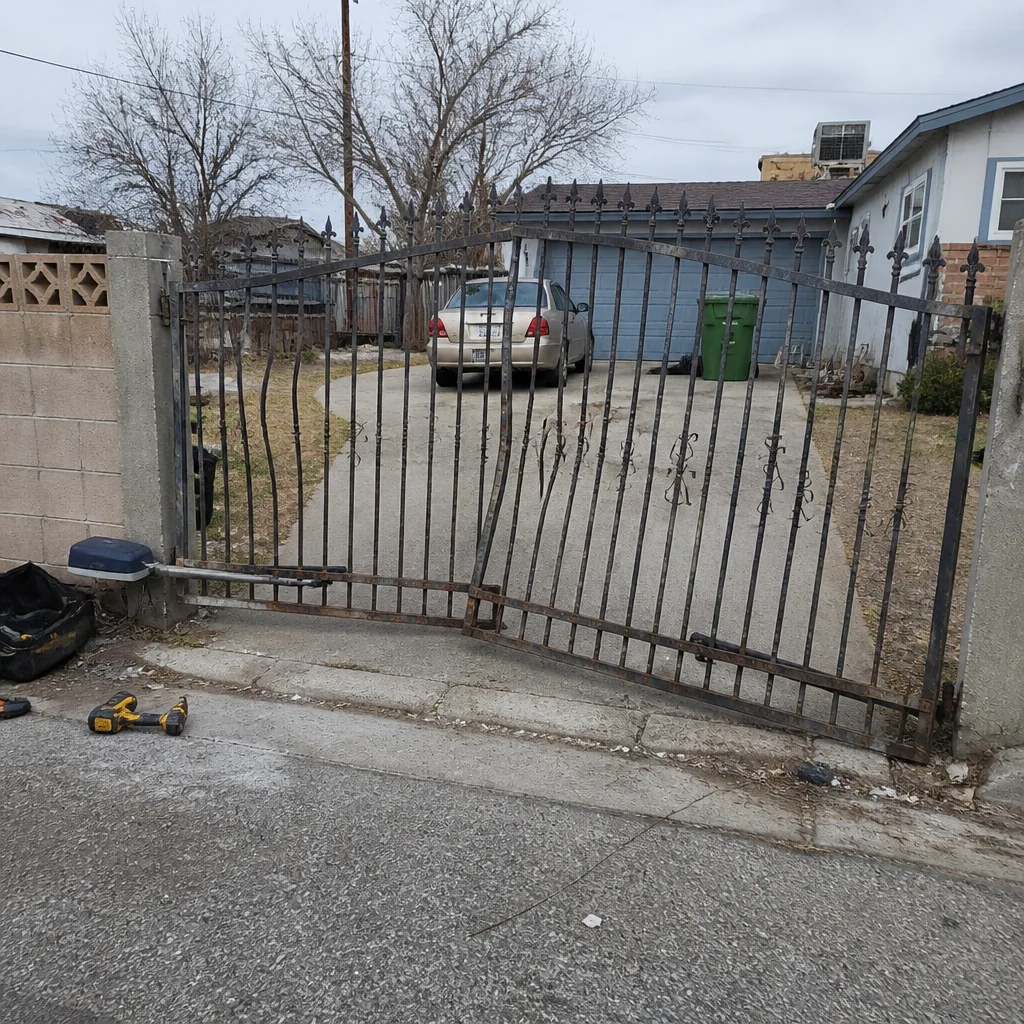 Before
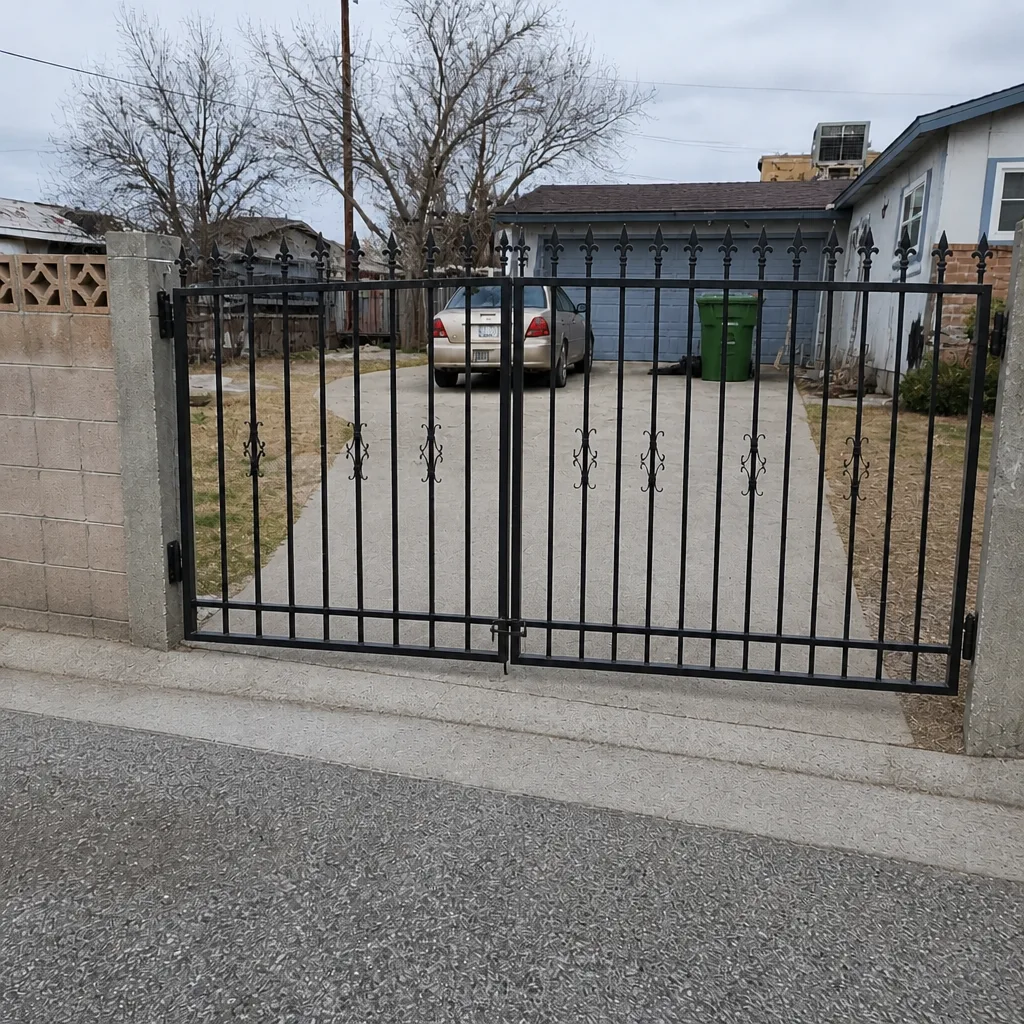 After
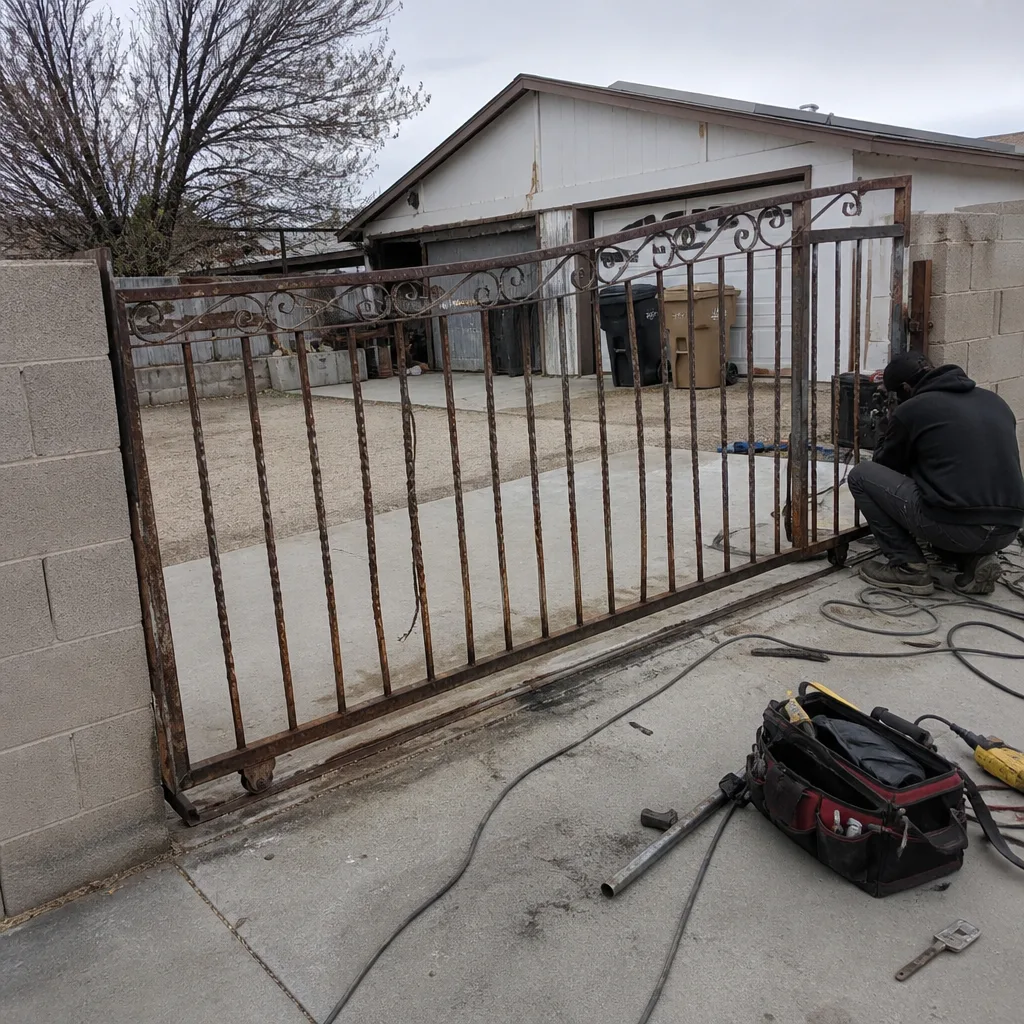 Before
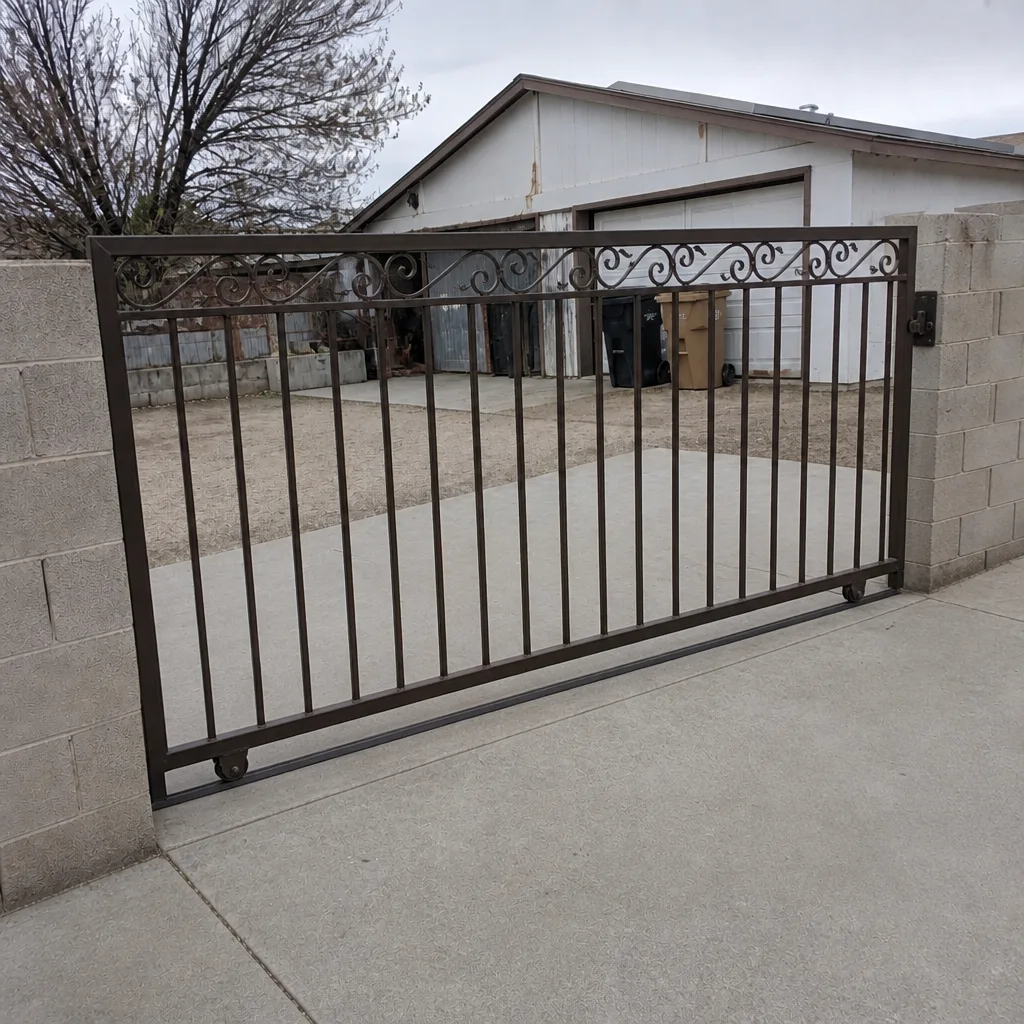 After
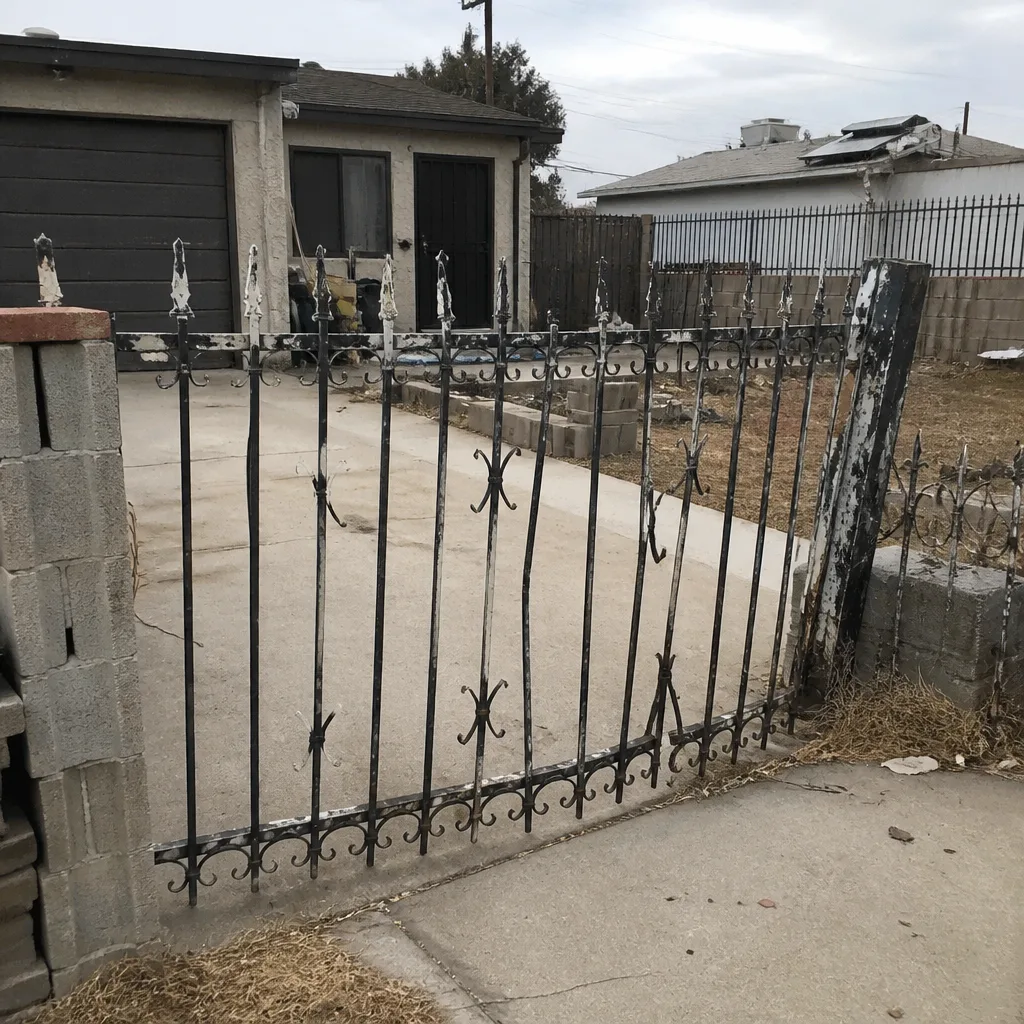 Before
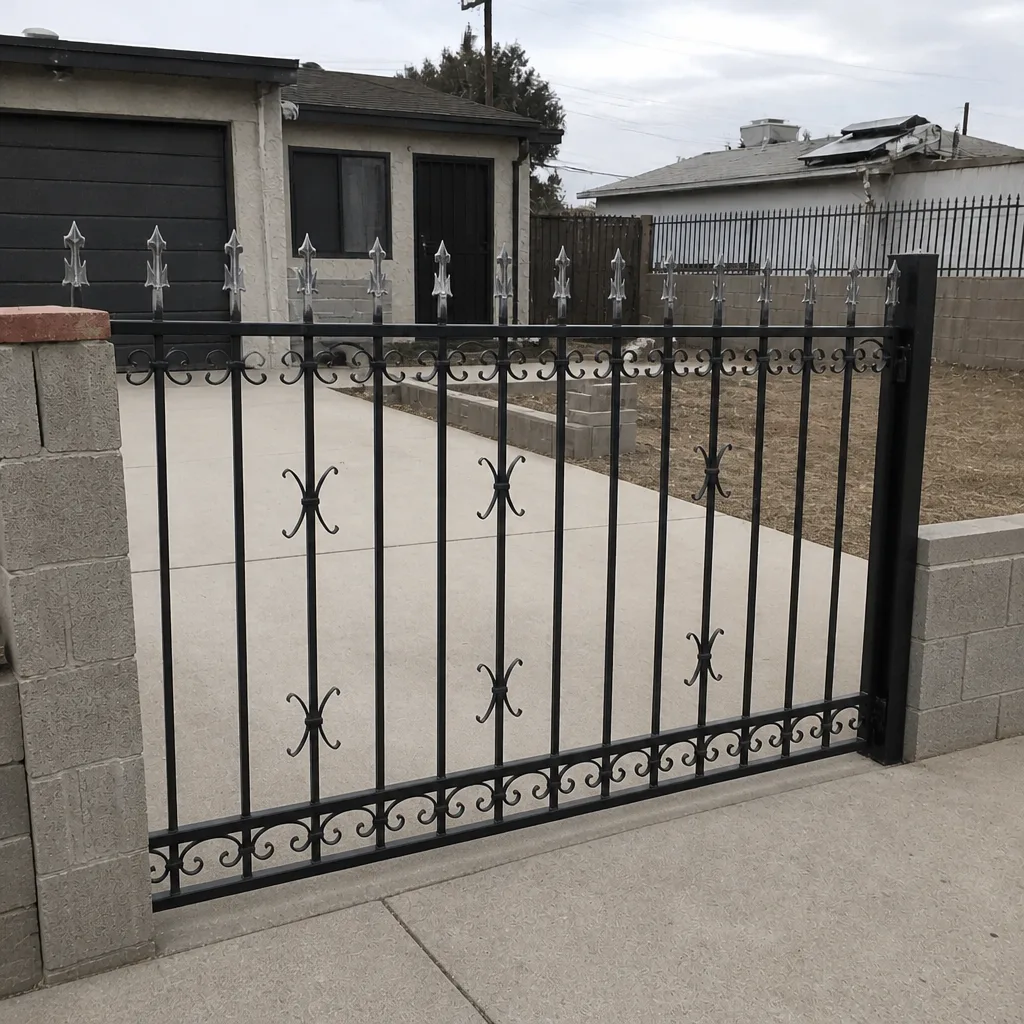 After
When to Call a Professional
Some things a homeowner can handle in five minutes. Some things need to be handled by someone with the tools, the truck, and the experience to fix it right the first time. The line is usually clear when you look at the facts:
- The gate won’t release manually, or won’t move by hand after release
- The gate moves on its own, cycles erratically, or makes a grinding or humming sound under power
- A hinge post is loose, rusted through, or actually broken
- The operator has power but the arm doesn’t engage, or engages and immediately releases
- The safety edge or photo eye won’t reverse the gate
- The board is dead, tripped repeatedly, or you smell hot electronics
Gatewood Fence & Gate Sunrise Manor offers free estimates in Sunrise Manor – call (844) 761-8729. We’re a locally owned, owner-operated shop with our address and license published, our technicians carry up to 25 years of experience, and every job carries the 90-Day Done Right Promise in writing. If the gate needs repair, we repair it in your driveway rather than hauling it off. And yes, a live person answers the line around the clock, not a voicemail.
Frequently Asked Questions
Every residential operator has a manual release: a lever on the back of the housing for Mighty Mule and Ghost Controls, a keyed release on LiftMaster, FAAC, and BFT, and a cover plate with a release lever on most DoorKing slide units. Find the release tonight in daylight, practice it once, and you’ll be able to do it by touch if you ever need to. Call (844) 761-8729 and we’ll walk you through your exact model if you’re not sure.
A gate stuck open is a security exposure – the property is exposed and anyone can walk in. A gate stuck closed is an access problem – a car or a family member is trapped. The first-15-minutes response differs: for stuck-open, secure the gate leaf to the latch with a padlock or chain; for stuck-closed, release the operator manually and open the gate by hand so no one’s trapped. Both are usually solved by the same release procedure, and both are quick calls to (844) 761-8729.
Yes. A live person answers the phone 24 hours a day, 7 days a week, and we coordinate emergency repair in Sunrise Manor after hours. Have the operator brand, model, gate type, and exact symptom ready when you call – that’s what keeps the response fast. Call (844) 761-8729 for the after-hours line.
Repair pricing in Sunrise Manor varies by what’s actually broken – hinge and post adjustment, operator repair, board replacement, and track straightening all sit in different ranges. What we promise is that you get the price on the phone before anyone is dispatched, and it doesn’t change at the door. Our standing offers apply here too: $40 off any repair over $200, no trip charge inside the county, and a permanent 10% discount for seniors and veterans. Call (844) 761-8729 for an exact quote – estimates are free.
Once a year at minimum, plus a second manual-release check in mid-summer given the desert heat. The annual service should include hinges, posts, the operator, safety edges, photo eyes, and the track or swing path. A gate that’s checked yearly almost never lands in the emergency queue. Call (844) 761-8729 to schedule your annual check.
Stop and don’t force it. A gate that’s released but won’t swing or slide has a mechanical failure – a seized hinge, a bent track, a broken post – and forcing it makes every one of those worse. Note the brand and model, secure the gate if it’s open, and call (844) 761-8729. Our crew will come look, tell you what’s actually wrong, and give you a written price before anything is touched.
The Bottom Line
A gate emergency in Sunrise Manor is rarely a mystery – it’s a gate that’s been telling you something for months that you didn’t have the chance to hear. The two minutes you spend tonight finding your operator’s manual release and testing it are worth more than any emergency call. Take ten minutes once a year to check the release, the hinges, and the safety edges. Secure an open gate at the leaf, never at the operator arm. Have the brand, model, and symptom ready before you dial. Do those four things and you’ll spend a lot less time searching Google at midnight. If you do need help, Gatewood Fence & Gate Sunrise Manor is on the line around the clock, with a real name on the shop and a real address you can drive to.
Call (844) 761-8729 for a free estimate on any gate repair, or to book an annual service check. We’re happy to give you a second opinion on any written estimate from another shop, and that second opinion is free.
Written by the team at Gatewood Fence & Gate Sunrise Manor.