
Last updated November 18, 2026
 Wrought iron
 Wood & steel frame
 Farm & ranch
 Sliding driveway gates
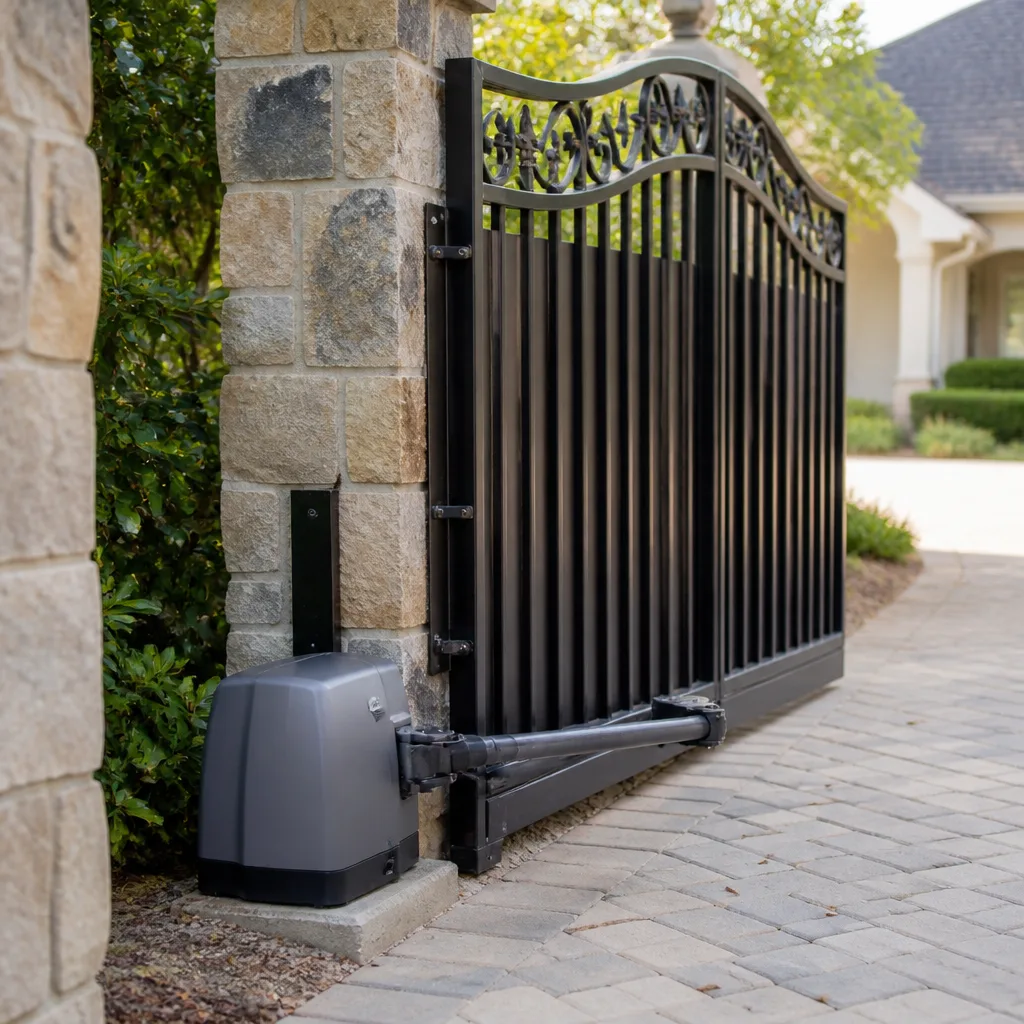 LiftMaster operators
Free on-site gate assessment - hinges, posts, and your LiftMaster or Nice gate operator checked before anything is quoted
The assessment is free and the quote is the invoice.
Get your free estimateGate Repair Maintenance Schedule: What to Do and When
Lubricating your gate hinges in August in Nevada is the worst time to do it. The oil thins out in the heat and flings off within weeks, leaving bare metal grinding against bare metal right when the monsoon humidity rolls in. Here in Sunrise Manor, the calendar matters as much as the task. This guide lays out a real maintenance schedule built around our seasons – pre-summer heat checks, post-monsoon hardware inspections, and winter alignment checks – plus the lubricants that survive sustained 100°F+ heat and the four-minute torque check that prevents most spring sagging calls.
Quick Answer
A gate needs a quick visual and hardware check monthly, lubrication every two to three months (more often in summer heat), a full torque and alignment inspection twice a year, and a deep service each spring and fall. In Sunrise Manor, shift the heavy checks to just before summer heat and just after monsoon season, and use a high-temperature lithium or dry-film lubricant that won’t thin out and fling off.
Styles & brands we work with
- Wrought iron
- Wood & steel frame
- Farm & ranch
- Sliding driveway gates
- LiftMaster operators
Table of Contents
- Why the Calendar Matters More Than the Task
- The Sunrise Manor Month-by-Month Calendar
- Which Lubricants Survive 100°F+ Heat
- The Four-Minute Torque Check
- How to Log What You Find Each Time
- What “Looks Fine” Actually Means on a Gate
- Common Mistakes to Avoid
- When to Bring in a Professional
Why the Calendar Matters More Than the Task
Most maintenance advice tells you to lubricate and inspect, but it skips the timing. A gate check in Sunrise Manor is not the same in February as it is in July. Our desert swing does real work on hardware: summer afternoons push past 100°F, springs and hinges expand, and lubricant that was fine in winter turns thin and migrates. Then the monsoon season arrives with dust and sudden moisture, and any hardware with a worn bushing starts to bind.
In our experience, the calls that come in every spring aren’t really spring problems. They started the previous August, when a gate got lubricated at the wrong time and nobody noticed the hinge pin loosening. By the time the gate sags enough to drag on the driveway, the worn part has been failing for six months. The task list tells you what to do. The calendar tells you when it will actually help.
This is why a maintenance schedule tuned to Sunrise Manor’s actual weather beats a generic “inspect quarterly” list every time. The right month saves you a repair bill; the right task done in the wrong month can make things worse. If you’ve ever watched a gate close on its own and wondered why, the answer is almost always in the hardware, and the clock started against it long before you noticed.
The Sunrise Manor Month-by-Month Calendar
Here’s the schedule we hand to homeowners in Sunrise Manor. It’s built around our seasons, not a generic climate. Adjust the exact week, not the order.
- January – February: Alignment check. Cool weather lets you spot a sagging gate without heat distortion confusing the read. Check the hinge posts, gate frame, and latch alignment. This is the best time to catch a slow sag before it becomes a spring repair.
- March: Pre-summer heat prep. Torque all hinge bolts, latch hardware, and post-mount brackets. Apply a high-temperature lubricant to hinges, rollers, and the latch mechanism. Inspect for rust that heat will spread.
- April – May: Operator and safety check. Test the opener, safety edges, and photo-eye sensors for a gate motor and opener system. Clear debris from the track or swing arc before the heat arrives.
- June – July: Light monitoring only. Skip lubrication here – it’s the worst window in the desert. Just eyeball for grinding, uneven travel, or a gate that stops short.
- August – September: Post-monsoon hardware sweep. After the dust and rain, check hinges, welds, and the hinge post for movement or rust bloom. Re-lubricate hardware with a dry-film or high-temp grease.
- October: Deep service and torque. A full alignment and torque pass, plus a weld and frame inspection. Replace any worn hinge bushings now, before winter.
- November – December: Winter readiness. Check the latch, verify the gate closes fully, and confirm access control hardware (keypads, intercoms, DoorKing entry systems) still functions in cooler temps.
If you only remember one line from this calendar: never lubricate in the peak heat, and always do the hardware sweep right after monsoon. That single shift prevents a large share of the sagging-gate calls we see across Sunrise Manor each year.
Which Lubricants Survive 100°F+ Heat
This is where most gate maintenance quietly fails. The lubricant you use in mild weather is often the one that wrecks your hardware in the desert. Thin penetrating oils are great for loosening a stuck bolt; they are terrible as long-term hinge lubricant in Sunrise Manor summer heat, because they thin out, run off, and leave the surface dry. Worse, some cheap petroleum products oxidize into a varnish-like film that gums up hinge pins and rollers until the gate drags.
What actually holds up here:
- High-temperature lithium grease on hinge pins, rollers, and the latch pivot. It stays put at sustained high heat where oil migrates.
- Dry-film (PTFE) lubricant for exposed hinges and surfaces where you don’t want dust to stick. Good for post-monsoon re-lubrication.
- Silicone spray on moving parts that collect grit, since it doesn’t trap the desert dust the way heavy grease can on a track.
Avoid WD-40 as a long-term hinge lubricant – it’s a water displacer, not a schedule. And skip old-fashioned motor oil on the hinge pins; it thins and flings off within weeks of a July afternoon. Match the product to the hardware and the season, and you’ll notice the difference at the next check. Getting this right is the core of keeping a Gate Motor & Opener in Sunrise Manor running smoothly, since the operator is only as reliable as the hardware it pushes.
The Four-Minute Torque Check That Prevents Most Sagging
A gate sags in the hinge post, not in the middle – and that’s where you start. The four minutes you spend checking torque twice a year prevents the majority of spring sagging calls we get. It isn’t complicated; it’s just skipped. Here’s the sequence:
- Grab a socket or wrench that fits your hinge bolts and gate-frame hardware.
- Start at the top hinge and work down, checking each bolt to firm hand-tight – snug, not cranked to the point of stripping.
- Check the hinge post anchors into the ground. A post that has started to lean is the beginning of most sag stories.
- Move to the latch and strike plate. A loose latch is a gate that won’t hold closed.
- Check the gate frame for any bolt that takes more than a quarter-turn to tighten – that one was working loose.
Fix the panel without the post and you’ll fix it twice. The torque check is your cheap insurance against that. If you find a bolt that spins freely or a post that’s moving, stop tightening and note it – that’s a repair, not a maintenance task. This check on a door-style swing gate versus a sliding gate varies a little, but the principle is the same: snug down the hardware that holds the gate to its anchor point.
How to Log What You Find Each Time
You can’t see a trend you never wrote down. A maintenance log turns “the gate feels a little off” into real evidence. It doesn’t need an app – a notebook taped inside the garage door works. What to record each visit:
- Date and weather: Sunrise Manor heat and post-monsoon humidity both affect hardware. Note it so you can compare across seasons.
- Torque notes: Which bolts moved, and roughly how much.
- Lubricant used: Product and where you applied it.
- Visual changes: Rust spots, new wobble, a gate that stops short, a latch that needs a little lift.
- Anything that felt different: A hinge that didn’t swing as freely, a drag at the same spot.
Over a year or two, the log shows you exactly when that one hinge started loosening. It tells you whether your maintenance is actually working or whether you’re chasing the same problem every season. When you do call for repair, a log saves the technician time and you money – and it’s the difference between guessing and knowing. For a gate that’s on a regular access-control routine, logging also catches the slow drift in a keypad or intercom before it fails completely.
What “Looks Fine” Actually Means on a Gate
“Looks fine” is the most dangerous phrase in gate maintenance, because a gate that looks fine can be weeks from a failure. So what does “fine” actually look like? Here are the visual indicators that tell you your maintenance is working:
- It swings with one finger. A well-maintained gate moves freely through its whole arc, no catches, no grunts.
- No rust bloom at the welds. Clean welds and hinge joints after monsoon season mean your post-rain inspection is doing its job.
- The latch lines up without lifting. A latch that needs a nudge means alignment is drifting.
- It closes fully and stays. Show me the gate closing on its own and I’ll show you where it’s failing – a self-closing gate that won’t latch is an alignment or tension problem.
- The post is straight. Sight down the hinge post; a lean of even a couple degrees is a warning.
In our experience working across Sunrise Manor, the gates that fail in the spring all showed one of these signs the previous fall. If yours shows two or more, it’s time for a real inspection, not another quick spray. A gate that groans or won’t close on its own is telling you where the problem is.
Common Mistakes to Avoid
- Lubricating in peak summer heat. In Sunrise Manor, oil applied in July thins and flings off within weeks. Schedule lubrication outside the hot window, or use high-temp grease that stays put.
- Using thin oil on hinge pins. Penetrating oil loosens stuck parts but doesn’t protect them. It oxidizes into varnish that seizes hardware.
- Tightening the panel and ignoring the post. A sagging gate is almost always a hinge-post problem. Fix the post or you’ll fix the panel again next season.
- Skipping the post-monsoon sweep. The dust and rain of late summer are when rust and loosened hardware take hold. If you only do one check a year, do this one.
- Never writing anything down. Without a log you repeat the same fix and never see the trend coming.
- Spraying the opener itself. Never lubricate an operator’s internal mechanism to “fix” a stutter – that’s a repair issue, and a LiftMaster or Linear unit needs a proper diagnostic, not a spray can.
- Treating a leaning post as cosmetic. A post that’s moved is a structural and safety concern, especially on a gate near a driveway or walkway.
When to Bring in a Professional
Most of this schedule is fair for a careful homeowner. Some of it isn’t. Call a professional if you find a hinge post that’s leaning or moving, a weld that’s cracked, an opener that stops or reverses on its own, or a gate that swings unevenly after a torque pass. Gas struts, high-tension springs, and anything electrical in the operator or access control should be handled by a trained technician – those components are dangerous to work on cold. If you’ve tried a repair and it didn’t hold, that’s the signal to stop and get it done right. Gatewood Fence & Gate Sunrise Manor offers free estimates in Sunrise Manor – call (844) 761-8729 and we’ll bring a second set of eyes and a written price before any work starts.
We’d rather fix a gate in your driveway than haul it off. If your hardware is older or you’re not sure when it was last serviced, a free estimate tells you whether the calendar just needs a reset or the gate needs a real repair. For a full look at what we handle locally, see Gate Repair in Sunrise Manor.
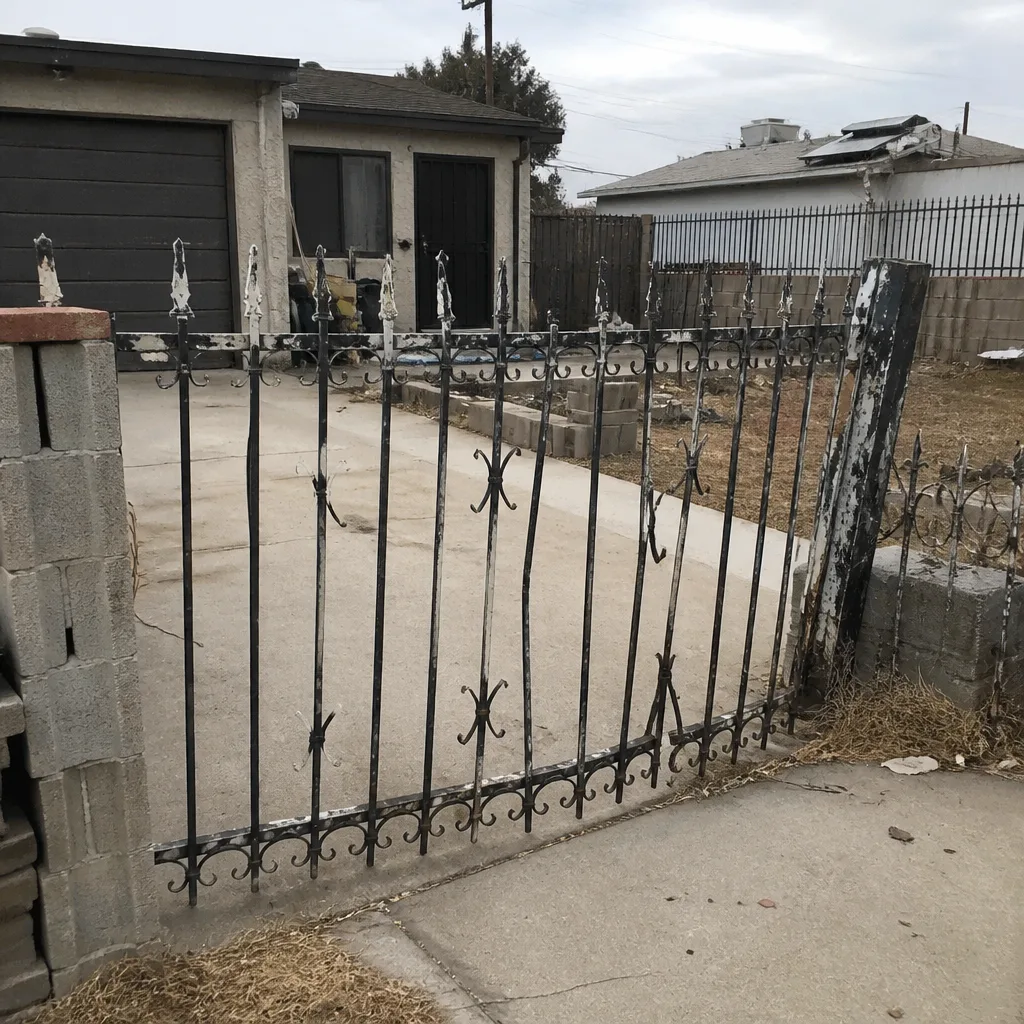
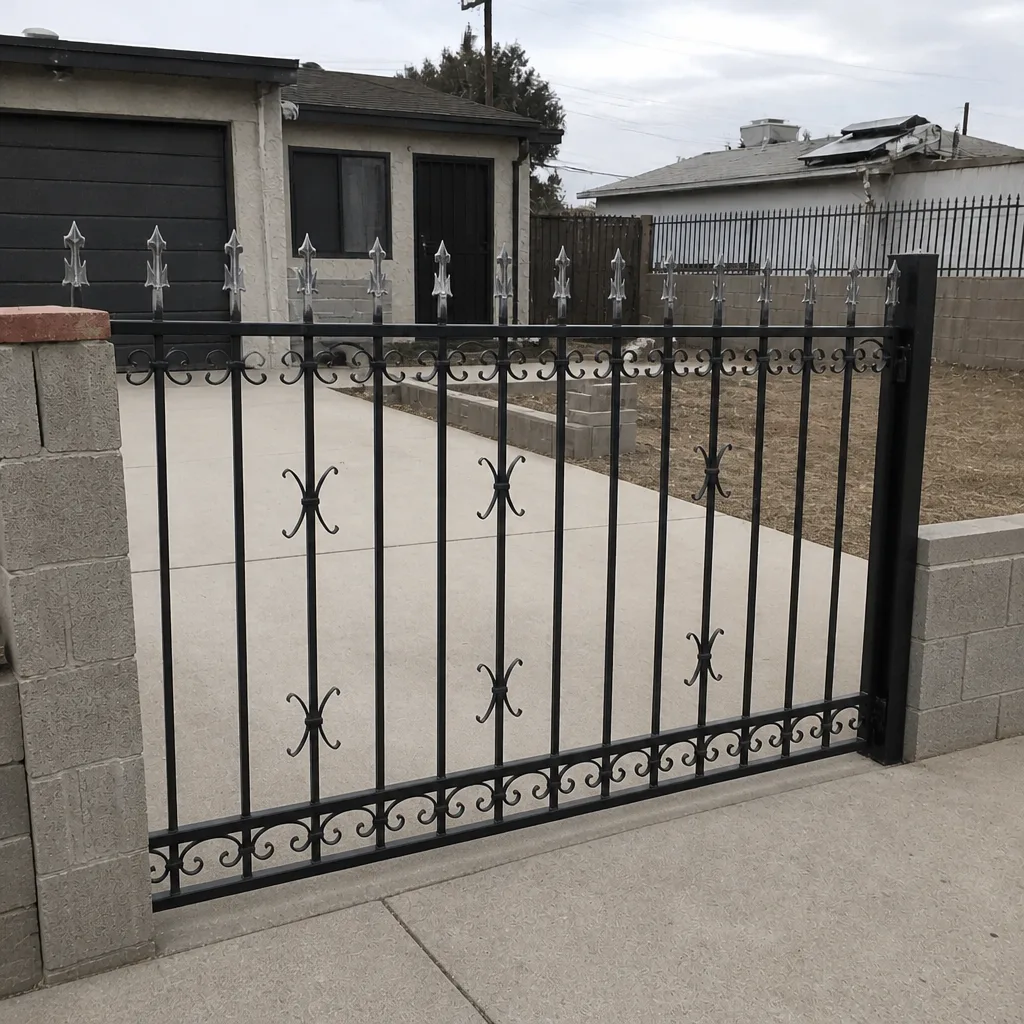
See the difference
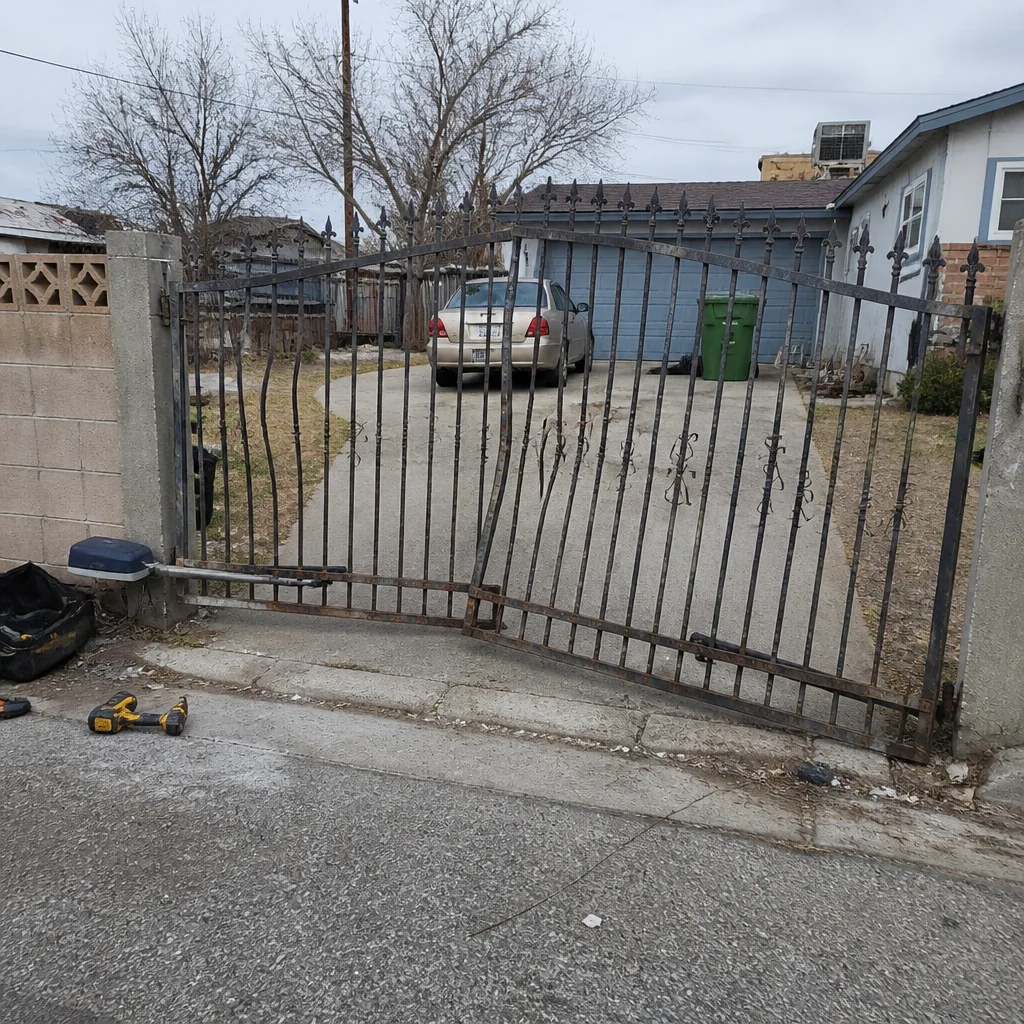 Before
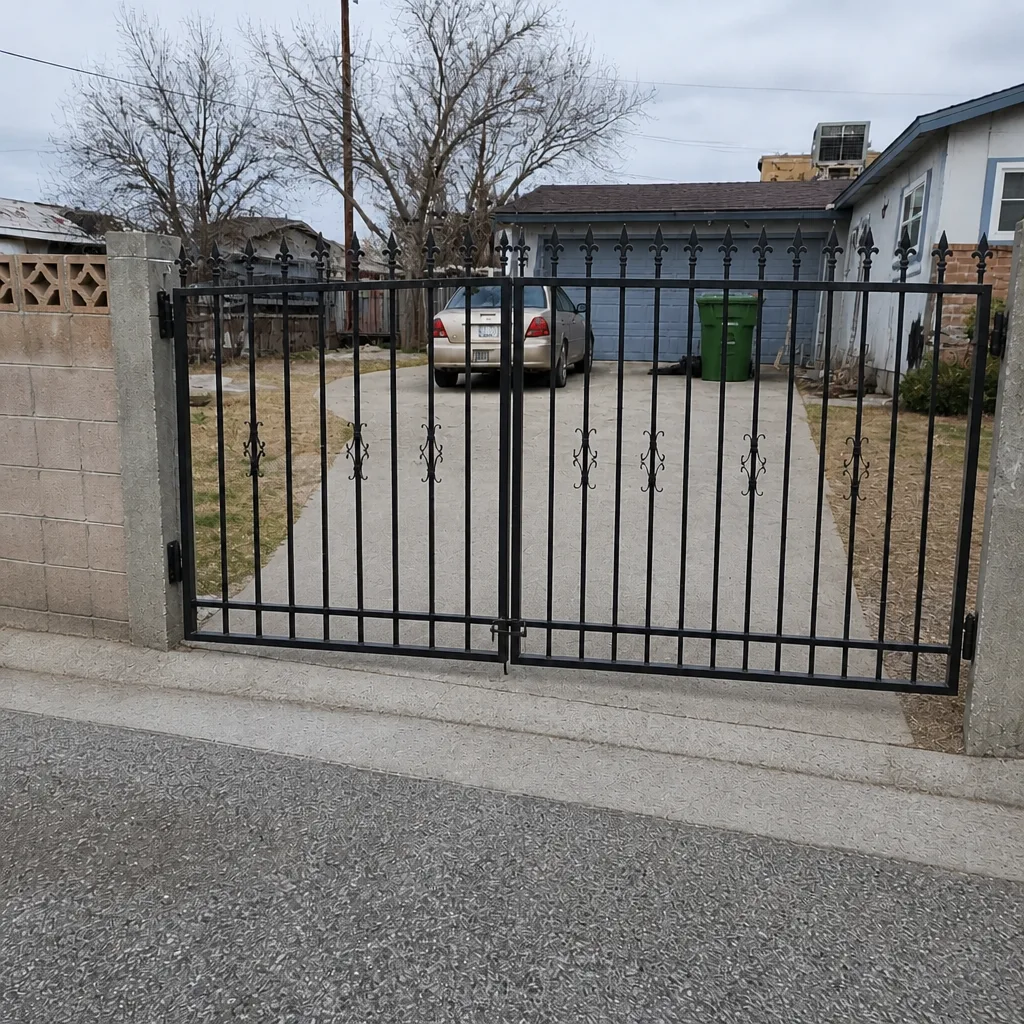 After
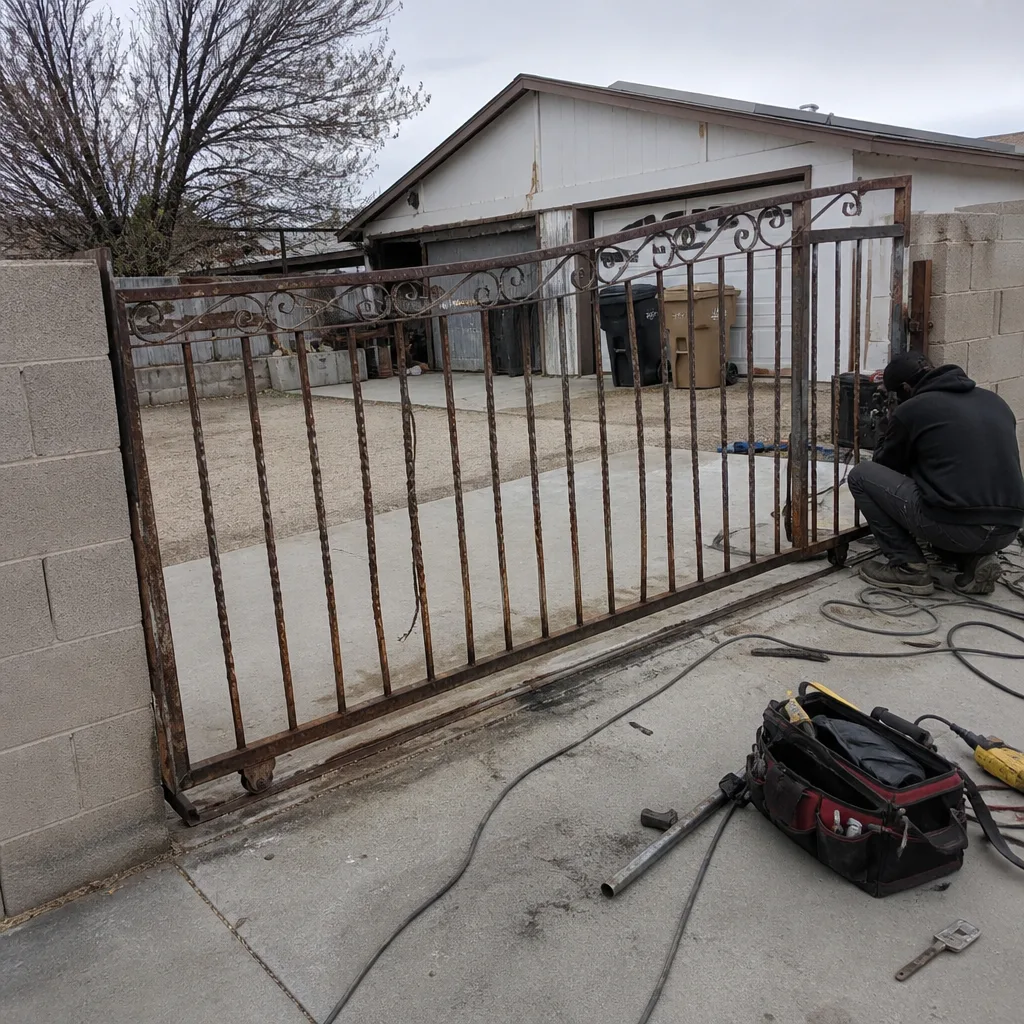 Before
 After
 Before
 After
Frequently Asked Questions
Every two to three months in normal conditions, and less often in peak summer heat in Sunrise Manor, when thin lubricants work against you. Use a high-temperature lithium or dry-film lubricant on hinges and rollers, and re-lubricate right after the monsoon season.
Late spring, before the heat, and mid-to-late fall, after monsoon but before winter, are the two best windows. Those are the two full torque-and-alignment passes. The in-between months are visual checks and light lubrication, and you skip heavy lubrication in June and July.
WD-40 is a water displacer, not a long-term lubricant, and it thins out and migrates in desert heat. It’s fine for loosening a stuck bolt, but rely on a high-temp grease or dry-film product for ongoing hinge protection.
If the hardware is snug, the hinges move freely, and the gate latches without a lift, you’re in maintenance territory. If the hinge post is leaning, a weld is cracked, the gate stops short, or it closes on its own, that’s a repair. Our team at Gatewood can tell you which with a free estimate – call (844) 761-8729.
Yes. Test the opener and safety edges quarterly, and have a certified technician service the unit annually. We’re certified to service LiftMaster, FAAC, BFT, Linear, Viking, Ghost Controls, DoorKing, Elite, and Mighty Mule operators, and we’ve seen how cold or heat changes the way a unit performs.
Light checks, lubrication, and the torque pass are fair to do yourself. Springs, gas struts, welds, and anything electrical in the operator or access control should go to a trained technician. If a repair you tried didn’t hold, that’s the point to call – a second look is free.
The Bottom Line
Timing beats task lists. In Sunrise Manor, do your heavy torque and alignment passes in late fall and early spring, re-lubricate right after the monsoon, and skip the thin oil in the peak heat. Use high-temperature grease or dry film, log what you find so you can spot a trend, and know that “looks fine” means a gate that swings freely, latches without a lift, and has a straight hinge post. The right calendar quietly prevents the spring sagging calls most homeowners think are inevitable, and when a gate needs real work, you’ll know before it becomes a bill. Getting a quick read on your own gate’s condition is the first step toward a schedule that pays you back. Browse Gatewood Fence & Gate Sunrise Manor home for what we handle, or call us for a free estimate – the name is on the shop and we’ll be there.
Contact
Whether you need a hand with your maintenance calendar, a repair on a gate that didn’t hold, or a free second opinion on a written estimate, we’re glad to help. We answer every call with a live person and quote and agree on the price before any work starts. Senior and veteran discounts are permanent, and there’s no trip charge inside the county. Call (844) 761-8729 for a free estimate in Sunrise Manor today. You can also read more about our Gate Installation in Sunrise Manor services if your gate is past repair and you’re weighing a new one.
Written by the team at Gatewood Fence & Gate Sunrise Manor.