
Last updated November 18, 2026
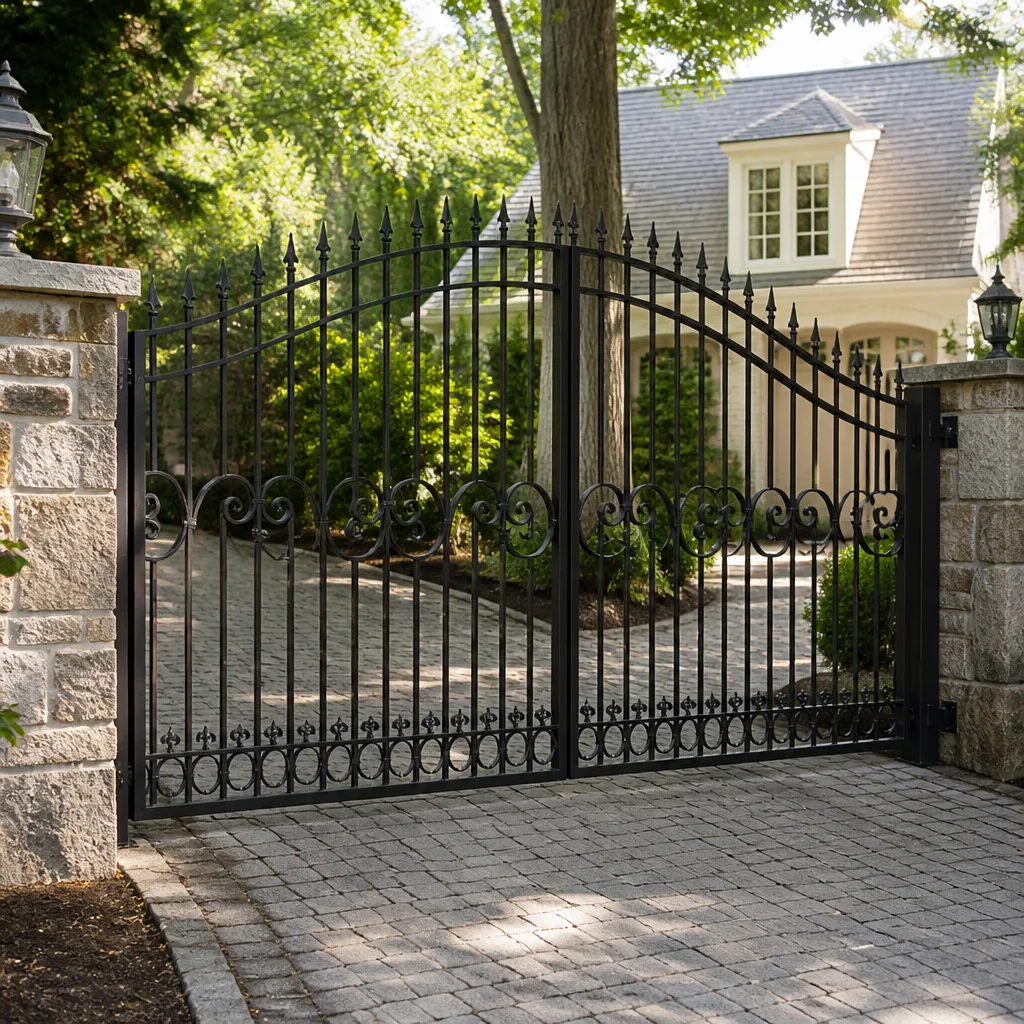 Wrought iron
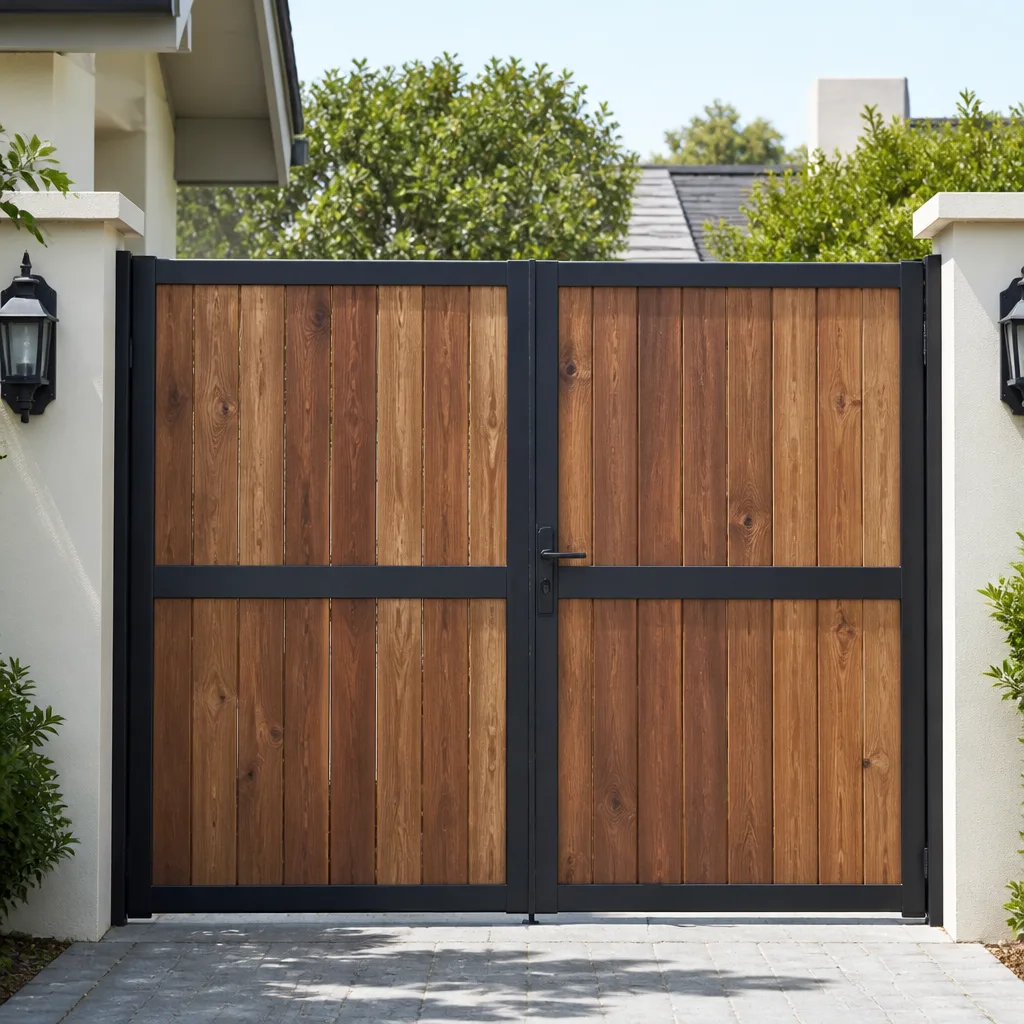 Wood & steel frame
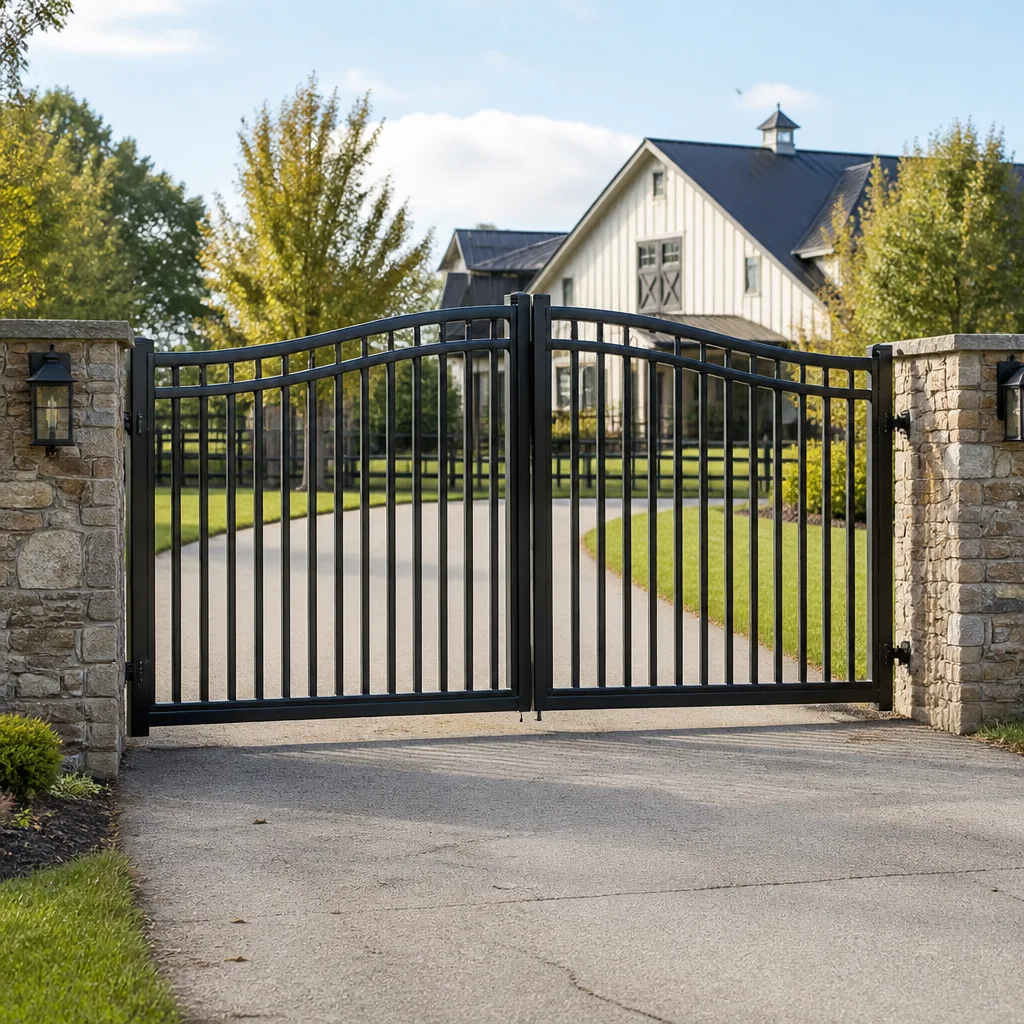 Farm & ranch
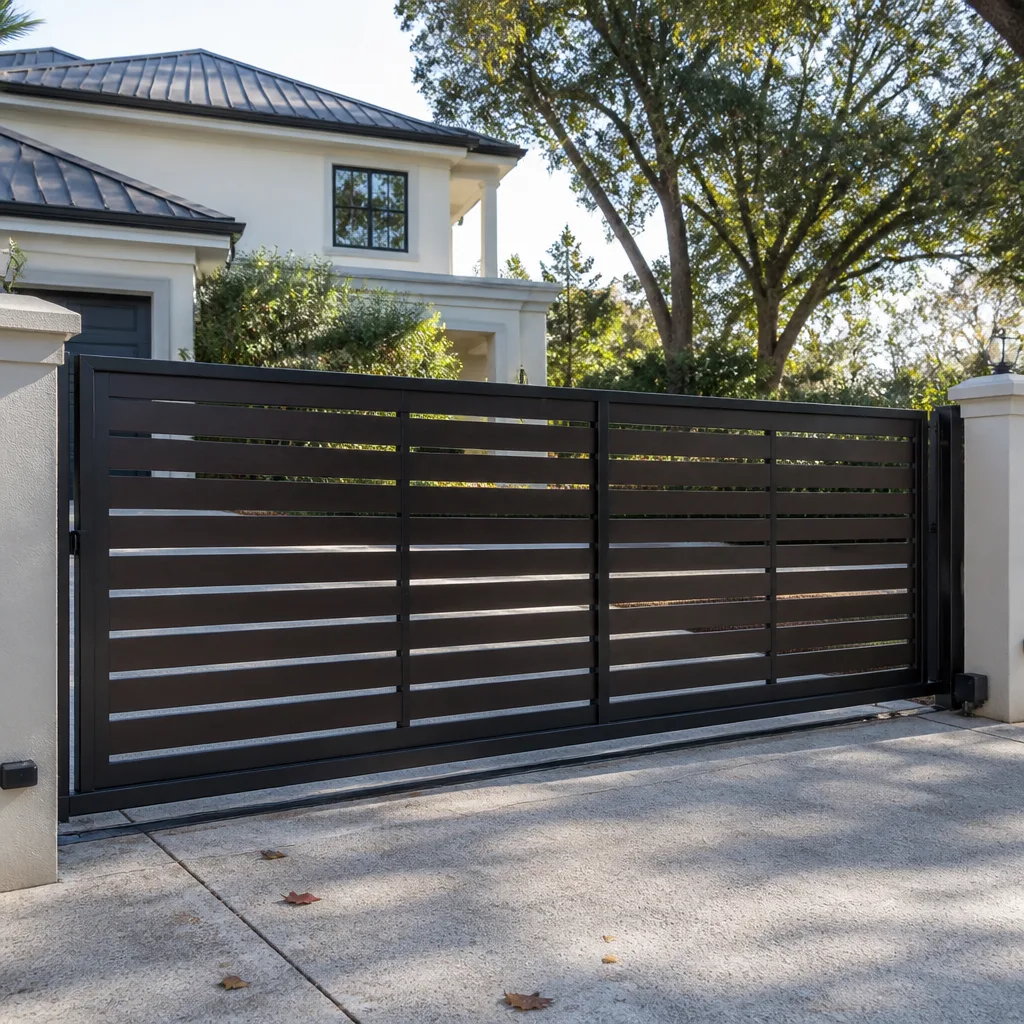 Sliding driveway gates
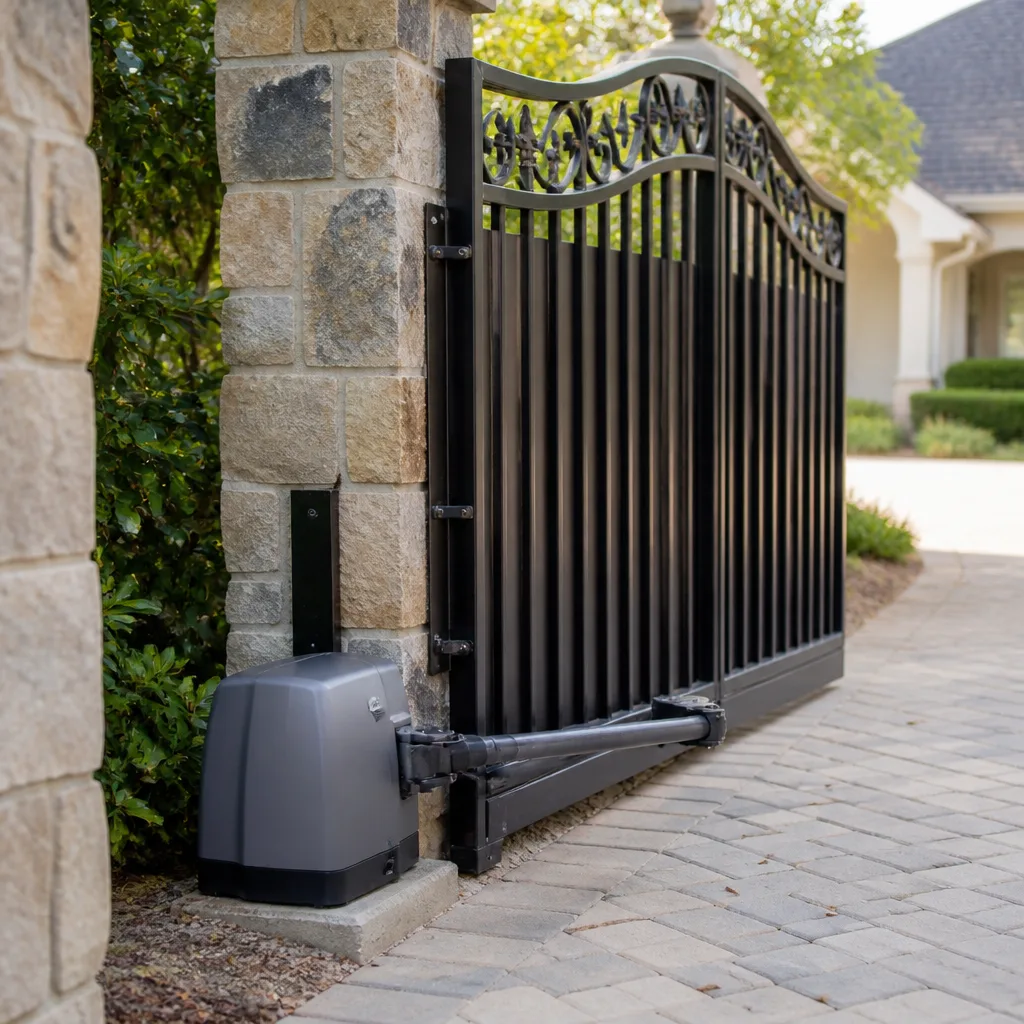 LiftMaster operators
Free on-site gate assessment - hinges, posts, and your LiftMaster or Nice gate operator checked before anything is quoted
The assessment is free and the quote is the invoice.
Get your free estimateGate Installation Maintenance Schedule: What to Do and When
The number one maintenance mistake on a new gate installation isn’t neglect. It’s doing the same thing you’d do on a ten-year-old gate and missing the first-year adjustments that actually matter. A brand-new galvanized steel or aluminum gate is still settling into its first desert summer, its hinges and lag bolts are still seating, and its opener is still learning where “open” and “closed” really are. Treat it like an old gate and you’ll skip the exact checks that decide whether it lasts two decades or starts sagging by year three. This guide lays out a real calendar for that first year in Sunrise Manor – the 30-day retorque, the 90-day alignment check, the first-summer heat inspection – and then the steady annual rhythm after.
Quick Answer
A new gate needs its hardware retorqued at 30 days, an alignment and settling check at 90 days, and a heat-expansion inspection at the end of its first summer. After year one, move to a twice-a-year schedule in Sunrise Manor – once in spring and once in fall – plus monthly visual checks and quarterly opener battery and photo-eye tests.
Styles & brands we work with
- Wrought iron
- Wood & steel frame
- Farm & ranch
- Sliding driveway gates
- LiftMaster operators
Table of Contents
- Why the First Year Is Different
- The First 90 Days: Break-In Maintenance
- The First Summer: Heat Expansion and Settling
- What Changes After Year One
- Automatic Opener Maintenance: What, and How Often
- Keeping a Log a Technician Can Actually Read
- What Deferred Maintenance Really Costs
Why the First Year Is Different
A gate installed in Sunrise Manor in, say, March is going to live through a 110-degree July within four months of going up. The steel or aluminum panels will expand. The concrete footings the hinge posts sit in will cure and shrink by a hair. The lag bolts holding hinges to the post will back off a quarter turn as the wood or steel grain relaxes under load. None of that is a defect. It’s normal settling, and it’s why the first year needs its own schedule.
This is where we see homeowners get into trouble. They buy a good new gate installation in Sunrise Manor, treat it like any other piece of equipment, and figure “I’ll get it serviced when something breaks.” But the first year isn’t about fixing what’s broken – it’s about catching the small drift before it turns into permanent warping. A hinge bolt that backs off at month one might just rattle. Let it go nine months and the gate panel torques sideways and pulls the post, and now you’re paying for post repair, not a wrench turn.
Here’s the other thing most installation guides leave out: operators. If your gate has a LiftMaster or Mighty Mule opener, the first 90 days are when the limit switches “learn” the swing arc. Those settings drift during break-in, which is why a new automatic gate often starts stopping short of fully closed around week six. It’s not a fault. It’s the system settling, and there’s a specific adjustment window for it.
The First 90 Days: Break-In Maintenance
This is the most important window in the entire life of the gate. Follow this sequence and you’ll get the full lifespan out of your hardware; skip it and you’ll be calling someone for gate repair in Sunrise Manor inside two years.
- Week 1 (or as soon as the gate is operational): Visual walk-around. Open and close by hand. Listen for rubbing, grinding, or a panel that drags the ground. Note anything that feels different from day one.
- Day 30 – hardware retorque: Every hinge bolt, lag screw, and bracket fastener gets checked and snugged. New installs almost always have a few that loosen in the first month while the materials seat. This is the single highest-value task in the first year.
- Day 30 – first lubrication: Grease the hinges and the latch, and check the roller or track on any sliding gate. In Sunrise Manor’s dry air, hinges want a heavier lithium-based grease, not a thin spray that evaporates by June.
- Day 90 – alignment check: Confirm the gate is still plumb and the panel is still square. Look for daylight between the gate and the strike post where there wasn’t any before. If the gate has started to sag, it’s usually in the hinge post, not the middle of the panel – that’s where the check starts.
- Day 90 – opener limit switch review: For automatic gates, confirm both the open and closed limits are still accurate. A gate that has stopped closing fully by 2 or 3 inches is showing limit drift, not a failed motor.
- Day 90 – photo-eye and safety edge test: Wave a hand across the photo-eye beam and confirm the gate reverses. Test the safety edge by pressing it while the gate is traveling. If either hesitates, stop using the automatic function and get it looked at.
Each of these is a 15 to 30 minute task. Do them in this order and you’ll catch every break-in issue that matters.
The First Summer: Heat Expansion and Settling
Sunrise Manor summers are hard on gate hardware. We’re not talking about the heat being unpleasant – we’re talking about metal that expands a measurable fraction of an inch per panel between an April morning and a July afternoon, then contracts again in October. That cycle is when a marginal install shows its weaknesses.
The first-summer inspection is best done in late August or early September, once the gate has been through its worst heat. It covers:
- Hinge post check: Push the gate gently at the latch end and watch the hinge post for any movement. A post that shifts indicates soil settling around the footing – common in Sunrise Manor’s caliche-heavy soil, which holds water inconsistently.
- Panel-to-panel fasteners: On multi-panel gates, check that the vertical fasteners between sections haven’t loosened under thermal expansion. Loose panel fasteners are the leading cause of “the gate is wobbly” calls we get in the fall.
- Paint and finish: Touch up any chips on the powder coat or paint before fall winds arrive. Sunrise Manor’s blowing dust and grit sand off thin spots quickly, and a chip that’s fine in September is rusting by January.
- Ground clearance: Confirm the gate still clears the ground by the same amount it did on install day. If the bottom edge has dropped, that’s settling in the hinge post, not the gate itself.
- Operator housing: Check the opener housing for heat discoloration or cracking. LiftMaster and DoorKing control boxes hung in direct afternoon sun get worked hard in Sunrise Manor – a shade cover in June pays for itself.
This is also the point where most homeowner logs will show one or two items needing attention. That’s not bad news; that’s the schedule doing its job.
What Changes After Year One
Once the gate has been through a full annual cycle, the frantic break-in pace stops. The hardware has seated. The limits have settled. The heavy adjustments are over. From here the schedule becomes a steady rhythm of twice-a-year visits, which in Sunrise Manor means spring – March or April – and fall, right after the heat breaks in October.
The spring visit is your “before the heat” check: retorque critical fasteners, fresh grease, photo-eye cleaning, opener battery backup review, and a careful look at anything that shifted during winter winds. The fall visit is your “after the heat” check: same core tasks, plus a harder look at hinge post integrity, panel fasteners, ground clearance, and any finish damage from summer sun.
In between spring and fall, monthly visual walk-arounds and quarterly opener safety tests keep the gate honest. Those aren’t replacements for the twice-a-year service – they’re the early warning system that tells you when something needs attention ahead of schedule.
What you’re buying with the annual rhythm isn’t the labor itself. It’s the head start. A gate that gets two real checkups a year is a gate whose problems get caught while they’re still twenty-dollar problems. We’ve seen Sunrise Manor installations, well made and well placed, still going strong a decade and a half in because the homeowner kept that twice-a-year rhythm. We’ve also seen good installations go to seed inside five years because the owner figured “no visible problem yet, so nothing to do.”
Automatic Opener Maintenance: What, and How Often
Automatic gates are their own maintenance list, and it’s shorter than most people fear if you’re honest about frequency. This matters most for sliding-gate operators like DoorKing and swing operators like LiftMaster and Elite, which are used across Sunrise Manor on a mix of residential and small commercial properties.
Monthly (5 minutes): Clean the photo-eye lenses on both sides of the driveway. Dust and spider webs block the beam far more often than actual failures do. Press the safety edge once to confirm it stops and reverses.
Quarterly (15 minutes): Test the battery backup by cutting power at the breaker and confirming the gate cycles open and closed once or twice on battery alone. Weak batteries are the reason less than you’d think unlatched gates fail during a power interruption. Also confirm the manual release works and the key is where you can find it.
Twice a year (30 minutes): Confirm limit switches are still accurate – the gate should open fully and close completely with no adjustment. Verify photo-eye alignment hasn’t drifted. Check the operator arm, chain, or track for wear and lubrication needs.
When the gate changes behavior: Any sudden change – stopping short, reversing mid-travel, or failing to close – is a stop-use signal, not a wait-and-see. The cause is almost always limit drift or a misaligned photo-eye, both quick to diagnose and quick to resolve. But a gate that closes on a car or a person because the sensors were ignored is a serious safety problem. If you’re not sure what you’re looking at, don’t keep cycling the automatic function while you figure it out.
If the opener is showing age or you’re considering a swap, our gate motor & opener service in Sunrise Manor handles diagnostics and replacement. And if you’re not sure whether your opener is safe to keep, a free second opinion on any written estimate is available.
Keeping a Log a Technician Can Actually Read
A simple maintenance log saves money and time. Not because the log prevents problems, but because it gives whoever is diagnosing the gate a real history rather than a shrug. When a technician walks up to a gate that “doesn’t close right,” the difference between knowing it started three weeks ago after a windstorm and knowing it’s been drifting since spring is the difference between a twenty-minute visit and an afternoon of guesswork.
The log doesn’t need to be fancy. A spiral notebook in the garage works. So does a note in your phone. What it needs:
- Date. Every entry. No exceptions.
- What you did. Retorque, grease, photo-eye cleaning, whatever. Simple phrases.
- What you noticed. “Slight play in the lower hinge.” “Gate drags a bit on the strike side.” “Photo-eye needed cleaning, felt gritty.” These observations are the gold.
- Weather or event context. “After two weeks of 105-degree days.” “First big wind of the season.” Sunrise Manor’s conditions shift hard between seasons, and noting the weather at the time of the note helps connect cause and effect.
- Who did the work. DIY, a friend, or the company. Transparency makes the history usable.
Even a rough log beats no log. The most useful thing in a technician’s bag is a homeowner who remembers that the gate “started dragging last spring.” The log just makes sure you remember it accurately.
What Deferred Maintenance Really Costs
Here’s the honest math on skipping the schedule. It’s not vague doom. It’s specific.
Skipping the 30-day retorque often means a hinge that starts slipping under load by year two. That’s a hinge repair plus potentially a hinge post repair, since a slipping hinge torques the post over time. What would have been a 20-minute check during a regular service visit becomes a $150 to $350 fix depending on the post condition.
Skipping the 90-day alignment check means a drifting gate that’s now clearing the ground unevenly. The fix is adjustment plus possibly re-shimming the post. The cost goes up. Do the check and you spend zero on it beyond the routine time.
Skipping the first-summer heat inspection almost always catches you in the fall with a wobbly gate, loose panel fasteners, and finish wear. Combined, that’s hundreds of dollars you wouldn’t have spent if the September walk-around had caught one loose fastener and one touched-up paint chip.
Do this math over a decade of ownership and the gap between “kept the schedule” and “skipped the schedule” is not a few hundred dollars. It’s the difference between a gate that hits year 15 still on the original hardware and one that’s had two major repairs, one replacement operator, and a hinge-post rebuild. Same gate. Same installation quality. Different maintenance discipline. The schedule is the cheapest line item in the lifetime cost of the gate – and the one that determines whether the rest of the money you spent lasts.
Common Mistakes to Avoid
- Skipping the 30-day retorque because “it’s brand new, nothing’s wrong yet.” Brand new is exactly why the fasteners need a look. The gate hasn’t settled yet, and month one is when the settling happens.
- Treating the first summer like any other. In Sunrise Manor, the first summer is the hardest weather your gate will see in its first 12 months. It needs a specific inspection – not just the regular checkup.
- Greasing the hinges once a year and calling it maintenance. Hinges want grease twice a year here, and a dry hinge in the wind is a hinge that wears fast.
- Ignoring photo-eye grime because “the gate still works.” The gate working is not the same as the safety devices working. Clean the lenses monthly, test the safety edge monthly.
- Letting the opener “learn” bad limits because the gate seems fine. A gate closing 2 inches short in July will close 4 inches short by December. Adjust limits at the quarterly check.
- Keeping zero notes. When something does need fixing, the person who shows up needs history. Without it, every diagnosis starts from zero.
- Waiting for warping before doing anything. Warping is what you’re preventing. By the time the gate itself is warped, you’ve already lost time you can’t get back.
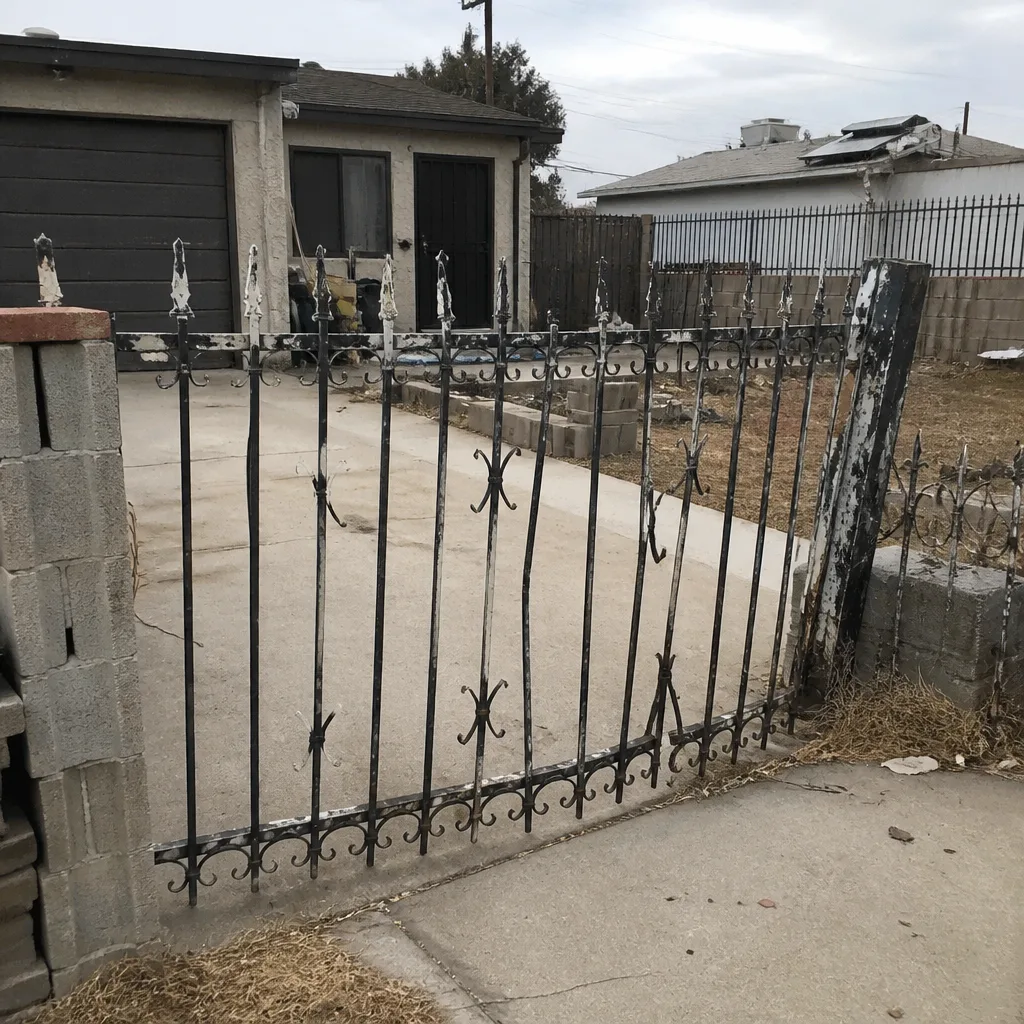
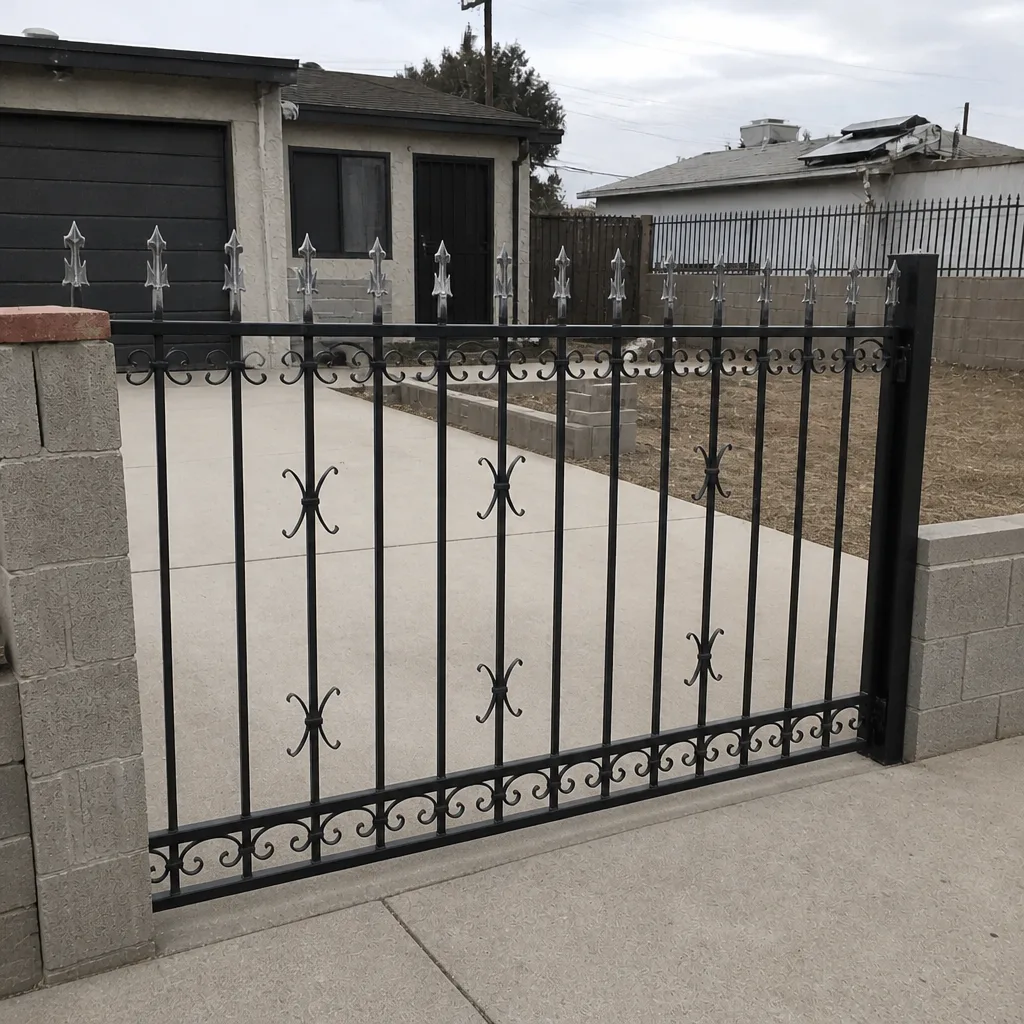
See the difference
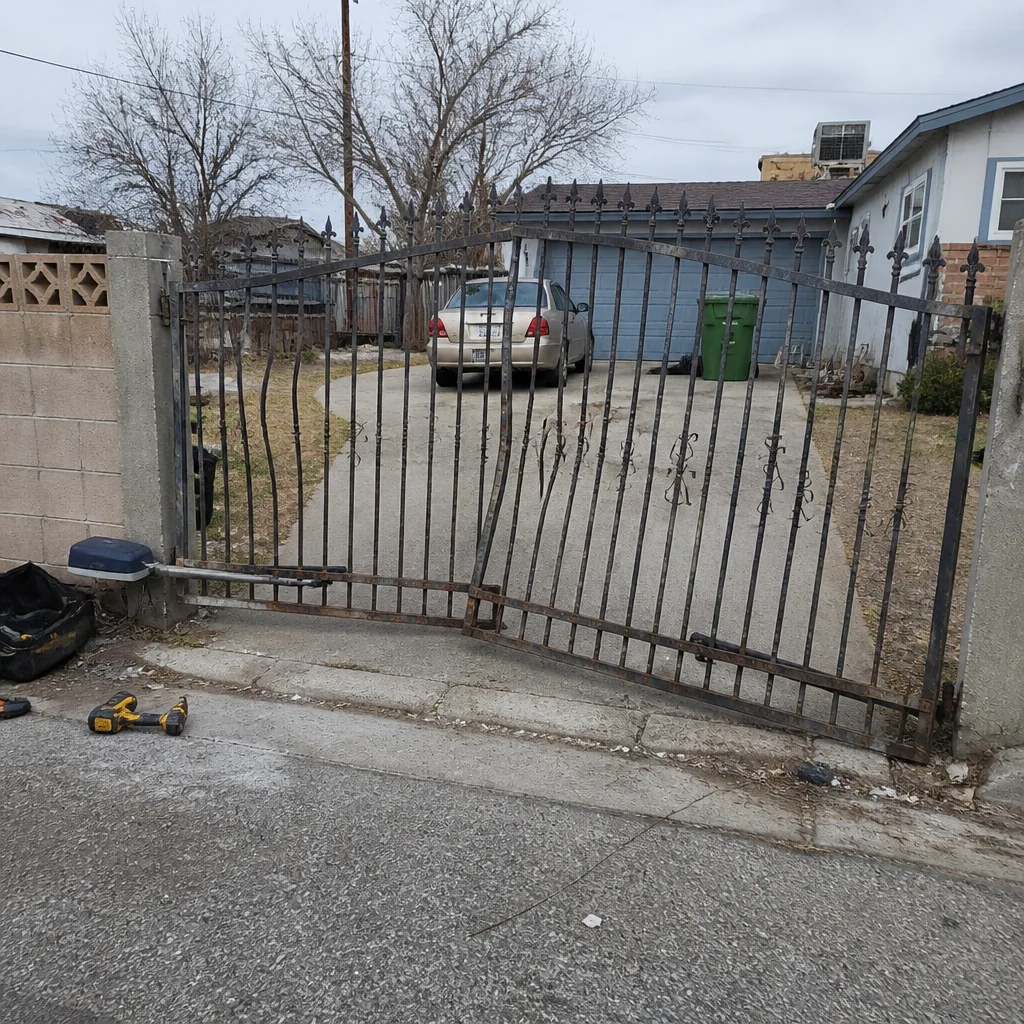 Before
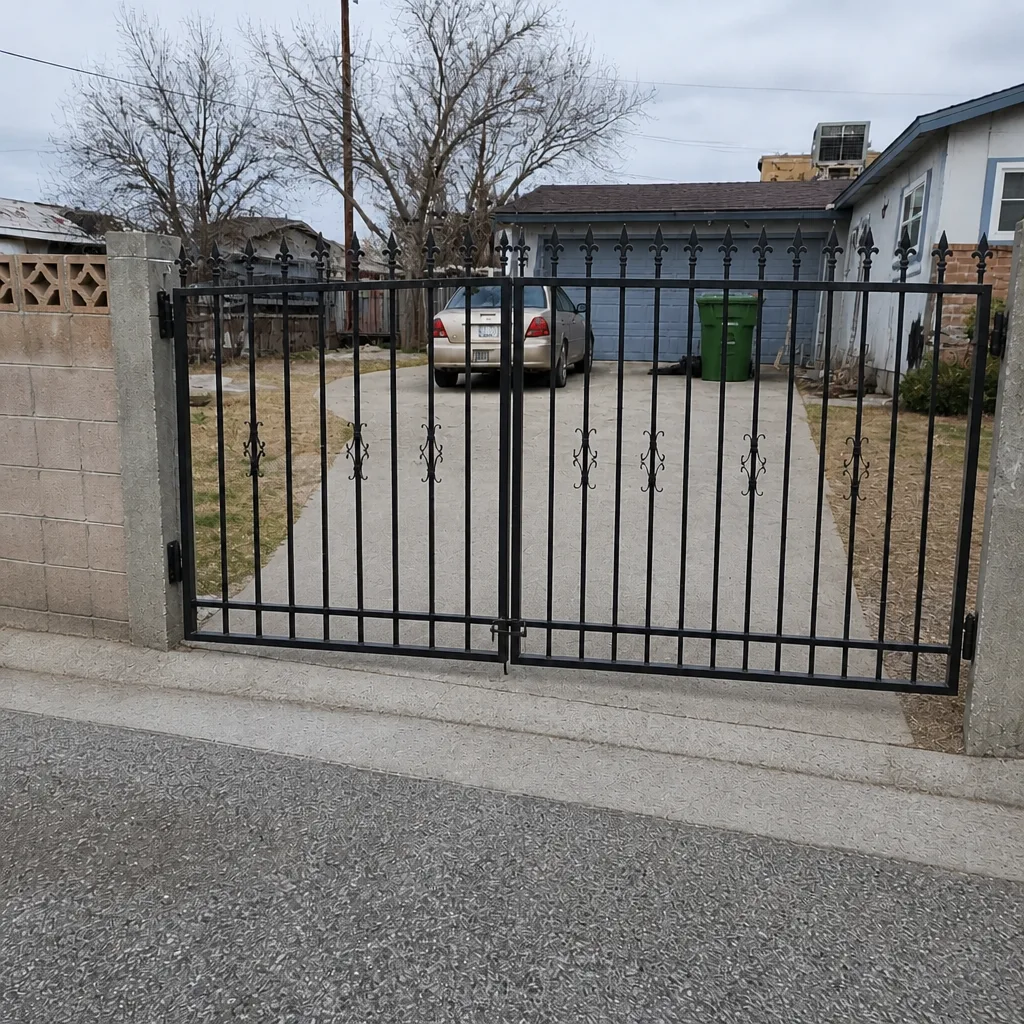 After
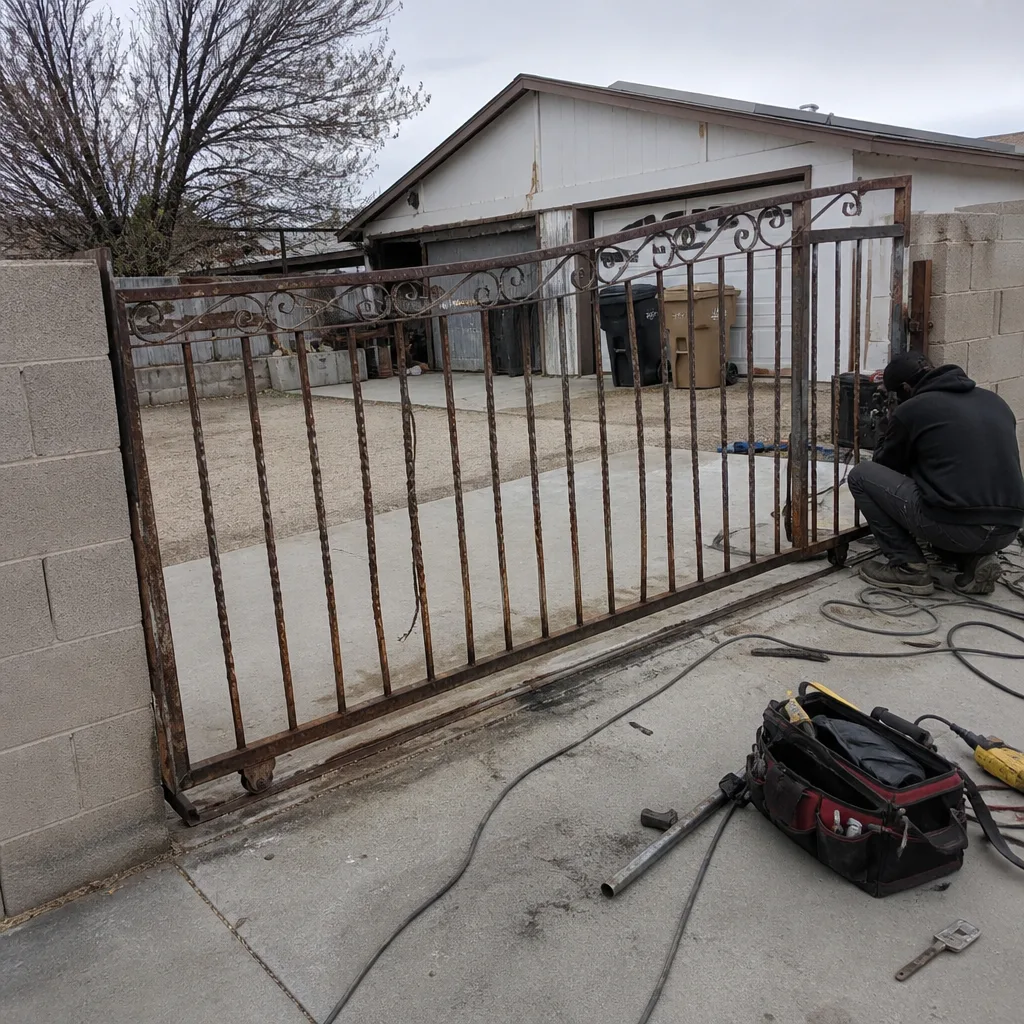 Before
 After
 Before
 After
When to Call a Professional
Not every task needs a call. Lubrication, photo-eye cleaning, and visual checks are homeowner-friendly. But there are specific situations where a trained pro should be the one on the gate, and the reason is safety as much as skill:
Any hinge-post movement, any panel that’s come loose from its frame, any sign that the gate is failing to reverse on the safety edge or photo-eye, and any automatic gate that’s swinging or sliding unpredictably. Gate operators are high-torque equipment, gates are heavy, and the space between them is not a place to guess. Springs and counterbalances – if your gate uses them – are under real tension and are not a homeowner task. Anything that requires welding needs a proper on-site welding setup, not a garage-job rig, because weld quality on gate structure is structural. And any warranty work or post-install adjustment in the 90-day window should be documented by the installer.
Gatewood Fence & Gate Sunrise Manor offers free estimates in Sunrise Manor – call (844) 761-8729. Every job carries our 90-Day Done Right Promise in writing: if it isn’t done right, we make it right. Calls are answered by a live person, 24/7. If you’d rather be shown the diagnosis before deciding, a free second opinion on any written estimate is available, and there’s no trip charge inside the county.
Frequently Asked Questions
Within the first week for a visual walk-around, then a full hardware retorque at day 30, and an alignment check at day 90. The 30-day retorque is the single most important task in the first year – it catches hardware that has settled under load during the break-in period. Call (844) 761-8729 if you’d like us to do the first-year checks for you.
Yes. Sunrise Manor’s heat and dry air put different demands on a gate than a coastal or humid climate does. Metal expands more in summer, hinges dry out faster, and photo-eyes collect more dust. The first-summer heat inspection and twice-yearly greasing are specifically tuned to those conditions. Call (844) 761-8729 for a schedule built around your specific gate and property.
Monthly for photo-eye cleaning and safety edge testing, quarterly for battery backup tests and limit switch verification, and twice a year for a full opener inspection. Operators from brands like LiftMaster, Elite, and DoorKing are generally reliable, but a limit switch that drifts at month six and isn’t checked will leave you with a gate that stops closing short. Call (844) 761-8729 to schedule an opener inspection – estimates are free.
A full annual visit covers hardware retorquing, hinge and latch lubrication, alignment and settling inspection, opener limit verification, photo-eye and safety-edge testing, battery backup check, panel-fastener check, and a finish walk. What it doesn’t include is repair work beyond the routine – anything found during the visit gets quoted separately before any work starts. Call (844) 761-8729 for a free quote on annual maintenance.
You can safely handle lubrication, photo-eye cleaning, visual checks, and monthly safety-tests. Anything involving the hinge post, panel integrity, welding, spring tension, or an opener that isn’t behaving correctly should be handled by a trained professional. The line is simple: if it’s about cleaning or looking, that’s yours. If it’s about structure, tension, or safety devices, that’s ours. Call (844) 761-8729 for anything on that second list – estimates are free.
The gate itself starts drifting – hinges loosen, panels shift, and the finish degrades – which is usually caught as a repair rather than a maintenance visit. That adds cost and shortens lifespan. The specific difference we see is measurable: a well-maintained Sunrise Manor installation hits year 15 on original hardware; a neglected one often needs a hinge-post rebuild and a replacement operator inside that same window. Call (844) 761-8729 to get back on schedule before the next seasonal check.
The Bottom Line
A new gate’s first year is not the same as its tenth. The 30-day retorque, the 90-day alignment check, and the first-summer heat inspection are the three tasks that decide whether the money you spent on that installation produces twenty years of gate or eight. After year one, the schedule simplifies to twice-a-year maintenance tuned to Sunrise Manor’s heat – spring and fall – with monthly visual checks and quarterly opener tests in between. Keep a simple log. Catch the small stuff. And when the gate needs a trained hand, get one. That’s not complicated, and it’s the difference between a gate that lasts and one that gets replaced. If you want help building a schedule around your specific gate, or a free second opinion on any estimate you’ve received, Gatewood Fence & Gate in Sunrise Manor is ready to help. Call (844) 761-8729 for a free estimate – our team is on it, and every job carries the 90-Day Done Right Promise in writing.
Written by the team at Gatewood Fence & Gate Sunrise Manor.