
Last updated November 18, 2026
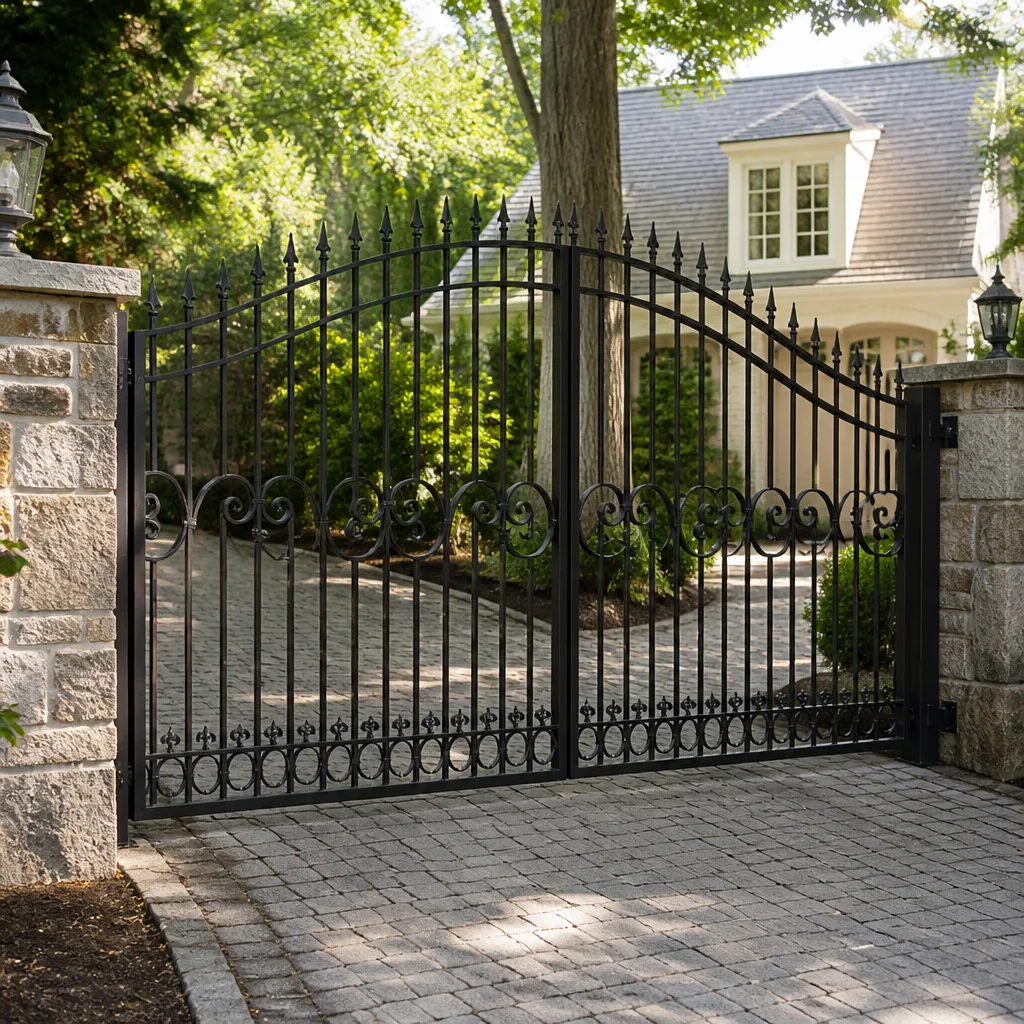 Wrought iron
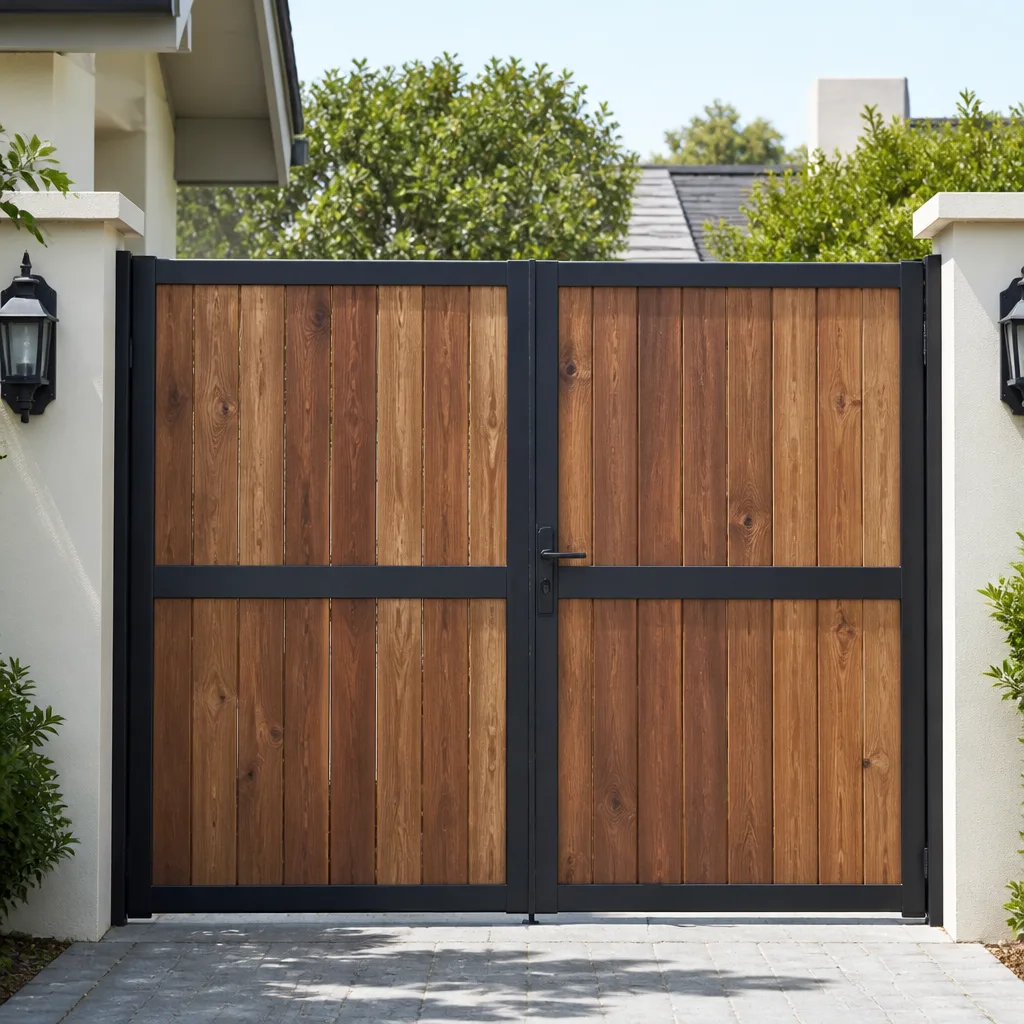 Wood & steel frame
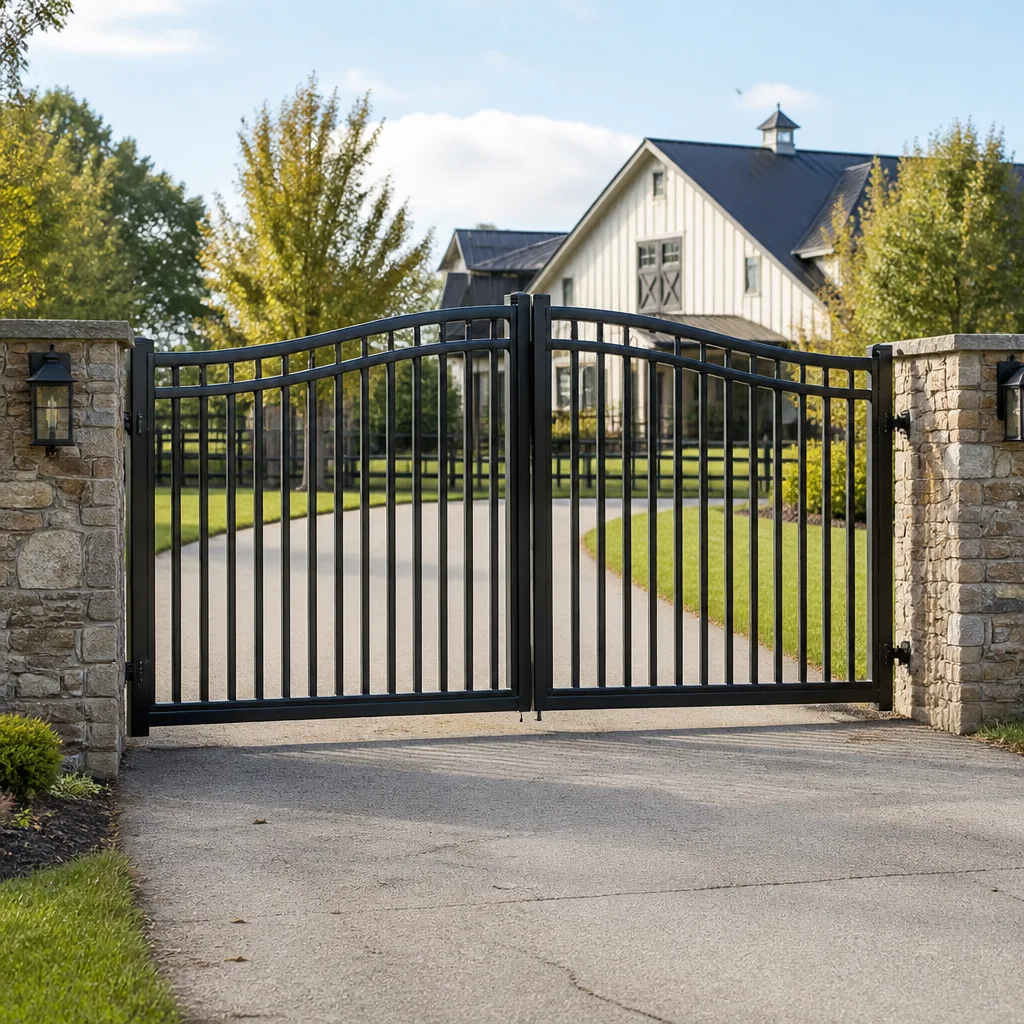 Farm & ranch
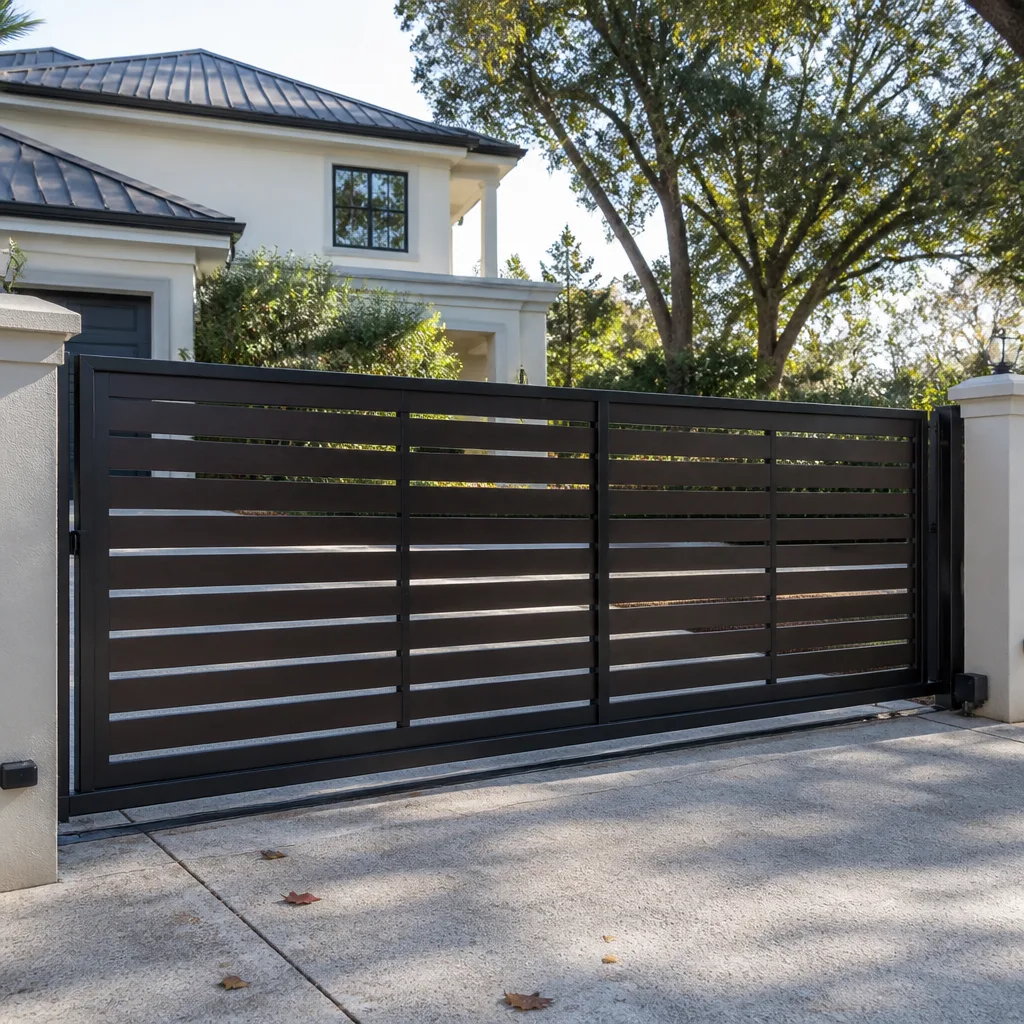 Sliding driveway gates
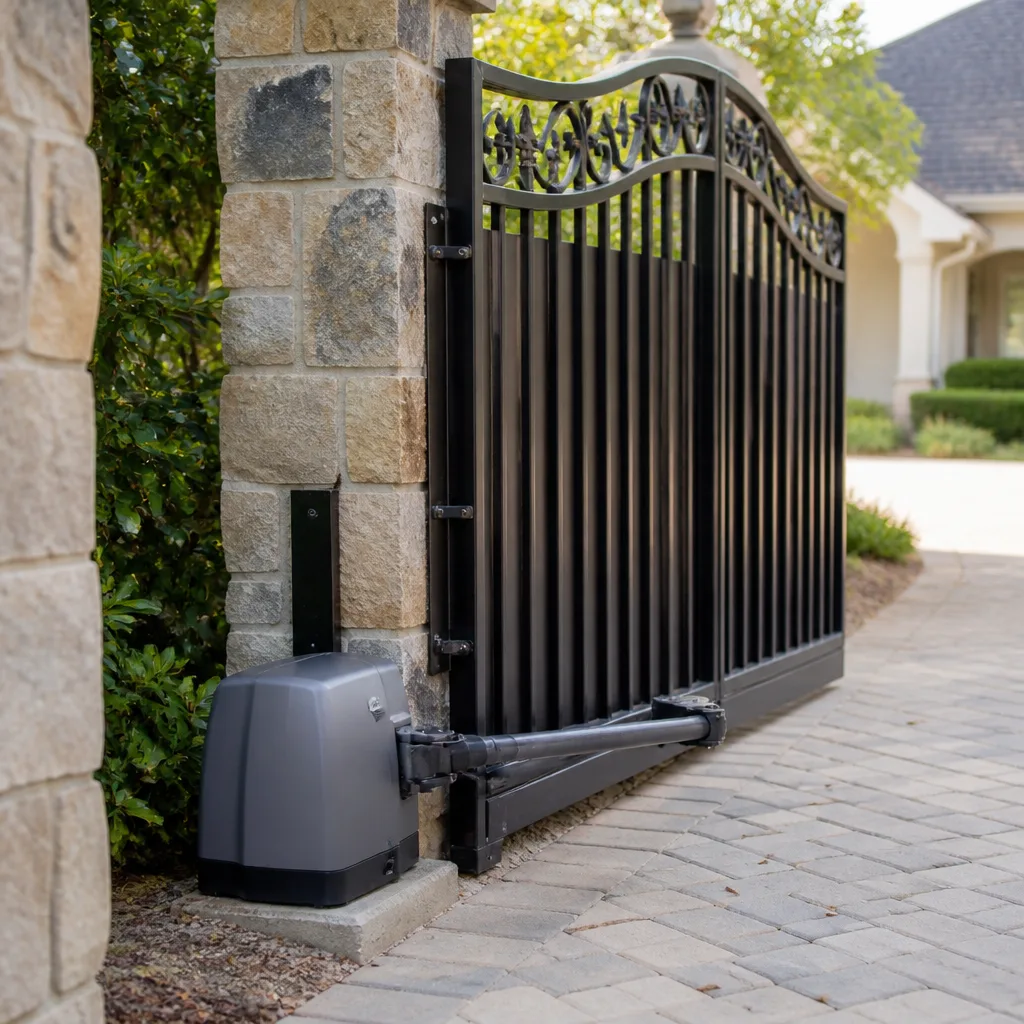 LiftMaster operators
Free on-site gate assessment - hinges, posts, and your LiftMaster or Nice gate operator checked before anything is quoted
The assessment is free and the quote is the invoice.
Get your free estimateGate Motor & Opener Troubleshooting: Common Problems and How to Fix Them
Here’s something that surprises almost every caller: when a gate stops working and the motor seems dead, the motor is usually fine. Before Hal drives out to a property in Sunrise Manor or anywhere in the valley, he walks every caller through the same five questions. Roughly half the time, the gate is rolling again before he hangs up. The culprit is almost always a tripped internal breaker, a dusty photo-eye, or a logic board that reset itself and needs a clean start. This guide gives you that sequence, in order, so you can figure out in about ten minutes whether you’re looking at a reset you can do yourself or a repair that needs a trained hand.
Quick Answer
Most gate motor failures are electrical resets, dirty photo-eyes, or drifted limit switches, not dead motors. A power-cycle-and-reset sequence clears the majority of electronic faults across brand lines like LiftMaster, Elite, and FAAC, and cleaning and realigning your safety photo-eyes with a soft cloth and a careful hand often handles the rest. Any fault that traces back to 120-volt wiring, a burning smell, or repeated breaker trips is where you stop and call a professional.
Styles & brands we work with
- Wrought iron
- Wood & steel frame
- Farm & ranch
- Sliding driveway gates
- LiftMaster operators
Table of Contents
- The Power-and-Reset Sequence That Clears Most Faults
- Photo-Eye Problems: Dust, Overspray, and the Two-Minute Fix
- Limit Switch Drift: Why Your Gate Reverses Short in August
- Battery Backup Failures: How to Test and What the LEDs Tell You
- The Line Between DIY-Safe and Call-a-Pro
- Remotes, Keypads, and Access That Quits Working
- Staying Ahead of It: A Simple Seasonal Check
- Common Mistakes to Avoid
The Power-and-Reset Sequence That Clears Most Faults
Nine out of ten calls that start with “the motor is dead” aren’t dead. The board caught a fault, tripped its own protection, and is waiting for you to tell it to try again. The fix is a full power cycle done in the right order. When you flip a switch or hit the breaker and the gate starts moving, you’ve learned two things: the motor works and the board is healthy. Now you just need to find what tripped it.
Here’s the sequence we walk people through over the phone:
- Find the control box. It’s usually near the operator arm or on a post beside it. Open the cover.
- Look for the internal breaker or reset button on the board. On most LiftMaster and Elite operators it’s a small button near the terminal strip; FAAC boards vary but sit in a similar spot.
- Turn off power at the breaker, wait a full 30 seconds, then restore it. This lets the board drain and reset cleanly instead of holding a half-stuck fault.
- Press the reset button if there is one. Watch the LED indicators while it cycles.
- Try a full open-and-close cycle from the wall control, not the remote, so you’re testing the board and operator only.
When the gate moves, you’re done. When it trips again immediately, something downstream is drawing too much. In Sunrise Manor, that’s often the operator working harder than it should in summer heat, or a hinge that’s gone stiff and is loading the motor. If it keeps tripping after a reset, don’t keep cycling it. Call Gate Motor & Opener in Sunrise Manor so we can trace the real cause instead of masking it.
Photo-Eye Problems: Dust, Overspray, and the Two-Minute Fix
Photo-eyes, the paired safety sensors that straddle your driveway, are the single most common reason a gate won’t close. They’re built to stop a closing gate the instant the beam between them breaks, and they’re just as likely to see a bug, a leaf, or a sheet of dust. In Sunrise Manor, we deal with two specific enemies: dust from a windy spring afternoon and irrigation overspray that leaves a mineral film on the lens. Both knock the eyes out of alignment or blind them.
You can clear most of this yourself in two minutes:
- Wipe the lens on each eye with a soft cloth. Don’t scratch it with a rough rag or a fingernail.
- Check that neither eye has been bumped. They should be aimed straight at each other, roughly level.
- Look for the alignment LED. Most brands show a lit indicator when the beam is good; if it’s blinking or dark, the eyes are talking past each other.
- Clear spiderwebs, grit, and grass clippings from the bracket mounts. Desert grit collects fast.
- Re-aim by loosening the bracket gently, pointing at the partner eye, and snugging it back down.
When the gate closes and stays closed on a test, you’ve solved it. When one eye is cracked, water-fouled, or its bracket is bent, it needs replacing, and that’s a quick job we do on the spot. If you’d rather not chase the beam around the driveway in the heat, we can take a look as part of a Gate Repair in Sunrise Manor visit.
Limit Switch Drift: Why Your Gate Reverses Short in August
A gate that worked perfectly in March starts reversing before it fully opens in August. Owners notice it first in the summer heat, and the pattern isn’t a coincidence. Limit switches tell the operator where “fully open” and “fully closed” are, and those settings live on physical cams or magnets that ride the track. When the track expands in 105-degree heat, or when a bracket loosens a hair over months of use, the switch trips a little early. The operator thinks it hit its end point, reverses, and stops short.
The giveaway is consistent: the gate opens partway, pauses, and comes back. Your board’s diagnostic LEDs usually flash a limit or travel fault. In our experience, Sunrise Manor properties with a long slide gate on a sunny south-facing track drift most, because that steel and aluminum stays hot well into the evening. On swing operators, a slipping limit cam or a loose magnet does the same thing.
Recalibrating limits is a careful, methodical job, and it’s different on every brand. Elite and FAAC swing operators store their travel limits differently, and one wrong adjustment can leave a gate trying to close past its stop, which is a real safety problem. If you’re handy and have the manual, the manual’s own limit-setting steps are the right reference. If the manual’s gone, that’s a five-minute call we’re happy to take. A limit that drifts once will drift again, and the underlying loose bracket is worth catching before it wears the track.
Battery Backup Failures: How to Test and What the LEDs Tell You
Solar and battery-backup operators keep working when the power’s out, right up until the battery gives up. In Sunrise Manor, where a summer storm can knock the grid offline for hours, a healthy backup battery is doing real work. The trouble is that a dying battery doesn’t always announce itself, and owners find out during a power outage when the gate just sits there. A weak battery also causes odd behavior on the board long before it fails outright.
Here’s how to read it and test it:
- Find the battery status LEDs. Most boards have a charge or battery indicator near the terminal block.
- Check what the light is telling you. A steady charge light means it’s charging; a fault or blink pattern points to a bad battery or a charging circuit problem.
- Unplug from the grid and run one test cycle on battery alone. If it flags out immediately or can’t finish a cycle, the battery is done.
- Note the age. Most backup batteries are good for a few years before they stop holding a charge, and desert heat shortens that.
A straight battery swap fixes the common case: the board still reads correctly, it just can’t hold a charge. When the swap doesn’t fix it, or the board misreports even with a fresh battery, the charging circuit or the board itself is the problem, and that’s a bench-diagnosis job. Mighty Mule and Ghost Controls solar units are common on rural Sunrise Manor properties, and we service those alongside the bigger commercial-style boards.
The Line Between DIY-Safe and Call-a-Pro
We’d rather you clear a tripped breaker yourself than wait hours for a visit over a reset, and we’ll walk you through it. But there’s a line, and it’s drawn at the voltage that can hurt you. The logic side of your board runs on low voltage, usually 12 or 24 volts, and that’s safe to look at and reset. The other side of that box is 120-volt house current. Getting near live 120V wiring, a high-tension spring, or anything you can’t identify is where we stop and recommend a trained hand.
This isn’t caution for its own sake. On swing gates with torsion or extension springs, and on slide gates with tensioned cables, those are stored-energy components that cause serious injury when they let go. You shouldn’t adjust springs or re-tension cables yourself. Same with 120V supply wiring and anything that shows burn marks or smells hot. That’s the difference between a reset you can do and a repair that needs a pro with the right meter and the right hands.
So the rules we give callers are simple. Safe to try: a full power cycle, wiping photo-eyes, clearing debris, reading LEDs, and a test cycle. Call us for: 120V wiring, spring and cable work, burnt smells, repeated breaker trips, and any fault the reset won’t clear. A gate that runs on its own, past its limits, is also a stop-and-call, because that’s a safety issue before it’s a convenience one.
Remotes, Keypads, and Access That Quits Working
When the gate opens from the wall control but the remote does nothing, you’ve narrowed it to the remote or the receiver, not the operator. Remotes are worth checking before you assume the worst. On most LiftMaster systems we service in Sunrise Manor, a dead remote is a battery, a lost programming memory, or a receiver that’s stopped talking to the head. Keypads and access control fall off the map the same way, and a power cycle often brings them back.
Try the obvious first: new battery in the remote, confirm the wall control still runs the gate, and re-press the remote a few feet from the receiver. Heat and sun can bake an outdoor receiver or keypad over a summer, and a cracked housing takes on grit that fouls the buttons. If you’ve got a multi-remote setup and only some quit, the odd one is usually the culprit. If every remote fails at once, look at the receiver or board. For keypad and entry access work, our gate access control service can sort a failing reader or re-key a panel.
Staying Ahead of It: A Simple Seasonal Check
Almost every “dead motor” call traces back to something small that was left alone until it got big. Five minutes twice a year prevents most of it. Before summer’s heat settles in, wipe the photo-eyes, walk the track for grit and loose brackets, test the backup battery, and run a full cycle to watch for slowing or short-travel. After a windy season, re-clear the eyes and check that nothing’s blown into the travel path. And listen to the gate. A hinge that groans or a track that shudders is loading the motor and halting a fault that’s coming.
We see this rhythm in Sunrise Manor neighborhoods wherever the sun hits a long track, and the properties that get a seasonal look rarely call us at eleven at night. If you’d rather have a trained eye go over it, we’re glad to help, and our Gate Installation in Sunrise Manor work includes a proper commissioned setup so the operator starts out dialed in. For a broader look at what we service, start at the Gatewood Fence & Gate Sunrise Manor home.
Common Mistakes to Avoid
- Cycling a gate that keeps tripping. Repeated resets can push a struggling motor into a worse failure. When it trips twice, stop and find the load.
- Adjusting limit switches without the manual. A limit set past its stop can send a gate into the frame or the track. Use the manual’s steps or call us.
- Spraying water into the control box to “clean” it. Desert dust tempts you, but water in a 120V box is dangerous. Wipe the outside and let us handle the inside.
- Ignoring a batteried backup until the outage. Sunrise Manor summer storms test the battery when you can’t do anything about it. Test it in calm weather.
- Swapping parts to “see if it fixes it.” It usually swaps a working part for a guess and masks the real fault. Diagnose first, buy once.
- Letting a stop-and-call gate run. A gate that moves on its own past its limits is a safety issue. Shut it down and get it looked at.
- Assuming the motor is dead. Most “dead motor” calls are a tripped breaker or a dusty photo-eye. Clear the simple things before you budget a repair.
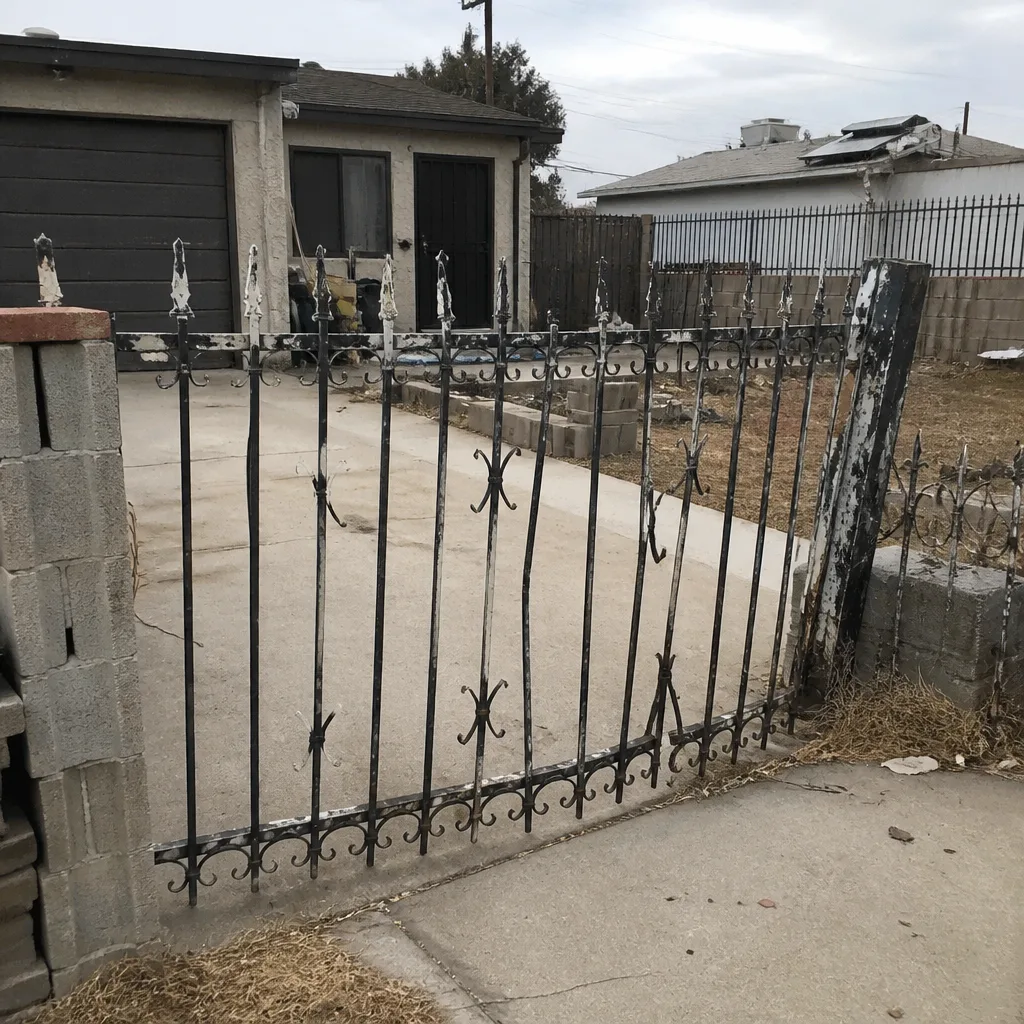
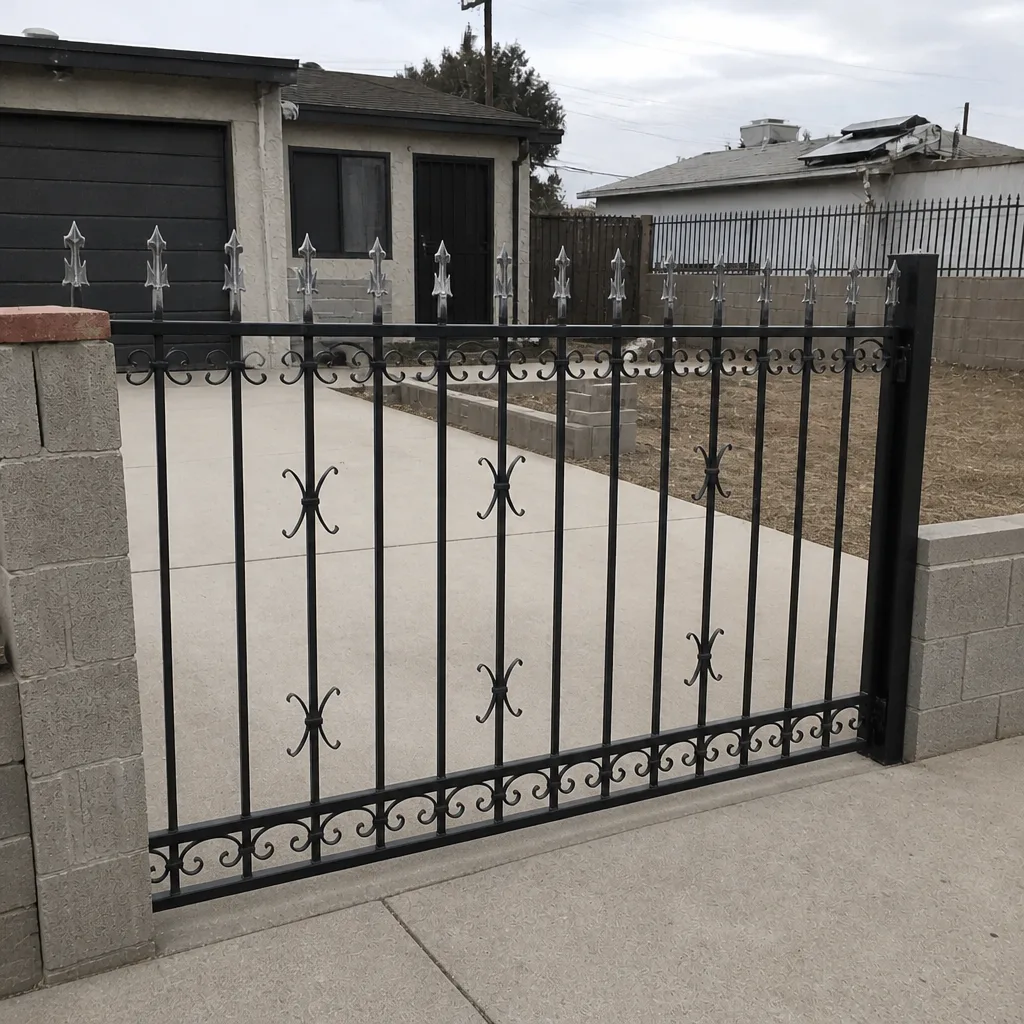
See the difference
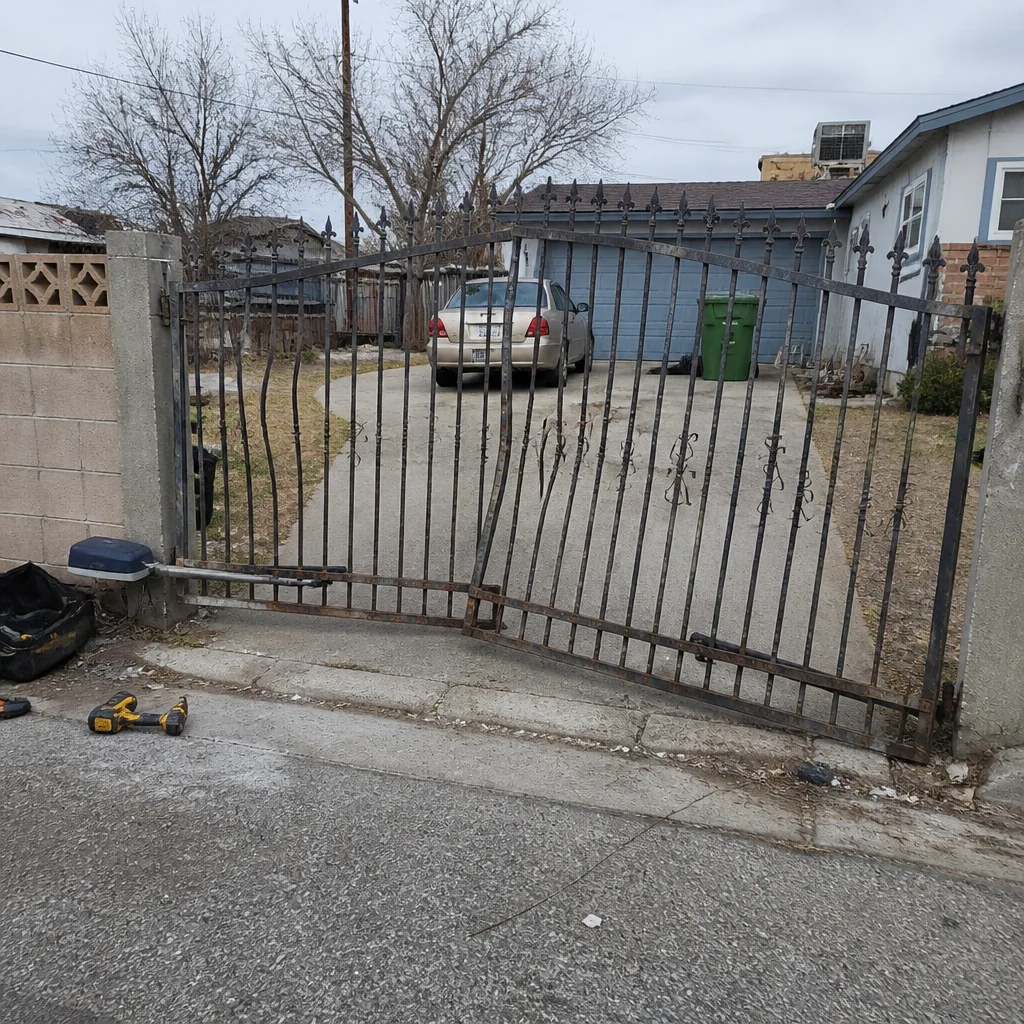 Before
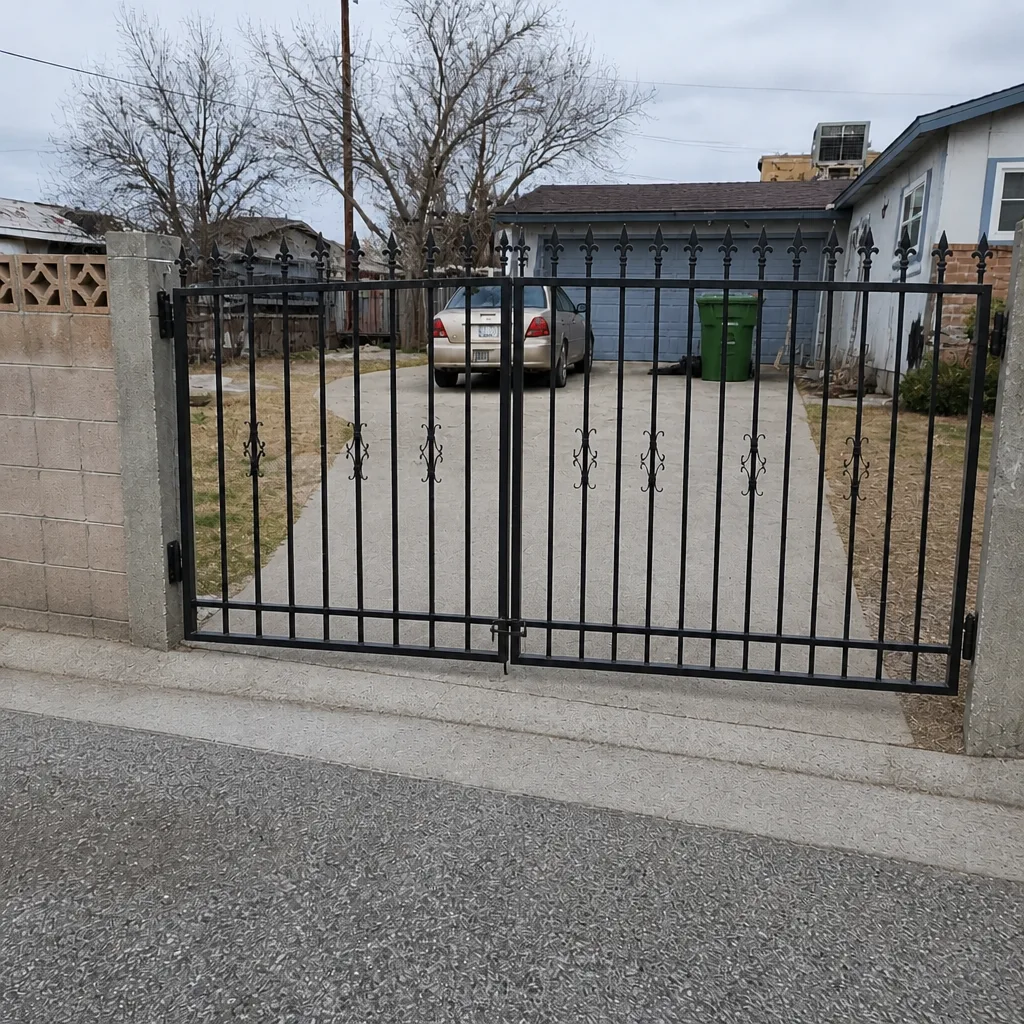 After
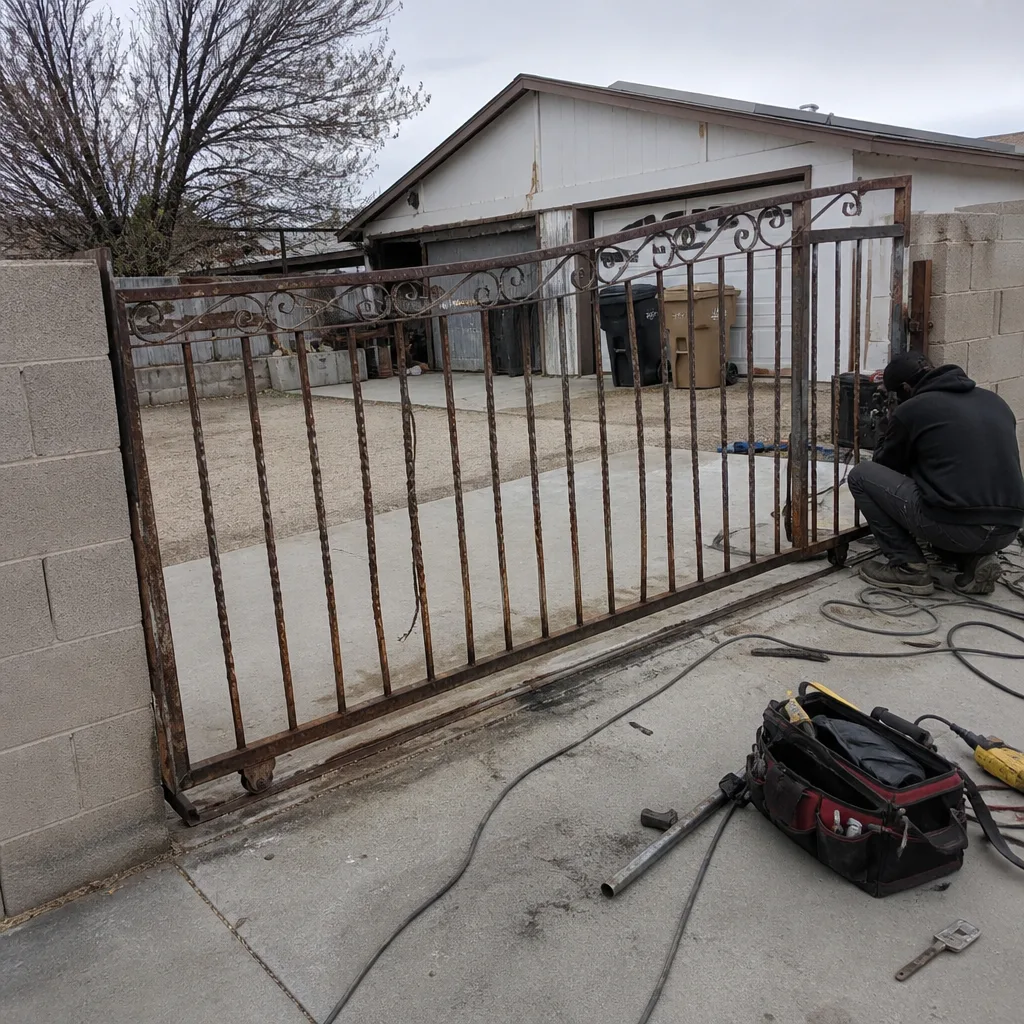 Before
 After
 Before
 After
When to Call a Professional
Call us when the fault traces to 120V wiring, when a reset won’t hold and the gate keeps tripping, or when the fault points at a spring, cable, or high-tension component. Call us when you see burn marks or smell something hot at the control box, and when a gate runs past its limits or won’t stop on its own. We handle limit drift that comes back, battery and board faults the swap won’t fix, and any access control that’s stopped talking to the head. Our technicians have up to 25 years of experience and are certified on LiftMaster, FAAC, Elite, Mighty Mule and more. Every job carries our 90-Day Done Right Promise in writing, and we answer the phone with a live person around the clock. Call (844) 761-8729 for a free estimate in Sunrise Manor, no trip charge inside the county, and $40 off any repair over $200.
Frequently Asked Questions
Because the motor is usually fine and the board has tripped its own protection. A full power cycle, breaker off for 30 seconds and then a reset from the board, clears most electronic faults across LiftMaster, FAAC, and Elite operators. If it trips again right after the reset, something downstream is loading the motor, and it’s time to call.
You can safely handle a power cycle, a photo-eye wipe, LED checks, and a test cycle. Anything involving 120V wiring, springs, or tensioned cables is where you stop, because those can cause serious injury. Call (844) 761-8729 for an exact quote if the fault goes past the low-voltage side, and estimates are free.
That’s almost always limit switch drift from heat expansion of the track. In Sunrise Manor’s summer heat, a south-facing track grows and the limit switch trips a little early, so the operator thinks it hit its stop and reverses. A careful limit recalibration fixes it, and we do it regularly in Sunrise Manor.
A dirty or misaligned photo-eye is the most common cause, and desert dust or irrigation overspray is usually the reason. Wipe each lens, check the alignment LED, and clear grit from the brackets. If the eye is cracked or the bracket is bent, it needs replacing, which is a quick fix. Call (844) 761-8729 if you want us to check it.
Check the battery status LEDs on the board, then unplug from the grid and run one test cycle on battery alone. If it flags out immediately or can’t finish, the battery is done. A fresh battery fixes most of these. When the swap doesn’t hold, the board or charging circuit is the problem, and that’s our job.
We’re certified on nine major brands including LiftMaster, FAAC, BFT, Linear, Viking, Ghost Controls, DoorKing, Elite, and Mighty Mule. Whether it’s a solar backup on a rural property or a commercial-style slide gate, we likely service it. Call (844) 761-8729 and we’ll confirm and give you a free estimate.
The Bottom Line
Most “dead motor” calls aren’t dead motors. A tripped breaker, a dusty photo-eye, or a drifted limit switch explains the majority of them, and a homeowner can clear those with a full power cycle and a soft cloth. Know the order: reset, wipe the eyes, read the LEDs, and test. Know the line: 120V wiring, springs, and cables are for a trained hand, not a DIY project. When the fault goes past a reset or the gate acts on its own, call us. The name is on the shop, the shop is down the road, and that’s the oldest accountability there is.
If your gate isn’t behaving and you’d rather not chase it alone, call Gatewood Fence & Gate Sunrise Manor at (844) 761-8729 for a free estimate. We’re locally owned and owner-operated, we answer with a live person 24/7, and every repair is backed by our 90-Day Done Right Promise in writing. Seniors and veterans get a permanent 10% discount, there’s no trip charge inside the county, and you’ll get a free second opinion on any written estimate. Upfront pricing, quoted and agreed before any work starts.
Written by the team at Gatewood Fence & Gate Sunrise Manor.