
Last updated November 18, 2026
 Wrought iron
 Wood & steel frame
 Farm & ranch
 Sliding driveway gates
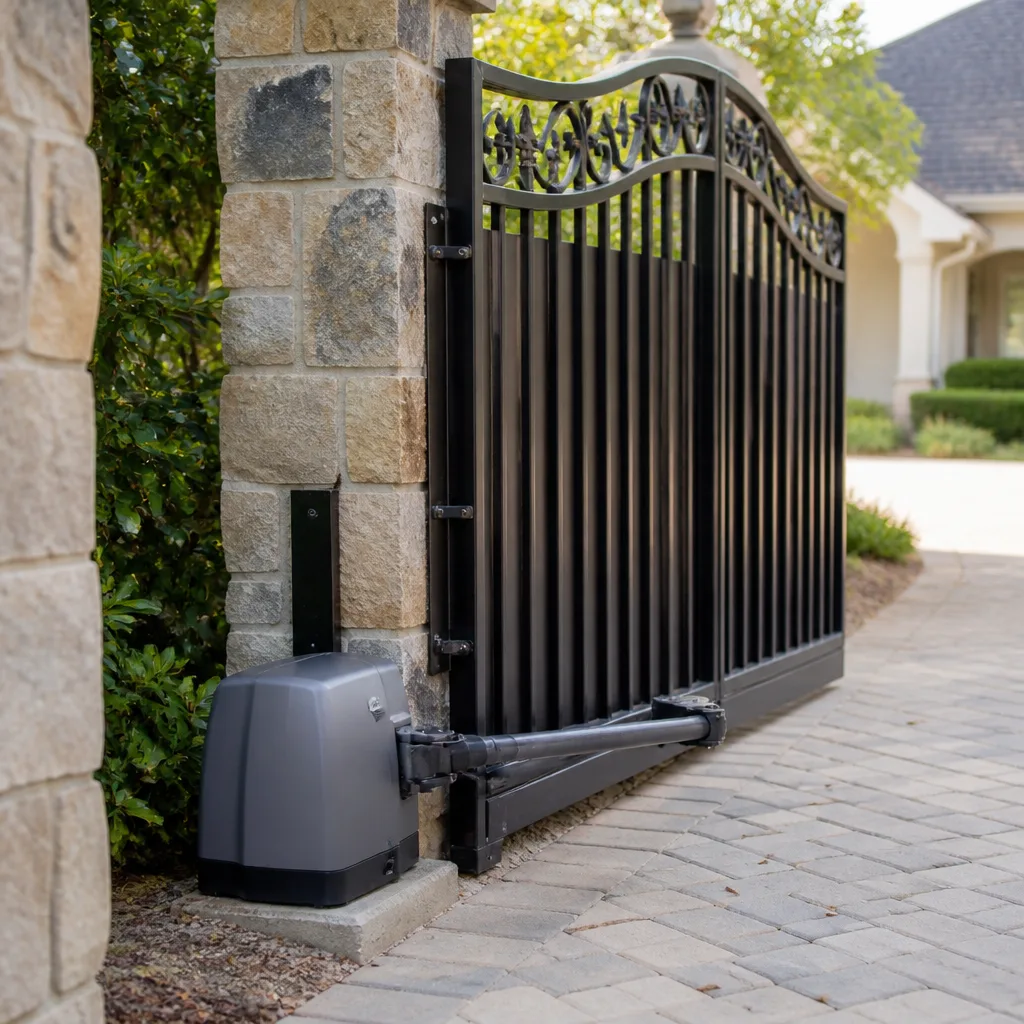 LiftMaster operators
Free on-site gate assessment - hinges, posts, and your LiftMaster or Nice gate operator checked before anything is quoted
The assessment is free and the quote is the invoice.
Get your free estimateGate Motor & Opener Maintenance Schedule: What to Do and When
Skip the August post-monsoon check on a gate operator around here and you’re basically letting fine alkaline dust pack itself into every moving part for eleven more months. We’ve pulled apart openers in Sunrise Manor where the grease had turned into something closer to sandpaper than lubricant, all because nobody cleaned the housing after the last big blow. Most maintenance guides hand you a generic quarterly checklist and call it a day. That checklist ignores the two events that actually wreck gate hardware in this valley: the late-summer dust intrusion and the January cold snap that turns summer-weight grease sluggish. This guide builds the schedule around those two windows, plus the hardware walk most people never do.
Quick Answer
A gate motor and opener needs attention at three points a year in Sunrise Manor: a pre-monsoon check in June (seals, photo-eye housings, battery load test), a post-monsoon purge in September (dust out of the housing, chain and belt tension after thermal cycling, limit re-verification), and a January cold check on lubricant viscosity. Twice-a-year is the minimum for most openers. Three times is what the climate here actually demands. If the gate is on a heavy sliding track or a steep driveway, add a hardware walk for hinge bolts, pivot pins, and the mounting plate weld.
Styles & brands we work with
- Wrought iron
- Wood & steel frame
- Farm & ranch
- Sliding driveway gates
- LiftMaster operators
Table of Contents
- The June Pre-Monsoon Checklist
- The September Post-Monsoon Purge
- The January Cold Check
- The Hardware Walk Most People Skip
- What a Real Maintenance Visit Includes
- The Drive-By Inspection vs. the Real Thing
- Common Mistakes to Avoid
- When to Call a Professional
The June Pre-Monsoon Checklist
June is the calm before the storm, literally, and it’s the best window to get ahead of the dust. The goal is to seal up everything that’s about to get hammered by wind-driven grit and humidity swings. If you do nothing else this year, do this one. We schedule more pre-monsoon service calls in Sunrise Manor the last two weeks of May than any other time, because homeowners here have learned the hard way that a chain full of dust in September costs more to fix than a seal swap in June.
Here’s what a June check should cover:
- Seal inspection on the operator housing. Look at door gaskets, the cover seal, and any entry points where the housing meets the mounting plate. A cracked gasket is an open door for dust.
- Photo-eye housing integrity. The safety photo-eyes take the worst of it. Check that the housings are snug, the lenses are clear, and the wiring hasn’t been chewed or pinched. One loose photo-eye can stop a gate cold in the middle of a July afternoon.
- Battery load test. If your opener has a backup battery (most Linear and Viking units do), test it under load before the humidity spike. A battery that reads fine on a meter but can’t carry the gate through a power blip is a battery that fails when you need it.
- Limit switch function. Run the gate through a full open-and-close cycle and watch where it stops. Limits drift, and a limit that drifts in June will be way off by September.
- Lubricant top-up on the chain or screw drive. Use the manufacturer’s spec, not whatever is in the garage. That matters more than people think, and we’ll get to why in January.
If you have a FAAC or BFT sliding operator, the June check should also include a look at the track for debris and a quick test of the clutch or anti-crush setting. Those two brands are common in Sunrise Manor’s larger driveways, and they’ll tell you they’re unhappy long before they quit.
The September Post-Monsoon Purge
September is when we find the damage. Monsoon season in Sunrise Manor runs roughly July through early September, and it deposits a fine alkaline dust that works its way into every gap, crevice, and bearing surface on the operator. Left alone, that dust mixes with old grease and becomes an abrasive paste. We’ve opened housings in Sunrise Manor where the chain looked like it had been rolling through a sandbox.
The post-monsoon service isn’t complicated, but it needs to be done in order:
- Kill the power and disengage the operator. No exceptions. This is a mechanical check, and you don’t want the gate moving while your hands are inside the housing.
- Dust purge from the operator housing. A soft brush and low-pressure air if you have it. Never high-pressure air into bearings; it drives grit deeper. Work from the top down and get the corners where the dust settles.
- Chain or belt tension check. Thermal cycling through the summer heat loosens tension. Too loose and you get slapping and wear. Too tight and you strain the motor bearings. There’s a spec for your model; use it.
- Limit re-verification. After the dust and tension work, run the gate and re-check your limits. A gate that closes 2 inches shy of the post after a September service needs the limits reset, not a new motor.
- Photo-eye and safety-edge test. Wave a hand (or a piece of cardboard) through the beam and confirm the gate reverses. Test the safety edge the same way.
This is also the time to look at the manual release. If you ever need to open the gate by hand during an outage, you want to know the release works before the outage happens.
The January Cold Check
Sunrise Manor gets cold enough in January and February to matter. Sub-40°F mornings are routine, and that’s where summer-weight grease becomes a problem. The grease thickens, the operator works harder, the gate moves sluggishly, and homeowners call us convinced the motor is dying. Nine times out of ten it’s not the motor. It’s the lubricant fighting the cold.
What to check in January:
- Lubricant viscosity. If the label on your grease doesn’t mention cold-weather performance, it probably wasn’t formulated for it. Make the swap before the coldest weeks, not after the gate starts dragging.
- Battery cold-cranking. Backup batteries lose capacity in cold weather. A battery that tested fine in June may not carry the gate in January. Load-test it again.
- Photo-eye lens fog. Morning fog or frost on the lenses can cause phantom reversals. A quick wipe of the housings and lenses finishes the check.
- Listen to the gate run. A cold gate that sounds labored on the first cycle of the morning is telling you something. Give it two or three full cycles before you decide whether it’s a real problem.
If your opener still drags after a lubricant swap and a full battery test, that’s when it’s time to have the unit looked at. Sluggish operation in the cold is normal. Grinding, intermittent stopping, or a motor that trips a breaker is not. If you’d rather have us lay hands on it, Gate Motor & Opener service in Sunrise Manor is where we spend most of our January calls.
The Hardware Walk Most People Skip
Everyone focuses on the motor. The motor is the part that makes noise, so it gets the attention. But most of the failures we see on gates in Sunrise Manor don’t start at the motor; they start at the hardware the motor has been fighting. A gate sags in the hinge post, not in the middle, and the motor pays for it every single day.
Once a year, walk the gate with a wrench and a flashlight:
- Hinge bolt torque. Check every hinge bolt on the gate and post side. Loose hinge bolts let the gate sag, and a sagging gate drags the operator.
- Arm pivot pins. On swing operators, the arm pivot pins wear. Check for side-to-side play. A worn pin turns a smooth swing into a jerky one.
- Mounting plate weld. Look closely at where the operator’s mounting plate meets the gate or post. Hairline cracks at the weld are common after enough thermal cycling and gate movement. This is the one to catch early, because a mounting plate that lets go under load can damage the operator or the gate itself.
- Hinge post anchoring. If the hinge post rocks even slightly when you push on the gate, the anchor is failing. No motor tune-up will fix a wobbly post.
Two of these are things a homeowner can check with a wrench: the hinge bolts and the pivot pins. If they’re loose, snugging them is fine. But the mounting plate weld is a different story. Cracks at the weld need to be ground out and re-welded properly, and that’s on-site welding work, not something to patch with a tube of epoxy from the hardware store. When we find a cracked mounting plate in Sunrise Manor, we weld it in the driveway and the gate never leaves. That’s the same approach we bring to every gate repair in Sunrise Manor, and it’s why we keep a welder on the truck.
What a Real Maintenance Visit Includes
People ask us what a maintenance visit actually is. Fair question, because “maintenance visit” can mean a lot of things depending on who’s doing it. Here’s what a real visit should look like, whether it’s us or anyone else:
- A full open-and-close cycle under load, watched, not just triggered.
- Housing opened, dust purged, and internals inspected (not just wiped down).
- Chain or belt tension checked and adjusted to spec.
- Limits and force settings verified after any adjustment.
- Photo-eyes and safety edge tested, not just visually checked.
- Battery load test with a real meter, not a glance at a status light.
- Hardware walk of the hinges, pivot pins, and mounting plate.
- Written notes on what was found, what was adjusted, and what to watch.
That last one matters. A maintenance visit that doesn’t tell you what was found and what might need attention next is a visit that didn’t really happen. And whatever the visit uncovers, the price gets quoted and agreed up front, before any work starts. We don’t do the door-knock surprise invoice routine. If a repair turns out bigger than expected, you hear about it before the wrench comes out.
The Drive-By Inspection vs. the Real Thing
We’ve followed behind enough of these to know exactly what a drive-by inspection looks like. Somebody runs the gate twice from the driveway, watches it move, jots something on a clipboard, and hands you an invoice. The housing never comes off. The tension is never checked. The battery is never load-tested. It’s a vehicle for a piece of paper, not a maintenance visit.
The tell is what you get afterward. A real maintenance visit leaves you with a written rundown of what was found. A drive-by leaves you with a bill and a vague “looks good.” If a company won’t open the housing, that’s your cue to ask why. Dust intrusion doesn’t show up from the end of the driveway.
This is also where a manufacturing-savvy operator pays for itself. DoorKing, Elite, and Mighty Mule units each have their own service quirks and their own tension and limit specs. An outfit that treats every gate the same is an outfit that hasn’t done many. We service nine major brands, and we keep the specs on hand for each one so the settings come back to spec, not to whatever feels right on the day. If you’re still deciding who to call, the Gatewood Fence & Gate Sunrise Manor home page has the shop address and license number, so you can look us up before you do anything.
Common Mistakes to Avoid
- Skipping the September purge because the gate “seems fine.” The abrasive damage from monsoon dust doesn’t announce itself. By the time the gate sounds wrong, the chain and bearings have already taken the wear.
- Using summer-weight grease in winter. We see this constantly in Sunrise Manor. It’s the number one cause of the “my motor is dying” call in January that turns out to be a ten-minute lubricant swap.
- Tightening the chain until it hums. Tighter is not better. Over-tensioned chain strains the motor bearings and shortens the life of the operator.
- Bypassing a photo-eye to “fix” a phantom reversal. A photo-eye that trips when it shouldn’t is a wiring or alignment problem. Jumpering it out means the safety feature is gone and the gate can close on someone. Don’t.
- Ignoring a hairline crack at the mounting plate weld. That crack grows. A plate that lets go under load can drop the gate or damage the operator, and it turns a small repair into a big one.
- Doing the parts-swap guess. A gate that closes short isn’t necessarily a bad motor. It can be a limit, a track obstruction, a tension issue, or a sagging hinge post. Replacing the motor when it’s the hinge post is a waste of money.
- Hiring whoever answers the phone without checking the name. Sunrise Manor has plenty of gate work that gets done by whoever’s passing through. Ask for the shop address and the license number. If the answer is vague, keep looking.
When to Call a Professional
Some of this schedule is homeowner work: snugging a hinge bolt, wiping the photo-eye lenses, listening to the gate on a cold morning. The rest calls for hands that know what they’re looking at. Call a pro when the mounting plate weld is cracked, when the gate drags after a lubricant swap and battery test, when the operator trips a breaker, when a limit won’t hold its setting, or when the hinge post itself is rocking in the ground. High-tension springs, live electrical work inside a control box, and anything that involves welding should be left to someone trained to do it, because those are the parts of a gate that can hurt you. If your gate is doing any of the above in Sunrise Manor, we’ll come take a look. Free estimates in Sunrise Manor.
See the difference
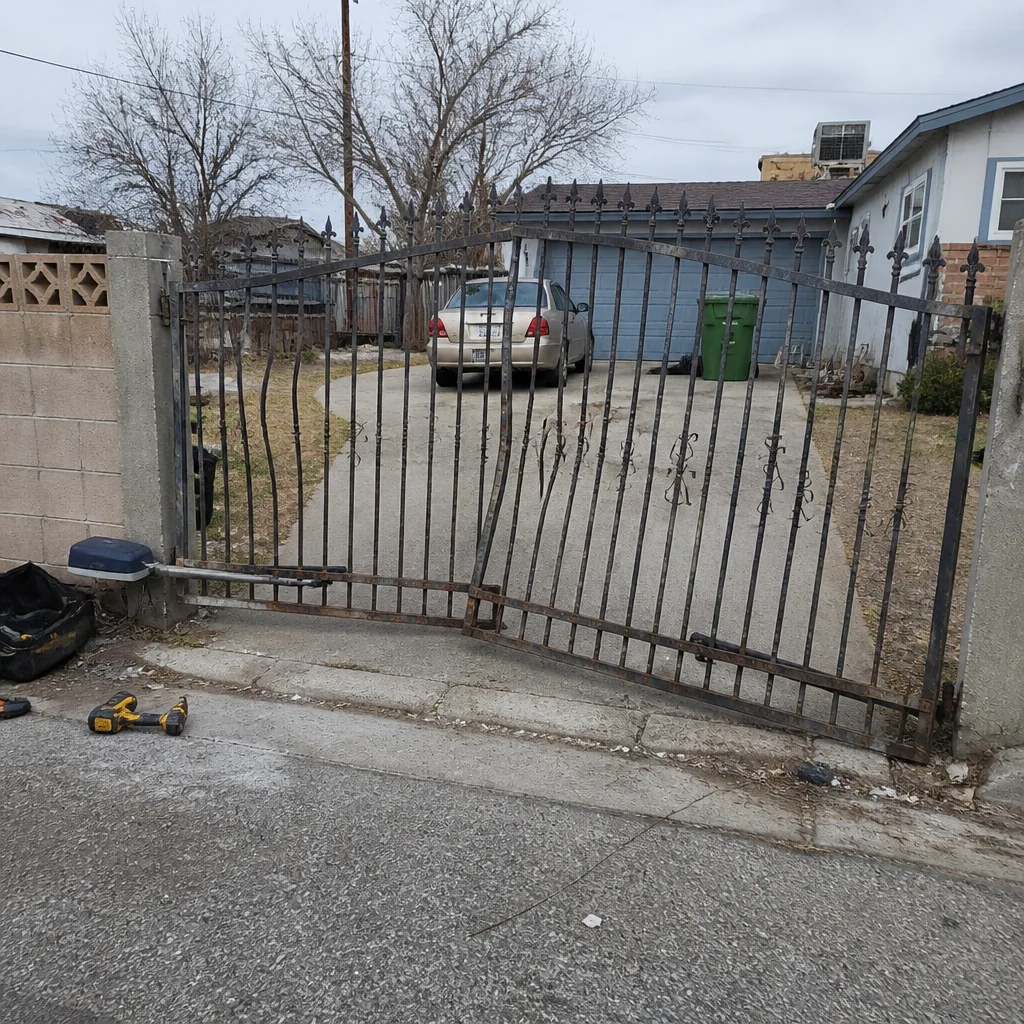 Before
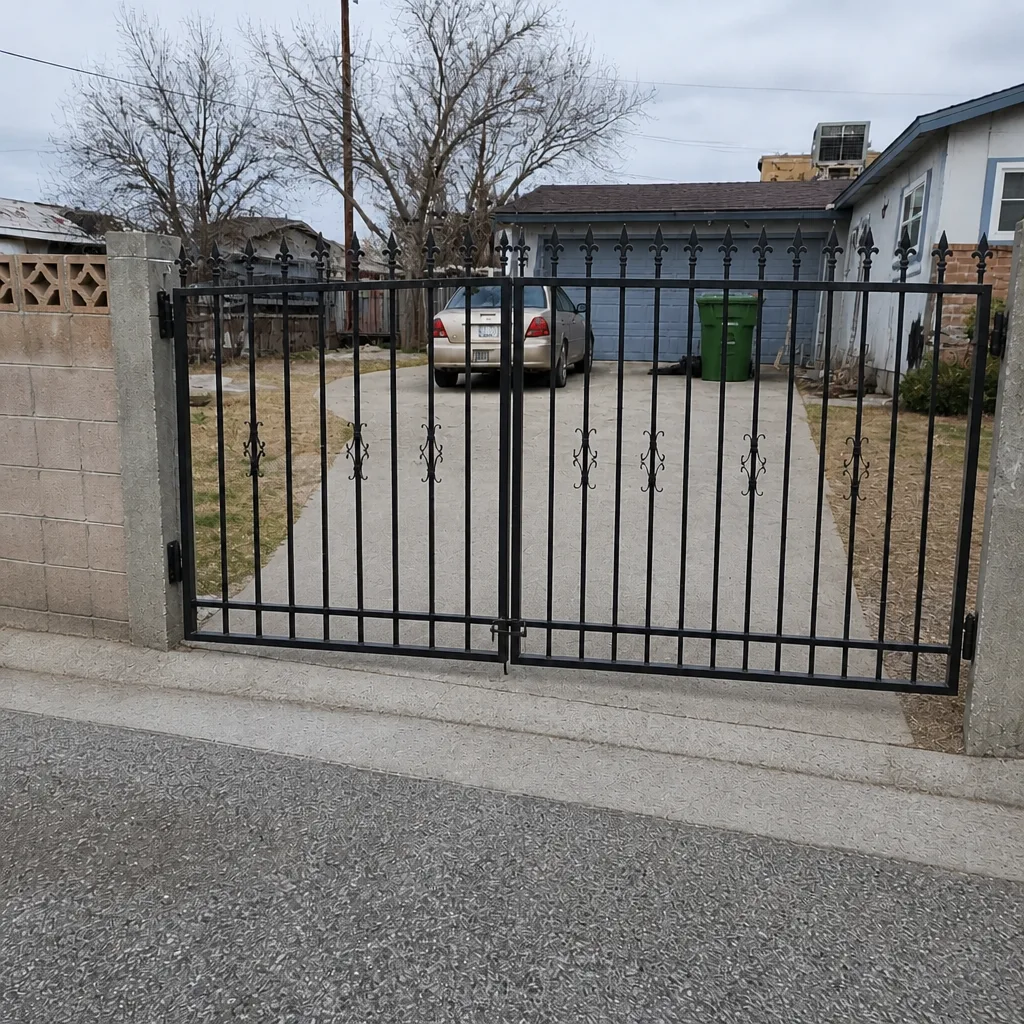 After
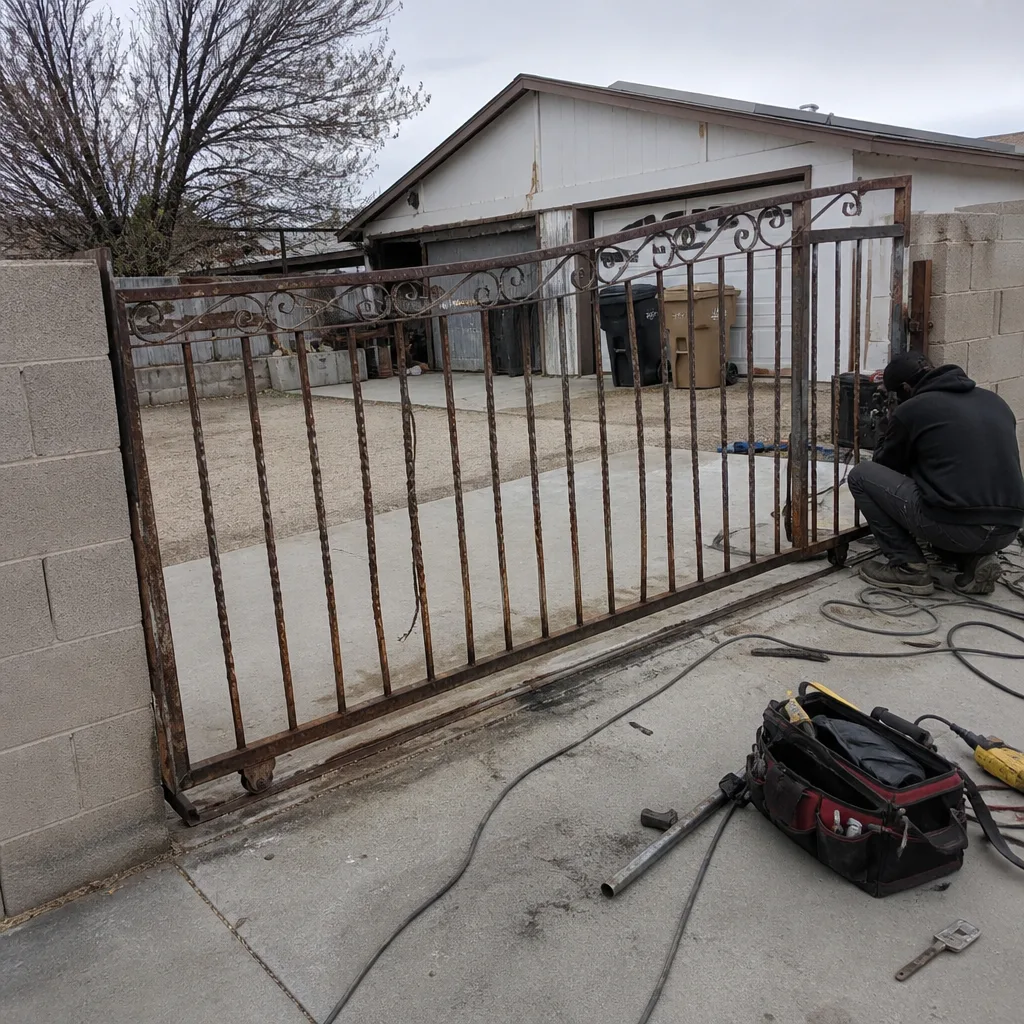 Before
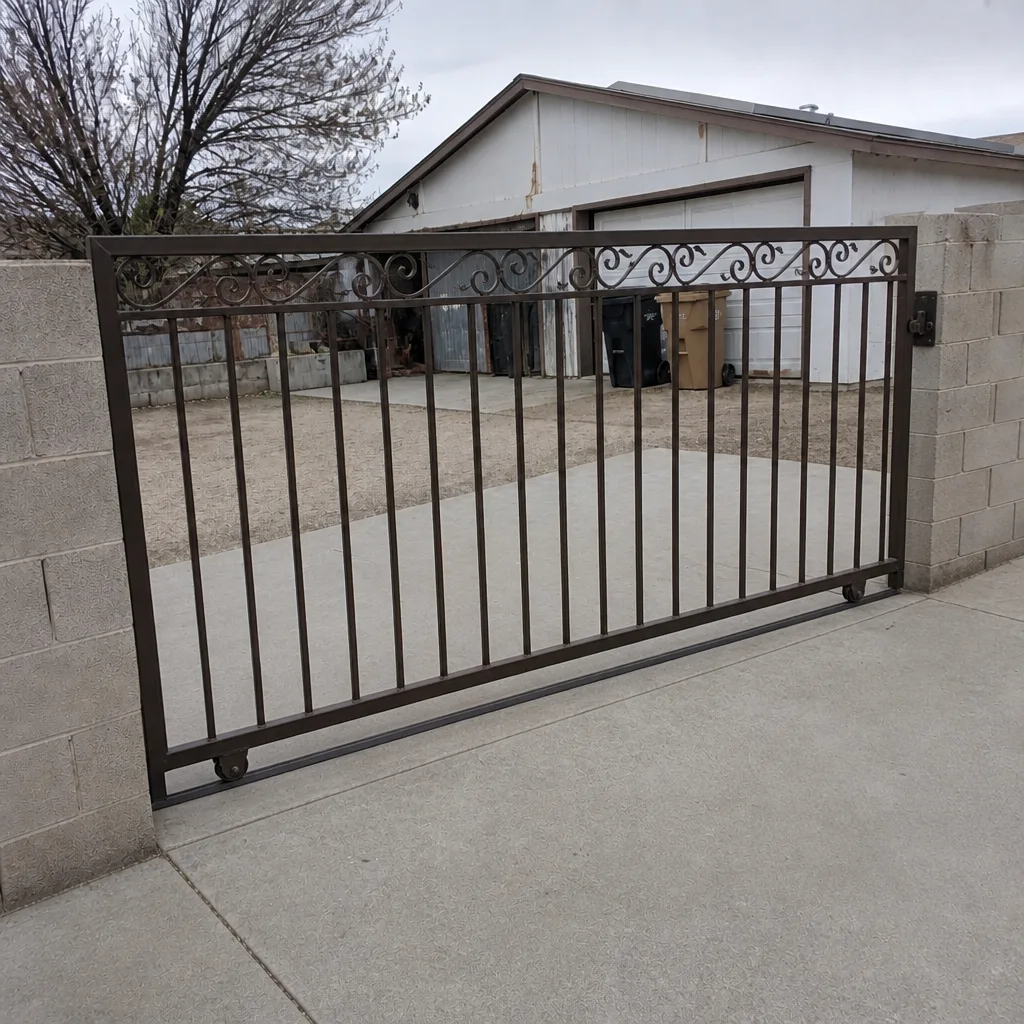 After
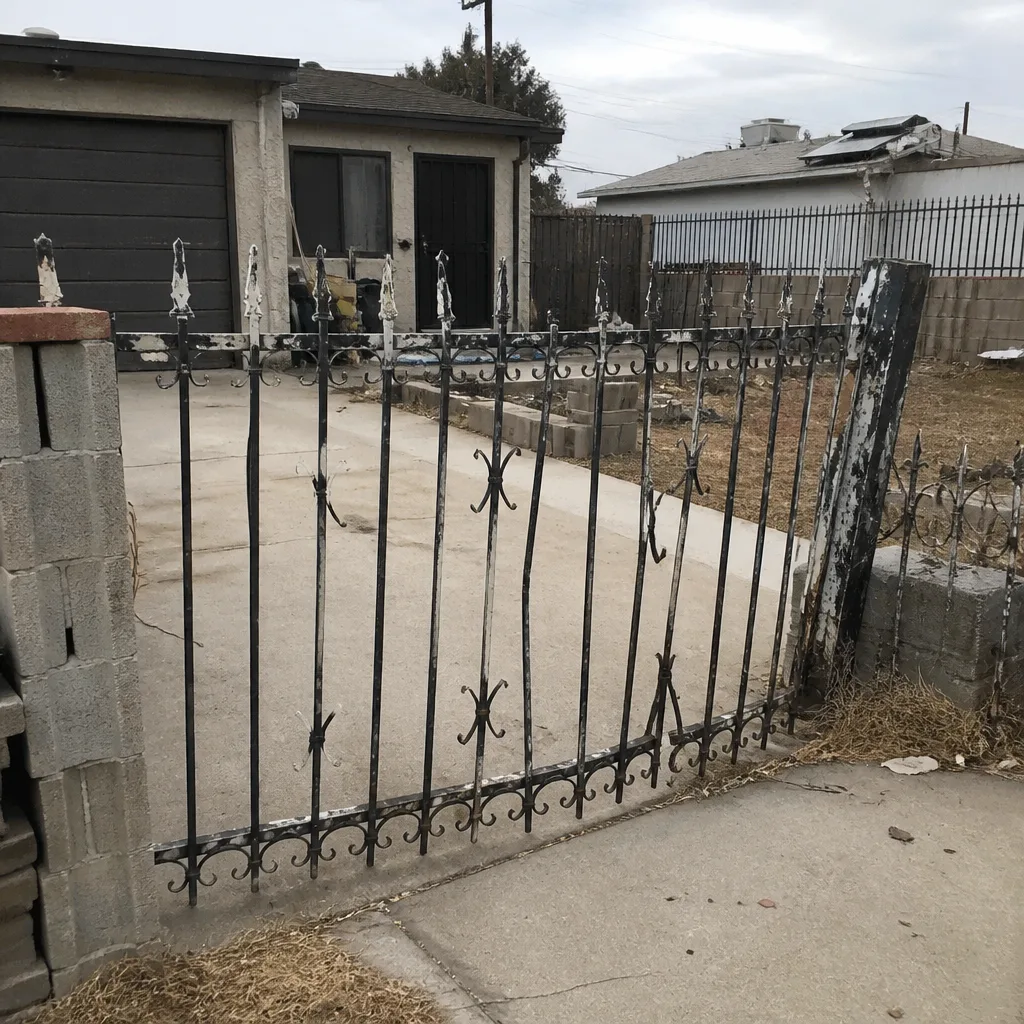 Before
 After
Frequently Asked Questions
Two to three times a year is right for Sunrise Manor: a pre-monsoon check in June, a post-monsoon purge in September, and a cold check in January. Twice a year is the bare minimum for a lightly used gate, but the monsoon dust and the January cold here both punish operators, so three visits keeps ahead of the wear.
A maintenance visit is quoted up front before any work starts, so you know the number before anyone touches the operator. It covers opening the housing, cleaning, checking tension and limits, testing the battery and safety devices, and walking the hardware. Call (844) 761-8729 for a free estimate; the price is agreed before we start, not after.
Cold-thickened lubricant is the usual cause. Summer-weight grease firms up in the cold and forces the motor to work harder, which feels like a failing unit. Swap to a cold-rated lubricant and load-test the battery, and if the gate still drags, have the operator looked at.
You can wipe the exterior and clear the photo-eye lenses on your own. Opening the housing and purging the internals is a power-off job with bearings and limit mechanisms inside, so that part is better left to someone who knows the model. If you’re not sure, have it done as part of a visit.
We service nine major brands, including FAAC, BFT, Linear, Viking, LiftMaster, DoorKing, Elite, Ghost Controls, and Mighty Mule. Chances are good your unit is on that list. Call (844) 761-8729 and tell us what’s on the housing label; we’ll confirm.
A cracked mounting plate weld needs to be ground out and re-welded, not patched. That’s on-site welding work, and we do it in the driveway so the gate doesn’t leave your property. Call (844) 761-8729 and we’ll take a look. The price is quoted before the welder comes out.
The Bottom Line
The gate maintenance schedule that actually works in Sunrise Manor is built around two hard dates: the September dust purge and the January lubricant check. June is where you get ahead of it. Between those three windows, walk the hardware once a year and don’t ignore a crack at the mounting plate. Keep a real maintenance visit on the calendar, not a drive-by run of the gate twice. If you’re not sure how your operator is holding up, or you want a second opinion on a written estimate before you commit, the team here has you covered for installation questions too. Call (844) 761-8729 for a free estimate. Every job comes with the 90-Day Done Right Promise in writing, and someone picks up the phone 24/7.
Written by the team at Gatewood Fence & Gate Sunrise Manor.