
Last updated November 18, 2026
 Wrought iron
 Wood & steel frame
 Farm & ranch
 Sliding driveway gates
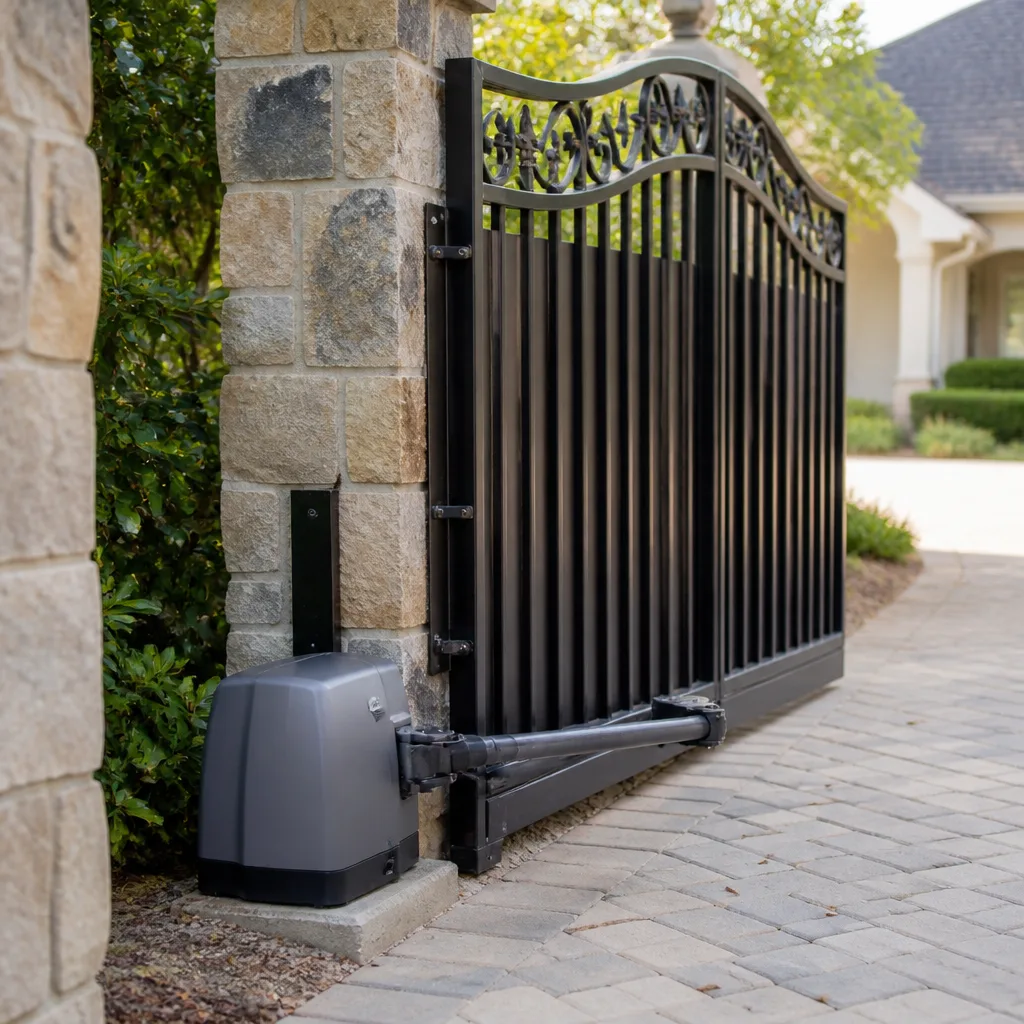 LiftMaster operators
Free on-site gate assessment - hinges, posts, and your LiftMaster or Nice gate operator checked before anything is quoted
The assessment is free and the quote is the invoice.
Get your free estimateGate Motor & Opener Warning Signs Every Homeowner Should Know
A gate that hesitates for half a second before it opens is not “quirky.” It’s a motor drawing excess amperage because something mechanical is binding, and if you let it run that way, the board will follow the motor into the trash. We’ve watched that exact sequence play out in Sunrise Manor more times than we can count: a homeowner mentions the little stutter at the hardware store, shrugs it off for a season, and then calls us when the gate won’t move at all. By then a $200 service call has become a $900 board-and-motor replacement. This guide teaches you to read the signals your operator is already sending, weeks before it quits.
Quick Answer
Gate motors and openers fail on a schedule they telegraph well in advance. The earliest warning signs are usually behavioral: a half-second hesitation before opening, a reversal that happens for no visible reason, or a delay that grows a little longer each week. Mechanical signs come next, including grinding at the same point in the travel arc, clicking on startup, or a gate that drifts back open after it closes. Catching any of these early usually means a repair and a tune-up. Ignoring them usually means a new motor and control board.
Styles & brands we work with
- Wrought iron
- Wood & steel frame
- Farm & ranch
- Sliding driveway gates
- LiftMaster operators
Table of Contents
- Behavioral Warning Signs vs. Mechanical Warning Signs
- Why Your Gate Reverses for No Reason
- Sound Diagnostics: What Your Gate Is Telling You
- Intermittent Operation and the Control Board Warning
- The Corrosion Check Most Homeowners Skip
- Sunrise Manor Climate and Gate Motor Life
- Common Mistakes to Avoid
- When to Call a Professional
Behavioral Warning Signs vs. Mechanical Warning Signs
The distinction matters because these two categories point to different failure paths and carry different urgency. Behavioral signs are what the operator does: timing changes, reversals, cycles that stop short. They usually trace back to the control board, the photo-eye safety circuit, the limit switches, or the sensitivity settings. Mechanical signs are what you can see and hear in the gate itself: sagging, binding, worn hinges, drag in the track, or a roller that no longer rolls.
Here’s the practical difference for a Sunrise Manor homeowner. A behavioral sign is often an electronics problem that will get worse on its own, and fast. A mechanical sign is usually physical wear that has been building for months, and it’s dragging the motor down with it every single cycle. The motor is the victim in both cases, which is why we treat behavioral hesitation as urgent and mechanical drag as the root cause worth fixing first.
Run through this checklist once a month and you’ll catch most failures early:
- Travel time: Time the full open and the full close. If it’s two seconds slower than it was last month, something changed.
- Starting hesitation: A pause before movement means the motor is straining to break free of a bind.
- Reversals: Any reversal without an obstruction in the path needs a diagnosis, not a reset.
- Physical drag: Disconnect the operator (or put it in manual release) and push the gate by hand. It should move smoothly with one hand.
- Cycle count, if your operator tracks it: Compare the count to the service interval in your manual. Most residential operators are rated for a specific number of daily cycles, and a busy driveway in Sunrise Manor can blow past that faster than you’d think.
When the gate itself is the problem, that’s a mechanical repair, and it’s exactly the kind of work we handle. If you want to see what that looks like, our page on Gate Repair in Sunrise Manor walks through the most common failure points we find in this area.
Why Your Gate Reverses for No Reason
A gate that reverses for no reason is almost always reporting one of three things: a dirty photo-eye, a drifting limit switch, or obstruction detection set too sensitive. Telling them apart takes about ten minutes, and it saves you a service call if the fix is a wiped lens.
- Photo-eye contamination. The photo-eye is the safety beam across the gate opening. In Sunrise Manor, wind-blown dust and fine desert grit coat those lenses constantly. Wipe both lenses with a soft cloth and test the gate. If the reversals stop, you found it. If they come back within a week, the alignment is off, not just the lens.
- Limit drift. Limit switches tell the operator where fully open and fully closed are. Over time, vibration and temperature swings walk them out of position. The symptom is a gate that reverses near the end of travel, as if it thinks it hit something. This is common on LiftMaster and DoorKing residential operators and usually needs a tech to re-set the limits.
- Obstruction sensitivity creep. Modern operators sense resistance and reverse to protect people and property. When hinges stiffen or a track clogs with grit, the operator reads that extra resistance as an obstruction. The gate reverses, you press the remote again, and it works. That pattern is your clue: the motor is fine, the gate is binding.
Here’s the rule we give people: if the gate reverses and there’s nothing in the way, don’t cycle it twenty more times hoping it clears up. Each forced cycle pushes the motor harder. Testing in manual mode (release the operator and push the gate by hand) tells you immediately whether you have a mechanical bind or an electronics problem. If the gate moves freely by hand, the problem is in the operator. If it drags, the operator is a symptom.
Sound Diagnostics: What Your Gate Is Telling You
Your ears are the cheapest diagnostic tool you own, and most homeowners already hear the warning without recognizing it. Three sounds are worth memorizing:
- Grinding at the same travel point. A grind that happens at one specific spot in the arc, not throughout, is almost always a damaged section of track, a worn roller, or a chain or screw drive that’s worn at that point. It’s mechanical, it’s predictable, and it gets worse because the damaged spot wears faster every cycle.
- Clicking on startup. A single click before the gate moves, especially a click that used to be silent, often points to a failing relay on the control board or a starter capacitor on its way out. It can also be a loose terminal connection, which we’ll get to below.
- The groaning, straining tone of a capacitor struggling to start a motor. This is distinct from grinding: it’s a low, labored hum that resolves into movement. A failing start capacitor can’t give the motor the jolt it needs, so the motor lugs. On some units it will eventually just hum and not move at all. That’s a part swap a trained tech can handle in a single visit, and it’s much cheaper than the motor it protects.
Sunrise Manor’s dust makes the grinding category more common than you’d expect. Grit works its way into rollers, tracks, and chain paths, and a dry, dusty drive is a wear accelerator. If your operator has a screw drive, listen for a rhythmic scrape; if it’s a chain drive, listen for slapping. Both are telling you the same thing: debri is in the mechanism and it’s time for service.
When the sound is paired with a gate that also sags, you’re likely looking at a repair-first situation. That’s why we say a gate sags in the hinge post, not in the middle, and that’s where we start. Our team handles Gate Motor & Opener in Sunrise Manor service for every major brand, and we’d rather fix the mechanism than sell you a motor you don’t need.
Intermittent Operation and the Control Board Warning
Intermittent operation is the one warning sign people most often write off, and it’s the most dangerous to ignore. The pattern looks like this: some days the gate works perfectly, other days it stops mid-travel or won’t respond to the remote, and pressing the button a second or third time gets it moving. Homeowners assume the remote battery is dying. Sometimes it is. But when fresh batteries don’t fix it, and the pattern gets more frequent over a few weeks, the control board is failing.
Boards rarely give you a second warning. On LiftMaster, Elite, and similar residential boards, the failure pattern is often a slow degradation of the logic that manages travel and safety, followed by a full stop. The reason is condensation and dust working into the housing. Sunrise Manor sits in a climate with big temperature swings between day and night, and every swing pulls moisture into the enclosure. That moisture finds the terminal block and the board’s own connections.
Two things you can do before that happens:
- Keep the housing sealed. Check the cover gasket once a season and make sure the screws are snug. A cracked or missing gasket is an open invitation.
- Track the pattern. If you can tell a tech “it fails about two times a week, always after the gate has been closed for a while,” that saves diagnostic time and points straight at the board or a supply issue.
If your operator is more than a decade old and starts showing intermittent behavior, get it looked at. Sometimes it’s a $60 relay. Sometimes it’s the board. But you need to know which before the motor itself gets dragged down by the failing logic.
The Corrosion Check Most Homeowners Skip
Here’s the check nobody does until the gate is dead: the terminal block inside the operator housing. Every low-voltage connection in the operator, from the photo-eye wiring to the loop detector leads to the limit switch wires, lands at that block. In Sunrise Manor, dust and condensation combine into something that acts a lot like alkaline residue. It creeps into screw terminals, eats the copper, and creates resistance where there was supposed to be continuity.
The result mimics a dead motor. The homeowner hears nothing on command, assumes the operator is finished, and starts shopping for a replacement. A tech opens the housing, finds a corroded negative terminal, cleans it, re-torques the connection, and the gate runs like new. We’ve made that call more than once, and it’s the best kind of service visit because the price is small and the outcome is a gate that works.
What to check, if you’re comfortable opening the low-voltage cover only (never the high-voltage side):
- Look for chalky white or greenish residue on any terminal.
- Check that screws are snug, not stripped, and that no wire strands are frayed.
- Confirm the photo-eye and safety-edge wires are fully seated, especially after any lawn work or fence repair.
- If the operator uses a battery backup, check the battery terminals too, since they corrode fastest.
The high-voltage side of the operator is a different matter. Do not open the supply-side cover. That’s a licensed electrician’s territory, and we say that plainly. When your automated gate needs that kind of work, our Gate Installation in Sunrise Manor page outlines how we handle power runs and safety edges, and we coordinate that side of the job rather than asking a homeowner to poke at live conductors.
Brand presence matters on this check. Mighty Mule operators are common on rural driveways and tend to show terminal corrosion early because their housings sit lower and catch more ground splash. DoorKing units on larger properties have more terminals and thus more places for a connection to fail. Knowing the model matters; we service all nine major brands, including both of those.
Sunrise Manor Climate and Gate Motor Life
A gate motor in Sunrise Manor lives a harder life than the same motor in a coastal climate, and it’s worth saying why. The combination of summer heat, blowing desert dust, and big day-night temperature swings ages an operator in three ways at once. Heat alone shortens capacitor and board life. Dust accelerates mechanical wear on rollers, tracks, and the chain or screw drive. The temperature swings pull moisture into the housing, and that moisture finds terminals.
What that means for scheduling: in our experience, gates on the east side of the valley, where the wind runs harder, need a mechanical inspection about every six months rather than yearly. And if your driveway catches afternoon sun directly, the operator’s own housing runs hot; a shade panel is worth considering on some installs, and we’re happy to talk through whether it makes sense on your gate.
What that means for you as a homeowner: watch for these local patterns.
- Spring and early summer is peak failure season. The first real heat wave after a mild stretch is when a weakening capacitor or a marginal board finally lets go.
- Dust storms leave grit in the mechanism. After a serious wind event, put the gate in manual and push it once. If it drags, clean and lubricate before the next command.
- Monsoon-season rain is brief but intense. Check the housing cover and gasket after any storm, since a small leak becomes a board replacement later.
This is where a local shop earns its keep. A technician who works in Sunrise Manor week in and week out knows which streets see wind-driven sand, which neighborhoods have the older swing operators, and what the current failure season looks like. Our team is proud to serve the area from a shop you can drive to, and our main page at Gatewood Fence & Gate Sunrise Manor home spells out the standing offers, including no trip charge inside the county and a free second opinion on any written estimate.
Common Mistakes to Avoid
- Hitting the remote again and again. Every forced cycle pushes a binding gate harder and heats the motor. If it won’t move, stop and diagnose in manual mode instead.
- Greasing everything in sight. Excess grease in a dusty Sunrise Manor environment traps grit and makes wear worse. Light, correct lubrication on the right parts, not a can of grease on everything.
- Replacing the motor when the gate is the problem. A new operator bolted onto a sagging, binding gate will fail faster than the old one did. Fix the post and hinges first.
- Ignoring a single reversal. One unexplained reversal is a diagnostic clue. Waiting for a pattern wastes the lead time the equipment gave you.
- Skipping the gasket check. A cracked housing gasket lets moisture in, and moisture finds the board. Ten minutes twice a year can add years to the operator’s life.
- Calling a national number that quotes over the phone. On a gate, an accurate price needs eyes on the operator and the mechanism. Consumers in this part of Nevada have been burned by quotes that changed at the door; we quote after we look, and the number we give is the number you pay.
- Assuming the photo-eye and safety edge can be skipped. These are the parts that stop the gate for a child or a pet. Never bypass them to quiet a nuisance reversal; fix the cause.
When to Call a Professional
Call when the gate reverses without an obstruction and wiping the photo-eyes doesn’t fix it, when you hear grinding at a specific point in travel, when the operator clicks but won’t move, or when it stops mid-travel more than once a week. Call immediately if the gate moves after you close it, if the safety edge stops responding to a push test, or if you see scorched wiring or smell burning at the housing. Those last two are genuine safety issues; shut the operator off at the disconnect and get a professional out.
For everything else, it’s often a judgment call, and we’d rather you call than guess. Gatewood Fence & Gate Sunrise Manor offers free estimates in Sunrise Manor, and a live person answers the phone day or night. Call (844) 761-8729 and tell us what the gate is doing; we’ll tell you what it likely needs and what it costs before anyone touches it. Every quote is agreed before work starts, and every job carries our 90-Day Done Right Promise in writing. Seniors and veterans get 10% off, permanently.
See the difference
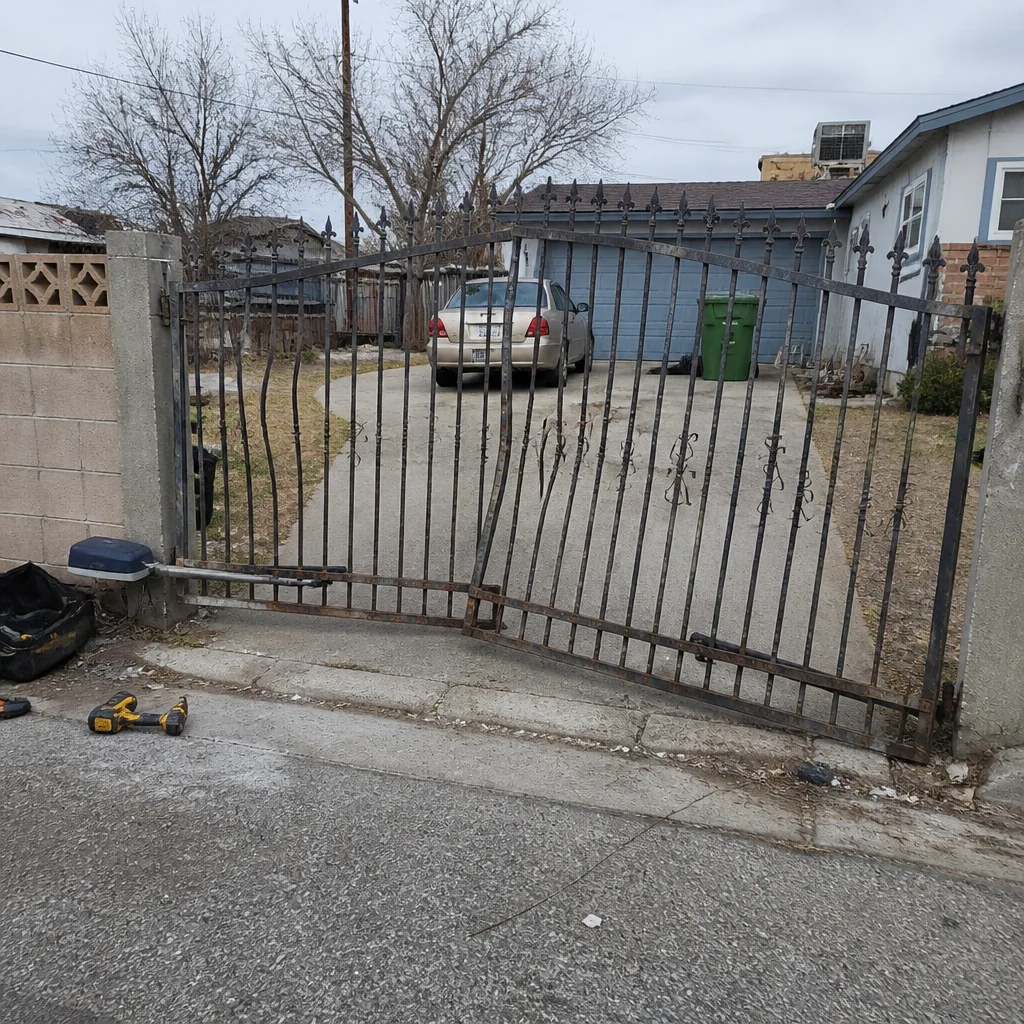 Before
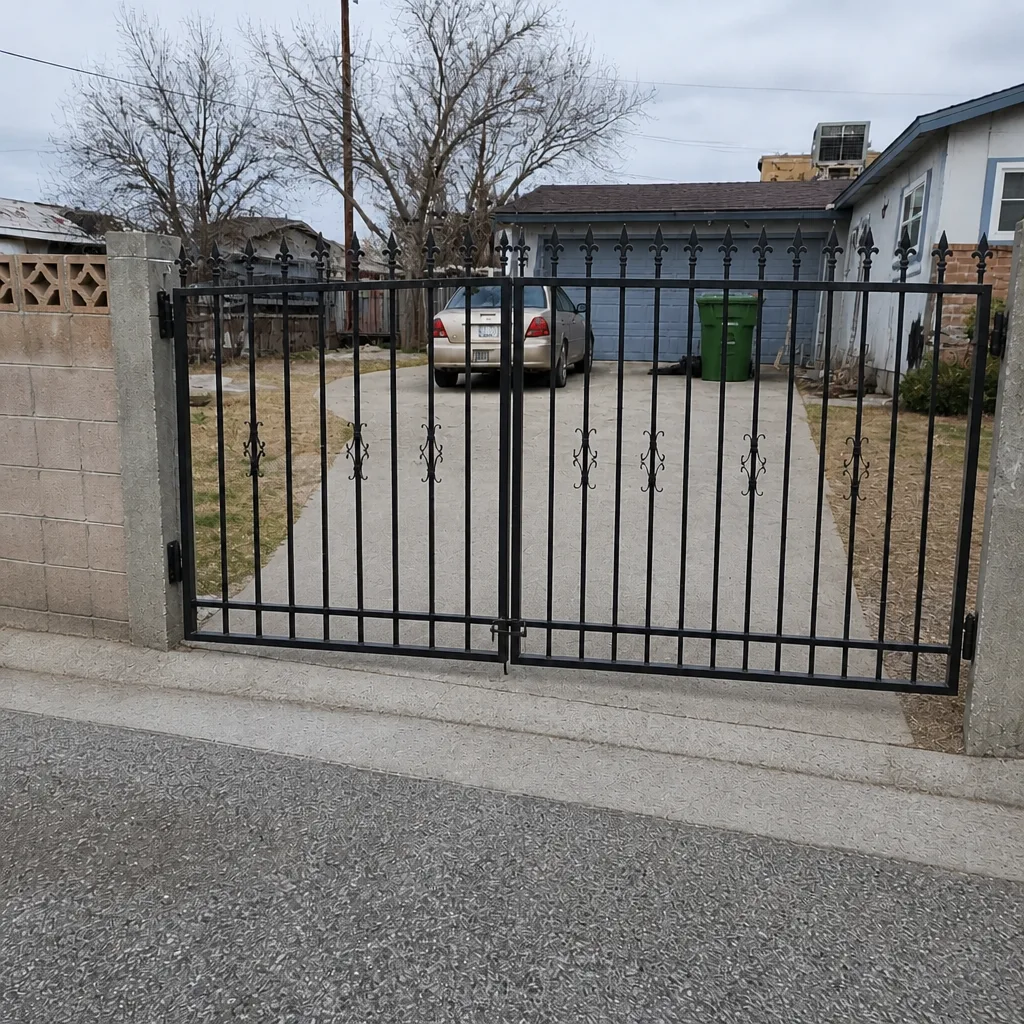 After
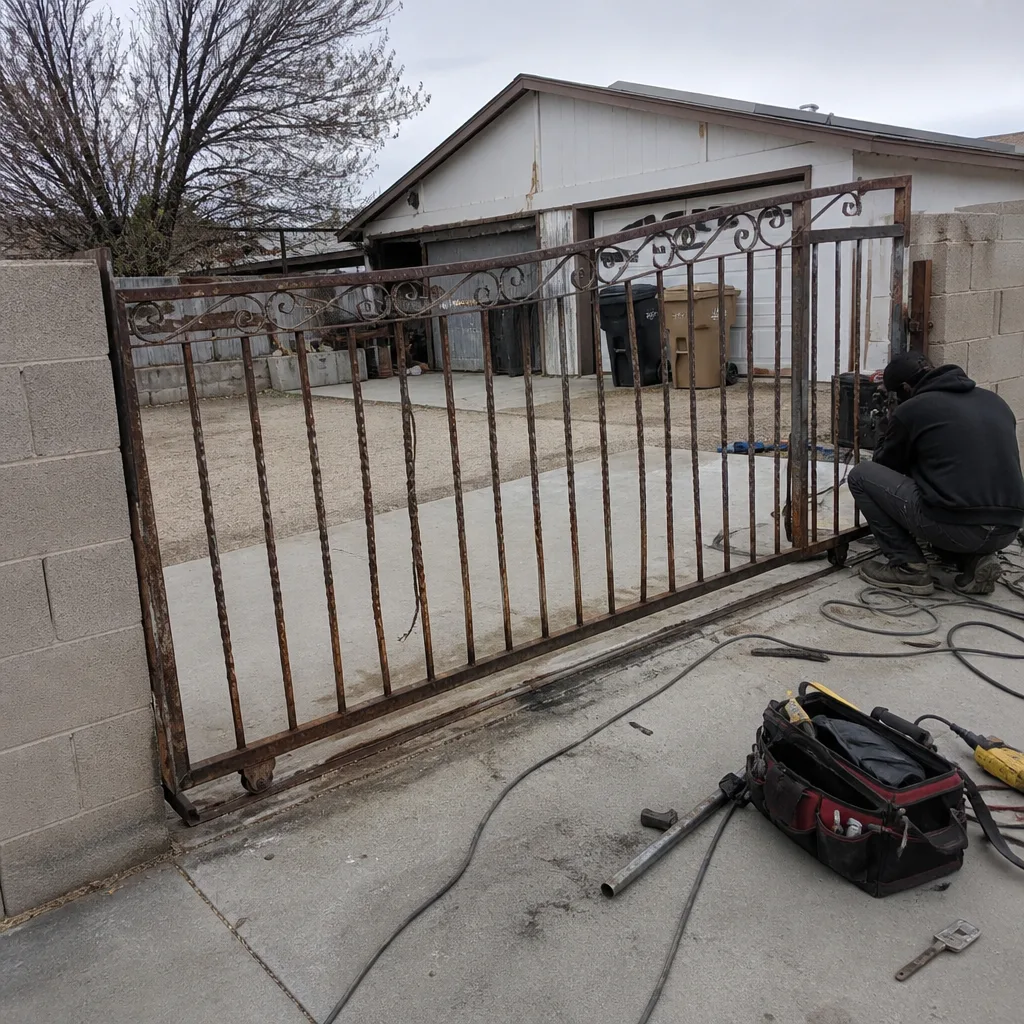 Before
 After
 Before
 After
Frequently Asked Questions
Most gate motor repairs in Sunrise Manor run from about $150 for a capacitor, relay, or terminal fix up to around $500-$900 if the control board or motor has to be replaced. The wide range is exactly why we diagnose before quoting: a $60 relay and a $900 board can feel identical from the driver’s seat. Call (844) 761-8729 for an exact quote; estimates are free and the price is agreed before any work starts.
Yes, in most cases, since a live person answers our line 24 hours a day, seven days a week. A gate stuck open or closed is a security issue as much as a convenience one, so we prioritize it. Call (844) 761-8729 and tell us the gate’s position and what it’s doing; we’ll get a technician out and quote the repair before work begins.
Most no-reason reversals come from a dirty or misaligned photo-eye, a limit switch that has drifted out of position, or obstruction sensitivity set too high while the gate is binding. Wipe the photo-eye lenses first, then test the gate in manual mode. If it moves smoothly by hand, the problem is in the operator; if it drags, the gate itself needs mechanical repair before the operator gets worse.
Most residential gate operators in the Sunrise Manor heat and dust last eight to twelve years with regular service, and noticeably less without it. Heat shortens capacitor and board life, and dust accelerates mechanical wear. Regular inspections, a clean housing seal, and prompt repair of gate drag are the biggest things that move the number up rather than down.
A full gate installation includes the gate itself, the operator sized to the gate’s weight and daily cycle count, the power run to the operator, the photo-eye and safety edge, and the limit and sensitivity setup. We measure first and give a written price before anything is ordered. This is scheduled work, not same-day; call (844) 761-8729 to book a free measure and estimate.
Yes. The power run and safety edges are part of the job, not an add-on we hand off to the homeowner. The high-voltage side is done by a licensed electrician, and we coordinate that work along with the low-voltage side, photo-eyes, and safety edge setup. If your operator has ever been installed with a bypassed safety edge, we fix that as part of the service call.
The Bottom Line
Your gate motor is sending signals for weeks before it quits, and the signals are readable: a half-second hesitation, a reversal with nothing in the way, a grind at one point in the arc, a click on startup, a gate that works three days out of four. Each one points you toward a small repair now instead of a large one later. In Sunrise Manor, heat and dust make those signals show up earlier than in most places, so monthly checks and twice-yearly service pay for themselves. If you’re hearing any of these, don’t wait for the board to tell you. A trained eye on the mechanism and the terminal block usually catches the failure while it’s still a repair, and that’s exactly what our team is here for.
When your gate needs a look, call Gatewood Fence & Gate Sunrise Manor at (844) 761-8729 for a free estimate. We’re the locally owned, owner-operated shop with our name on the door and a published address you can drive to. A live person answers around the clock, our technicians have up to 25 years of experience, and we’re certified to service nine major gate brands. Every job carries the 90-Day Done Right Promise in writing: if it’s not done right, we make it right.
Written by the team at Gatewood Fence & Gate Sunrise Manor.