
Last updated November 18, 2026
 Wrought iron
 Wood & steel frame
 Farm & ranch
 Sliding driveway gates
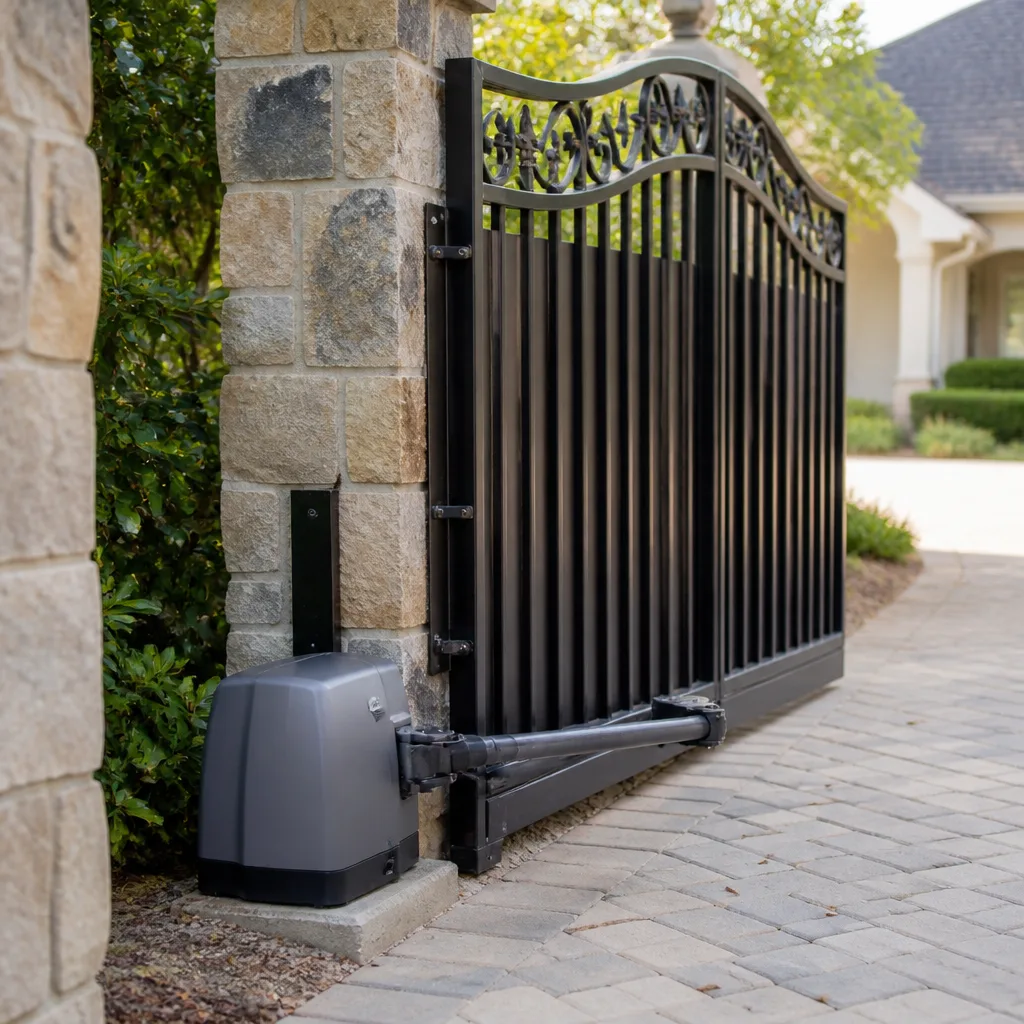 LiftMaster operators
Free on-site gate assessment - hinges, posts, and your LiftMaster or Nice gate operator checked before anything is quoted
The assessment is free and the quote is the invoice.
Get your free estimateHow Long Does Gate Access Control Take? Timelines and What to Expect
If a company quotes you “a few hours” for every access control job, they either don’t know what they’re looking at yet or they’re padding the clock. Neither one is good for you. After more than two decades of opening up keypads, control boxes, and loop detectors across the Sunrise Manor area, we’ve learned that access control work has one of the widest time spreads in the whole gate trade. A keypad swap can be 45 minutes. A full new system with fresh wiring and a buried loop can eat half a day or more. This guide lays out real, job-by-job time ranges so you can plan your day honestly, and it covers the hidden snags that turn a “quick visit” into a return trip.
Quick Answer
A keypad replacement usually takes about 45 minutes, a control board replacement runs 1.5 to 2 hours, a vehicle loop detector replacement takes 2 to 3 hours once you count the asphalt cure, and a complete new access control system is a half-day minimum. Repair time and full restoration time aren’t the same thing. Intermittent faults and someone else’s non-standard wiring can add an hour or more to any of these ranges.
Styles & brands we work with
- Wrought iron
- Wood & steel frame
- Farm & ranch
- Sliding driveway gates
- LiftMaster operators
Table of Contents
- Job-by-Job Time Ranges
- Keypad Swap: The 45-Minute Job
- Control Board Replacement: 1.5 to 2 Hours
- Vehicle Loop Detector: 2 to 3 Hours With the Cure
- Complete Access System Install: Half a Day Minimum
- What Adds Time Homeowners Never Think About
- Repair Time vs. Restoration Time
- How Sunrise Manor Summer Heat Changes the Clock
- What to Ask Before the Tech Starts
Job-by-Job Time Ranges
Here’s the honest breakdown we’d give you over the phone if you described the problem. These ranges are for a straightforward job on a gate that’s already in decent shape. Your actual time lands inside the range, or above it if we find surprises.
- Keypad or card reader swap: about 45 minutes, assuming the wiring is standard and the old unit comes off clean.
- Control board replacement: 1.5 to 2 hours. The board itself is quick. The testing is what takes the time.
- Vehicle loop detector replacement: 2 to 3 hours including the asphalt cure. The saw cut and pour don’t take long. Waiting for the patch to firm up does.
- Telephone or intercom entry repair: 1 to 2 hours depending on how far the wiring runs.
- Complete new access system (keypad, control, safety edges, power): half a day minimum, often longer if a new power run is needed.
- Intermittent fault diagnostic: 1 to 3 hours. We may have to cycle the gate many times to catch the failure.
Notice what’s not on this list: any promise of a same-day fix for a full system install. New access control is measured, ordered, and scheduled work, so the timeline starts at the estimate, not the call. If you need the gate working right now, that’s a repair conversation, not an install one. For a straight gate repair in Sunrise Manor, the crew can usually get out and look at it faster than an install crew can.
Keypad Swap: The 45-Minute Job
A keypad swap is the closest thing to a predictable job in access control. Most modern keypads – we service DoorKing, Elite, and LiftMaster units regularly – mount the same way, wire the same way, and program the same way. If your existing keypad is a standard unit that’s simply given up, 45 minutes is a realistic window, and we’ve done plenty in less.
The clock starts moving when any of these show up:
- The old keypad was wired with whatever the last installer had in the truck, not the manufacturer’s color code.
- The keypad shares a power feed with something else, and we have to trace which wire goes where.
- The mounting surface is a brick or stucco pillar that needs careful drilling, not a metal post.
- You want the new keypad to control a second entry point, not just the main gate.
In Sunrise Manor, we see a lot of older keypads on block pillars where the original installer ran the wire through the block without a conduit sleeve. Sun and heat work on that wire for years. When the keypad finally fails, the wire comes out brittle and needs replacing, and that’s the difference between a 45-minute swap and a two-hour job. If you tell us on the phone what your pillar looks like, we can usually predict which one you’re getting.
Control Board Replacement: 1.5 to 2 Hours
Swapping a control board is a 20-minute task if nothing goes wrong. We budget 1.5 to 2 hours because nothing ever goes right on the first try. A control board replacement is when you find out the real state of everything downstream: the safety edges, the limit switches, the loop detector, the power supply.
Here’s the sequence we run, and why it takes the time it takes:
- Kill power and label every lead. This is the step nobody sees and the one that saves you a callback.
- Pull the old board and inspect the enclosure. Heat damage, corrosion, and moisture tell us what killed the old board and what will kill the new one.
- Mount and wire the replacement. Standard on a LiftMaster or Linear board. Slightly longer on a board where the previous tech used wire nuts instead of terminals.
- Reprogram the operator. Travel limits, force settings, remote codes, keypad codes. This is where the time adds up, especially on a system with multiple remotes and a shared code structure.
- Cycle the gate 10 to 15 times and confirm every safety input. We don’t leave until the gate has closed and reopened cleanly on every pass.
If the control board is the only problem, you’re looking at the low end. If the board failed because a safety edge is shorted or a loop is waterlogged, we’re fixing those too, and that’s a longer visit. We’d rather tell you upfront that it might run long than surprise you at the end.
Vehicle Loop Detector: 2 to 3 Hours With the Cure
The vehicle loop detector is the buried wire in your driveway that tells the gate a car is there and it’s safe to move. When it fails, the gate either won’t open for a car or won’t close behind one. The repair itself is not the slow part. The asphalt is.
Replacing a loop detector means cutting a shallow channel in the driveway, pulling the old wire, laying the new loop, and patching the asphalt. The saw cut and the wire run take under an hour on a clean job. The patch is where the clock runs. Fresh asphalt needs time to firm up before a car drives over it, and if you park on it too soon you’ll have a divot where your loop used to be.
Two things affect the timing:
- Driveway surface. Asphalt cures predictably. Concrete needs a different patch and, depending on the mix, can hold traffic sooner or later. Decomposed granite and gravel driveways are the trickiest, because the loop has to be protected from shifting stone.
- Time of day. A morning loop replacement on a Sunrise Manor driveway is usually drivable by evening in milder months. A late afternoon job in July pushes the patience part longer.
Plan to keep the car off the patch for the rest of the day. If you have a second vehicle or a neighbor’s driveway, use it. This is the one access control job where the gate might be on manual for a few hours, and it’s worth knowing before we start.
Complete Access System Install: Half a Day Minimum
If you’re putting in new access control – keypad, card reader, intercom, safety edges, the control box, and the power to run it – treat it as a half-day minimum. Larger properties with a long gate run, a long driveway, or multiple entry points can stretch to a full day or beyond, and we won’t pretend otherwise. This is scheduled work, not emergency work, and it’s measured and quoted in advance.
A standard install includes the following, and the timeline assumes all of it:
- Site walk and measurement. We confirm gate weight, cycle count, power location, and where the reader or keypad mounts.
- Power and conduit run. This is the step homeowners underestimate. Running power to a roadside pedestal hundreds of feet from the house takes time and, in some spots around Sunrise Manor, a trench.
- Mount and wire the access hardware. Keypad, reader, control enclosure, safety edges. Straightforward once the power is there.
- Program every device and every user code. Household codes, temporary contractor codes, remote assignments. It’s the part that takes thoughtful attention.
- Test the full sequence and walk you through it. Gate opens for a car, closes behind it, holds for a person on foot, and fails safely if the power drops.
We’ve seen “a few hours” quoted for a job that needed a full day because the power run was never measured before the quote. That’s how the door price ends up different from the phone price. If you’re planning a new system, ask for a written estimate after a site check, not a phone number.
What Adds Time Homeowners Never Think About
The biggest time thief on access control jobs isn’t the hardware. It’s the history of the gate. Someone installed something at some point, and their work is now the puzzle we have to solve before ours can start.
Here’s what we’ve run into, and it’s almost always in older gates:
- Non-standard wiring from a previous installer. The color code goes out the window, every wire has to be traced by hand, and a 45-minute job becomes two hours. We see this a lot in the rural pockets around Sunrise Manor where there’s no inspection history to lean on.
- Intermittent faults that need replication. “It works fine for three days and then fails once.” We can’t fix what we can’t see fail, so we cycle the gate until it acts up. Sometimes that takes minutes. Sometimes it takes an hour and a half.
- Undocumented shade-tree work. A gate that’s been “fixed” three times by three different hands is a gate that needs to be mapped before it’s repaired.
- Dead power to the access point. If the pedestal has no live feed, tracing it back to the panel is its own job.
- Buried boxes under landscaping. The control enclosure that was easy to reach in 2010 is under a foot of gravel and two shrubs today.
We don’t pad time on purpose. We quote a range because we’ve seen how often the second hour gets eaten by the first hour’s discoveries.
Repair Time vs. Restoration Time
Repair time and restoration time are two different clocks. The repair is the physical fix: the board is swapped, the loop is laid, the keypad is mounted. Restoration is when the gate is back to doing what it did before. On most access control jobs those finish at the same moment. On some, they don’t.
When they don’t line up:
- The gate gets manually locked for a night. If the safety edges are bad and the parts are on order, we may leave the gate locked rather than leave it cycling without a working safety input. That’s a night on manual, and we’ll tell you both when we arrive.
- The board needs programming that requires a working app. If the manufacturer’s portal is down for the evening, programming runs to the next morning.
- Weather stops the loop patch. A sudden rain shower across the east side of Sunrise Manor will cancel the cure time and push the patch to another day. The wire is in. The driveway closed early. That happens.
We’d rather have a clear conversation about the possibility than let you discover it at the gate at 9 p.m. If a repair job and a restoration job are going to split, you hear it from us before we leave.
How Sunrise Manor Summer Heat Changes the Clock
Summers around here are not gentle. When the afternoon high sits above 100 degrees, three things change about access control work, and none of them speed up the calendar.
First, asphalt cure times stretch. A patch that would take a couple of hours on a mild morning takes longer in the direct July sun because the surface skins over fast and stays soft underneath. Rushing it means a divot by August. We won’t rush it.
Second, outdoor electronics hate the heat, and the enclosures they live in turn into ovens. A control board that cooked through a summer in a box with no shade fails earlier than it should. When we replace a board in July, we look hard at the enclosure and mounting before we put a new one in the same spot. Sometimes that adds 15 minutes. It’s worth it.
Third, we plan jobs earlier in the day when we can. A loop detector or keypad install that starts at 6 a.m. is done before the worst heat, and the patch has hours to set before the sun gets serious. That’s not a marketing promise; it’s how the schedule actually works. In the winter, when overnight lows dip into the 30s, the same patch needs a different approach and can take longer to cure. Sunrise Manor climate cuts both ways. Ask your tech how the season affects your specific job before the day starts.
What to Ask Before the Tech Starts
You can walk into any access control visit with a clearer picture than most homeowners have. Five questions cover almost everything, and the answers tell you whether you’re planning a two-hour window or an afternoon.
- What’s the plan for my gate if the fix takes longer than expected? The honest answer is either “we’ll finish it today” or “we may leave it on manual overnight and come back for parts.” Ask now, not at 8 p.m.
- Do you have the parts on hand, or will they be ordered? A keypad and board are often in stock. A specific loop size or an older-brand safety edge may not be.
- How long do you expect to be on site, and how much of that is testing? A tech who can break the window into “install” and “test” knows the job.
- Will you leave the driveway drivable today? If it’s a loop job, ask about the patch and when you can drive over it.
- What’s your written estimate, and does it change at the door? The answer should be a flat number arrived at from a site check. If it’s “we’ll see,” that’s the wrong answer.
Ask these on the phone and you’ll schedule more accurately, whether you use us or anyone. For motor and operator concerns rather than access control, our team has a gate motor and opener service page that covers the same timing questions. If you’re still deciding between repairing and replacing a gate, the gate installation page lays out what a fresh build involves. And if you want the full picture of what we do locally, start at the Gatewood Fence & Gate Sunrise Manor home.
Common Mistakes to Avoid
- Booking a whole day for a keypad swap. Unless your pillar is block, your wiring is suspect, or your keypad is controlled by a shared panel, a swap is under an hour. A full day off work is unnecessary.
- Accepting a one-hour arrival window from a company that hasn’t seen the gate. The window isn’t the issue. The schedule behind it is. If a company can’t answer “what kind of gate do you have” on the phone, they’re guessing.
- Rushing the loop patch in the summer. A car on a soft patch in July will leave a dimple and shorten the loop’s life. Wait the extra hours. The gate will work; the driveway will recover.
- Assuming the previous installer used standard wiring. They didn’t, and it’s the single most common reason an access control visit runs long.
- Skipping the safety edge inspection on a control board replacement. A board that failed because a safety edge shorted is a board that will fail again if the edge isn’t fixed. Cheap board, expensive second call.
- Scheduling a new full system in the middle of the day in July. Power runs and programming in the afternoon heat take longer, and the driveway cure spills past your dinner. Morning starts are the right call in Sunrise Manor summers.
- Hiring a company that can’t tell you when they’ll be back if a part is missing. If the pickup truck leaves with your gate unlocked and no return date, you’ve got a bigger problem than a control board.
See the difference
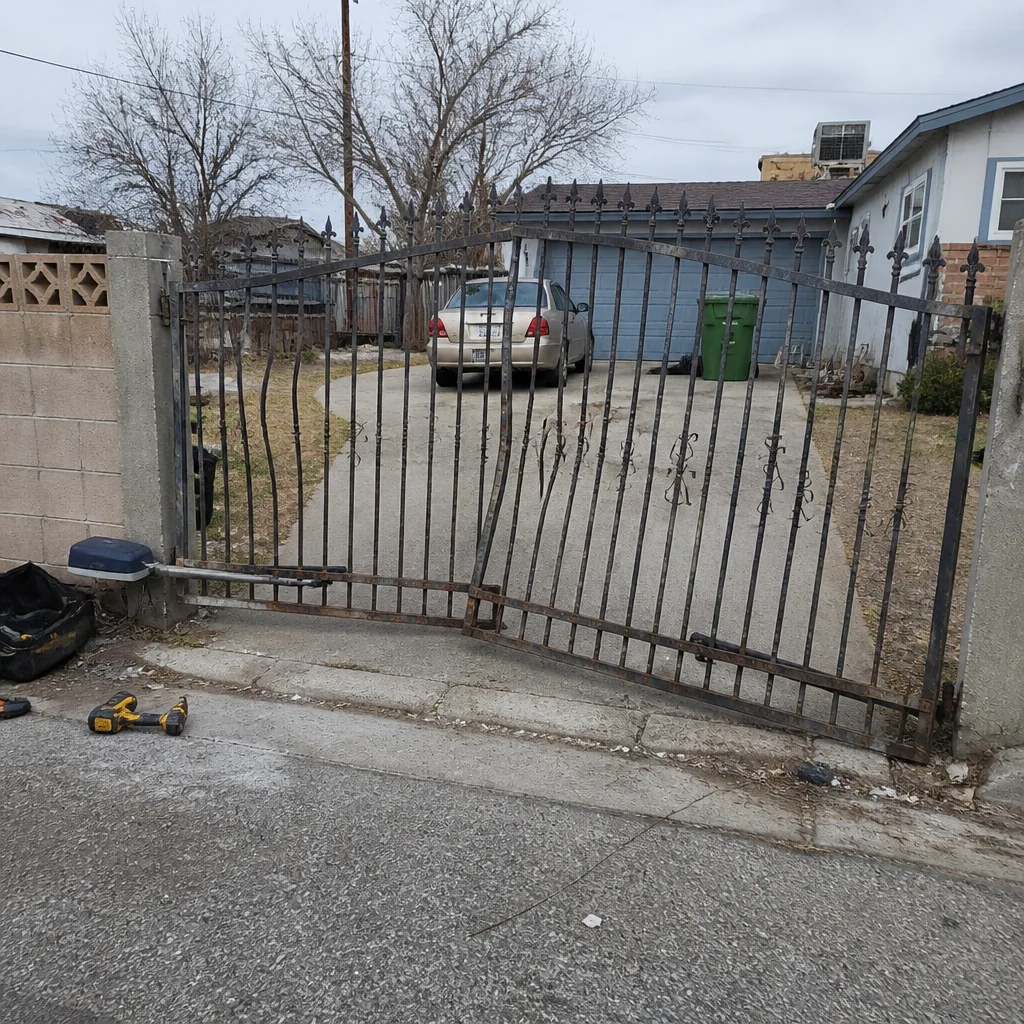 Before
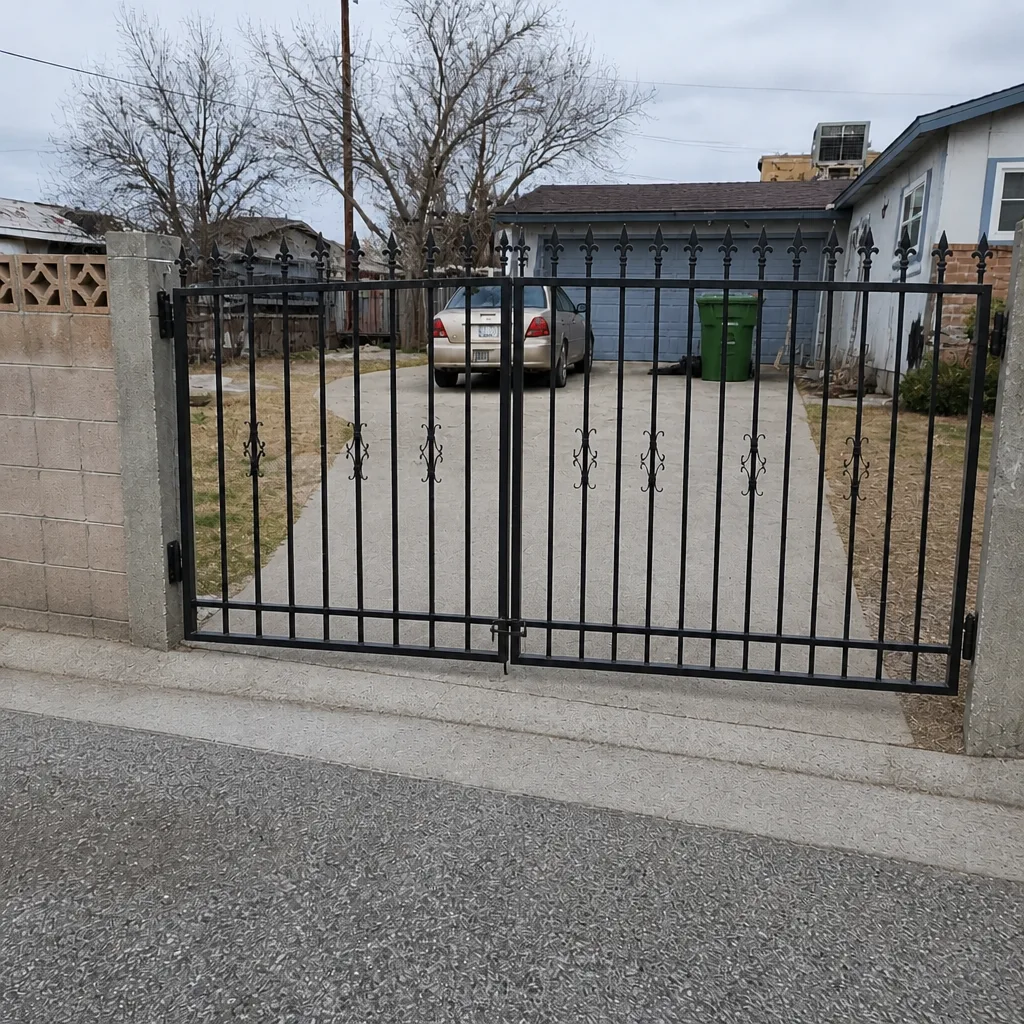 After
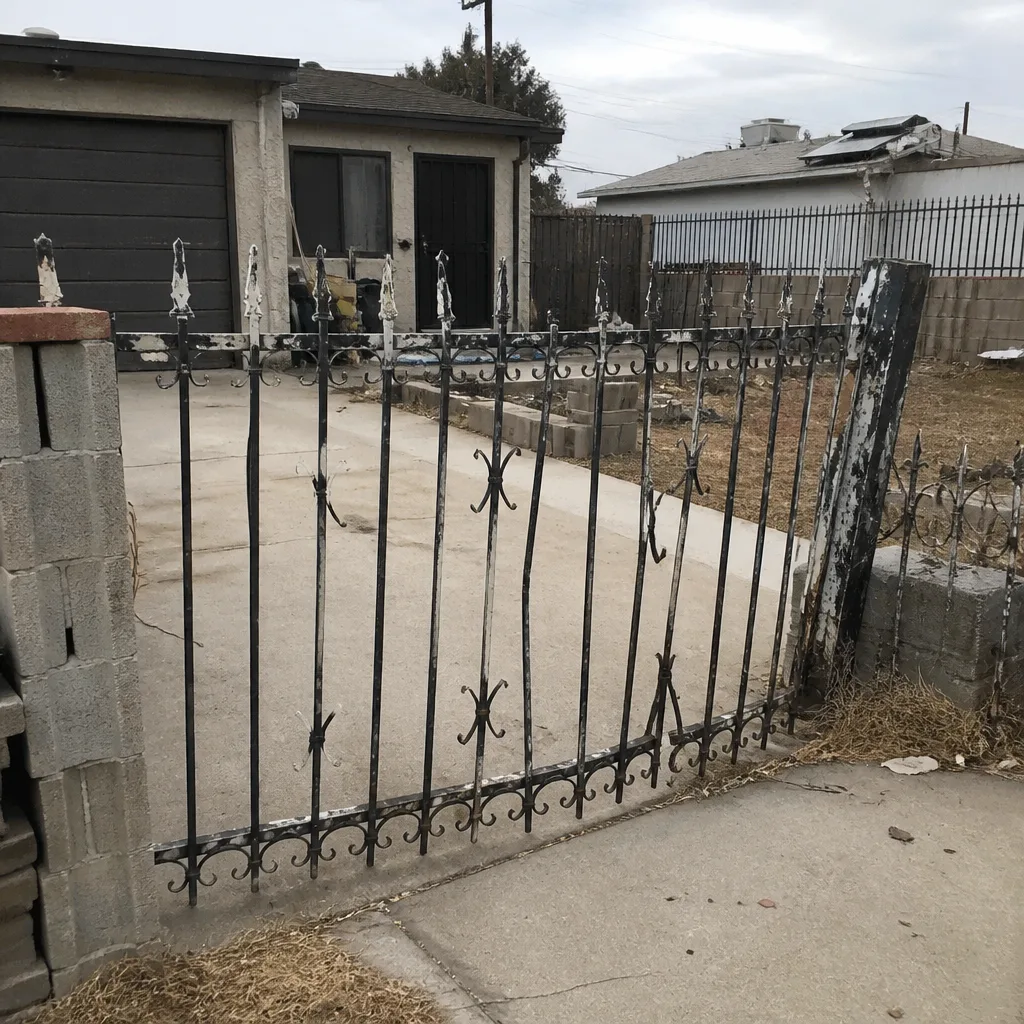
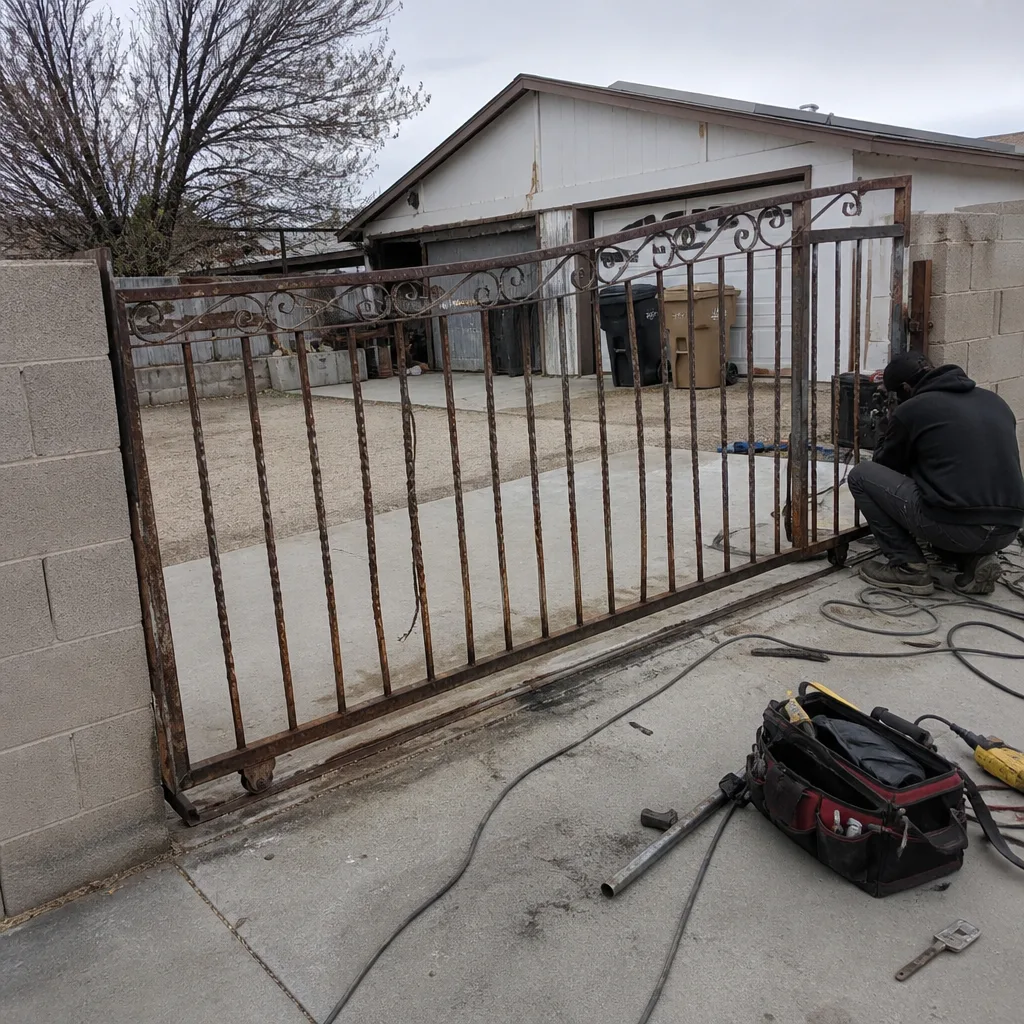 Before
 After
 Before
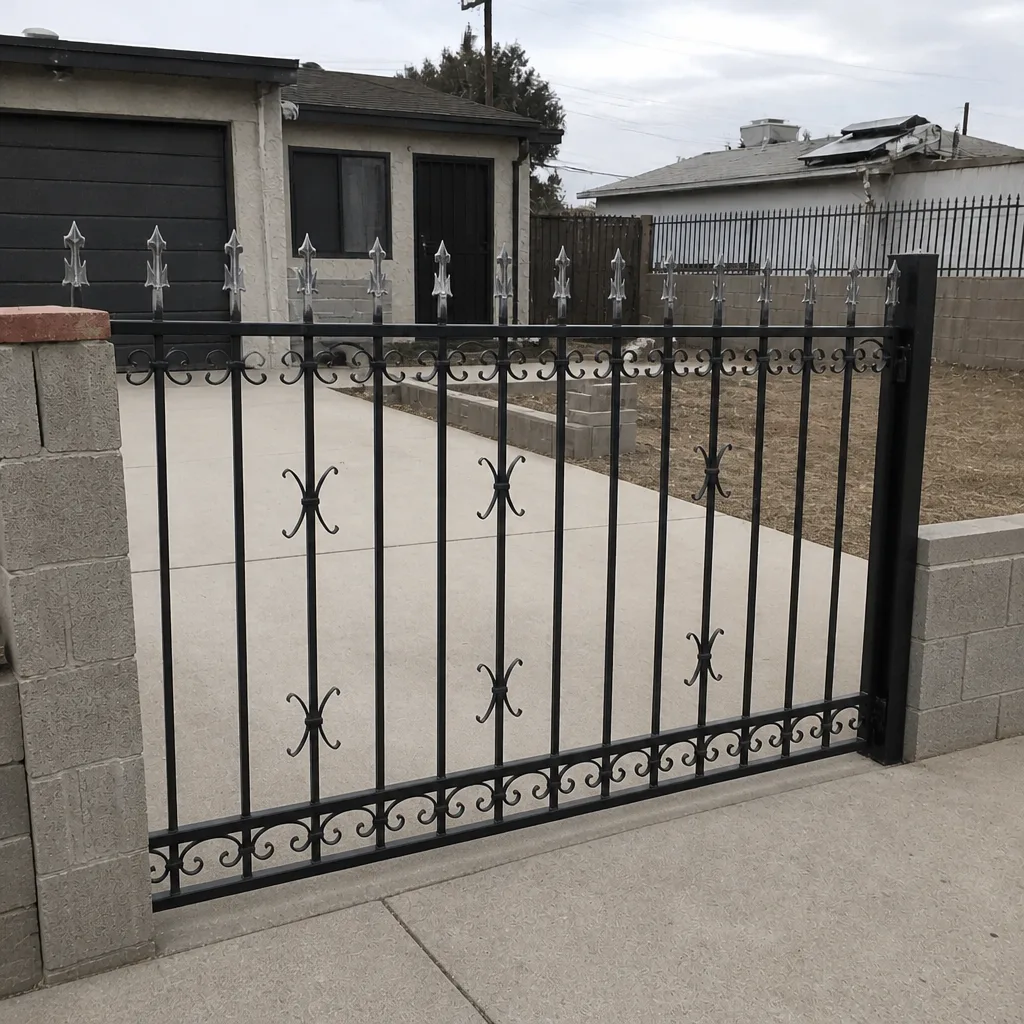 After
When to Call a Professional
If your keypad has stopped responding, your gate is cycling on its own, or your access control has been out for more than a day, that’s a call worth making today. The same goes for a loop detector that only works for one car out of three, a safety edge that won’t register, and any intermittent fault you can’t pin down. Intermittent faults get worse, not better, and a short visit early almost always beats a longer one later. If your gate has been “fixed” by two or three different companies without resolving the issue, that’s a mapping job before it’s a repair job, and it’s exactly the sort of mess our team takes on. Gatewood Fence & Gate Sunrise Manor offers free estimates in Sunrise Manor. Call (844) 761-8729 and we’ll talk it through.
The safety piece is real here. Vehicle loop systems and control boards sit on powered circuits, and safety edges are not optional hardware. If a gate closes without a working edge, that’s a genuine risk, not a nuisance. Leave the electrical work to a trained, licensed tech who can test the whole sequence, and don’t open the enclosure yourself.
Frequently Asked Questions
About 45 minutes on a standard job where the old keypad is a normal unit and the wiring is intact. Expect closer to two hours if the wiring has to be traced or replaced, which is common on older block pillars where heat has damaged the original feed. Call (844) 761-8729 for an exact window on your gate – estimates are free.
Because intermittent faults can’t be fixed until the gate shows us the failure, and sometimes replicating it takes an hour or more. Non-standard wiring from a previous installer is the other big one. When we can’t get the failure to repeat, we’d rather come back than guess. Call (844) 761-8729 and describe what yours is doing – we can usually narrow it down over the phone.
Often yes, as long as the power run is straightforward. A full new system is a half-day minimum, and it can stretch to a full day if the run to the roadside pedestal is long or has to be trenched. This is scheduled work, not same-day, so you’ll get a written estimate after a site check first. Call (844) 761-8729 to set up the measurement.
Because the wiring is only half the job and the asphalt cure is the other half. The loop itself can go in under an hour on a clean driveway, but the patch needs time to firm up before a car crosses it, and that pushes the visit to 2 to 3 hours in Sunrise Manor. Waiting the extra hours protects the driveway and the loop. Call (844) 761-8729 for a quote.
Morning is better in Sunrise Manor summer heat for anything with a buried patch or an outdoor enclosure. Cooler morning temps give the asphalt time to set before the sun gets serious and cut the dead time down. Ask your tech which time of day works best for your specific job – call (844) 761-8729 and we’ll help you plan it.
It’s off for the duration of the swap, which is typically 1.5 to 2 hours. We kill power, swap the board, reprogram it, and cycle the gate 10 to 15 times to confirm every safety input. If a part is missing, we’ll tell you before we leave whether the gate stays on manual, so you’re not finding out at the end of the day. Call (844) 761-8729 with your gate details and we’ll be upfront about the plan.
The Bottom Line
Access control jobs don’t all take the same time, and any company that quotes a flat “few hours” is either guessing or padding. A keypad swap is 45 minutes. A control board is 1.5 to 2 hours. A loop detector is 2 to 3 hours once the asphalt cures. A full install is half a day or more, and it’s scheduled work rather than emergency work. The wild card is always the previous installer’s wiring and the intermittent faults that need replication. In Sunrise Manor, the summer heat stretches the loop cure and pushes installs earlier in the day. Ask the five questions, get a written estimate, and you’ll plan your day with your eyes open instead of on a promise.
If you’d like to talk through your specific gate before you book anything – part of a gate repair in Sunrise Manor or a new system altogether – we’ll answer the phone with a live person, day or night. Call (844) 761-8729 for a free estimate.
Written by the team at Gatewood Fence & Gate Sunrise Manor.