
Last updated November 18, 2026
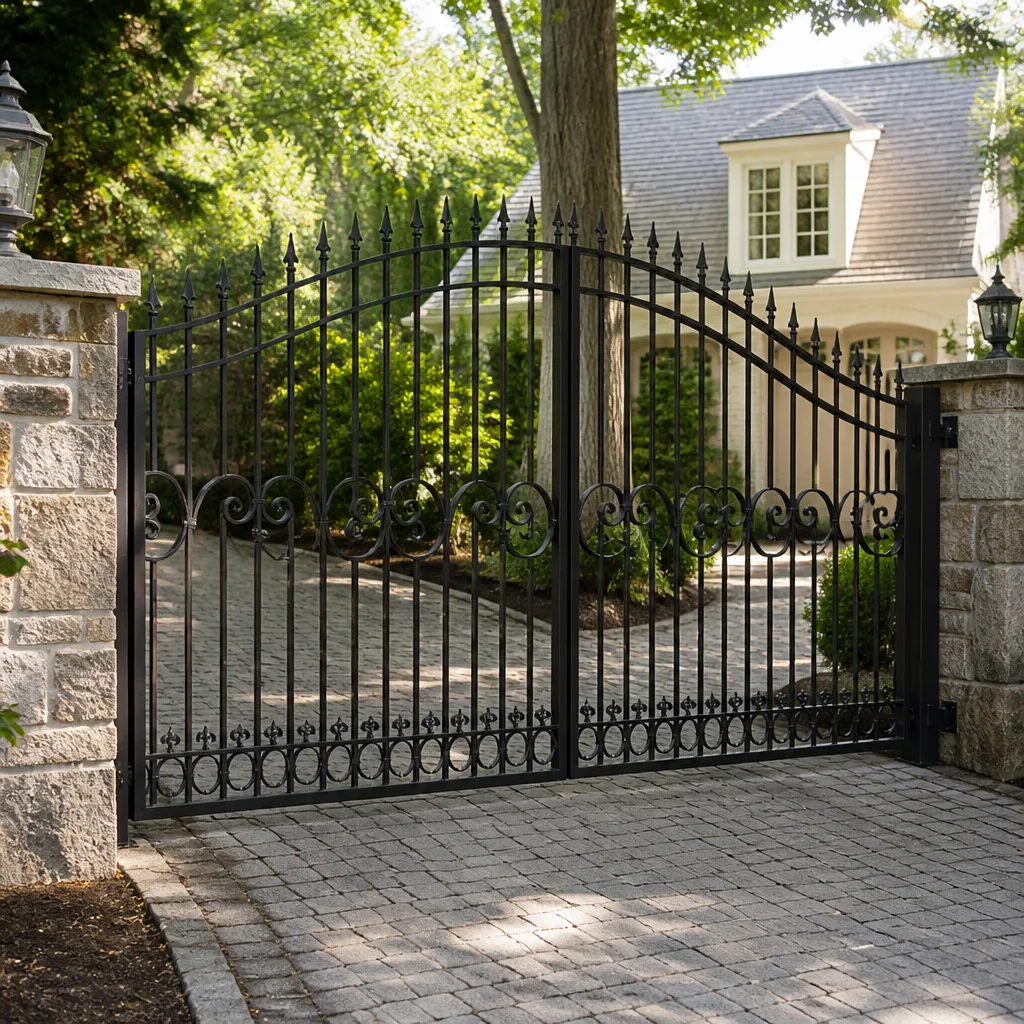 Wrought iron
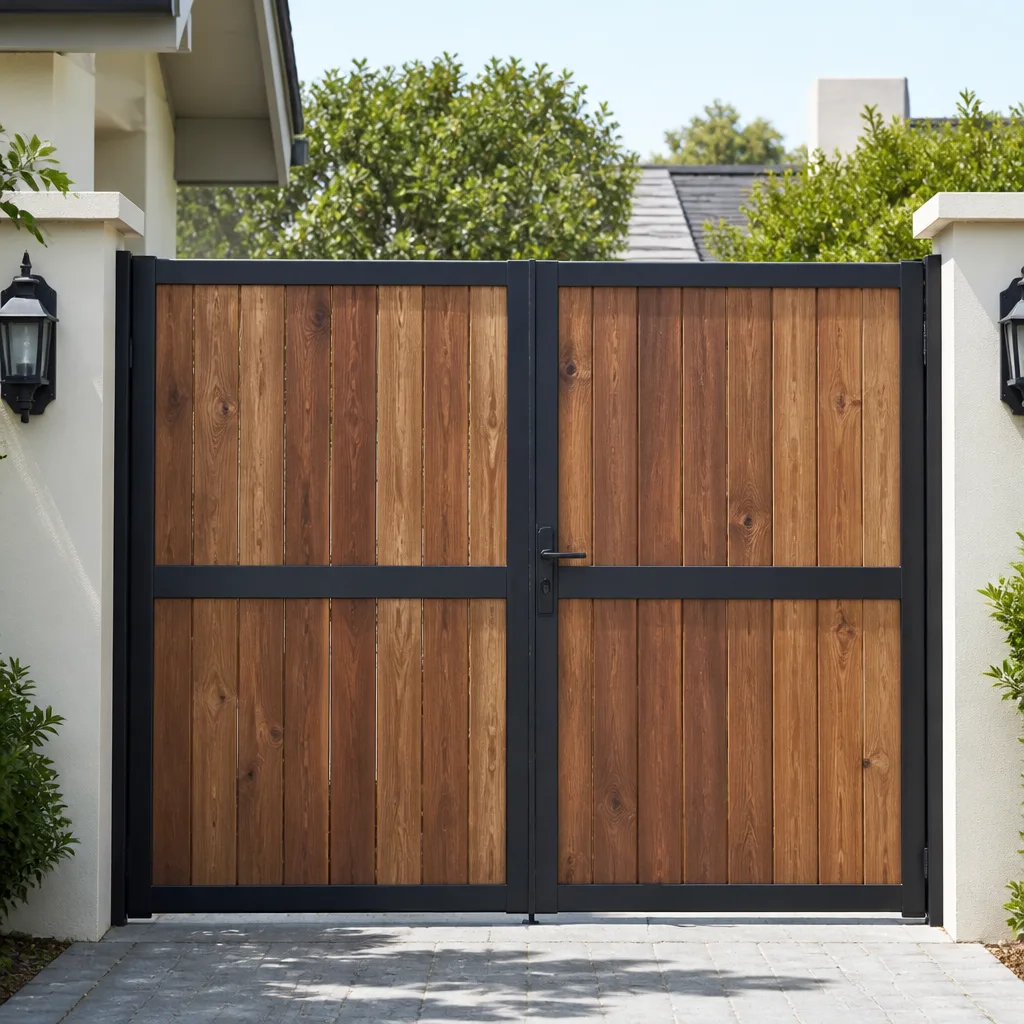 Wood & steel frame
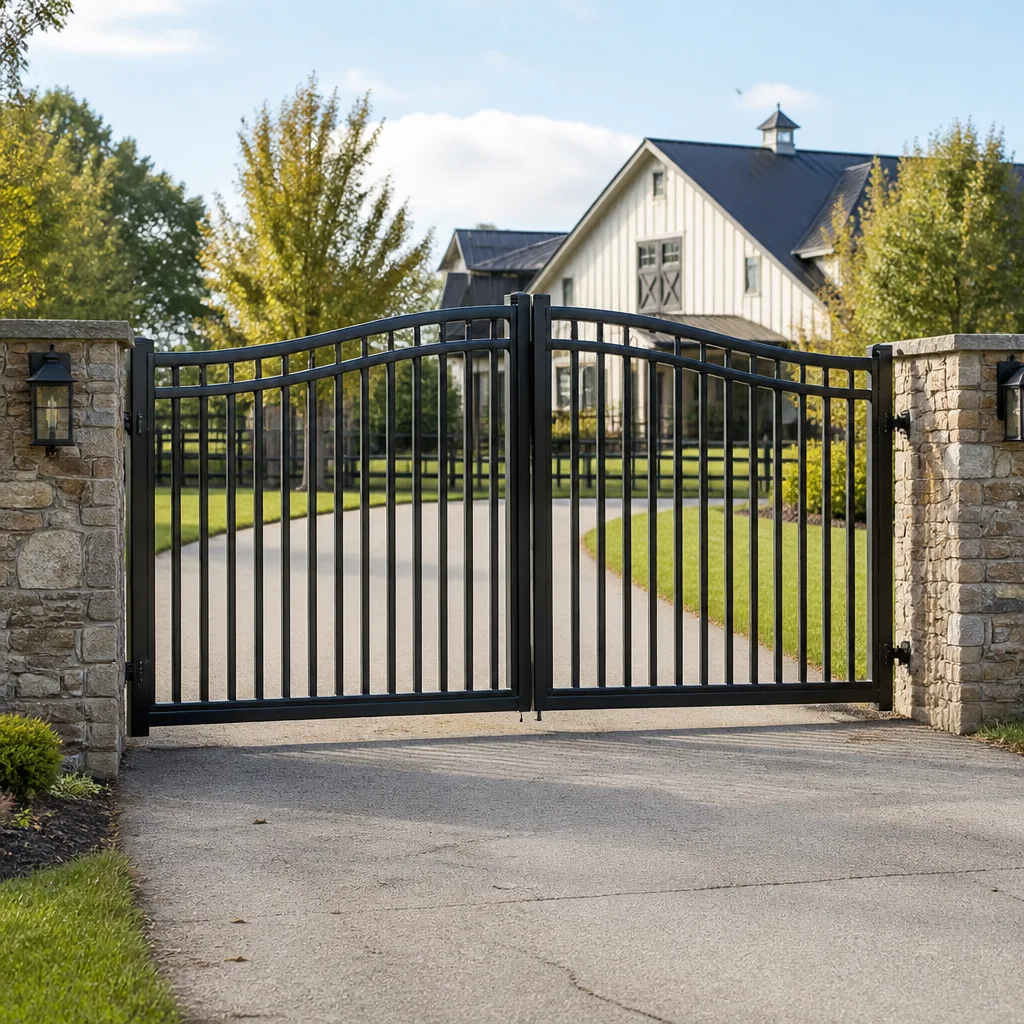 Farm & ranch
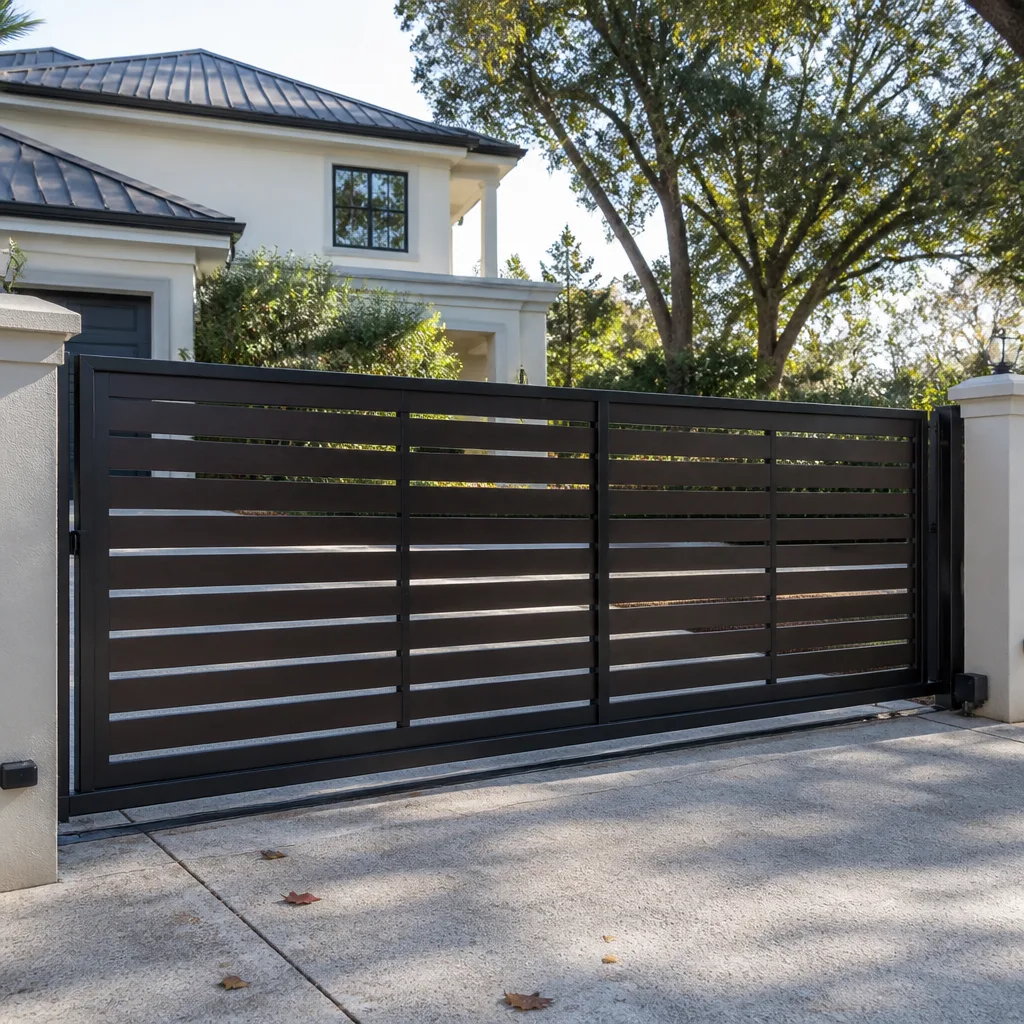 Sliding driveway gates
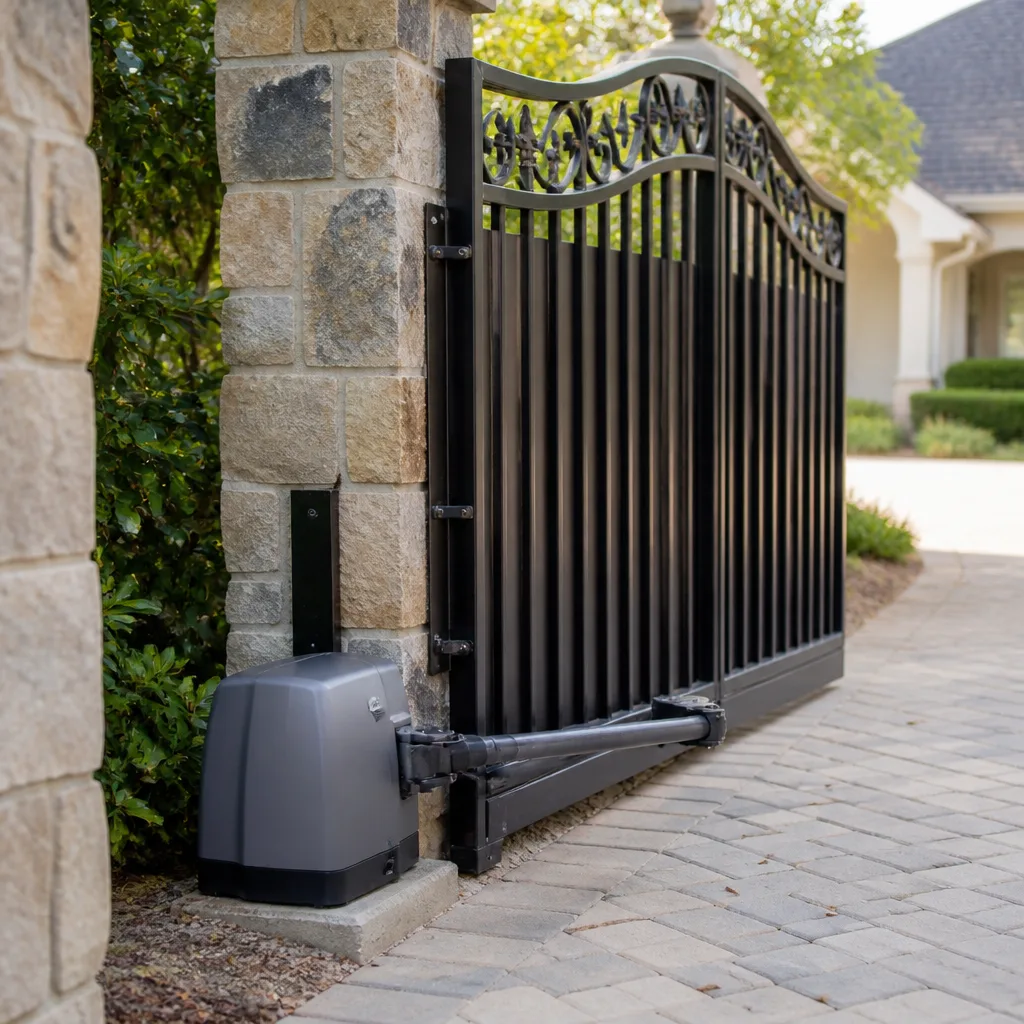 LiftMaster operators
Free on-site gate assessment - hinges, posts, and your LiftMaster or Nice gate operator checked before anything is quoted
The assessment is free and the quote is the invoice.
Get your free estimateThe Complete Gate Parts & Welding Guide for Sunrise Manor Homeowners
We’ve pulled gates out of Sunrise Manor yards where the installer used perfectly good steel and then skipped the primer coat under the top finish. On the surface it looked fine for a couple of seasons. Underneath, that gate was rusting from the inside out the whole time. The desert here is unforgiving in ways that national gate guides never mention: alkaline soil that eats at post footings, caliche that fights every digging bar, and summer afternoons that bake metal at 115 degrees. This guide covers which steel and finishes actually survive here, how footings need to be built for our ground, the failure modes unique to each gate style, and how to tell a real weld from a cosmetic one.
Quick Answer
For a Sunrise Manor gate to last, use galvanized or hot-dip steel with a proper primer under the finish coat, set posts deep enough to clear our caliche and decomposed granite with concrete mixed for alkaline soil, and insist on full-penetration welds rather than surface passes. Powder coating only holds up here when the metal is prepped correctly first. Anything less and you’ll be repairing rust and cracked welds within a decade instead of getting the two-plus decades the steel should deliver.
Styles & brands we work with
- Wrought iron
- Wood & steel frame
- Farm & ranch
- Sliding driveway gates
- LiftMaster operators
Table of Contents
- Why Sunrise Manor Is Harder on Gates Than Most of the Country
- Which Steel Grades and Finishes Hold Up in the Las Vegas Valley
- Caliche, Decomposed Granite, and Post Footings That Last
- Gate Configurations and Their Failure Modes Here
- How to Tell a Real Weld From a Cosmetic One
- Why Powder Coating Fails Fast Without Surface Prep
- The Parts That Wear Out First in This Climate
- Common Mistakes to Avoid
Why Sunrise Manor Is Harder on Gates Than Most of the Country
The same steel gate that lasts 25 years in Seattle can be showing rust and hairline weld cracks here in 10. That isn’t a knock on the steel. It’s the environment. Sunrise Manor sits in the Las Vegas Valley, which means three things working against your gate at once: intense UV, extreme heat cycling, and alkaline soil.
UV breaks down coatings at the molecular level. Every summer afternoon the finish on your gate takes a beating that a coastal climate simply doesn’t deliver. Heat cycling is the quieter problem. Metal expands in the afternoon and contracts overnight, thousands of times over a gate’s life. That movement finds every weak weld and every spot where the coating didn’t bond. And our soil – alkaline, often loaded with caliche – attacks the buried steel and the concrete around it in ways that homeowners in neutral-soil regions never deal with.
We’ve seen gates in Sunrise Manor that were installed with the right steel and the wrong prep, and they were failing within a decade. We’ve also seen gates done right that are still going strong. The difference is almost never the brand of steel. It’s the details: primer, weld penetration, footing depth, and coating prep. Get those right and the gate earns its keep.
Which Steel Grades and Finishes Hold Up in the Las Vegas Valley
Not every steel grade belongs on a gate in this climate. Here’s how the common options shake out for Sunrise Manor conditions.
- Hot-dip galvanized steel: The best all-around choice for our environment. The zinc coating is metallurgically bonded to the steel, so it protects even when the surface gets scratched. It handles alkaline soil contact at the footings far better than bare steel.
- Galvanized then powder coated: Excellent when the prep is right. The zinc layer does the heavy lifting and the powder coat handles the UV. When someone skips the galvanizing step and relies on powder coat alone, the rust clock starts ticking.
- Mild steel with a quality primer and finish: Workable for above-ground rails and pickets, but you’ll be recoating more often. Primer quality decides everything here.
- Aluminum: Doesn’t rust, but it’s softer and needs heavier profiles for gate spans. Welding aluminum is a different skill set than steel, and a sloppy aluminum weld can crack under heat cycling.
- Bare or painted mild steel with no primer: The gate we described at the top of this guide. It looks fine for two or three seasons and then fails from the inside.
Whatever the grade, the finish schedule matters as much as the metal. A two-coat system with a real primer underneath will outlast a single heavy topcoat every time in Sunrise Manor. Ask what’s under the color coat. If the installer can’t answer clearly, that’s your signal to keep asking questions.
Caliche, Decomposed Granite, and Post Footings That Last
Our ground is not the soft loam that most national gate guides assume. Sunrise Manor yards sit on a mix of caliche – a cemented calcium carbonate layer that can feel like digging through concrete – and decomposed granite. Both change how you set a post.
Caliche doesn’t absorb water the way ordinary soil does. When it rains, water pools and moves along the caliche surface rather than draining down through it. That means a shallow footing can sit in standing water after a storm, and wet alkaline soil is the worst possible environment for buried steel. Decomposed granite drains better but shifts more, which puts extra lateral load on the post.
How deep and how wide
- Dig until you clear the caliche layer, or break through it and widen the hole below the caliche line so the concrete forms a bell that resists frost-style heave and lateral pull.
- Set the footing hole roughly three times the post width and deep enough to reach below the active soil layer – for most Sunrise Manor gate posts that means at least 24 to 36 inches, more for heavy dual-swing gates.
- Use a concrete mix rated for sulfate exposure. Alkaline soil attacks ordinary concrete over time, and a sulfate-resistant mix lasts longer at the footing, which keeps the post plumb.
- Set the post in the concrete with a slight crown at the top of the pour so water sheds away from the steel rather than sitting against it.
- Keep the bottom of the steel post above the concrete floor if you can, or cap the post so water can’t enter the tube from the top. Water inside a post tube is the quiet killer.
Digging through caliche is genuinely hard work, and it’s where a lot of quick installs cut corners. Shallow footings are the reason gates lean in Sunrise Manor. The reason is almost never the gate itself. It’s the post, and the post is only as good as the hole it sits in.
Gate Configurations and Their Failure Modes Here
Three gate styles dominate Sunrise Manor driveways and side yards. Each fails in its own way in this climate, and knowing which failure to expect helps you spot problems early.
Single swing gates
The most common configuration. In our heat and soil, single swing gates most often fail at the hinge post. The post leans or the hinge hardware loosens, and the gate starts dragging or sagging. A gate sags in the hinge post, not in the middle, and that’s where we start every diagnosis. The second common failure is weld cracking where the hinge plates meet the gate frame, especially when the gate was welded with a cosmetic pass instead of full penetration.
Dual swing gates
Dual swing gates double the number of hinge points and add a meeting point in the middle. That center gap is where alignment problems show up first. When one side sags, the gates stop meeting cleanly, and homeowners often compensate by adjusting the operator rather than fixing the root cause. In our climate, dual swing gates also tend to fail at the top rail welds because of heat cycling over a long span. Watch for hairline cracks where the top rail meets the stiles.
Cantilever slide gates
Cantilever slides are the most sensitive to footing quality. The whole gate hangs on a post-and-frame assembly designed to counterbalance the span, so a footing that shifts even slightly throws the entire gate out of alignment. Caliche and decomposed granite both make that footing harder to set correctly. When a cantilever slide starts dragging or the rollers wear unevenly, look at the footing and the counterbalance frame before you blame the operator. We’ve seen this exact issue on gates running a gate motor and opener that was working perfectly – the operator was fine, the footing was the problem.
How to Tell a Real Weld From a Cosmetic One
A cosmetic weld is a pass-over meant to look clean. A real weld fuses the two pieces of steel into one. Before you sign off on new gate work in Sunrise Manor, look closely.
- Look for a consistent bead. A real weld has an even, rippled bead along the joint with the same profile end to end. A cosmetic pass-over is often lumpy, uneven, or has visible gaps where the welder skipped.
- Check for undercut. Undercutting is where the weld eats into the base metal and leaves a groove along the edge. It looks fine at a glance but creates a stress riser that cracks under heat cycling.
- Watch the corners. Inside corners and acute angles are where sloppy welds hide. If a corner looks like it was dabbed rather than welded, it probably was.
- Ask about penetration. A full-penetration weld fuses through the joint. A surface tack does not. On structural joints – hinge plates, corner joints, top rail connections – penetration is what holds the gate together.
- Look for grinding marks over joints. Some grinding to dress a weld is normal. Heavy grinding on every joint can hide incomplete welds and is worth asking about.
- Come back after the first hot season. Heat cycling exposes bad welds. If a cosmetic weld is going to crack, it usually does so in the first year or two. Rust bleeding out of a joint is a strong sign the weld itself was incomplete.
If you’re not sure what you’re looking at, get a second set of eyes before the final payment. A real weld on a finished gate is something you can check, and a gate welder who’s proud of the work will happily show you the joints.
Why Powder Coating Fails Fast Without Surface Prep
Powder coating is a great finish in the right hands. In UV-intense climates like ours, it’s also a finish that fails faster than almost anywhere else if the surface prep is skipped.
Powder coating works by electrostatically applying a dry powder and baking it into a hard film. That film only bonds as well as the metal underneath is clean. If the steel isn’t degreased, if there’s mill scale or rust on the surface, or if there’s no primer layer under the powder, the coating sits on a weak foundation. Sun exposure and heat cycling then work the coating loose from the underside, and once water gets under powder coat, it travels along the interface and lifts the coating in sheets. In Sunrise Manor, that failure shows up within a few summers on a poorly prepped gate.
What to look for in a spec
- A documented surface prep step – typically a blast or chemical wash before coating. Ask for it in writing.
- A primer layer under the powder, especially on the lower rails and anywhere near the footings.
- A coating thickness spec, not just a brand name. Thicker isn’t always better, but a spec that’s been thought through is.
- Proper coverage of weld joints and inside corners, which are the first places coating fails.
- Touch-up paint on any weld or scratch that happened after coating. Skipping touch-up is how rust starts on a brand-new gate.
If a painter or installer can’t tell you what’s under the color coat, that’s the whole ballgame. In this climate, the layer under the topcoat makes the difference between a gate that lasts and a gate that gets repaired early.
The Parts That Wear Out First in This Climate
Gates have moving parts, and moving parts wear. Here’s what fails first in Sunrise Manor and why.
- Hinges and hinge posts: The number one failure point on swing gates, driven by footing settlement and heat cycling on the hinge plates.
- Rollers and tracks on slide gates: Rollers wear faster when the gate frame is out of alignment, and heat cycling is hard on track welds.
- Latches and catches: UV and grit wear the moving surfaces. Metal-on-metal latch points also gall faster in dry desert air.
- Operators and control boards: The gate motor is sensitive to heat. A unit mounted in full afternoon sun works harder than one with a shade cover. Service on gate motor and opener systems often catches heat-related failures before they strand you.
- Coatings on lower rails: Splash from irrigation and rain hits the bottom rail first, and that’s where coating failure and rust start.
Most parts failures in Sunrise Manor trace back to an earlier problem – a footing that shifted, a weld that cracked, a coating that was skipped in prep. Repair the cause and the parts last. Replace parts without addressing the cause and you’ll be back at it next season.
Common Mistakes to Avoid
- Skipping the primer layer. A gate that’s painted without a proper primer under the topcoat will rust from the inside out within a few years here. The color looks fine on the surface while the steel underneath is failing.
- Shallow footings in caliche. Contractors who don’t want to break through caliche set posts too shallow, and those posts lean within a couple of seasons. A leaning post sags a gate every time.
- Accepting cosmetic welds. A weld that looks smooth but was dabbed on rather than fused through will crack under heat cycling. Check penetration on structural joints before you pay.
- Powder coating over unprepped steel. Coating sticks to clean metal and lifts off oil, mill scale, and rust. Prep is the whole job.
- Replacing parts without fixing the cause. New hinges on a leaning post will fail too. Find the root cause first.
- Using ordinary concrete in alkaline soil. Sulfate-resistant concrete mix lasts significantly longer at the footing in our ground conditions. It’s a small cost difference with a big payoff.
- Leaving the post tube open at the top. Water gets in and the post rusts from the inside. Cap the top and you avoid a whole failure mode.
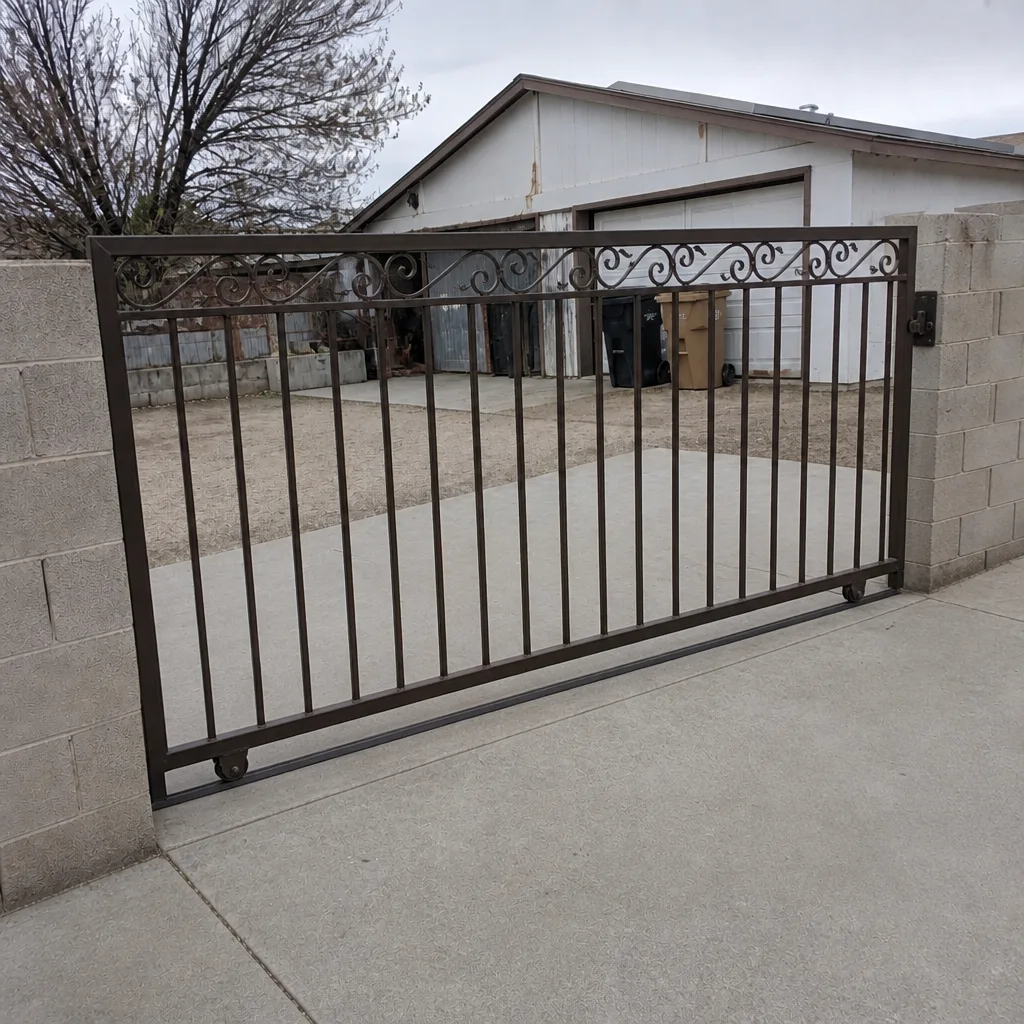
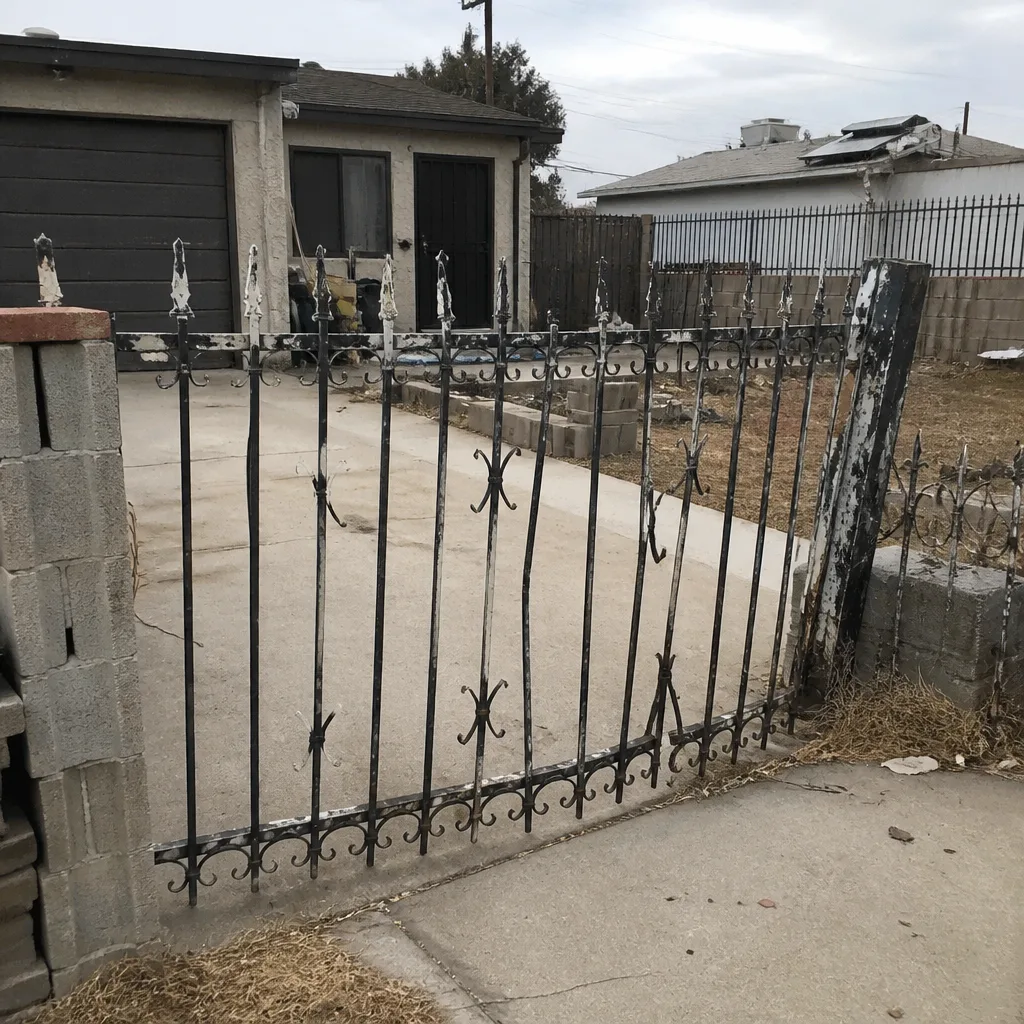
See the difference
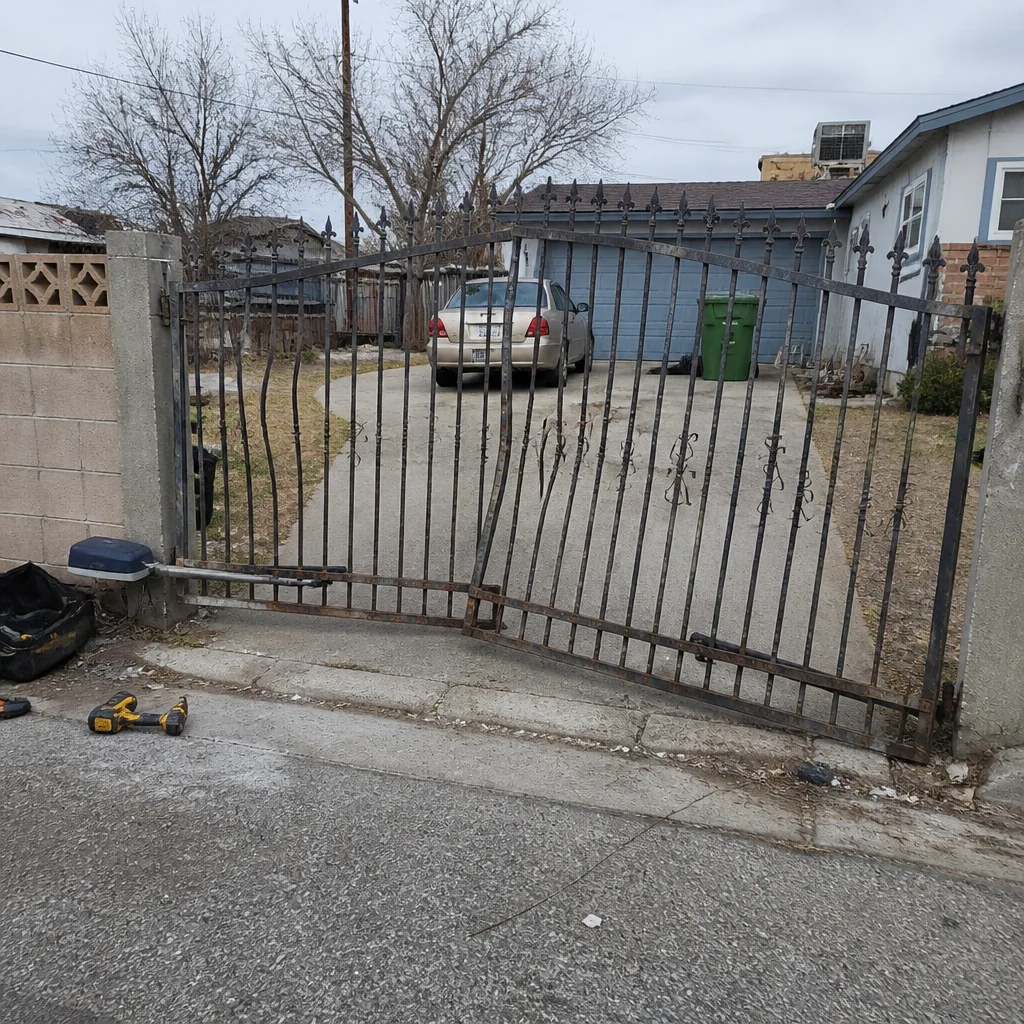 Before
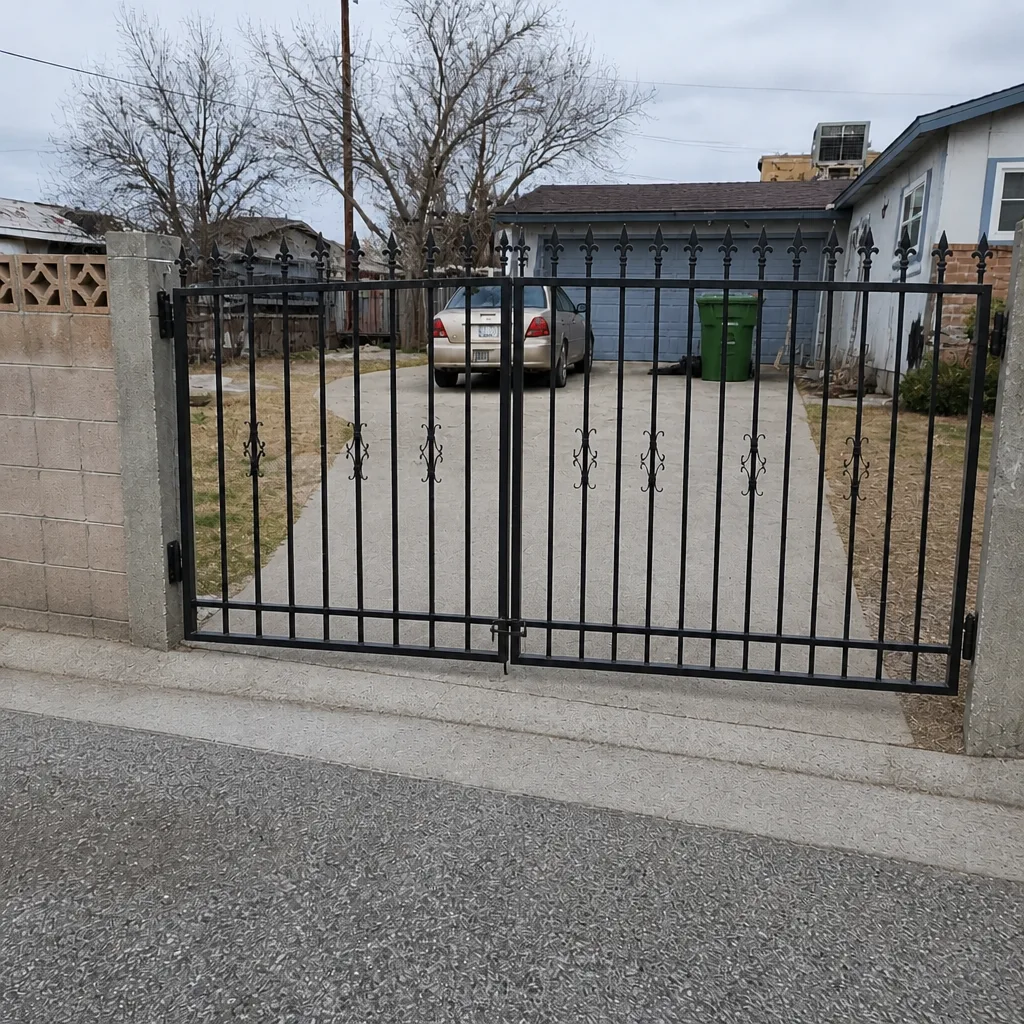 After
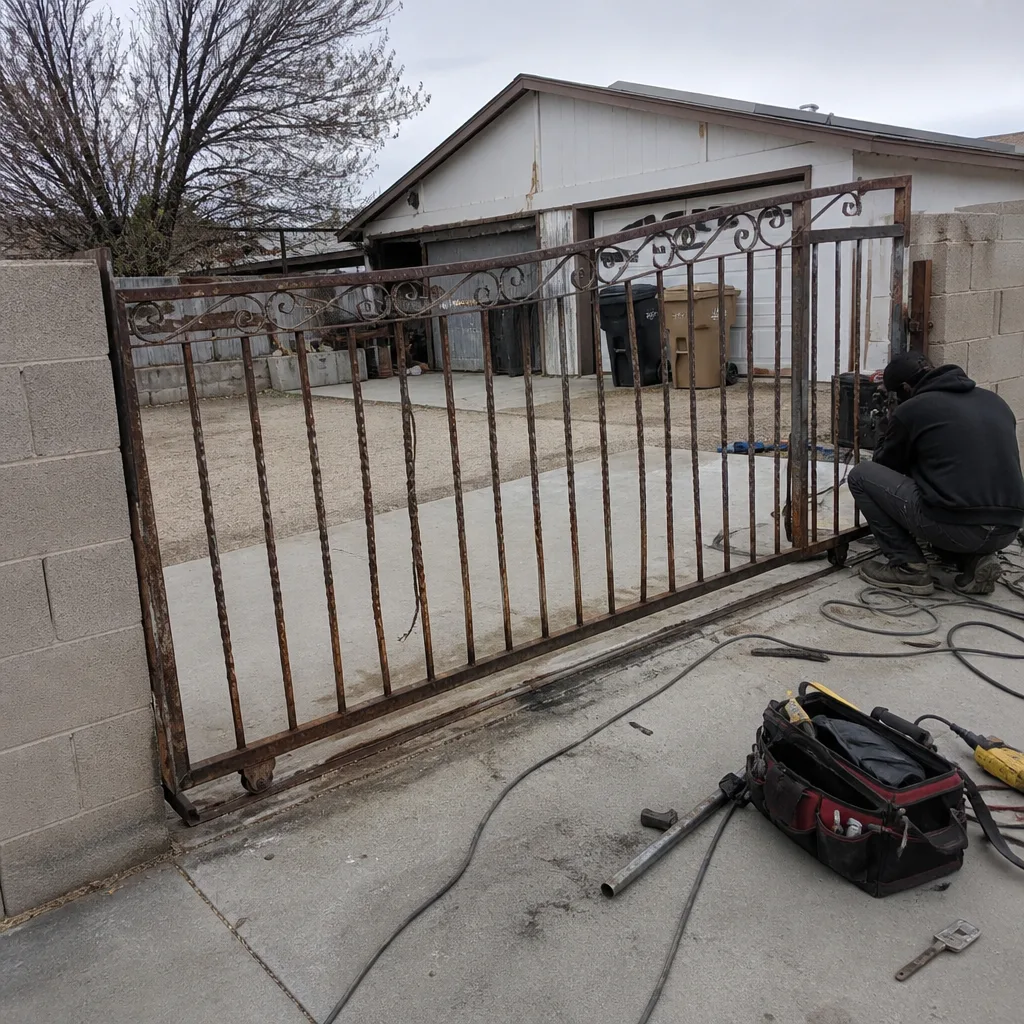 Before
 After
 Before
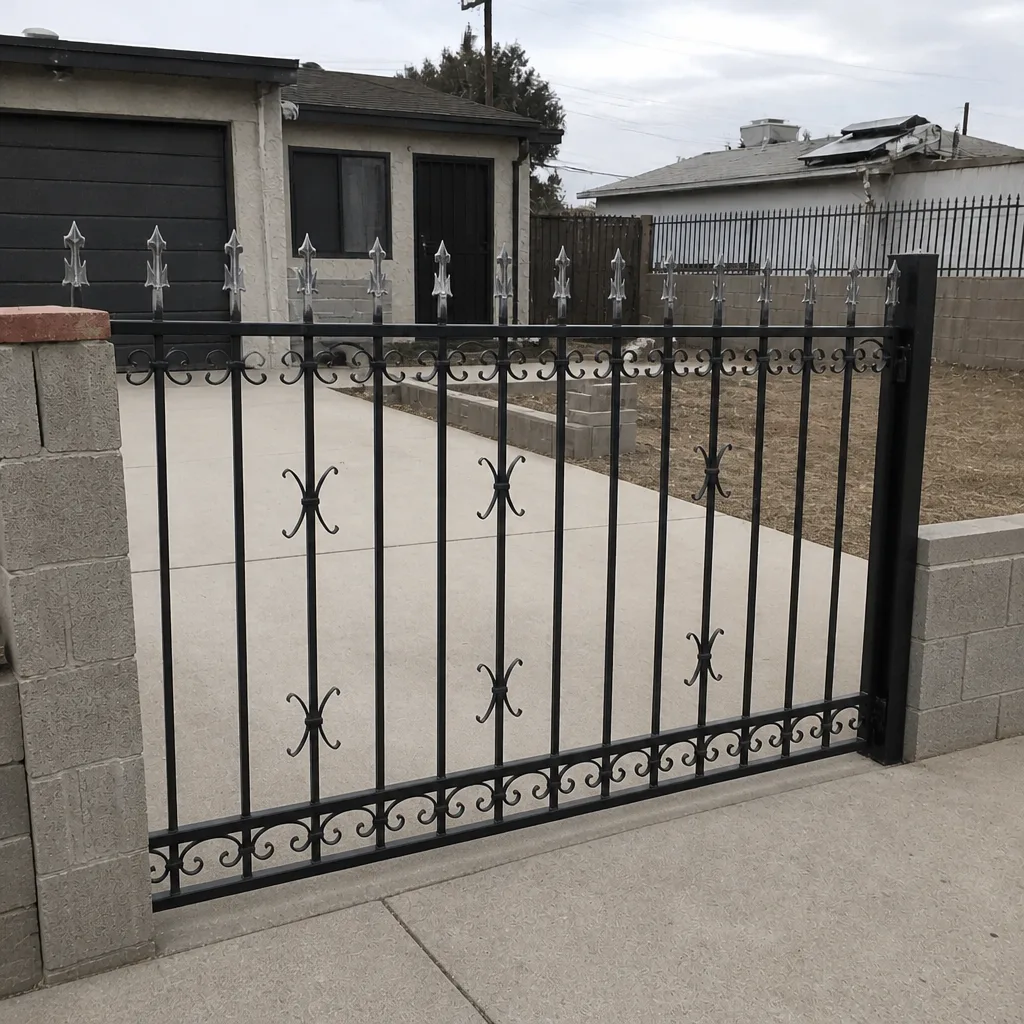 After
When to Call a Professional
Some gate problems are obvious – a gate that won’t latch, a post leaning visibly, rust bleeding from a weld. Others are subtler and need a trained eye. Call a professional when the hinge post is moving, when a weld is cracking, when a slide gate drags, or when the operator stops working and you’re not sure whether it’s the motor or the gate itself. Welding on a gate that’s carrying load, and diagnosing electrical issues on an operator, are both jobs where a mistake can be dangerous. On-site welding lets us solve the structural problem without hauling your gate away, and working on operators safely means knowing the power is off and the gate is immobilized before we touch anything. Gatewood Fence & Gate Sunrise Manor offers free estimates – call (844) 761-8729 and we’ll come take a look.
Frequently Asked Questions
A properly built steel gate with galvanized or hot-dip steel, a real primer under the finish, and a footing set below the caliche can last 20 years or more in Sunrise Manor. A gate built with the right steel and the wrong prep often fails in 10. The metal grade matters less than the prep and the footing.
On-site welding is standard for most gate repair. Welding in the driveway keeps the gate aligned with the post and footing, which matters in our shifting soil. Some structural repairs do need shop work, but the majority of Sunrise Manor gate repairs happen right where the gate stands.
Fast rust on a young gate almost always means the coating was applied over unprepped steel, or there’s no primer under the finish coat. UV and heat cycling then work the coating loose and water gets to bare metal. The rust you see on the surface is usually running ahead of the failure underneath.
A sulfate-resistant concrete mix is the right call for Sunrise Manor’s alkaline soil. Ordinary concrete breaks down faster in sulfate-rich ground, and a failing footing lets the post move. Pair it with a footing that extends below the caliche layer and you’ve solved the two biggest causes of leaning gate posts.
Powder coating can hold up well here when the steel is prepped correctly first, with a blast or chemical wash and a primer layer under the powder. Powder applied over rust, oil, or mill scale fails within a few summers. The prep step is where the longevity comes from.
A real weld has a consistent bead along the joint, no deep undercut, and full penetration on structural joints. A cosmetic pass-over looks smooth but is often lumpy or gapped and cracks in the first hot season. If a joint has heavy grinding over it, ask what the weld underneath looks like before you sign off.
The Bottom Line
Sunrise Manor is hard on gates in ways that national guides never cover. Alkaline soil attacks footings, caliche fights the dig, and UV and heat cycling punish every weak weld and skipped prep step. The steel grade matters, but the prep matters more. Galvanized or hot-dip steel, a real primer under the finish, sulfate-resistant concrete set below the caliche, full-penetration welds, and a coating spec you can actually verify – those are the details that separate a gate that lasts two decades from one that’s rusting at year eight.
If you’re not sure whether a gate was built to last in Sunrise Manor conditions, or you’ve got a weld, footing, or coating issue that needs a trained eye, that’s exactly what we do. For a full rundown of our services, start with our home page, or jump directly to gate repair, gate installation, or gate motor and opener service. Our technicians have up to 25 years of experience, and every job carries the 90-Day Done Right Promise. Call (844) 761-8729 for a free estimate.
Written by the team at Gatewood Fence & Gate Sunrise Manor.