
Last updated November 18, 2026
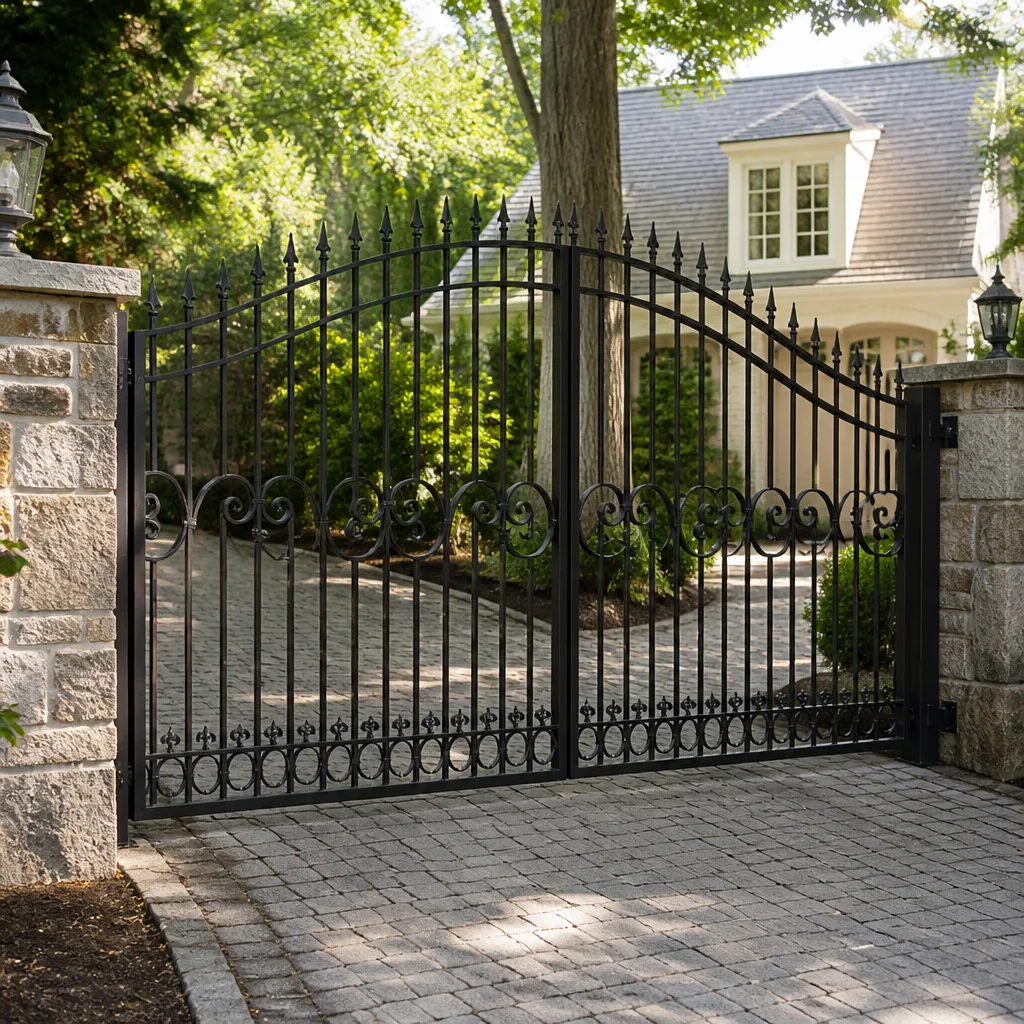 Wrought iron
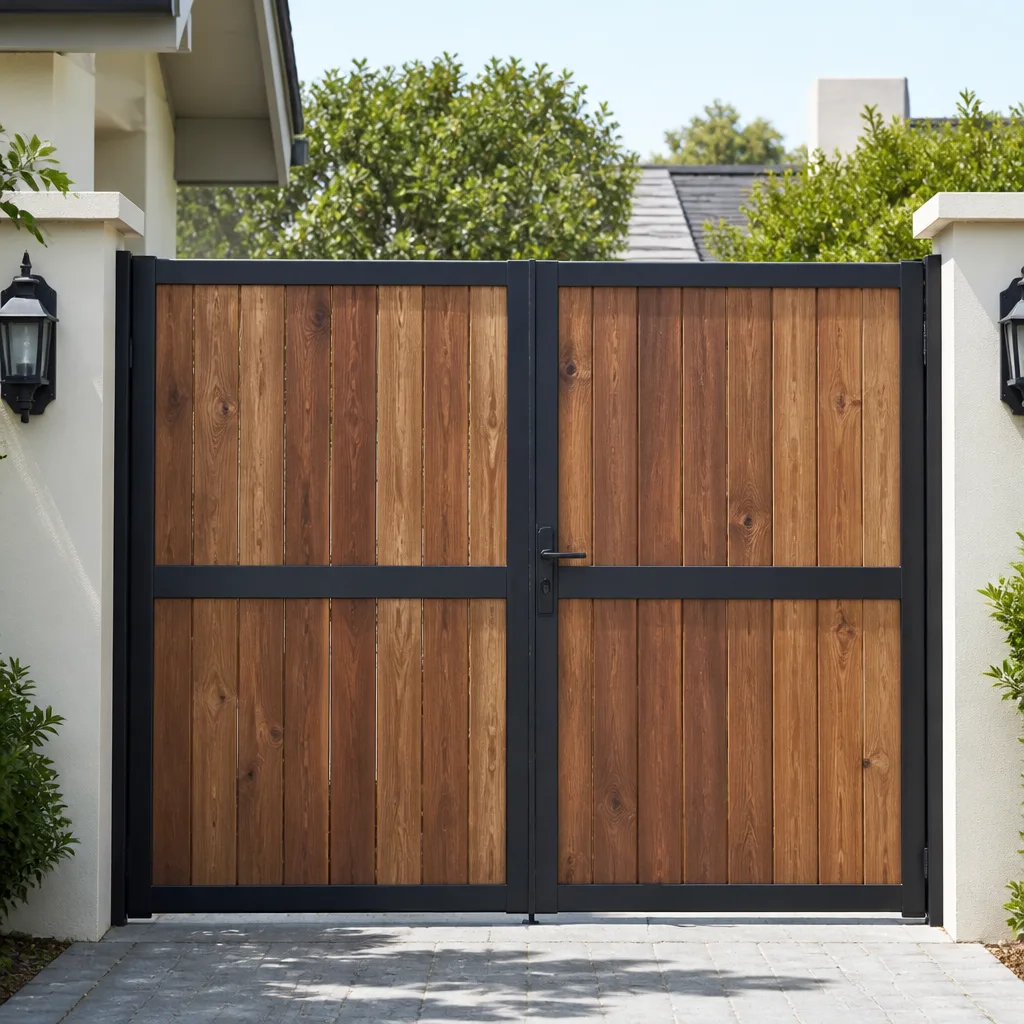 Wood & steel frame
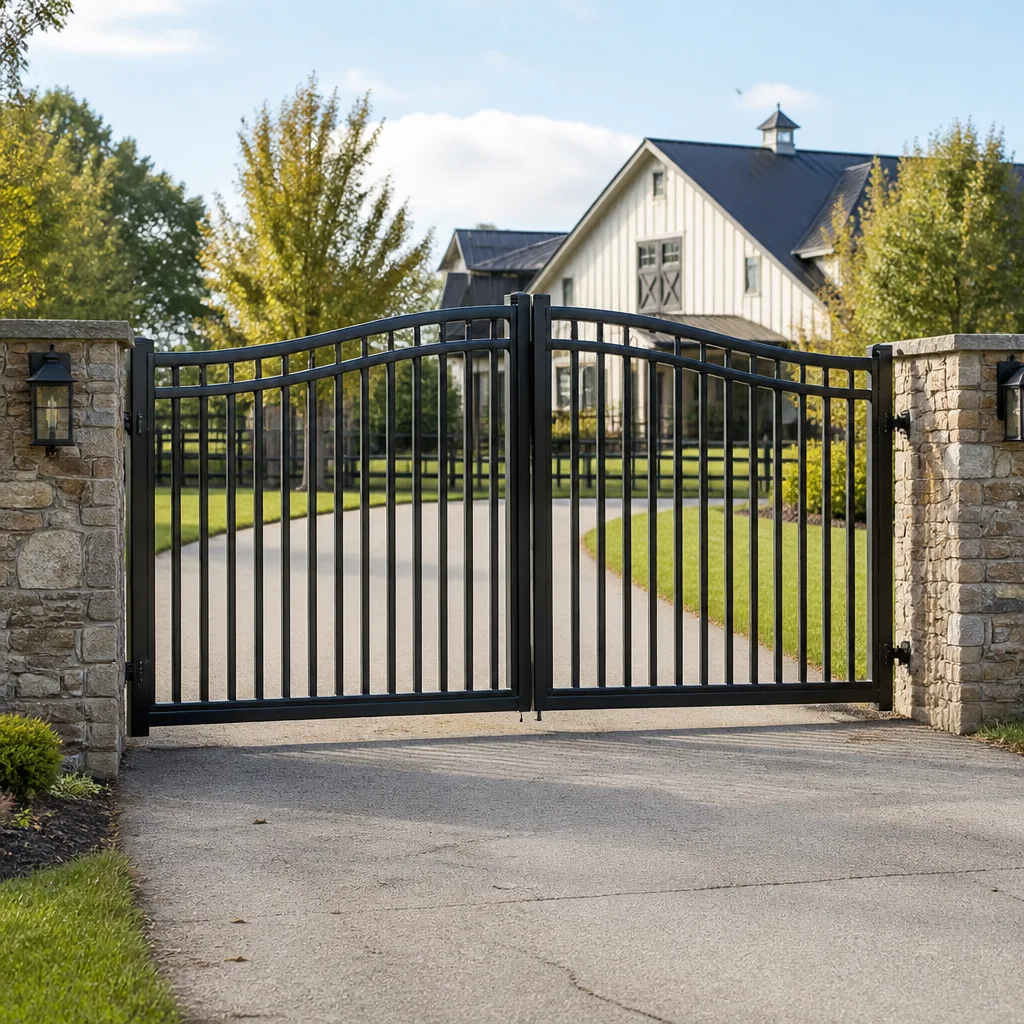 Farm & ranch
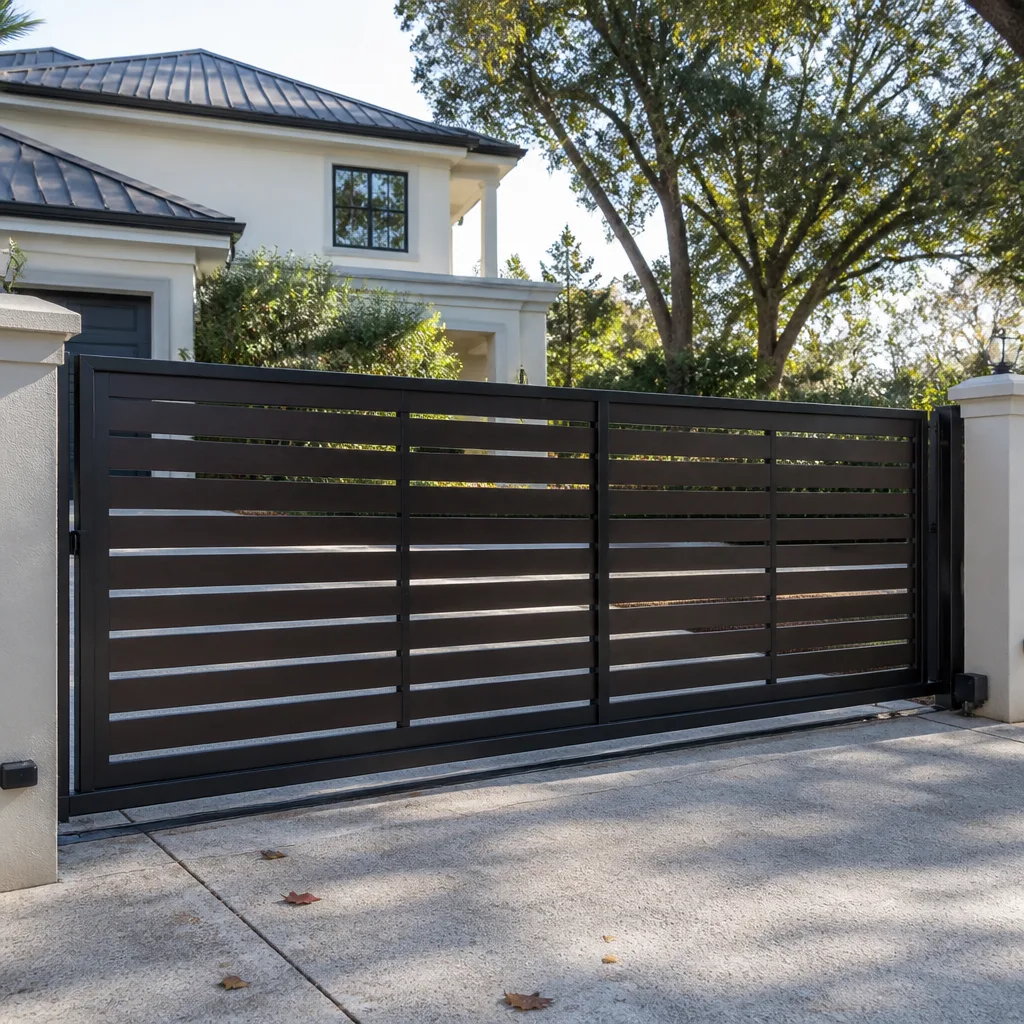 Sliding driveway gates
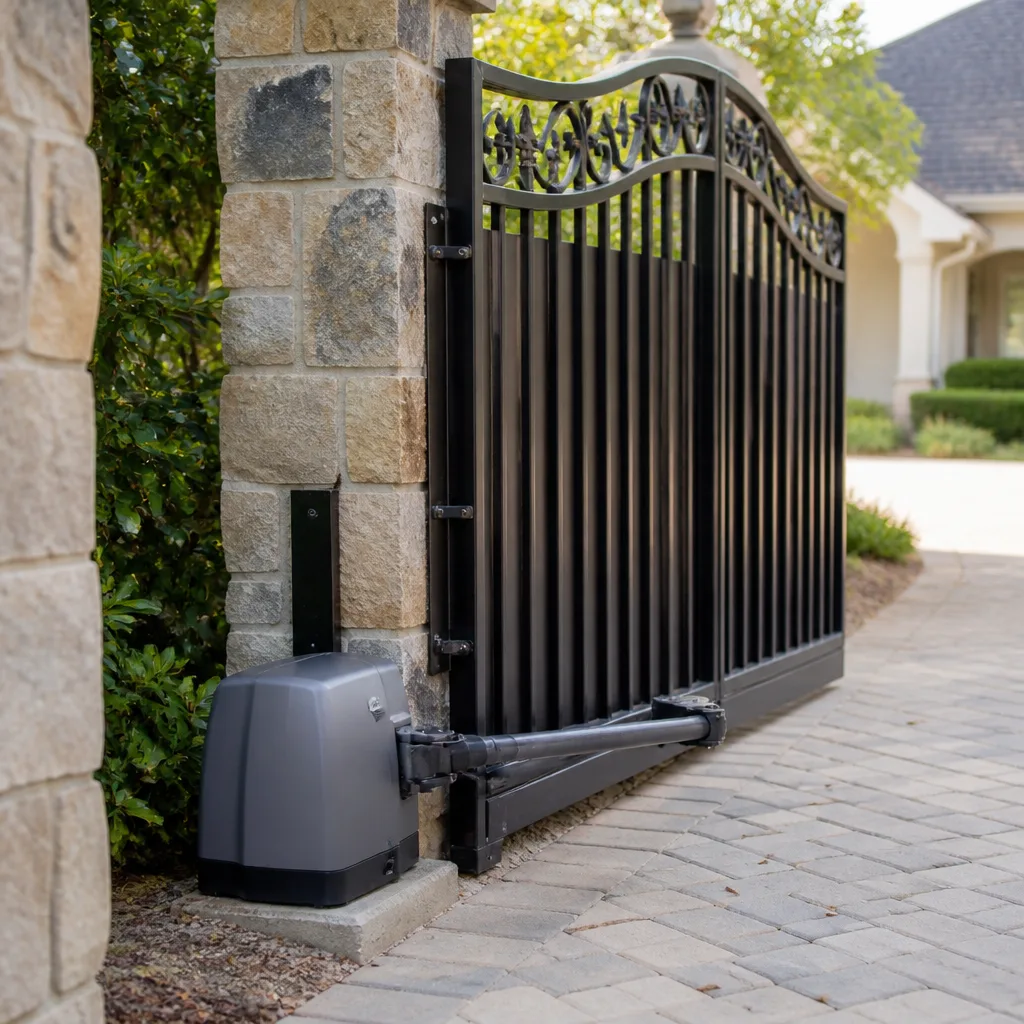 LiftMaster operators
Free on-site gate assessment - hinges, posts, and your LiftMaster or Nice gate operator checked before anything is quoted
The assessment is free and the quote is the invoice.
Get your free estimateDIY vs Professional Gate Access Control: What’s Safe to Do Yourself
A homeowner in Henderson replaced his own gate controller board, saved about $200, and three weeks later his automatic driveway gate closed on his wife’s SUV. The board worked fine. What failed was the obstruction sensor, which had been wired to the wrong terminal during the swap, so the gate never knew the SUV was there. That’s not a horror story. That’s a Tuesday for gate techs. We see the same pattern in Sunrise Manor: a repair that looks done, works for a few weeks, then fails in the one place that matters. This guide draws the honest line between the access control work you can safely handle and the work that can void a warranty, break Nevada electrical code, or put a vehicle or a person in the gate’s path. You’ll learn exactly what’s safe, what isn’t, and how to spot a hidden hazard a previous DIY job left behind.
Quick Answer
Safe DIY gate access control tasks are limited to cleaning the housing, replacing batteries in remotes and keypads, reprogramming existing entry codes, and lubricating hinges. Everything that touches line voltage (120V/240V), the obstruction-reverse circuit, in-ground loop detectors, or the control board’s safety logic belongs to a licensed professional. Those systems fall under UL 325, and a mistake there can cause injury or property damage, not just a gate that won’t open.
Styles & brands we work with
- Wrought iron
- Wood & steel frame
- Farm & ranch
- Sliding driveway gates
- LiftMaster operators
Table of Contents
- What’s Actually Safe to Do Yourself
- The Hard Stops: Where DIY Becomes Dangerous or Illegal
- What UL 325 Compliant Really Means
- How to Tell If a Previous DIY Repair Left a Hidden Hazard
- The Honest Cost Comparison
- Sunrise Manor Climate and Why It Matters for Gate Electronics
- Brand-Specific Realities: DoorKing, LiftMaster, and the Rest
- Common Mistakes to Avoid
What’s Actually Safe to Do Yourself
There are four access control tasks a careful homeowner can do without risk, and we’re happy to say so. None of them involve opening the control box or touching a wire that carries current. If a task is on this list, do it yourself and save the service call.
- Cleaning the housing. Dust, cobwebs, and grit build up in the control enclosure and the keypad face. Wipe them down with a dry cloth. Don’t spray water into the housing, even if it looks sealed.
- Replacing remote and keypad batteries. A remote that stops working is usually a dead battery, not a dead board. Pop the back, swap the battery, and re-test. If it still won’t work, stop there.
- Reprogramming existing codes. If your keypad already works and you want to change the entry code, or add a code for a family member, that’s a menu task in the keypad or receiver manual. You’re changing memory, not wiring.
- Lubricating hinges and the track. Hinges and rollers take a light application of lubricant a couple of times a year. In Sunrise Manor’s dry, dusty conditions, hinges dry out fast, and dry hinges cause the sag that leads to bigger problems. A can of lubricant and ten minutes beats an invoice.
That’s the whole list. If you’re looking at a task that isn’t on it, the smart default is to treat it as professional work until somebody qualified tells you otherwise. Calling us for gate repair in Sunrise Manor is cheaper than the problems a bad repair creates.
The Hard Stops: Where DIY Becomes Dangerous or Illegal
Here’s where we draw the line, and we draw it without apology. Three categories of access control work are not homeowner projects in Nevada, or anywhere else.
Line-voltage wiring. The 120V or 240V supply feeding the gate operator is not a hobby circuit. It requires a permit in most jurisdictions, it requires proper grounding and conduit, and it will hurt you if you get it wrong. There’s no version of “I watched a video” that makes this safe. Beyond the shock risk, an unpermitted electrical connection can complicate a home sale and can void your homeowner’s insurance if something goes wrong.
In-ground loop detectors. Those magnetic loops buried in the driveway that sense your car and open the gate are cut and sealed into the pavement, tuned to a frequency, and wired back to the controller. They fail on the installation, not the connection, and getting the loop wire routed and the detector tuned wrong means a gate that fails to detect a vehicle. That’s exactly how a gate ends up on somebody’s hood.
Anything touching the obstruction-reverse circuit. This is the safety circuitry that stops the gate when it hits something. Every switch, every terminal, every setting on that circuit is a life-safety component. Two wires swapped, and the gate reverses on command but not on contact. That’s the same failure that cost the Henderson homeowner $200 and a new rear quarter panel.
If you’re not sure which category your task falls into, half of Gatewood Fence & Gate Sunrise Manor home is built on second opinions, and the second opinion is free.
What UL 325 Compliant Really Means
UL 325 is the industry safety standard for automatic gates and garage doors. For a residential gate, compliant means: there’s a primary obstruction sensing through the operator itself, there’s a secondary means of protection (typically photoelectric sensors, a loop detector, or an edge sensor), and the gate meets the standard’s requirements for where it can open and how it behaves.
Here’s the part most online guides skip. The standard changed over the years. Older operators were allowed to meet a looser standard. If your gate’s electronics predate current code, “it worked fine for twenty years” means it worked fine under an older, weaker safety requirement. A good technician checks the safety edges first, because the sensor technology installed on the gate is often a generation behind what’s on the market now.
We see this in Sunrise Manor on gates installed during the big 1990s and early-2000s subdivision builds along the eastern edge of town. Many of those operators still function but wouldn’t pass a modern safety check. We’d rather tell you and give you a written option than have a gate put someone in the ER.
How to Tell If a Previous DIY Repair Left a Hidden Hazard
You bought a house with an automatic gate, or a neighbor “fixed” yours, and you want to know if it’s safe. Here’s the check we run, and you can run the safe part yourself before calling.
- Test the reverse. With nothing in the path, push the gate while it closes. It should reverse immediately. If it takes more than a gentle push or doesn’t reverse, stop using the gate.
- Check the safety sensors. If there are photoelectric sensors, break the beam with your hand while the gate is closing. It should stop and reverse. If it doesn’t, the sensors are either dead, miswired, or bypassed.
- Look for taped joints and wire nuts. Any exposed wire nut or electrical tape inside or outside the control housing is a red flag. A professional weatherproofs and terminates properly.
- Look for abandoned wires. Cut wires dangling near the operator mean someone removed a safety device instead of repairing it.
- Check the gate’s behavior. Does it stop in odd positions, reverse on its own, or respond to a vehicle that isn’t there? All three point to loop detector or board problems.
- Open the door and look at the sticker. The operator’s date of manufacture tells you whether the safety system is current-era or older. Older doesn’t mean unsafe, but it means the safety setup needs a careful review.
If a gate has already been in service for years and hasn’t been checked, the safest next step is a diagnostic visit. Our gate motor & opener service in Sunrise Manor exists for exactly this.
The Honest Cost Comparison
We’re not going to tell you every DIY job is a mistake. We’ll tell you where the math actually works in your favor.
- Battery replacement: DIY wins. A remote battery is a few dollars, five minutes, no risk.
- Code reprogramming: DIY wins. You own the manual; you can do it in the driveway.
- Hinge and track lubrication: DIY wins. Calling a pro for this is a waste of your money.
- Control board replacement: Usually a wash, sometimes a loss. The part itself can run $150 to $300 or more depending on the brand, and if you get the wire order wrong, you’re paying for a second board plus a safety check. A properly licensed pro with a live person answering the phone will do it right once, with a diagnosis instead of a guess.
- Loop detector installation: DIY loses every time. It requires cutting and sealing into the driveway pavement. The equipment is the cheap part; the install is the job.
- Line-voltage repair or extension: DIY loses and creates legal exposure. This is where an unpermitted electrical repair becomes a problem at resale and an insurance liability if something goes wrong.
Every job we do starts with a written price agreed before anyone touches the gate. No surprise at the door. Our standing offers include $40 off any repair over $200, no trip charge inside the county, and a free second opinion on any written estimate. On a $200 repair that’s half back in your pocket. On a board replacement it’s real money.
Our technicians have up to 25 years of experience and every job comes with the 90-Day Done Right Promise in writing. That means if something isn’t right in the first 90 days, one call brings us back.
Sunrise Manor Climate and Why It Matters for Gate Electronics
Sunrise Manor sits at roughly 1,800 feet on the east side of the Las Vegas Valley, which means our conditions are hard on gate electronics in ways you don’t see in wetter climates. Three specific factors drive the failures we see most.
Dust and fine grit. Northern Las Vegas Valley neighborhoods get regular wind events that push fine desert dust into keypads, hinges, and control housings. The grit abrades hinge pins and can jam mechanical keypads. That’s why we recommend a wipe-down and lubrication schedule rather than waiting for a failure.
Heat. Summer temperatures regularly push well past 100 degrees, and the inside of a control housing on a west-facing gate can run hotter than the outside air. Heat degrades batteries faster and stresses the capacitors on the control board. A 5-year-old board in Sun Valley might be fine. The same board in Sunrise Manor likely isn’t.
Dry air and temperature swings. Desert nights cool off fast, and that swing expands and contracts metal and wiring. We see a lot of small cracks in the wire insulation at the operator terminals that let in dust and cause intermittent faults. Intermittent faults are the hardest to diagnose and the easiest to prevent with a periodic inspection.
If you’re in the older ranch neighborhoods off Lake Mead Boulevard or closer to the Sunrise Mountain foothills, your gate is also dealing with more blowing grit than the newer builds closer to Nellis. Consider a yearly lubrication and safety check rather than a repair-after-failure cycle.
Brand-Specific Realities: DoorKing, LiftMaster, and the Rest
Not every brand is created equal when it comes to how much a homeowner can safely do. We’re certified on nine major gate brands, and here’s the honest read on the ones you’ll run into most in Sunrise Manor.
DoorKing. DoorKing controls are common on access control systems with phone entry, keypads, and commercial-grade features. They’re well-built and they’re designed for a technician. Even reprogramming a DoorKing access panel that has multiple units and phone numbers is usually better as a service call, because a wrong menu setting can lock out every resident on the system.
LiftMaster. LiftMaster made a real push into residential and light-commercial gate operators, and the good news is the consumer-facing remotes and keypads are forgiving to program. The bad news is the operator’s safety settings live behind a menu that isn’t obvious and needs a proper safety test after any change. We see a lot of LiftMaster operators in our area with battery-backup features, and those need an annual check.
Mighty Mule. Mighty Mule is a popular DIY-friendly brand sold at home improvement stores. It’s engineered for homeowners to install themselves, which makes it the one brand where a competent homeowner can safely do more. Note the word competent. Even with Mighty Mule, the obstruction sensor wiring and the power connection still deserve a professional’s eye before the gate goes into service.
Installing a new operator or new access control system is a measured, scheduled job, not an emergency. If you’re adding automation or gate installation in Sunrise Manor, we’ll come out, measure, quote it in writing, and schedule the work. No same-day promises on a job that has to be ordered and measured.
The rest of the brands we work on – FAAC, BFT, Linear, Viking, Elite, and the rest – follow the same rule: some brand’s engineering is more forgiving, but safety wiring is safety wiring. Don’t let brand familiarity talk you past the hard stops.
Common Mistakes to Avoid
- Replacing the control board without testing the safety edges first. Half the “dead boards” we see aren’t dead. A tripped safety edge or a bypassed sensor will mimic a board failure. Diagnose before you replace.
- Disconnecting the obstruction sensor “temporarily.” If it’s disconnected, it’s not protecting anyone. A gate that closes on a car because the sensor was unplugged for convenience is a repair waiting to happen, and a liability if someone gets hurt. Restore it as soon as the gate is back in service.
- Running your own 120V line to the operator. In Sunrise Manor and everywhere else in Nevada, this is permitted electrical work. Running it yourself is a shock risk, an insurance risk, and a resale complication.
- Assuming the old operator still meets current code. A gate installed in the 1990s may meet the standard it was built to, not the standard on the books now. If you’re depending on the gate’s safety systems, verify they’re actually current-era safe, not just working.
- Using the wrong replacement battery in a DoorKing or LiftMaster keypad. Cheap aftermarket batteries have shorter life and sometimes the wrong voltage taper. The savings evaporate the first time the keypad browns out in a Sunrise Manor summer.
- Ignoring the hinge. A gate that sags on a hinge will strain the operator, and strain on the operator becomes a control board problem. Fix the sag before you replace the electronics.
- Skipping lubrication because it’s boring. Dust in the hinge pins is the leading cause of premature gate hardware wear in our climate. Ten minutes with a can of lubricant once a season is the cheapest preventive maintenance you’ll ever do.
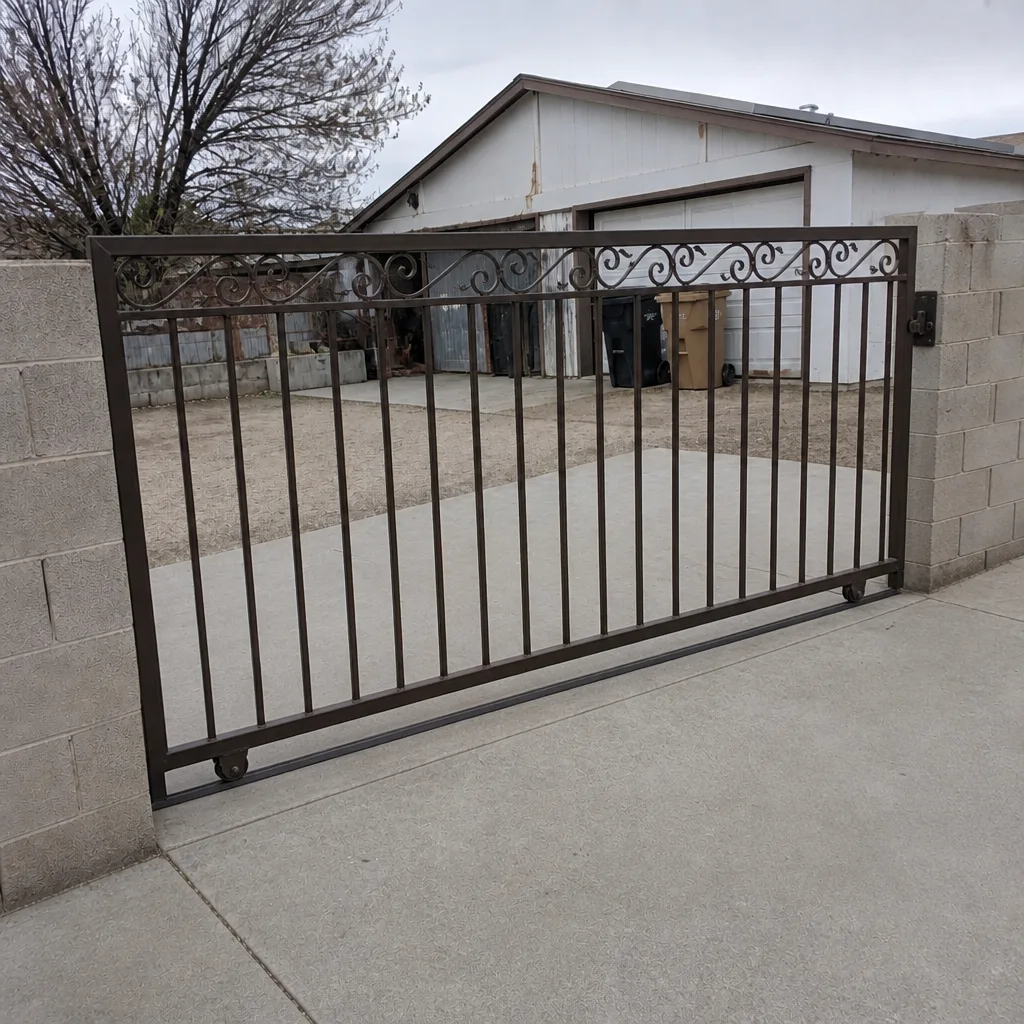
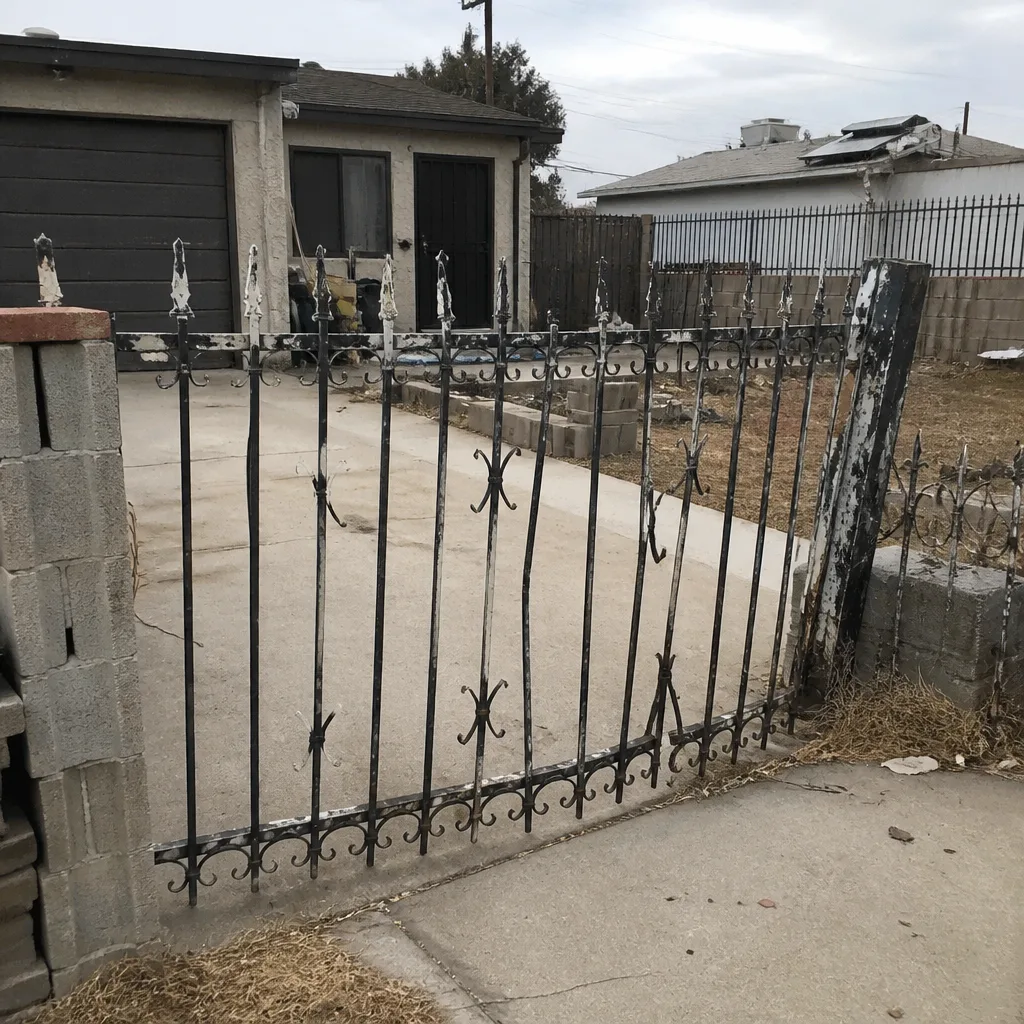
See the difference
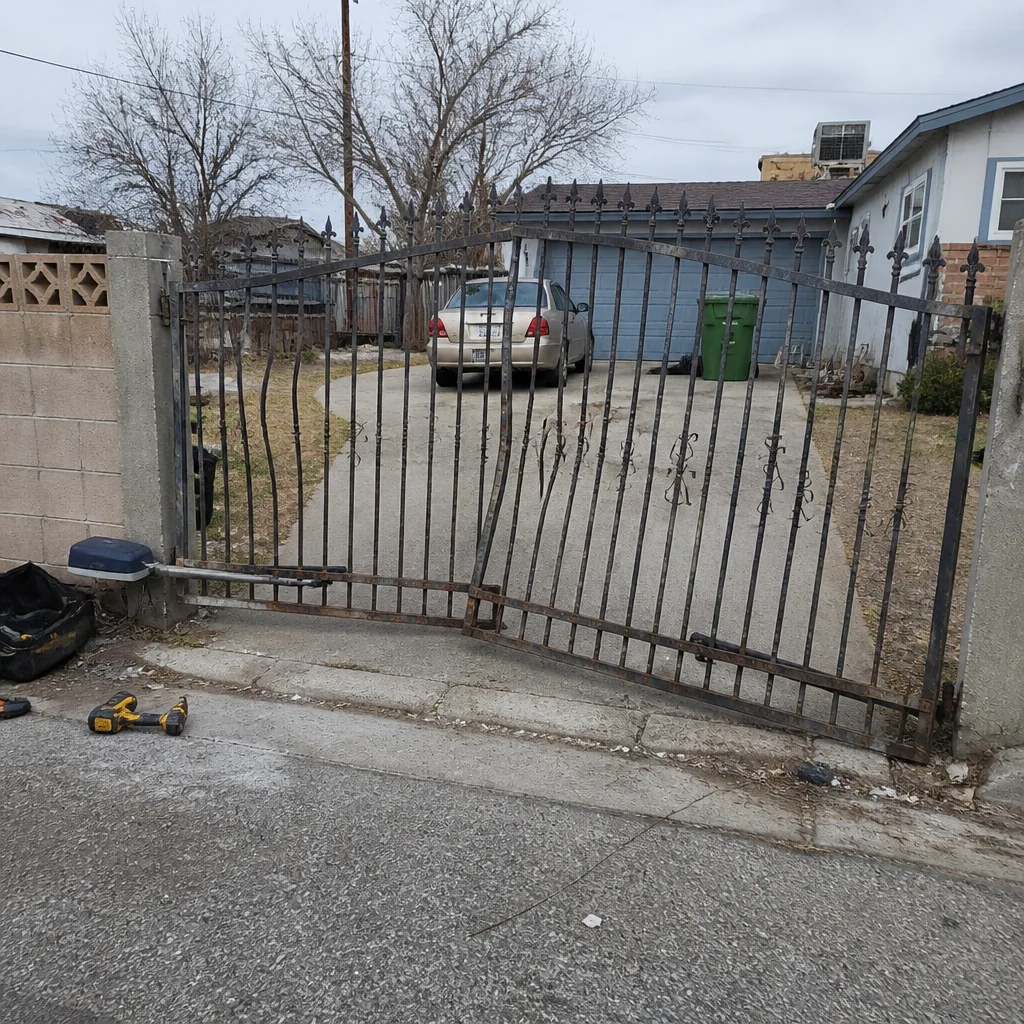 Before
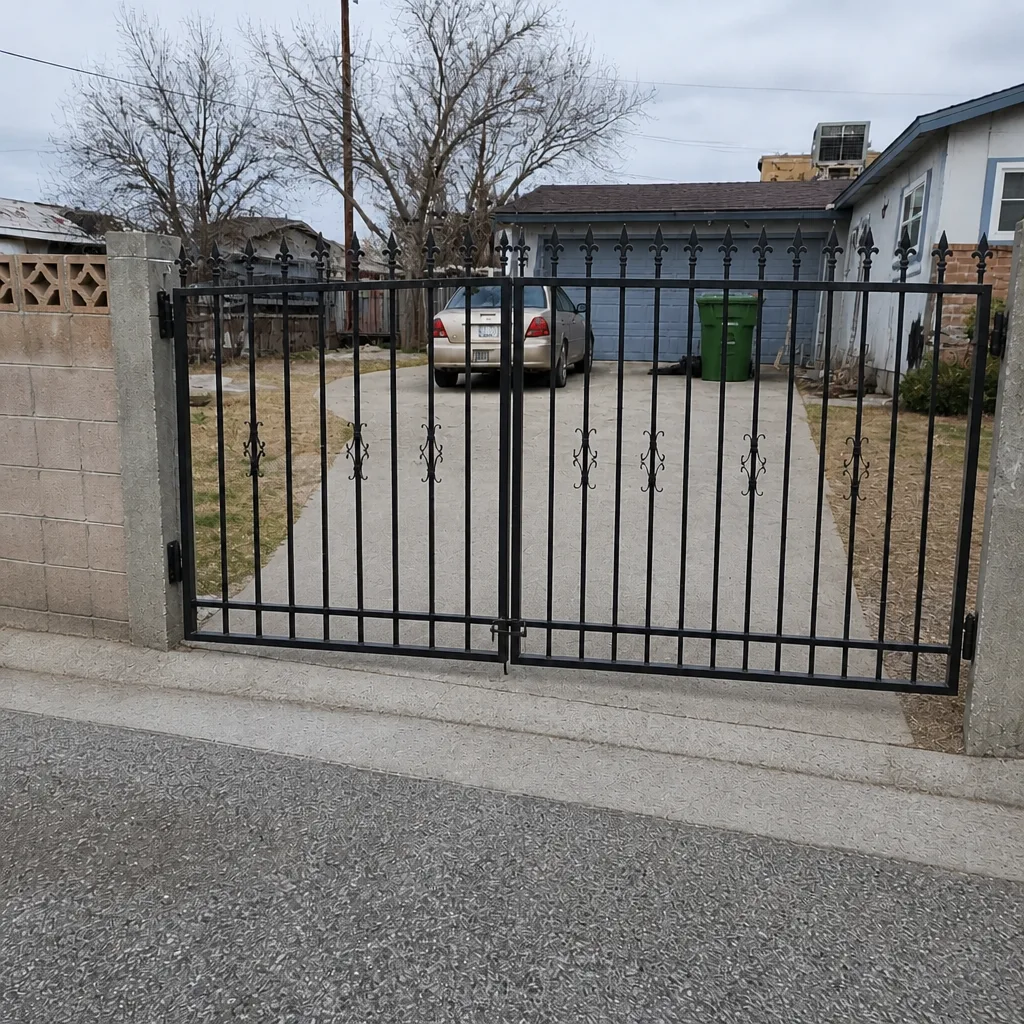 After
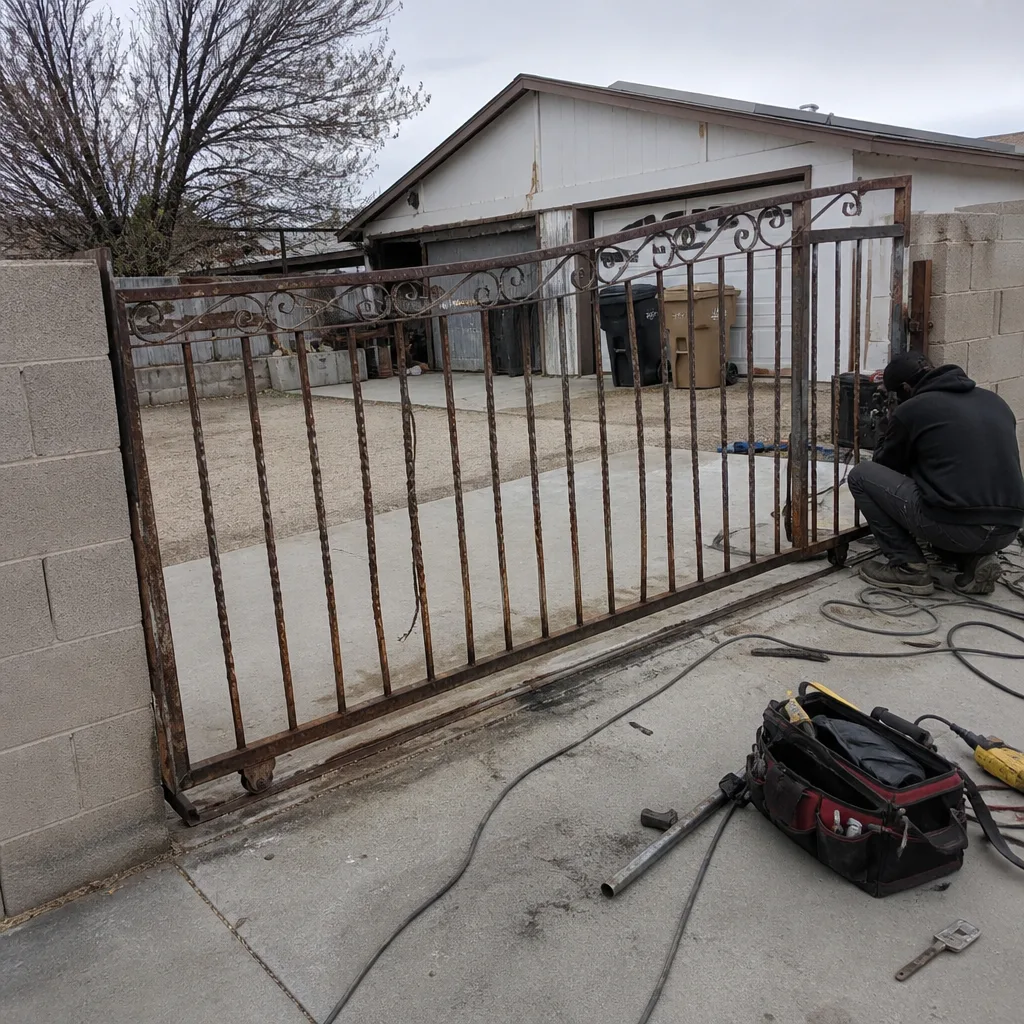 Before
 After
 Before
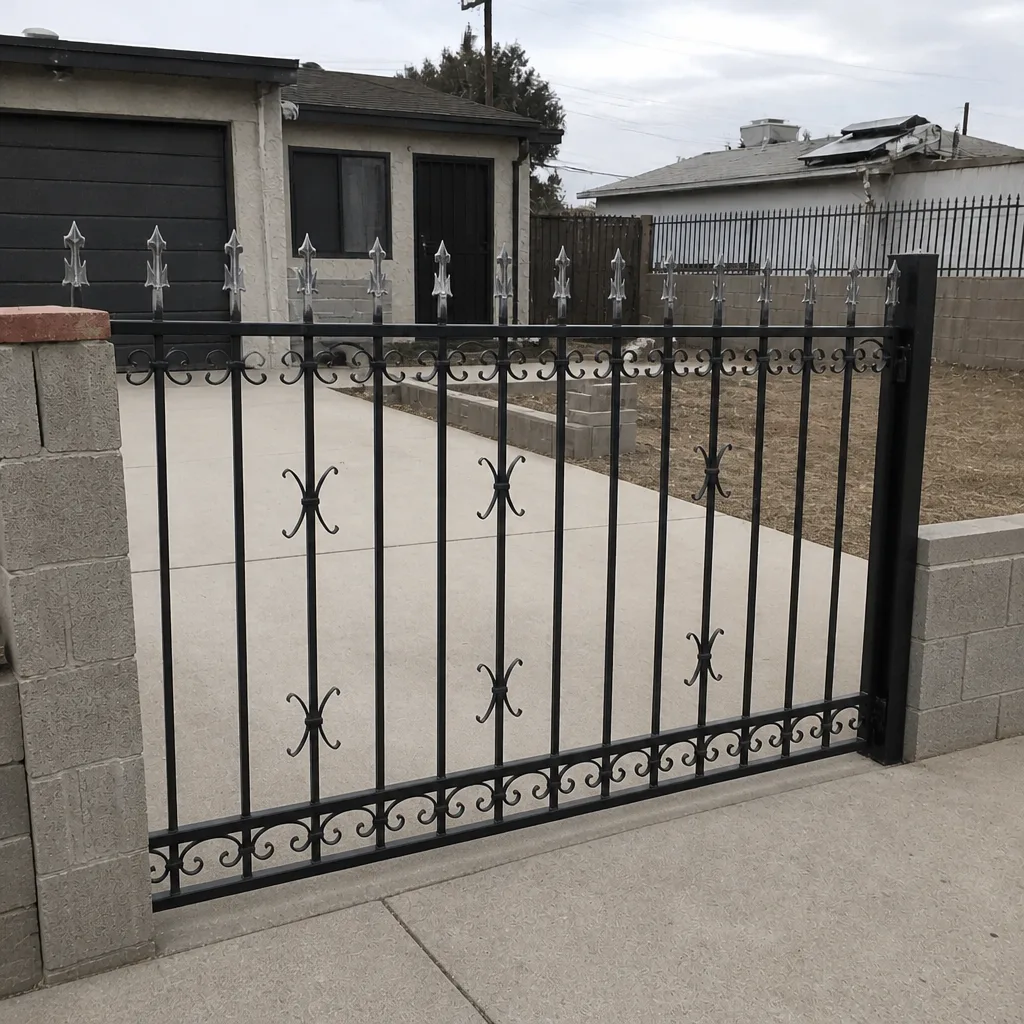 After
When to Call a Professional
Call a professional when the gate reverses unexpectedly, when the safety sensors don’t work, when you see taped or dangling wires, when the gate fails to detect a vehicle, when you need line-voltage work, when you’re installing or relocating a loop detector, or when the control board needs to come out and go back in with new hardware. These are not judgement calls. Each one is a safety issue or a compliance issue or both.
The other case for calling is uncertainty. If you can’t tell whether a task touches a safety circuit, that’s the answer. Gatewood Fence & Gate Sunrise Manor offers free estimates in Sunrise Manor – call (844) 761-8729 and a live person will pick up. Every job comes with upfront pricing agreed before we start and the 90-Day Done Right Promise in writing.
Frequently Asked Questions
Yes. Remote and keypad battery replacement is on the safe DIY list, and it’s usually a 5-minute job with a few-dollar battery. If a fresh battery doesn’t fix it, stop troubleshooting the electronics and call. Reprogramming the codes is also safe to do yourself if your keypad is already working.
No. In Sunrise Manor and across Nevada, line-voltage wiring to a gate operator requires a permit and licensed electrical work. Doing it yourself is a shock risk, an insurance problem if the gate fails, and a resale complication when the buyer’s inspector asks about it. This is a hard stop on the DIY list.
Break the photoelectric beam with your hand while the gate is closing. The gate should stop and reverse immediately. If there’s no beam sensor, push the gate gently while it closes and confirm it reverses. If either test fails, stop using the gate and have a technician look at it before somebody gets hurt.
UL 325 is the safety standard for automatic gate operators. For a residential gate, it requires a primary obstruction sensing through the operator plus a secondary means of protection, usually photoelectric sensors, a loop detector, or an edge sensor. A technician should verify your gate meets it if the operator is older or was worked on by someone else.
No. Loop detectors are cut and sealed into the driveway pavement and tuned on-site. The equipment is the cheap part; the installation is skilled work. A poorly tuned or routed loop fails to detect vehicles reliably, which is exactly how a gate ends up on a car hood. This is a professional job.
Not usually. Random reversing points to a loop detector, safety sensor, or control board fault. Those are the exact systems that aren’t safe to troubleshoot alone. Call for a diagnostic visit and have the safety edges tested first, because the common cause is a worn or miswired safety sensor.
The Bottom Line
Battery swaps, code changes, cleaning, and lubrication are yours to handle. Line-voltage wiring, loop detectors, and anything touching the obstruction-reverse circuit are not. UL 325 exists because a gate that closes on a car or a person is a real outcome, and a wrong wire can turn a working gate into a hidden hazard. The honest cost comparison comes down to diagnosis: a $200 guess is fine if it works, but a $200 guess plus a safety check plus the part gets expensive. If you’re near Sunrise Manor and want a second opinion on any written estimate, we’ll give you one for free. Call (844) 761-8729 for a free estimate.
Written by the team at Gatewood Fence & Gate Sunrise Manor.