
Last updated November 18, 2026
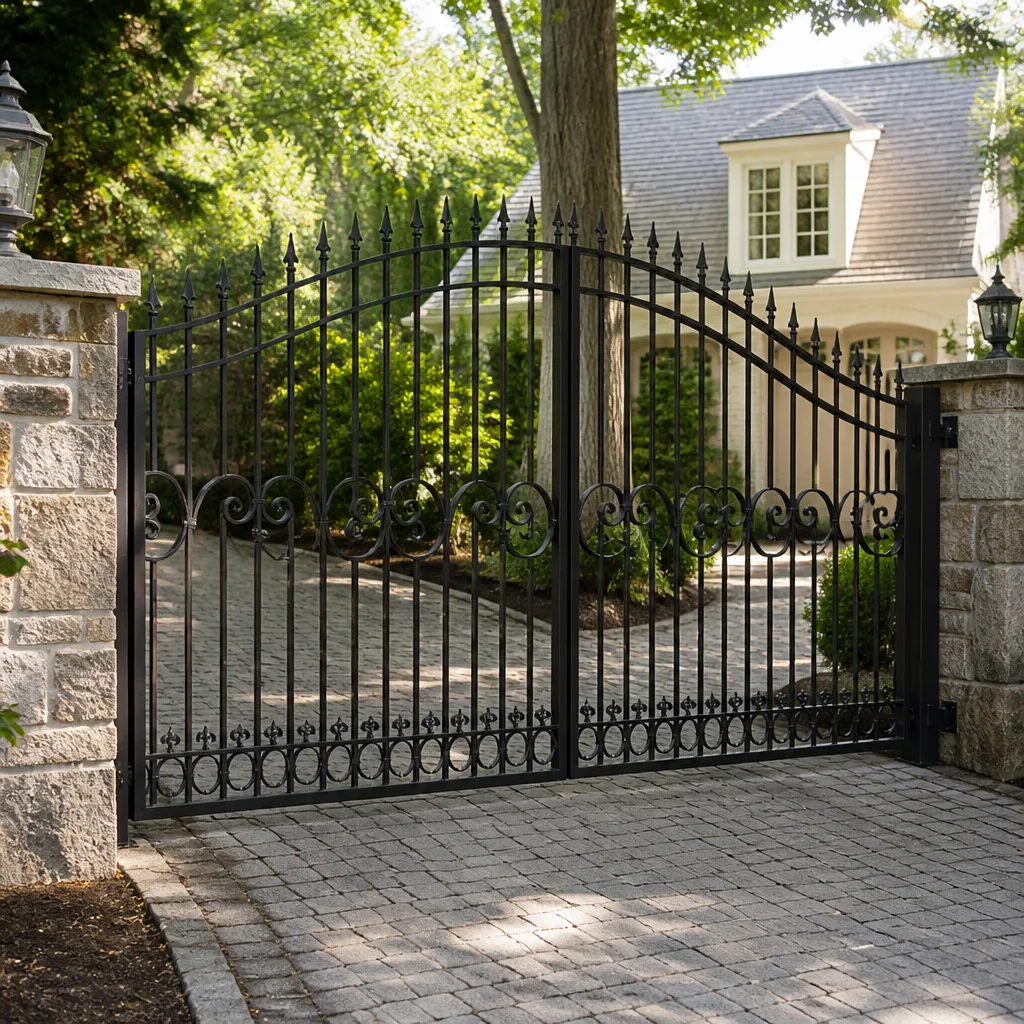 Wrought iron
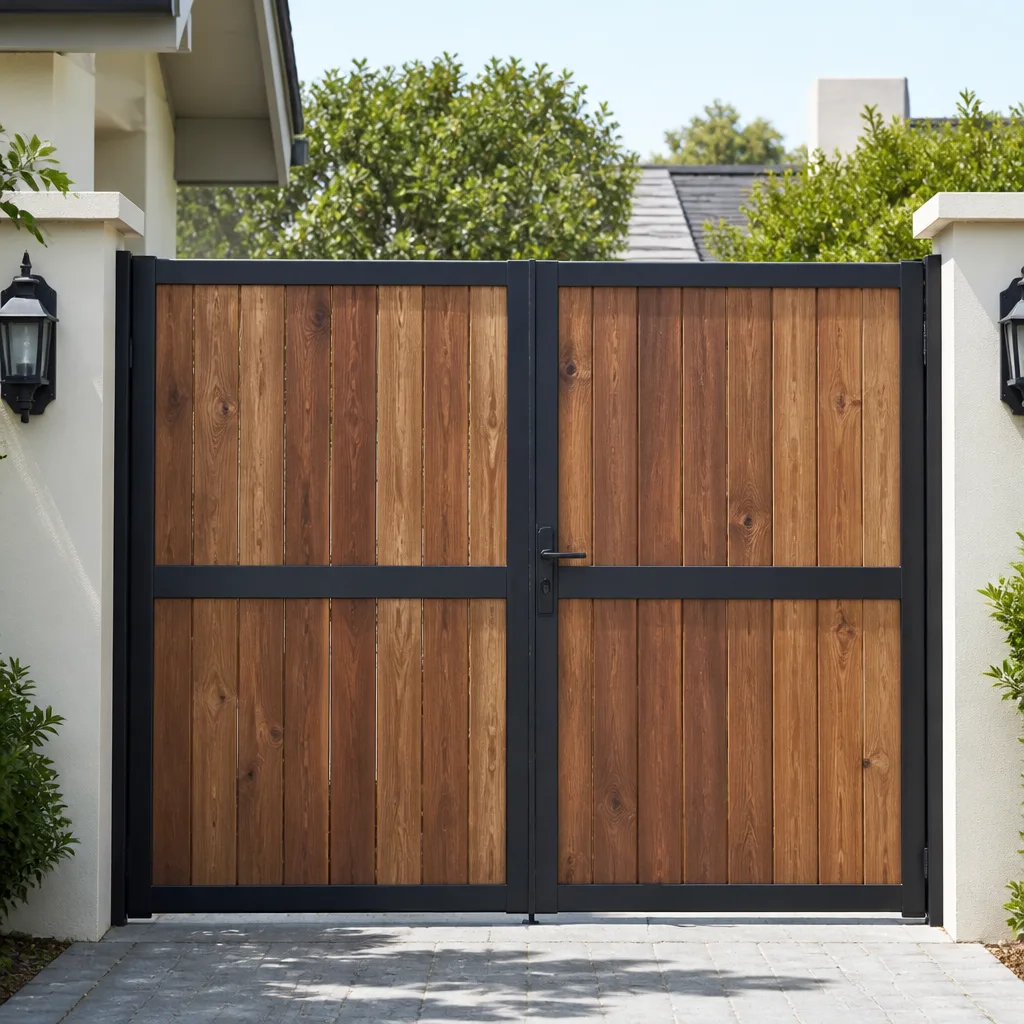 Wood & steel frame
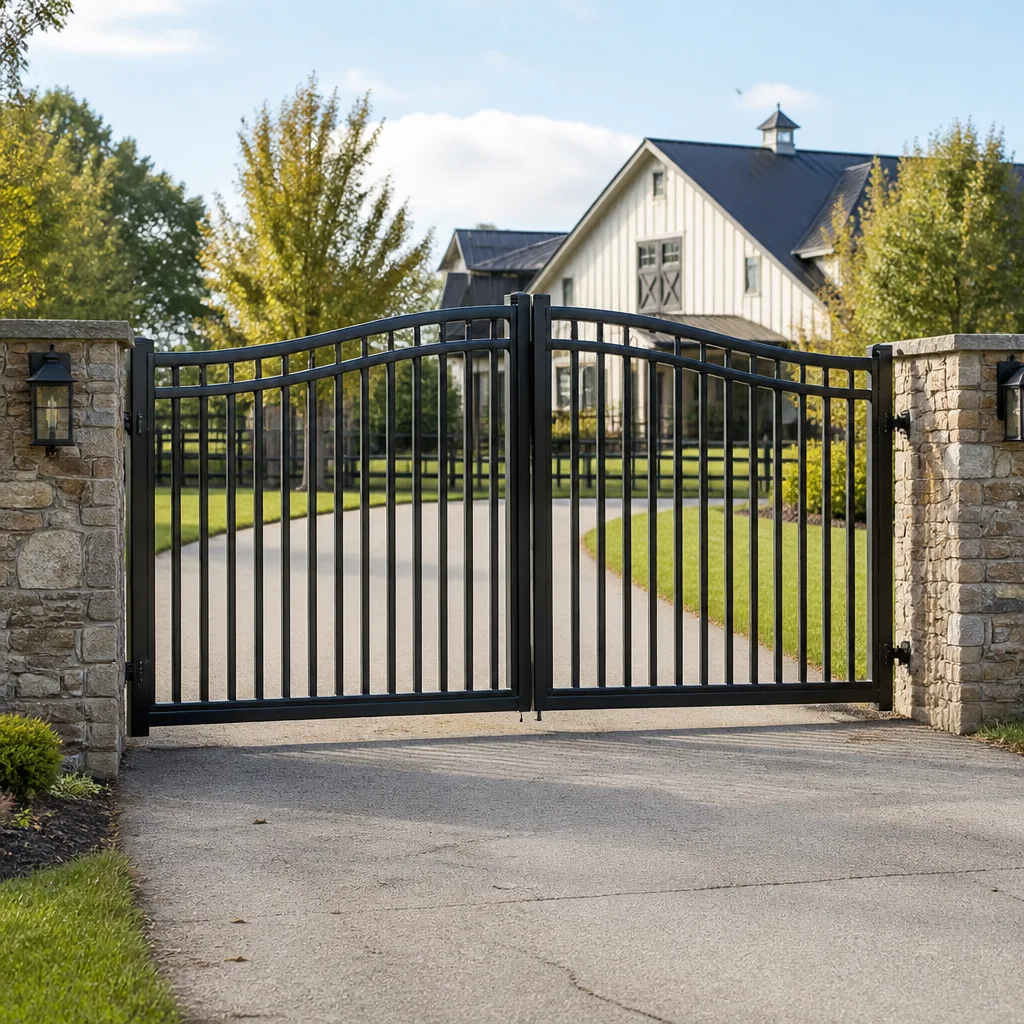 Farm & ranch
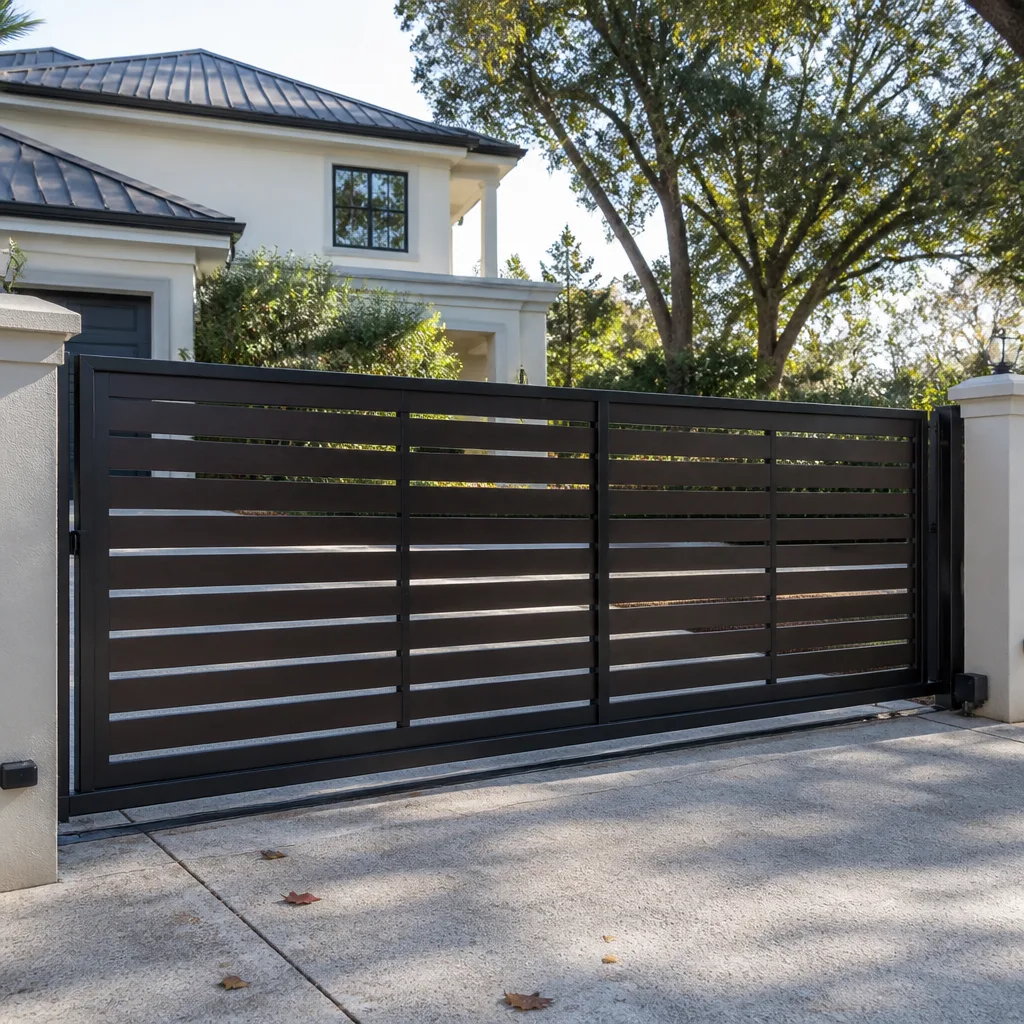 Sliding driveway gates
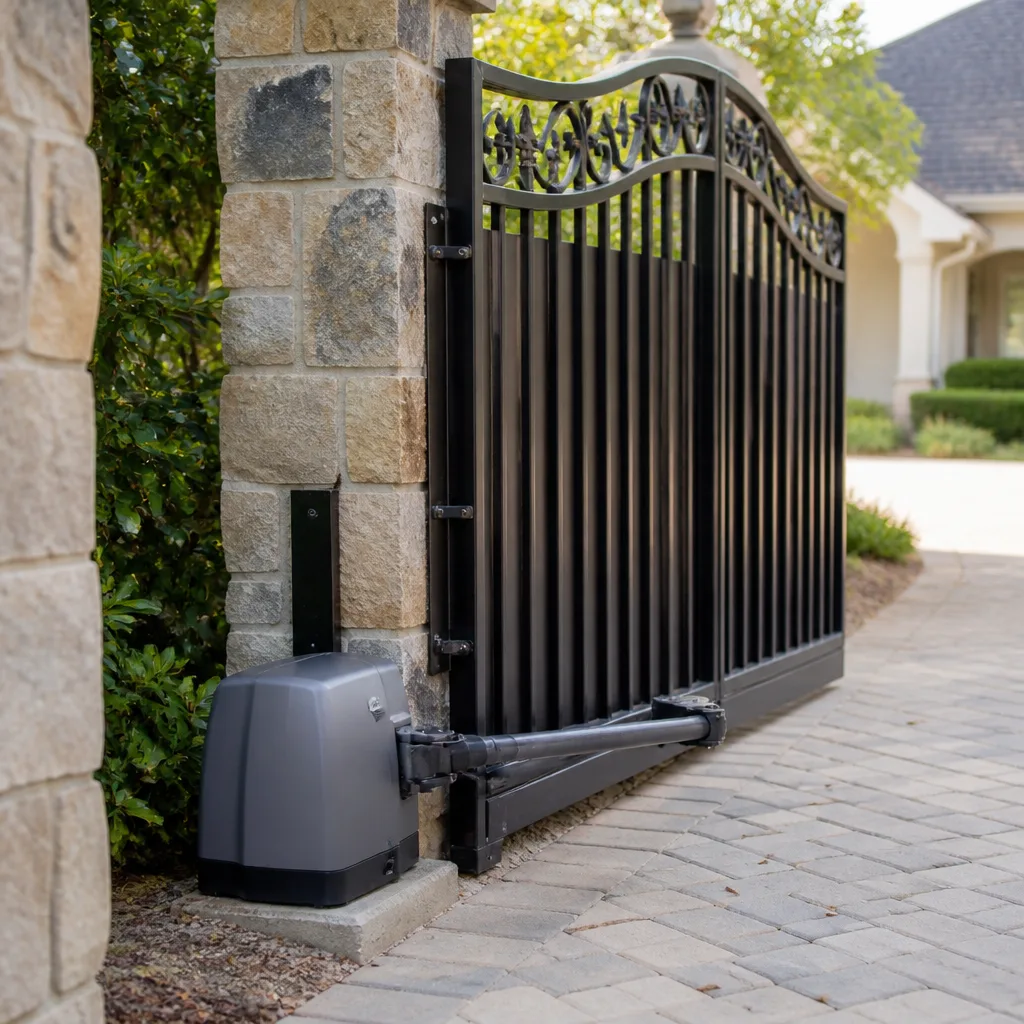 LiftMaster operators
Free on-site gate assessment - hinges, posts, and your LiftMaster or Nice gate operator checked before anything is quoted
The assessment is free and the quote is the invoice.
Get your free estimateDIY vs Professional Gate Repair: The Sunrise Manor Homeowner’s Decision Guide
Replacing a gate latch: absolutely do it yourself. Resetting a leaning post in caliche soil: please call someone, because if you don’t get the depth and backfill right in this ground, you’re doing it again in eighteen months. That’s the whole guide in two sentences, but it’s worth the next couple thousand words, because the line between those two jobs isn’t where most people think it is. Every year we get calls from Sunrise Manor homeowners who found that line the hard way, usually after the second attempt, sometimes after the gate fell on the car. What follows is the honest breakdown: which repairs are genuinely a Saturday afternoon job, which ones look simple and aren’t, and what a DIY repair actually costs when it goes wrong.
Quick Answer
Most gate repairs are DIY-safe if the work is limited to hardware (latches, hinges, handles, stops) with normal hand tools. Anything that involves the hinge post, the concrete footing, welding, or the spring and motor assembly usually isn’t, especially in Sunrise Manor’s caliche and desert heat. The reliable test: if the repair changes where the gate hangs or how the frame bears weight, call a professional.
Styles & brands we work with
- Wrought iron
- Wood & steel frame
- Farm & ranch
- Sliding driveway gates
- LiftMaster operators
Table of Contents
- Repairs that are genuinely DIY-safe
- The repairs that look simple but aren’t in Sunrise Manor
- Why this soil changes the answer
- Programming problem or mechanical problem?
- What a failed DIY repair actually costs
- The case for paying for a diagnosis first
- Common mistakes to avoid
- When to call a professional
Repairs That Are Genuinely DIY-Safe
We’ll start here because it’s the part most repair companies won’t tell you. Plenty of gate problems are simple hardware swaps, and if you have a screwdriver, a wrench set, and some patience, you’ll do fine. There’s no reason to pay someone to drive out for a $12 latch.
The work is safe for DIY when the gate frame and post stay put and you’re only changing what’s attached to them. That means the load path doesn’t move. Nothing about the gate’s weight or swing changes. Keep the repair inside that box and you can handle it.
These jobs are reasonable to tackle yourself:
- Replacing a latch. Remove the old screws, bolt in the new one, check that it catches cleanly. This is the classic beginner repair, right down to the hardware store aisle.
- Swapping a handle or pull. Same drill. Phillips head and five minutes.
- Adjusting a hinge that’s just loose. Tightening bolts and hinge screws is fair game. We’re talking about loose fasteners, not a hinge that’s pulling out of rotted wood or splitting metal.
- Replacing a worn hinge pin. If the pin comes straight out and a new one slides in, that’s a DIY job.
- Adjusting a gate stop. If the gate swings slightly past its resting point and slaps against a stop block, repositioning the stop is fine.
- Clearing a track or rail on a sliding gate. Sweeping gravel out of the channel is exactly the kind of maintenance you should be doing monthly anyway.
- Battery replacement in gate remotes and keypads. Obvious, but worth saying. A dead battery is not a repair call.
- Checking and resetting a tripped GFCI outlet that feeds the operator. Before anyone drives out, confirm the gate has power at all.
Two ground rules for any of this. First, if you’re working on a gate that swings or slides under its own weight, block it or tie it off before you touch hardware, because a gate that shifts while your hands are in the hinge is how people get hurt. Second, if the repair reveals something worse underneath (a cracked weld, a rusted-out post, a hinge that won’t stay tight no matter what you do), stop. That’s the point where the job changed.
The Repairs That Look Simple but Aren’t in Sunrise Manor
Here’s where the cheap Saturday job turns into the expensive one. A handful of gate repairs present as ordinary tasks, and then they don’t stay fixed. We’ve watched homeowners chase the same sagging gate for three seasons because each attempt worked for about six weeks.
A gate sags in the hinge post, not in the middle, and that is where we start. That single fact rules out a lot of DIY. When a gate drags, most people tighten the hinges or add a diagonal brace to the panel. But if the hinge post has shifted, rotted at the base, or come loose from its footing, you’re patching the symptom. Fix the panel without the post and you’ll fix it twice.
These are the repairs that look DIY and aren’t:
- Resetting a leaning hinge post. Looks like dig and re-pour. In caliche, it’s rarely that simple, and the depth and backfill have to be right or the post leans again in a season or two.
- Re-hanging a gate that’s dropped on its hinges. Straightening the gate in the opening usually means moving the hinges, which means the post is in play.
- Welding or repairing a cracked weld. The gate is holding significant weight and the repair needs to hold that weight under repeated stress loads. Not a job for a hobby welder on a frame that’s still mounted.
- Anything with a torsion or extension spring on an automatic gate. Springs store enormous stored energy and can cause serious injury if released badly. A trained technician with the right tools should handle these, full stop.
- Adding or replacing a diagonal brace to fix sag. The brace needs to load the right points on the frame. Braced wrong, it just bends the gate the other way.
- Replacing a panel or picket that’s bolted through the frame. The fasteners are often rusted and frozen. Ripping one out cleanly without deforming the frame is a skill.
- Replacing an operator arm or gear. Mechanical work inside the gate operator usually needs the right parts and the cover off safely. Programming is different (see below).
One more: the sun. Sunrise Manor routinely pushes through 100-plus-degree summer afternoons, and metal gates expand enough in that heat that a gate hung snug in March will bind in July. A professional repair accounts for that swing. You can hang a gate perfectly on a cool morning and it’ll drag by August.
Why This Soil Changes the Answer
Sunrise Manor sits on some of the most stubborn ground in the valley. Caliche is a calcium-carbonate layer that behaves like weak concrete. It’s why a lot of footing work here is a different job than it is in softer soil, and it’s why “just dig a new hole and re-set the post” advice from a video shot in the Midwest won’t get you far.
In our experience across Sunrise Manor, the footing depth and backfill on a gate post matter more than the post itself. A post set shallow or backfilled with loose native soil gets shoved around by seasonal moisture movement and by the weight of the gate itself. In a suburb with clay-heavy soil the settlement pattern is different; here, ground movement from moisture swings and the caliche layer means a shallow footing can loosen quickly. If the footing isn’t below the frost-and-moisture-active zone for this region and the concrete isn’t anchored into the caliche, the post will lean again.
We say it this way often: the name is on the shop, and the shop is down the road, and that’s the oldest accountability there is. In this trade, doing it right the first time in this ground means a post repair that lasts a decade, not a season. That’s the kind of thing a Saturday attempt usually learns the hard way.
If you do want to reset a post yourself, we’d be honest with you: get an assessment first. Even if you plan to do the work yourself, knowing whether the caliche layer is at four inches or two feet on your property changes what the job actually is. That’s the kind of thing we can diagnose on a Gate Repair in Sunrise Manor call.
Programming Problem or Mechanical Problem?
Automatic gate operators fail in two broad ways, and one is much more DIY-friendly than the other. Before anyone gets in a truck, run this test. We see DoorKing and LiftMaster operators in Sunrise Manor homes more than any other brand, and the diagnostic sequence is the same regardless.
Work through this list:
- Check power. Confirm the outlet and breaker, including the GFCI. If the operator is dead, this is the first fix.
- Check the manuals and remotes. Dead battery? A single remote that doesn’t work? Reprogram the remote first. This is still a DIY task.
- Watch what the gate actually does. Open the gate, then let it close. Does it stop partway, reverse, or slam? Does the light blink a specific pattern? Many operators have a diagnostic LED that flashes a code for the fault. Look up that code in the manual. This is a programming or safety-sensor issue often enough to warrant a check.
- Inspect the safety edges and photoelectric sensors. Dirty or misaligned sensors account for a lot of phantom reversing. A spiderweb or a knocked sensor is a DIY fix.
- Cycle the gate by hand (power off). Disconnect the operator manually and push the gate through its full swing. Does it move freely and smoothly? If it binds, drags, grinds, or takes real effort, the problem is mechanical, not programming. That’s a professional call.
The rule of thumb: if the gate moves smoothly by hand and the fix is in the remote, the sensor, or the control board settings, you can reasonably try it yourself. If opening the gate by hand feels heavy, catches somewhere, or squeals in the hinges, the mechanic is failing and no amount of remote reprogramming will fix it. A standard LiftMaster or Elite operator on a Sunrise Manor gate is a mechanical machine underneath, and it needs mechanical service when it wears out.
When the operator itself needs repair or replacement, the honest advice is to have it looked at in person before deciding anything. That’s the territory of Gate Motor & Opener in Sunrise Manor, and the cost of guessing wrong is a control board or a burned-out motor.
What a Failed DIY Repair Actually Costs
We’re not saying this to scare anyone. We’re saying it because we want you to have the real math. When a DIY repair on a post or a heavy gate goes wrong, the cost isn’t the wasted trip to the hardware store. The cost is the repair you’ll now pay for that includes undoing the first attempt.
Here’s the honest math, in rough terms for the Sunrise Manor market. These are broad ranges, not quotes, and your job will differ, but they’ll help you reason about it:
- A latch or handle swap on your own: roughly the price of the hardware and an hour of your weekend.
- A hinge or fastener adjustment done right the first time: similar. Low cost, genuinely a DIY job.
- A hinge post reset done by a professional: a mid-hundreds repair for the typical residential gate, quoted before anyone starts.
- The same post reset after a failed DIY attempt, with an over-excavated or badly backfilled footing: more, because the first attempt’s work now has to be undone and the ground re-prepared.
- Replacing a dropped or bent gate panel after a DIY re-hang goes wrong: the costliest outcome, and the one where the whole decision stops being a cost comparison at all.
- An automatic operator motor burned out from running a binding gate: often close to the price of a new operator once the control board is included. The mechanic failing first is what the operator is trying to tell you.
The pattern is this: the DIY repair costs twice as much when it works for six weeks and fails. The professional repair is quoted up front and stands behind what it fixes. We quote the price and agree it with you before any work starts, and the standing offer of $40 off any repair over $200 plus no trip charge inside the county is there so the first call isn’t the expensive one. A free second opinion on a written estimate means you can show us what another outfit quoted and borrow a set of eyes.
If you’re weighing repair against replacement on a gate that’s seen a lot of Sunrise Manor sun, we go through that in more detail on the guide to Gate Installation in Sunrise Manor.
The Case for Paying for a Diagnosis First
This is the part we most want you to take away. You don’t have to choose between “do it all myself” and “pay someone to do everything.” There’s a middle path that a lot of people overlook: pay for an honest diagnosis, and then decide.
Diagnosis is the one step that costs a little and saves a lot, whether you do the work yourself or not. We’ve had homeowners call us out, watch a ten-minute diagnosis, then confidently do the easy part themselves and hire us for the post. Both parties leave happy.
Why it pays off:
- You learn what’s actually wrong. That drag isn’t always where you think it is. A diagnosis names the failing component, not the symptom.
- You get the right depth and backfill guidance for your property’s soil before you start digging. That alone can save a redo.
- You get an upfront price on the professional version of the job. It’s a number you can compare against your own time and risk, without anyone changing it at the door.
- You find the line between easy and hard. If your repair turns out to be a $15 latch, we’re the first to tell you to go get the latch. If it’s a post or a spring, you’ll want to know before your hands are in the hinge.
A free second opinion on any written estimate does the same job from the other direction. Bring us the quote you already have and ask what we’d do. There’s no charge for that, and we’d rather give you a straight answer than fix something that didn’t need fixing. The repair-first habit is the whole reason we’re in this line: the gate gets fixed in your driveway, not swapped out for a new one.
Common Mistakes to Avoid
- Chasing a sagging gate on the panel instead of the post. The sag lives in the hinge post. If you tighten hinges and add braces without checking the post, you’re fixing the symptom and the real problem is underneath.
- Setting a footing shallow in caliche. A concrete pour that stops above the active soil layer in Sunrise Manor will move with the seasons. Depth and anchoring in the caliche are the whole job.
- Cutting or hanging a gate on a cool morning without accounting for heat. Metal expands in the summer sun here. A gate hung snug in March binds by July. Leave the right clearance, or you’ll be back out there adjusting it.
- Fighting an operator when the gate is the problem. Reprogramming a remote on a gate that binds by hand is wasted effort. The mechanic is failing. Fixing the gate fixes the operator.
- Handling a torsion or extension spring yourself. These store serious energy and release unpredictably. A trained technician with the right tools does this work. That’s not a hedge, it’s the rule.
- Welding a critical frame repair without knowing what’s holding the weight. A weld on a loaded gate needs to hold repeated stress, not just look solid on the bench. If it carries the gate’s weight, let a professional weld it on site, which also keeps the gate in your driveway instead of on a truck.
- Assuming a big brand means a simple fix. Mighty Mule and LiftMaster units fail in specific ways, and the fix is brand-specific. A diagnosis tells you which.
When to Call a Professional
Call for anything involving the hinge post, the concrete footing, welding, a spring, or a gate that’s dropped or binds by hand. Those are the jobs where the safety risk and the repair cost both go up fast, and where the ground here makes a do-over expensive. If your gate is the security boundary of the property and it’s failing, that isn’t just an inconvenience, it’s a security risk, and it’s worth getting it right the first time.
You can handle the rest. Latches, handles, loose fasteners, remote batteries, sensor cleanups, and most programming issues are yours to fix, and we’ll cheer you on. The goal is getting your gate working again without wasting your weekend or your money.
Gatewood Fence & Gate Sunrise Manor offers free estimates in Sunrise Manor. If you’d like a diagnosis before you decide, call (844) 761-8729 and tell us what the gate is doing. A live person answers, around the clock, and you’ll get a straight answer about whether it’s a Saturday job or a call for us.
See the difference
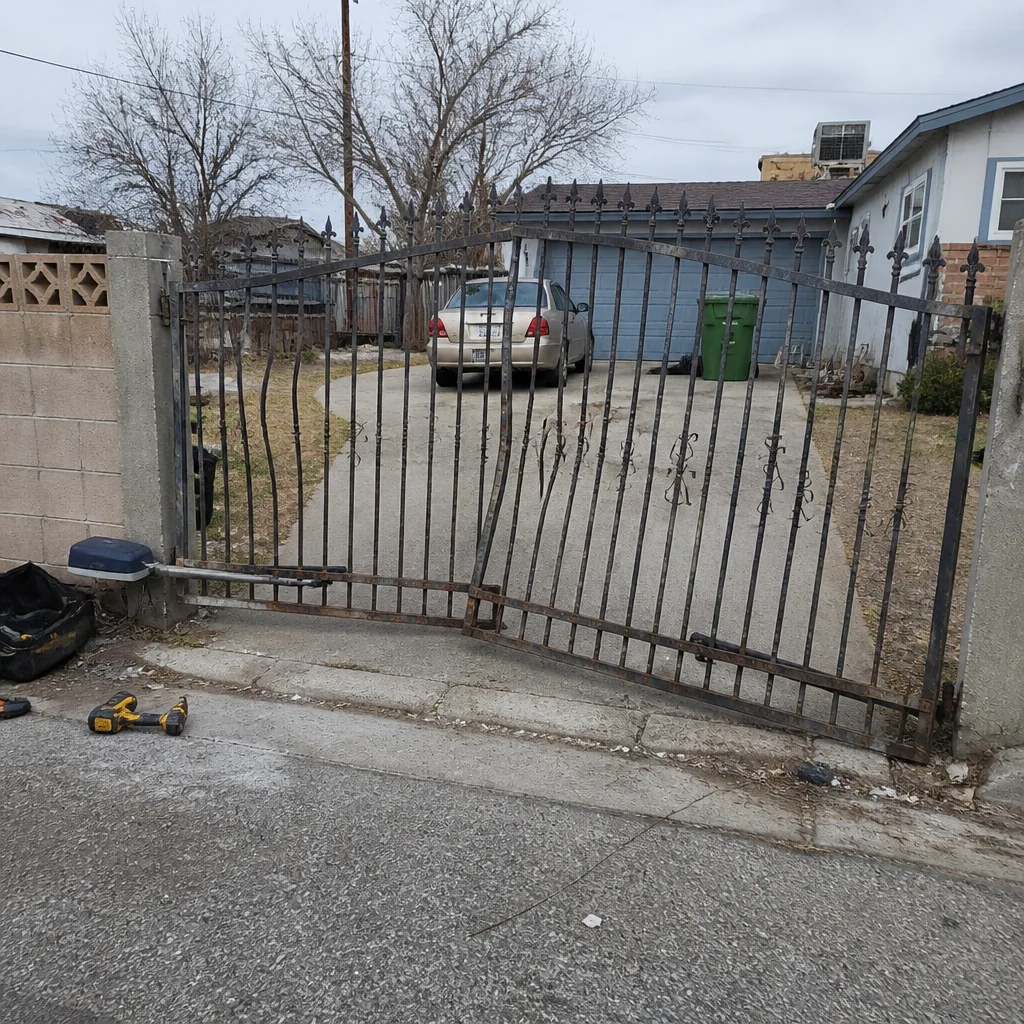 Before
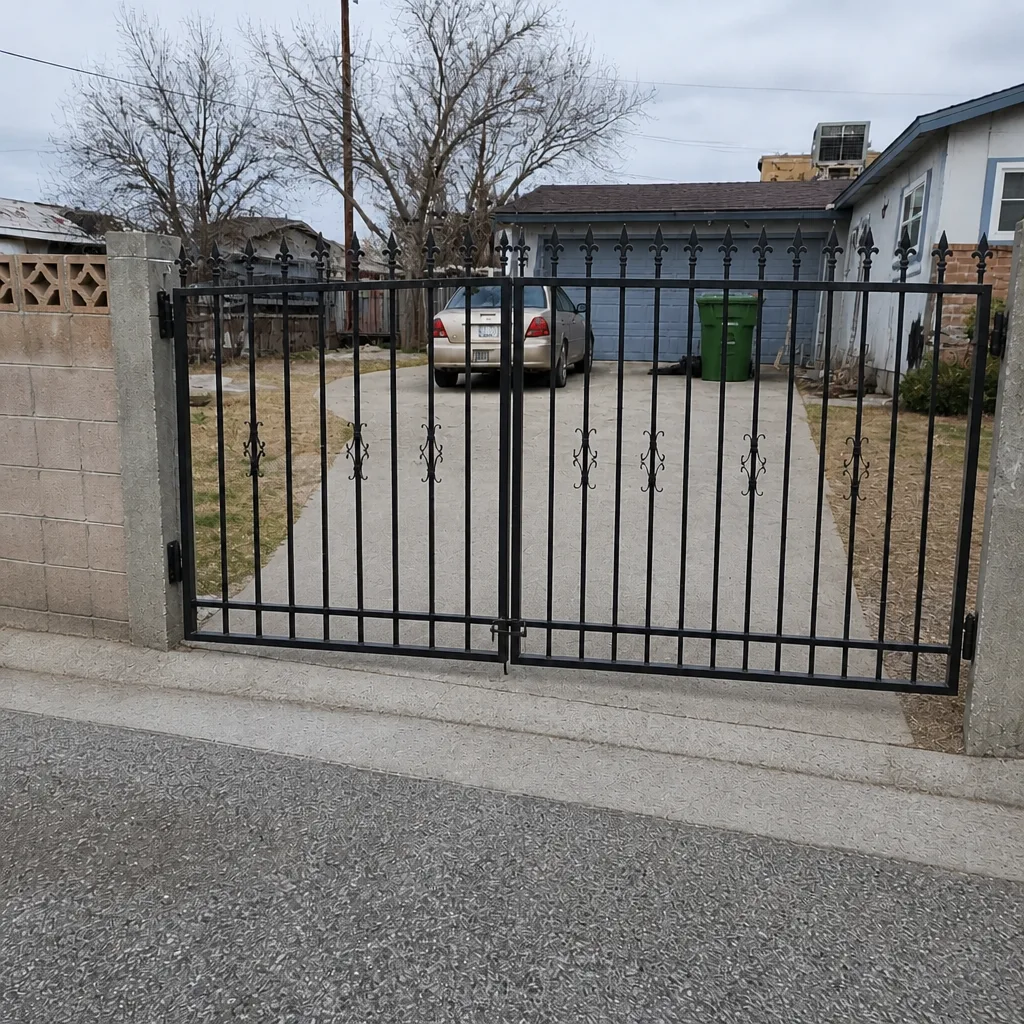 After
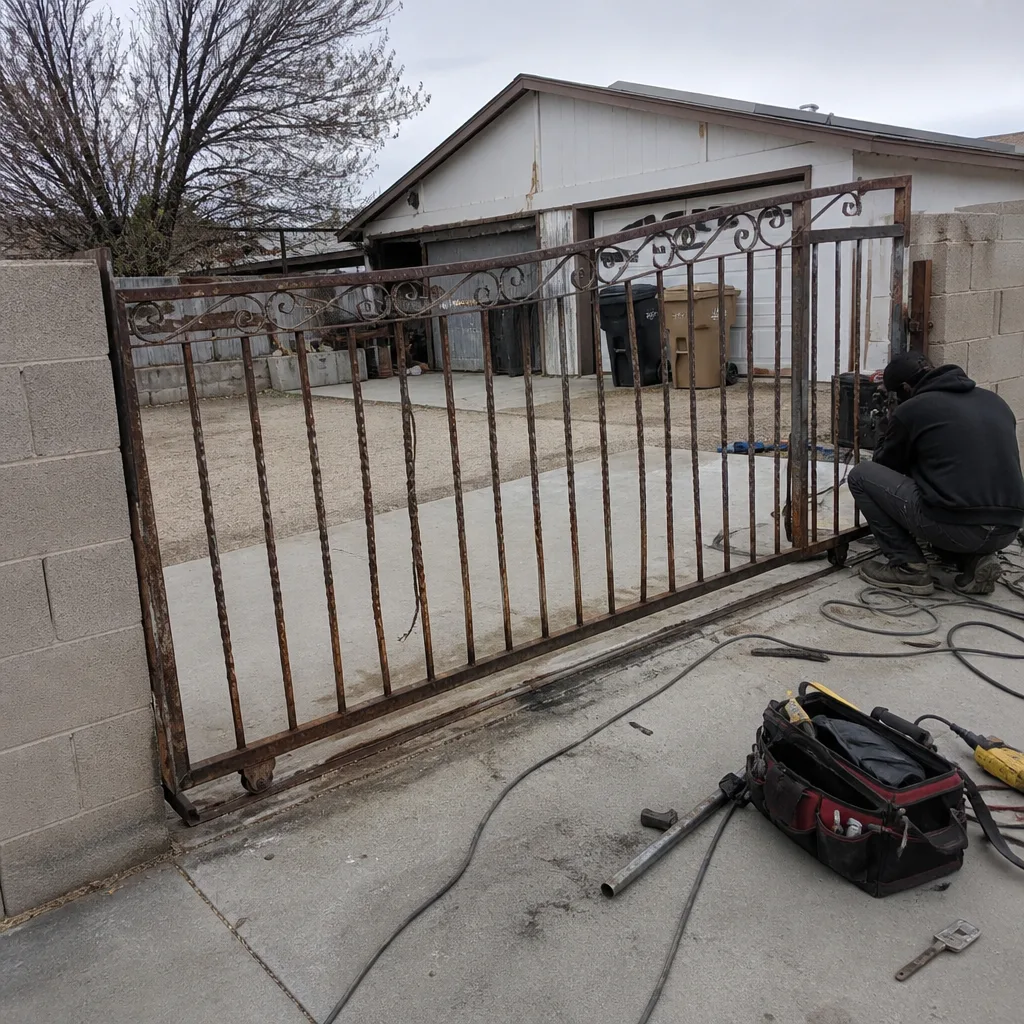 Before
 After
 Before
 After
Frequently Asked Questions
Yes. A latch replacement is a straightforward DIY repair that needs a screwdriver and about ten minutes. Remove the old latch, install the new one, and check that it catches cleanly on the strike plate. If the gate won’t latch because the gate has sagged, that’s a different problem, and it usually traces back to the hinge post rather than the latch.
Most common gate repairs in Sunrise Manor land in a moderate range and depend on what’s failing, though a hardware swap is far less than a post reset. We quote the exact price and agree it with you before any work starts, and there’s no trip charge inside the county. Call (844) 761-8729 for an exact quote, because estimates are free.
Yes, and we’re glad to. Call us, describe what the gate is doing, and we’ll give you an honest read on whether it’s a DIY-safe job or one where the risk is too high. We’d rather talk you out of a dangerous repair than have you find out the hard way. There’s no charge for the conversation.
Not always. A gate that won’t close can be a binding hinge, a shifted post, a misaligned sensor on an automatic gate, or a failing spring. The test is to disconnect the operator and move the gate by hand. If it moves smoothly but reverses on its own, it’s likely a sensor or programming issue. If it binds or drags by hand, it’s mechanical, and springs are one common cause among several.
A repair rarely needs a permit, but a full gate replacement or any change to the structure often does, and the rules vary by type and height. Check with the local building department before you start, especially on anything that changes the footing or the gate’s size. When we quote a job, we’ll walk you through what’s typically required for your gate.
That’s a common call and there’s no judgment in it. Bring us what you did and we’ll diagnose what’s still failing. Often the failed attempt points straight at the real problem, which is useful information. We offer a free second opinion on any written estimate too, so you can compare before you commit.
The Bottom Line
Most gate repairs fall on one side of a clear line. Hardware is DIY-safe with normal tools. Hinge posts, footings, welds, springs, and most mechanical operator failures are not, especially in Sunrise Manor’s caliche and summer heat. The honest math is that a failed DIY repair costs more than a professional one done right the first time, and the smart move is a diagnosis first if you’re not sure which side of the line you’re on. When the repair is a Saturday job, do it and enjoy it. When it’s not, we’re a phone call away.
If you’re ready to get your gate working, call Gatewood Fence & Gate Sunrise Manor at (844) 761-8729 for a free estimate. A live person answers 24 hours a day, and every job carries the 90-Day Done Right Promise in writing. Seniors and veterans get a permanent 10% discount. Start at the Gatewood Fence & Gate Sunrise Manor home, and if you’re just beginning to think about the project, our guide on Gate Installation in Sunrise Manor walks through what a new gate involves. Repair first, always, and we’ll tell you honestly if that’s not the right call.
Written by the team at Gatewood Fence & Gate Sunrise Manor.