
Last updated November 18, 2026
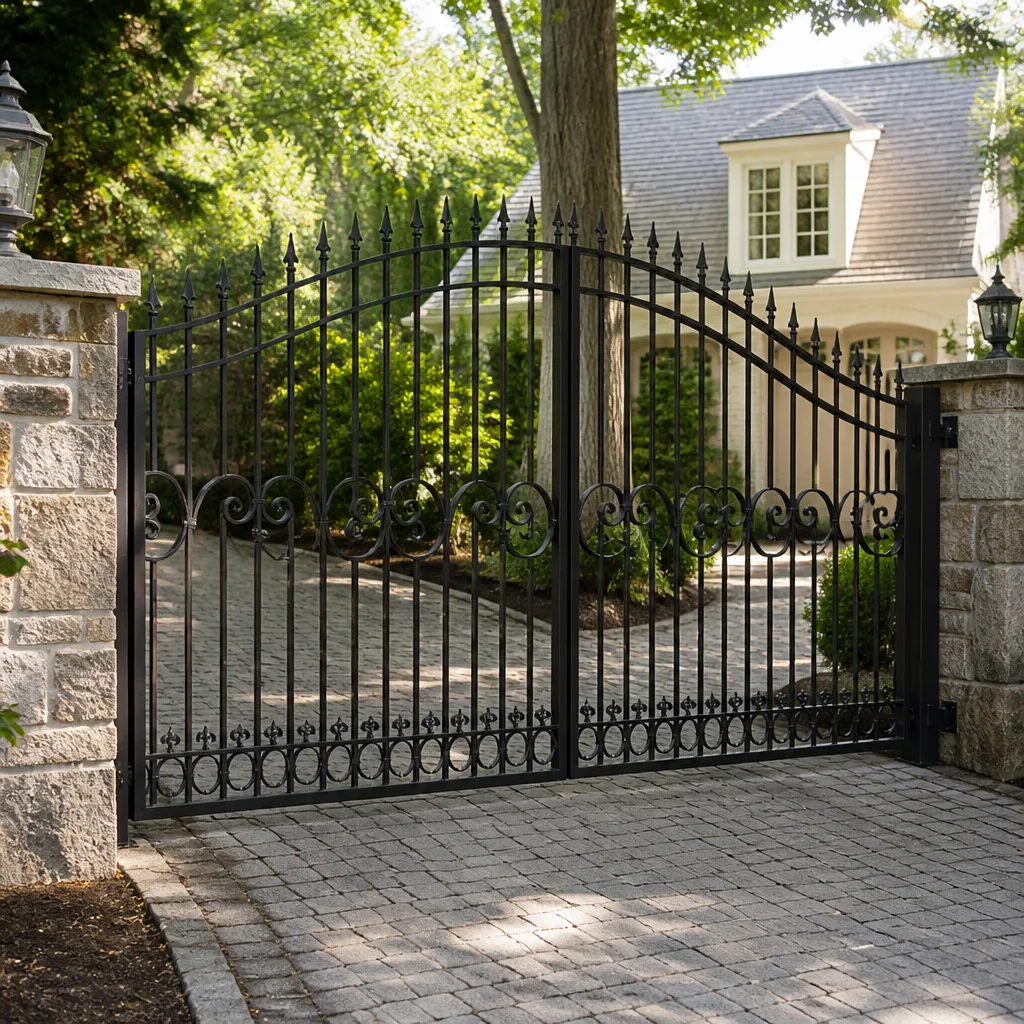 Wrought iron
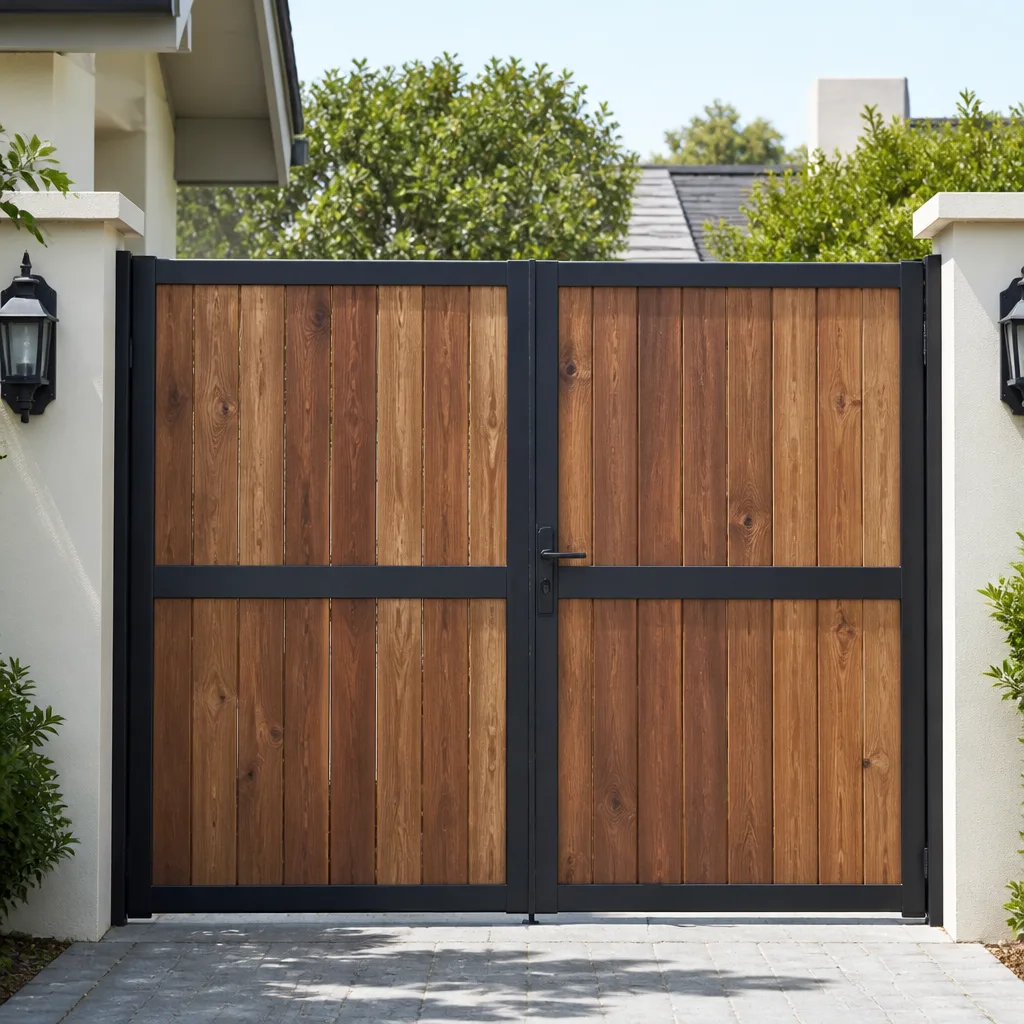 Wood & steel frame
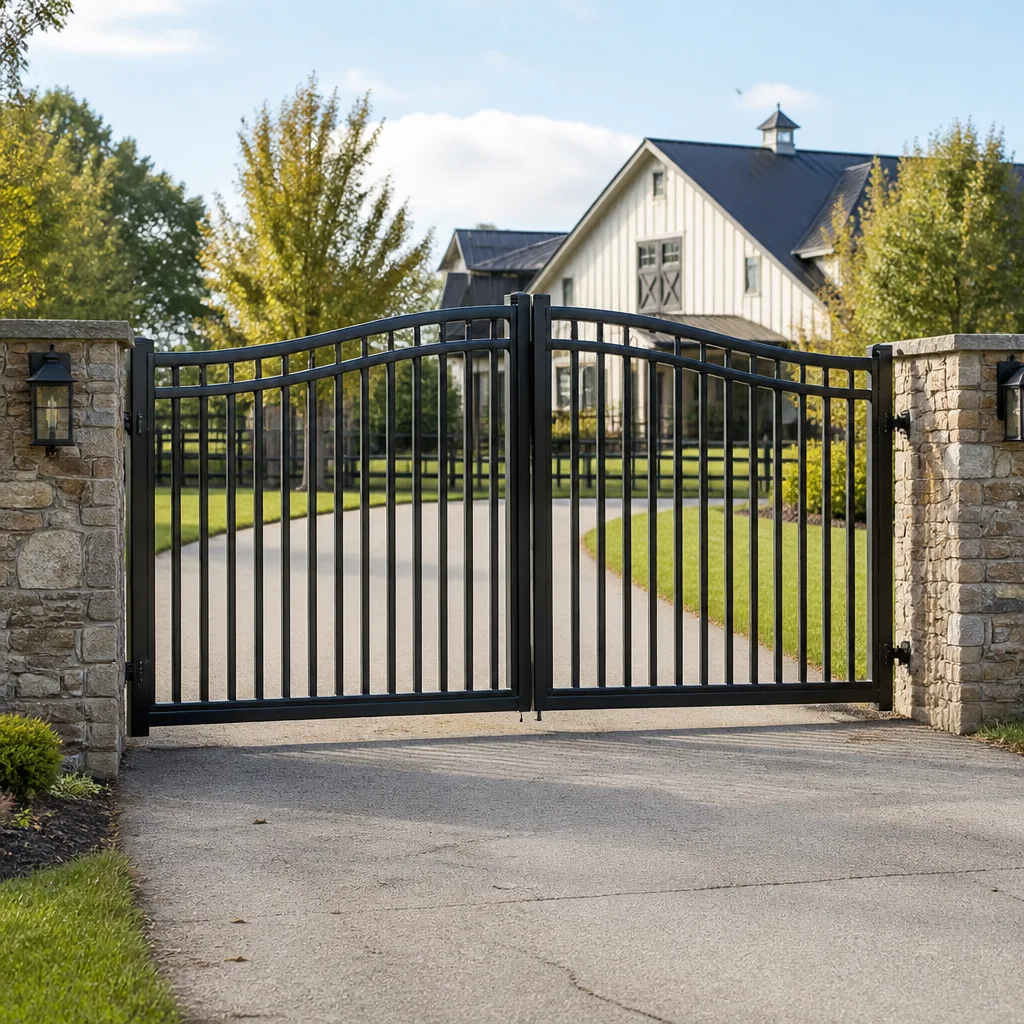 Farm & ranch
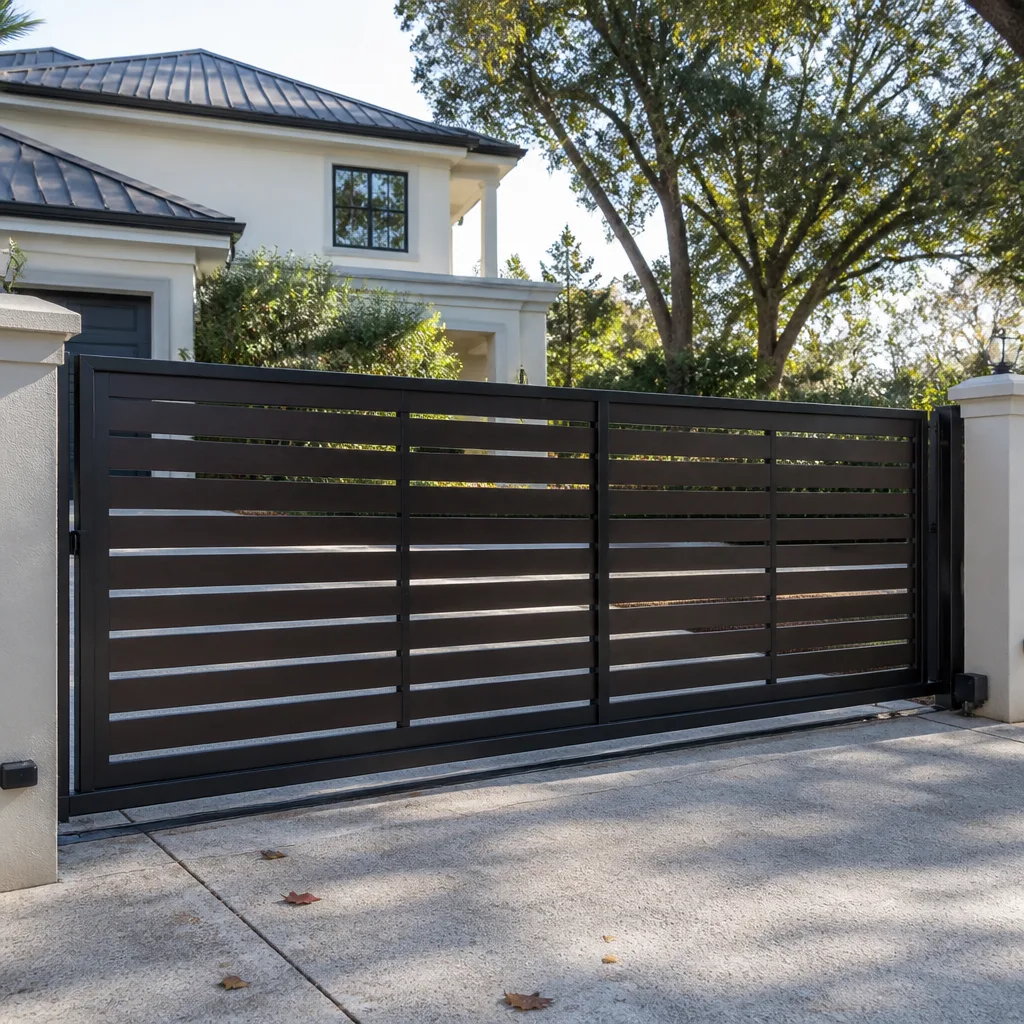 Sliding driveway gates
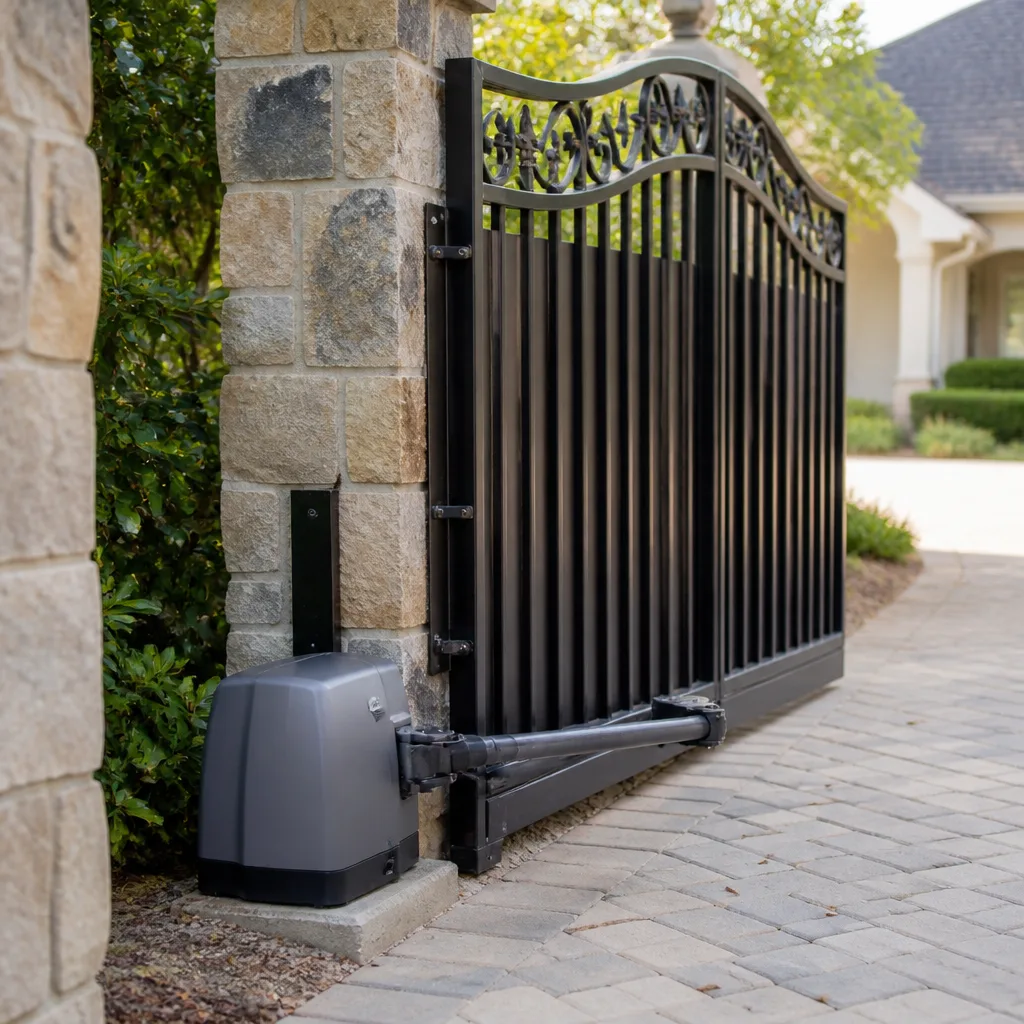 LiftMaster operators
Free on-site gate assessment - hinges, posts, and your LiftMaster or Nice gate operator checked before anything is quoted
The assessment is free and the quote is the invoice.
Get your free estimateDIY vs Professional Gate Repair: What’s Safe to Do Yourself
Adjusting a gate latch yourself is fine. Grinding down a stress-cracked weld because it looks ugly is how you end up with a 200-pound panel on the ground, or on your kid. In our experience, the question isn’t whether you’re handy enough to fix a gate. It’s whether you know which repairs punish a mistake gently and which ones don’t forgive at all. A hundred-dollar fix done wrong can turn into a five-hundred-dollar repair, and a post you reset badly can damage the gate frame, the operator, and the concrete anchor all at once. We work on gates across Sunrise Manor every week, and most of the costliest jobs we see started as a weekend project. This guide separates the repairs you can safely handle from the ones that need a pro with insurance, the right tools, and a working knowledge of what happens when it goes sideways. You’ll get a clear safety list, real failure modes, tool guidance, and an honest cost comparison.
Quick Answer
Lubrication, latch adjustment, sensor cleaning, and visual inspections are genuinely safe for a careful homeowner, and most people should do them. Anything involving welding, post resetting, spring or counterbalance work on a slide or cantilever gate, or 120-volt wiring should go to a professional. Those tasks carry injury risk or structural consequences that a video won’t prepare you for. In Sunrise Manor, the split matters more than usual because our heat, wind-blown dust, and sun exposure wear on gate hardware faster than most climates, so more “small” problems sit on the edge of becoming structural.
Styles & brands we work with
- Wrought iron
- Wood & steel frame
- Farm & ranch
- Sliding driveway gates
- LiftMaster operators
Table of Contents
- Tasks That Are Genuinely Safe to Do Yourself
- Tasks That Need Professional Tools or Liability Awareness
- What Happens When Common DIY Repairs Go Wrong
- The Right Tools for the Safe Stuff
- What “Renting a Welder” Actually Involves
- How to Tell a Previous DIY Repair Is Costing You Now
- The Honest Cost Comparison
- Common Mistakes to Avoid
Tasks That Are Genuinely Safe to Do Yourself
Some gate repairs reward a careful homeowner. These are the ones where the worst outcome is a gate that still sticks, not a gate that falls. Sunrise Manor’s dry, dusty summers mean gate tracks, hinges, and rollers collect grit fast, and a lot of the “broken” gates we look at just need cleaning and lubrication. You can absolutely handle that. Here’s what fits in the safe category:
- Lubrication. Hinges, rollers, latches, and the operator’s drive chain all benefit from a light silicone or lithium spray a few times a year. Skip WD-40 as a long-term lubricant; it’s a solvent, not a grease.
- Latch and striker adjustment. If a gate won’t latch cleanly, the striker plate usually just needs to move a quarter inch. Loosen, nudge, retighten, test.
- Sensor cleaning. Photo-eye safety sensors on automatic gates collect dust. A soft cloth and a check that the beam is aligned fixes most false trips.
- Hinge tightening and replacement on light swing gates. If the hinge bolts are accessible and the post is sound, replacing a worn hinge is a reasonable job.
- Visual inspection. Walk the gate line once a season. Look for rust, loose bolts, cracked concrete at the post base, and daylight through a weld. Catching these early is the single best thing you can do.
- Battery and remote checks on your operator. Swapping a remote battery or reprogramming a keypad (on brands like Ghost Controls and Viking, the manuals make this straightforward) is fine.
None of these require special tools or insurance, and all of them extend the life of the gate. If you’re not sure whether a repair belongs on this list or the next one, that’s your answer: it belongs on the next one. When in doubt, we’re happy to talk it through before you pick up a wrench. If you want to understand your broader repair options, our Gate Repair in Sunrise Manor page lays out what a professional visit covers.
Tasks That Need Professional Tools or Liability Awareness
The second list is where the consequences get real. These are the repairs that can hurt you, void a warranty, create a liability on your property, or cost far more to fix after a failed attempt than they would have from the start. On this trade, the danger is rarely obvious until something gives. Springs and counterbalances store energy, welds hold structural load, and 120-volt wiring can kill. Here’s the list:
- Welding structural gate parts. Any weld on a gate frame, hinge post, or mount carries load. If it fails, the gate can drop or swing free. Welding also needs the right rod for the metal, correct prep, and control of heat distortion. On-site welding keeps the gate in the driveway so the alignment doesn’t change; hauling it off to a shop and back often introduces a new sag.
- Resetting a leaning or loose post. A gate sags in the hinge post, not in the middle, and that’s where the fix starts. Reset the panel without fixing the post and you’ll fix it twice. Post resets mean digging out the old concrete, checking the footing, and setting the new post plumb with the right anchor depth.
- Spring and counterbalance work on slide or overhead gates. A counterbalance spring under load can release violently. This is a genuinely dangerous component, and it belongs to trained professionals, not a homeowner with a rented tool.
- Electrical work and operator wiring. Running a power line to a new operator, wiring a low-voltage control circuit, or replacing a control board (DoorKing control boards, for example) are electrical jobs. A mistake can short the operator, create a shock hazard, or fail an inspection.
- Structural frame repair or panel replacement on heavy gates. A 200-pound cantilever panel is not a two-person Saturday job. If the frame is bent, it needs to be assessed before a panel is swapped, or the new panel inherits the same failure.
This is also where liability lives. If a repaired gate later injures a visitor or a delivery driver, the repair itself becomes part of the record. A pro carries insurance and documents the work. That’s a different kind of protection than a youtube tutorial can give you. Our Gate Motor & Opener in Sunrise Manor page covers the operator side of this in more detail, and if you’re considering replacing rather than repairing, see Gate Installation in Sunrise Manor.
What Happens When Common DIY Repairs Go Wrong
We’re not here to scare you. We’re here so you can make an informed call. The failures below are the ones we actually see in Sunrise Manor, and knowing them turns a guess into a decision. Most of them involve a repair that looked fine for weeks, then failed under load or heat.
Grinding a weld that looks ugly. Welders who’ve done structural work will tell you the uglier weld is often the stronger one. Grinding a weld to make it pretty thins the metal at the joint. On a gate frame, that’s a stress riser waiting for the next windstorm or heavy slam. It fails suddenly and without warning.
Shimming a sagging gate instead of fixing the post. A shim under the hinge buys you a month. The real problem is the post footing, and the shim just lets the gate keep pulling on a footing that’s already failing. By the time it collapses, you’ve got a bent frame on top of a bad post.
Snugging a counterbalance spring. Adjusting a torsion or counterbalance spring to “fix” a gate that won’t hold open is one of the most common and most dangerous DIY moves. Under load, these springs can release without warning and cause serious injury. In our experience, a homeowner should never touch a loaded spring on a slide or overhead gate.
Replacing a control board without matching voltages. A gate operator control board is not a plug-and-play part. Wrong voltage, wrong firmware, or a miswired control circuit can kill the board on the first power-up. On brands like Viking and Elite, we’ve seen this happen more than once.
Overtightening or drilling mild steel with the wrong bit. Gate frames are often galvanized or mild steel. Drilling them with the wrong bit warps the metal and chips the galvanized coating, which rusts fast in the desert.
Cross-threading a hinge bolt. A stripped hinge thread looks fine until the gate starts to sag under wind load. It’s a small mistake with a structural result.
The Right Tools for the Safe Stuff
If you’re going to do the safe repairs yourself, you need the safe tools. The good news is that the total cost is modest, and most of it you may already own. Here’s what we’d put in a homeowner’s gate kit in Sunrise Manor:
- Adjustable wrench and socket set. The single most useful tool. Latch, hinge, and sensor hardware all need it.
- Silicone or lithium spray lubricant. For hinges, rollers, and chains. A few cans last years.
- Soft cloth and a small brush. For sensor cleaning and dust removal. The desert grit here is the main cause of false triggers.
- Phillips and flathead screwdrivers, plus a small hex set. Most keypads and remotes use standard bits.
- Wire brush and touch-up paint or galvanizing spray. For any exposed metal after a scratch or bolt removal. Desert rust is quick, and touching up a spot early is a five-minute fix.
- A spirit level and a soft mallet. For latch adjustments that need a little nudge.
- Work gloves and safety glasses. For anything involving metal edges under spring or wind load.
What should NOT be on that list: a rented welder, a pipe wrench the size of your leg from a rental yard, or anything that plugs into the operator’s electrical circuit. Those are professional tools for a reason.
What “Renting a Welder” Actually Involves
Here’s the part most DIY videos skip. Renting a welder is the small part of the job. Learning to weld structural gate metal well enough to trust it in a windstorm is the big part. A rental yard will hand you a stick or MIG rig in twenty minutes. That’s where the difficulty starts.
You need to know which process suits the metal (mild steel frame vs. galvanized tubing need opposite prep), how to prep a joint so the weld actually fuses, how to control heat so the frame doesn’t warp, and how to inspect your finished weld for cold lap, porosity, or lack of penetration. On a gate, a bad weld is a failure under load. In our experience, a first-ever weld on a gate frame is not where you want to learn. On-site welding is what keeps the gate aligned in your driveway during the repair, and it’s most of why professional welding on a gate is a better deal than a rental rig and a weekend of second-guessing.
The honest math: a rented MIG rig plus gas, wire, and safety gear runs close enough to a professional weld repair that the only thing you’re saving is labor you can’t yet trust. If the goal is learning to weld, take a class. If the goal is a fixed gate, hire the weld. If you’ve already got a weld you suspect, our main Gatewood Fence & Gate Sunrise Manor home page explains how we approach on-site repair.
How to Tell a Previous DIY Repair Is Costing You Now
We see a lot of gates in Sunrise Manor that were “fixed” once already, and most of those repairs made the eventual professional job harder. The signs are usually obvious once you know what you’re looking at. Here’s how to check your own gate:
- Fresh weld scars and grinding marks. If a weld was ground down and re-welded, the joint may now have less metal than it started with. A pro has to assess the joint before trusting it, which adds time.
- Shims under the hinge plates. A shim is a signal that the post was already failing and someone tried to hide it. The fix is the post, not the shim.
- Mismatched hinge or latch hardware. If one hinge is a different grade or brand from the others, it was likely replaced during a hobby repair. Under load, that one hinge takes more stress than the rest.
- Rusted bolt heads or stripped threads at the hinge. A stripped thread holds until it doesn’t. On a heavy gate, that’s a failure waiting to happen.
- Patch panels bolted onto the frame with self-tapping screws. On a light residential gate, this is fine. On a heavy cantilever or slide gate, it’s a structural problem the pro has to undo before repairing.
- An operator that trips the breaker or a safety sensor that keeps false-triggering after a DIY control-box swap. That’s usually a wiring or board mismatch a pro has to trace back.
If you’re seeing any of these, the repair cost goes up because the pro has to bring the gate back to a known-good baseline first. That’s not a scam. It’s the price of not knowing what the last owner did.
The Honest Cost Comparison
The DIY-vs-pro question isn’t really about the price of the tools. It’s about total cost over time. On the safe list, DIY genuinely saves money. Cleaning and lubricating a gate yourself twice a year costs a can of spray, and it delays the wear that leads to a bigger repair. Latch and sensor adjustments save the cost of a service call. That’s real money, and we’d encourage any homeowner to do it.
On the pro list, the math flips fast. A failed DIY weld on a heavy gate can mean a new frame section, a post reset, and an operator recalibration, all rolled into one repair. A miswired control board is a new board plus the shop time to trace the short. A counterbalance spring handled without training is a hazard, not a saving. Our honest rule: if the repair involves structural load, 120-volt wiring, welding, spring work, or something that could hurt somebody, the pro cost is almost always less than the cost of a failed attempt. If it involves cleaning, adjusting, or inspecting, the DIY cost is almost zero and the savings are real.
At Gatewood Fence & Gate Sunrise Manor, pricing is agreed before any work starts. We quote it, you approve it, we do it. That applies to every job, whether it’s a five-minute adjustment or a full post reset. For the full service picture, our Gate Motor & Opener and Gate Installation pages lay out what’s included in each type of work, and our main Sunrise Manor home page covers the shop and offers.
Common Mistakes to Avoid
- Grinding down a weld to make it pretty. The weld is holding structural load, and grinding thins it. Admire it, don’t sand it.
- Shimming the hinge instead of fixing the post. The post is the real problem, and a shim just hides it until it fails. In Sunrise Manor’s soil, a failing post rarely gets better on its own.
- Adjusting a counterbalance or torsion spring. These are loaded springs. A homeowner should never touch them, and a pro won’t let you.
- Replacing a control board without checking voltage. A control board is not a battery. Wrong voltage kills it on power-up, and it’s a part number mismatch waiting to happen.
- Skipping the seasonal inspection because nothing is broken yet. A missing bolt, a chipped galvanized coating, or a hairline weld crack is a five-minute fix now and a five-hundred-dollar repair next year.
- Painting over rust instead of treating it. Desert rust on gate steel spreads under paint. Wire-brush, treat, then paint. Otherwise you’ve just hidden the problem for a season.
- Letting a gate drag on the ground for a month. A dragging gate is usually a hinge or post problem the owner is hoping will go away. It won’t, and it wears the operator, the frame, and the driveway in the meantime.
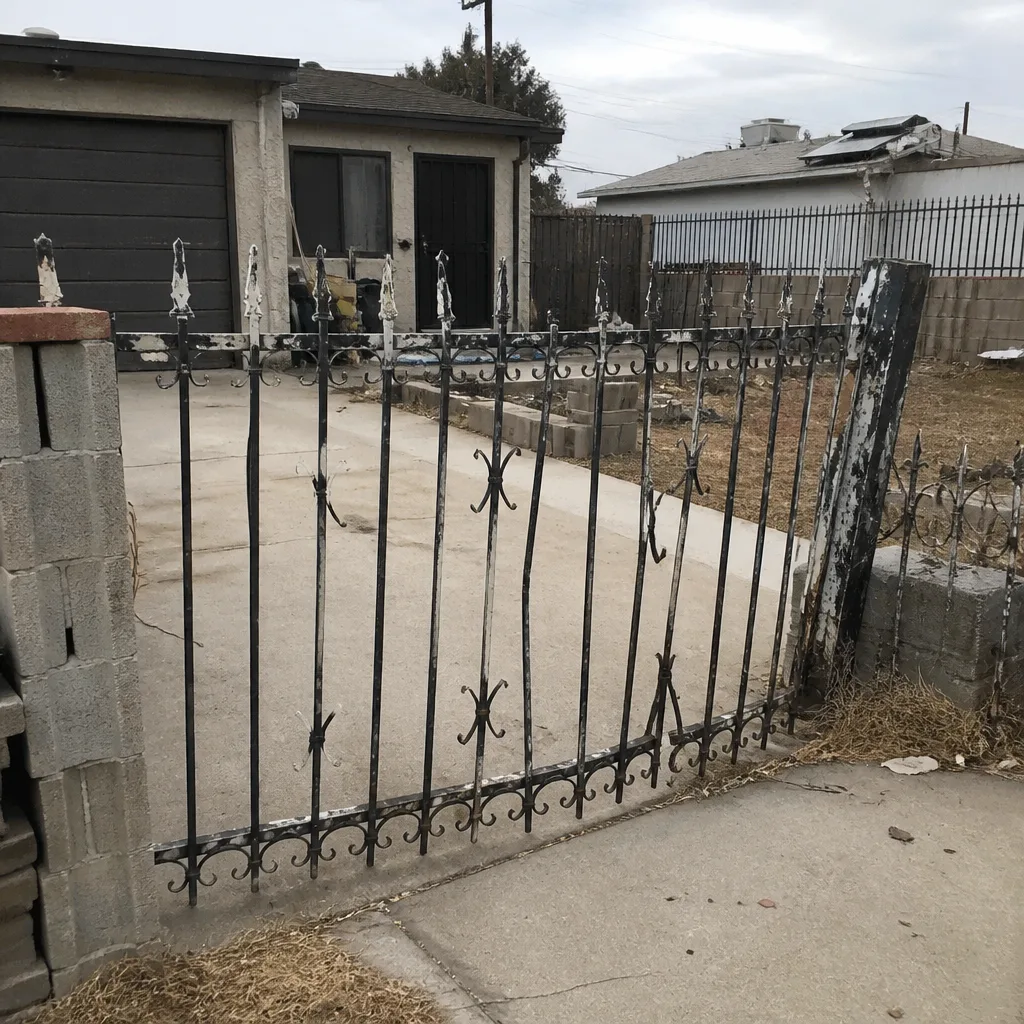
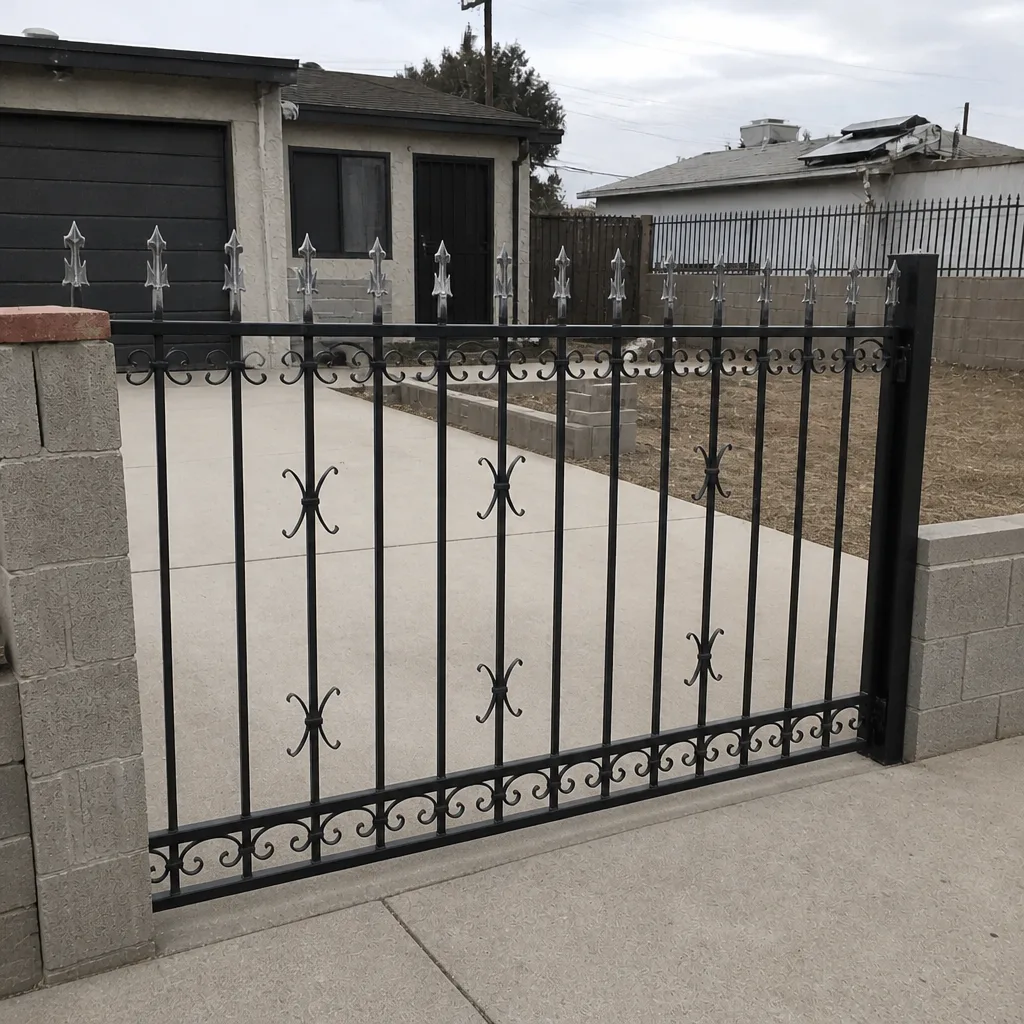
See the difference
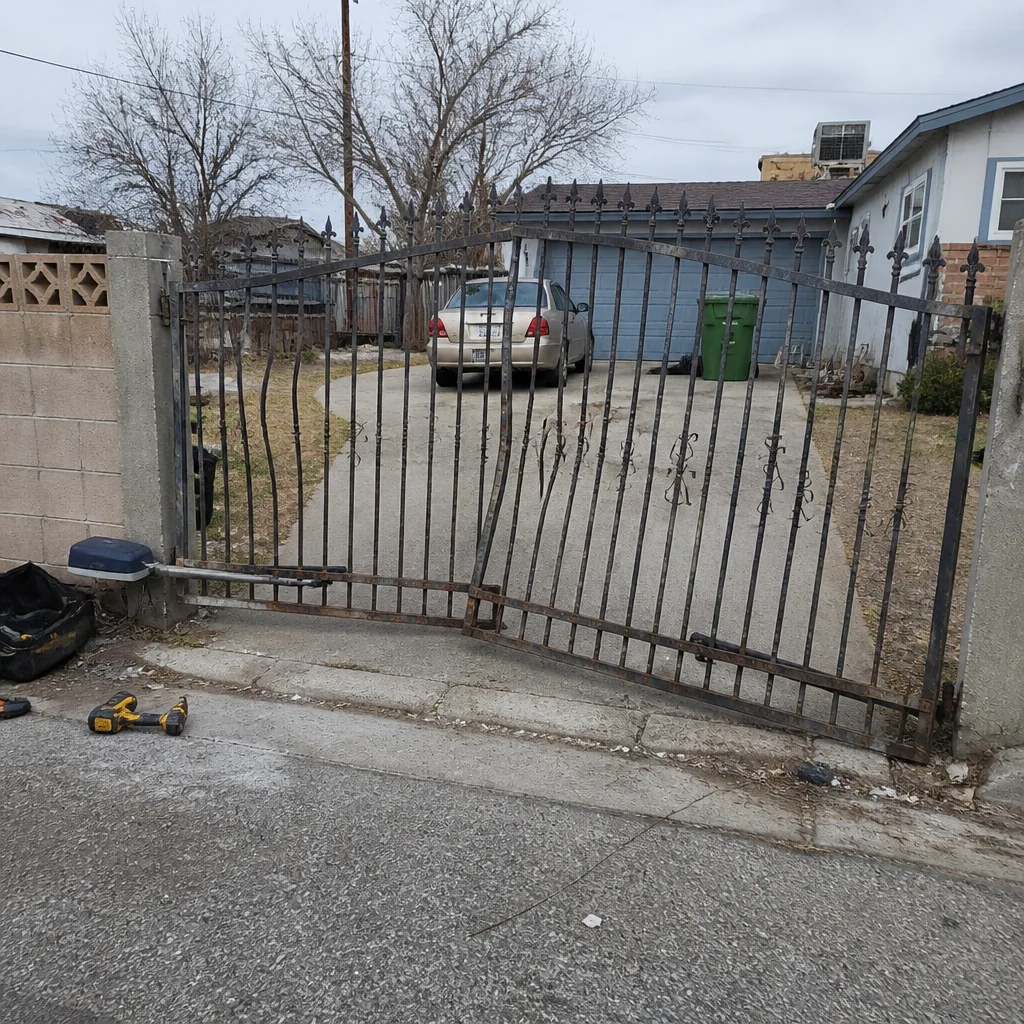 Before
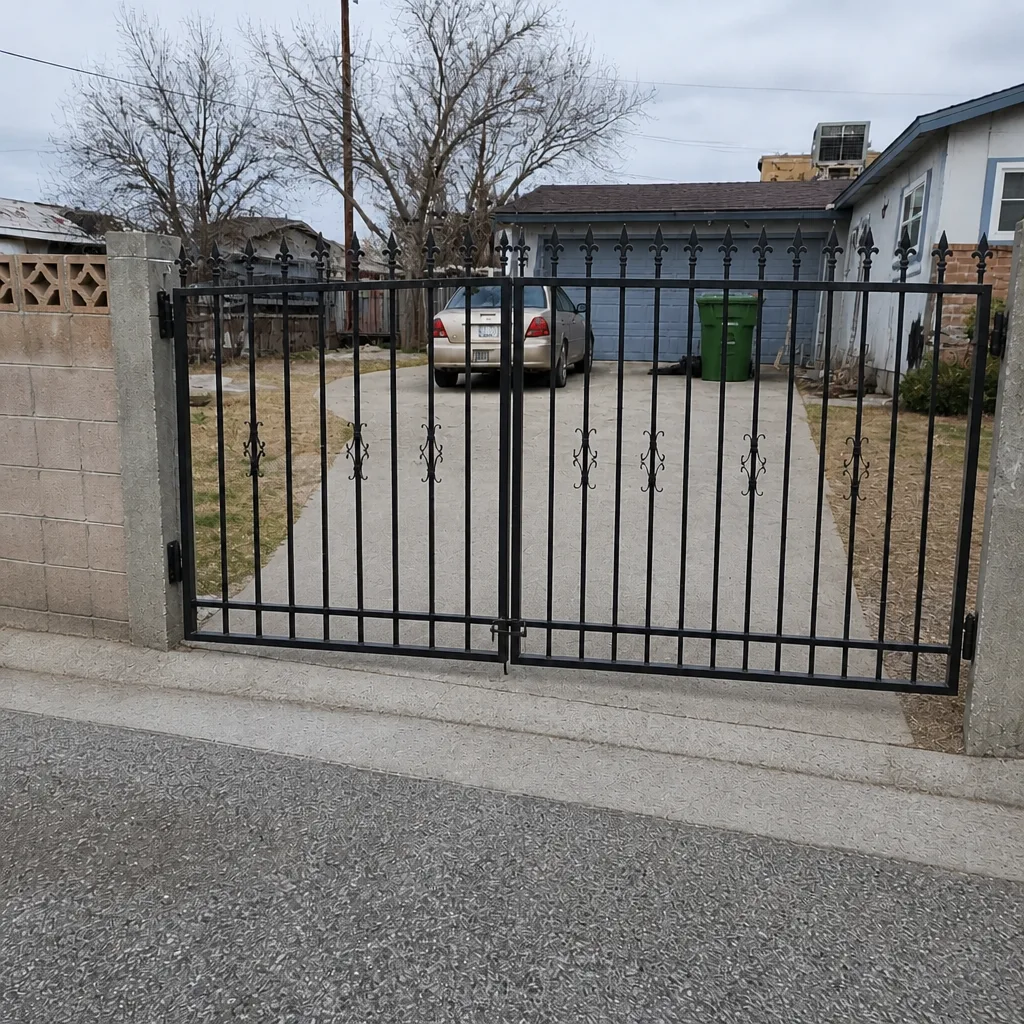 After
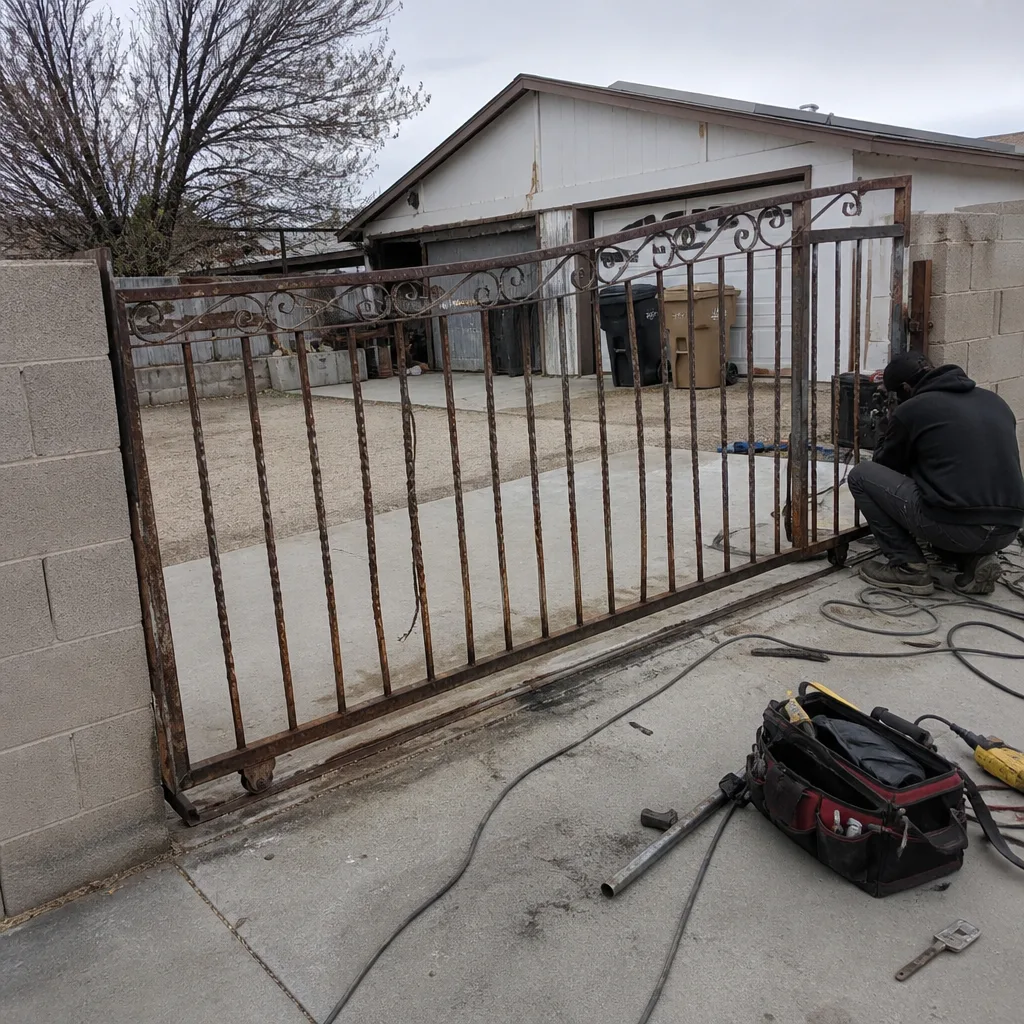 Before
 After
 Before
 After
When to Call a Professional
Call a professional any time a repair involves welding, post resets, loaded springs or counterbalances, 120-volt electrical work, or any component whose failure could injure someone. Call if the gate binds, if the operator trips the breaker, if a post is leaning or the concrete at the base is cracked, or if the gate sags suddenly with no obvious cause. Call if you’re seeing evidence of a previous repair that’s made the current one harder. And call if the repair looks like it will take more than an afternoon, because the total cost usually comes out lower than a weekend project gone sideways. Gatewood Fence & Gate Sunrise Manor offers free estimates in Sunrise Manor. Call (844) 761-8729 for a quote, and a live person answers, day or night. We’ll give you a written estimate and a second opinion on any quote you already have, at no charge.
Frequently Asked Questions
Yes, for lubrication, latch adjustment, sensor cleaning, hinge tightening, battery swaps, and visual inspections. These are genuinely safe for a careful homeowner and save real money. Anything involving welding, post resets, springs, or electrical work should go to a pro. Call (844) 761-8729 if you’re on the fence about which side a repair falls on.
Yes. A loaded counterbalance spring on a slide or overhead gate can release without warning and cause serious injury. This is not a repair to attempt with a tutorial. It belongs to a trained professional with the right tools and insurance. Call (844) 761-8729 and we’ll take a look.
It depends entirely on the task. Lubrication costs a can of spray and saves a service call. A pro post reset is the fair comparison for a serious sag and usually pays for itself against a failed DIY attempt within a year. We quote every job before work starts, so you always know the number first. Call (844) 761-8729 for a free estimate.
We’re certified to service LiftMaster, FAAC, BFT, Linear, Viking, Ghost Controls, DoorKing, Elite, and Mighty Mule. That covers most residential and light commercial operators in Sunrise Manor. If you’re not sure of your model, we can identify it on-site. Call (844) 761-8729.
Yes, and we do it regularly. The repair cost goes up because we have to bring the gate back to a known-good baseline before fixing the original problem. The same 90-Day Done Right Promise applies, and we’ll show you what we found before we start. Call (844) 761-8729 for a free second opinion on any written estimate.
Yes. There’s a permanent 10% discount for seniors and veterans, and it stacks with the $40 off any repair over $200. We also waive the trip charge inside the county. That’s upfront, no haggling. Call (844) 761-8729 and we’ll apply it to your quote.
The Bottom Line
Lubrication, latch adjustment, sensor cleaning, and seasonal inspection are safe, cheap, and worth doing yourself. Welding, post resets, loaded springs, and electrical work are not, and the cost of a failed attempt is usually higher than the pro bill. In Sunrise Manor, the dry heat and dust wear on gate hardware fast, so the safe list matters more than usual. Make the call on a repair based on what happens if it goes wrong, not on whether you feel handy that weekend. If it involves load, power, or a loaded spring, call a pro. Gatewood Fence & Gate has the tools, the on-site welding, and the 90-Day Done Right Promise to back it up.
If you’d rather not guess, call (844) 761-8729 for a free estimate in Sunrise Manor. A live person answers 24/7, we quote before any work starts, and we bring a second opinion on any written estimate you already have at no charge. Our technicians have up to 25 years of experience on gates, operators, and access control. We’ll tell you straight whether a repair is worth your weekend or ours.
Written by the team at Gatewood Fence & Gate Sunrise Manor.