
Last updated November 18, 2026
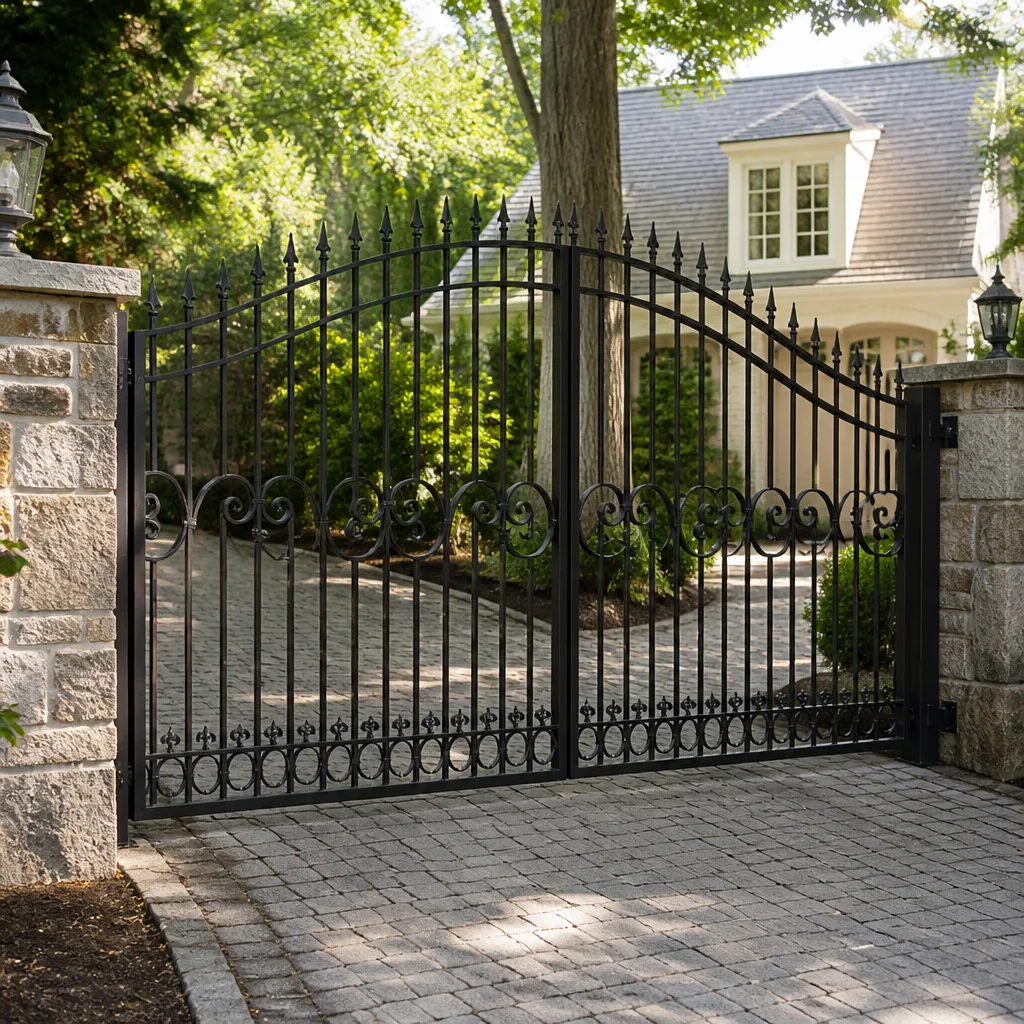 Wrought iron
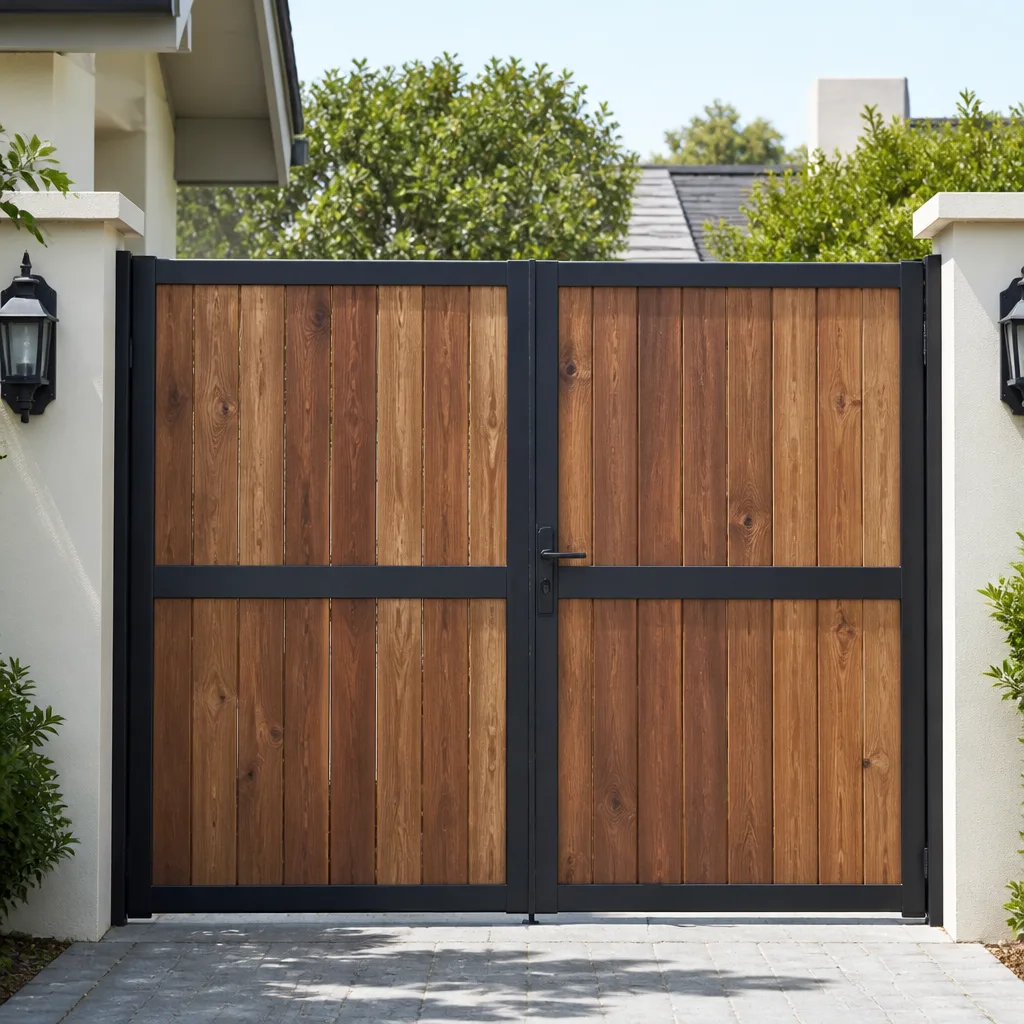 Wood & steel frame
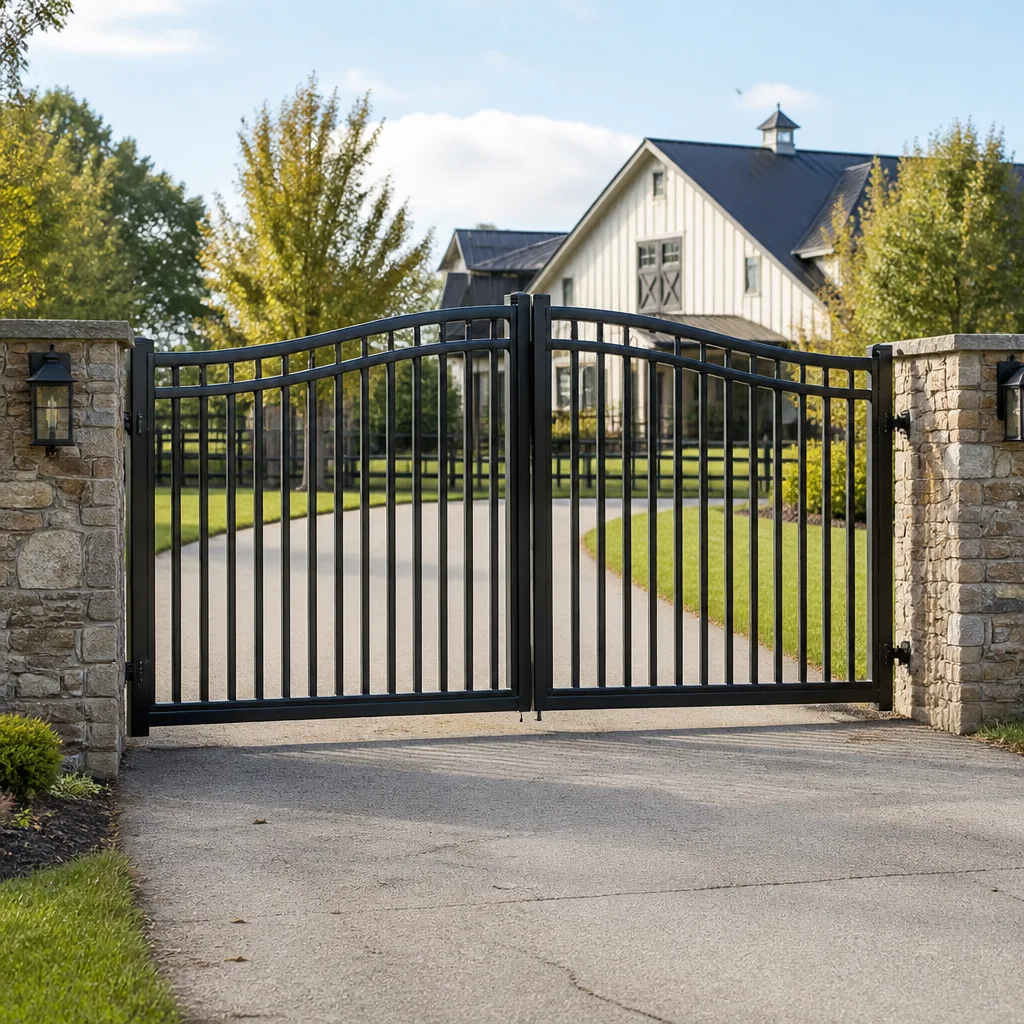 Farm & ranch
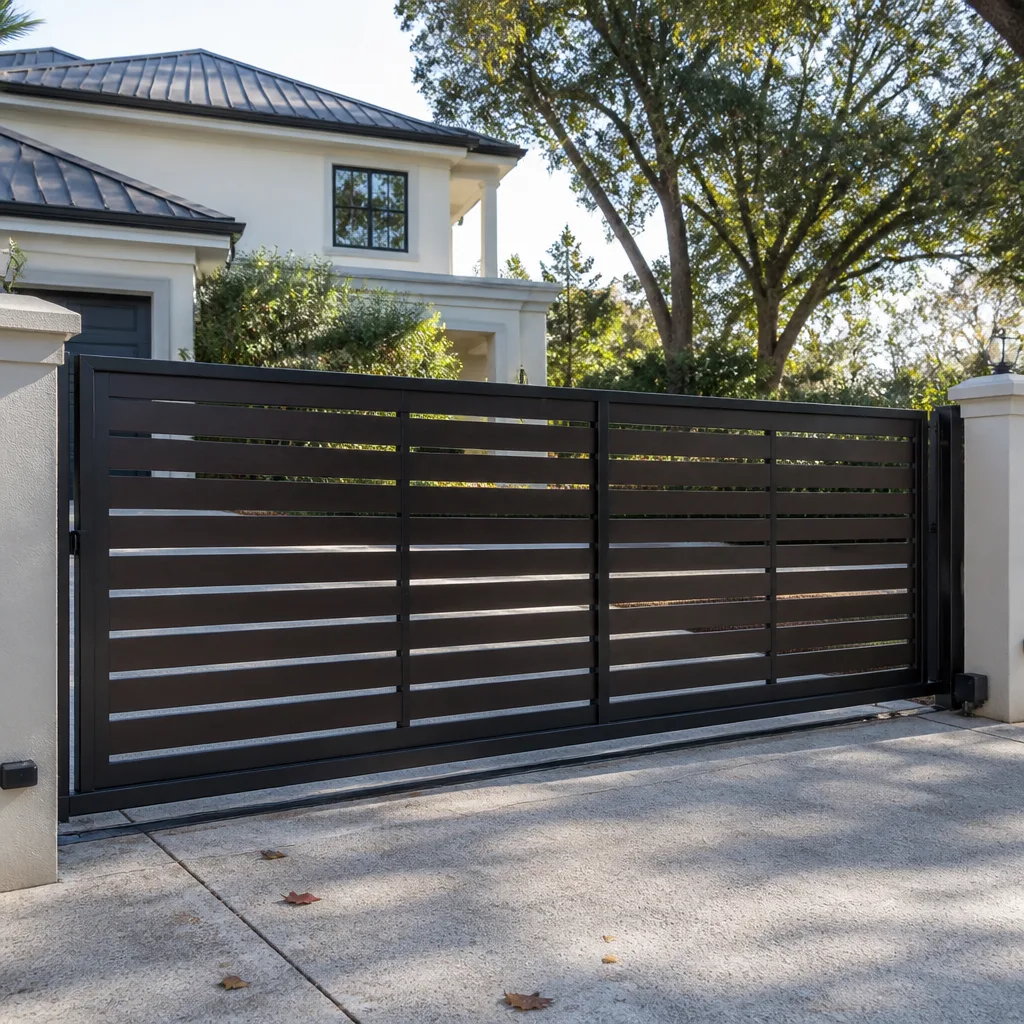 Sliding driveway gates
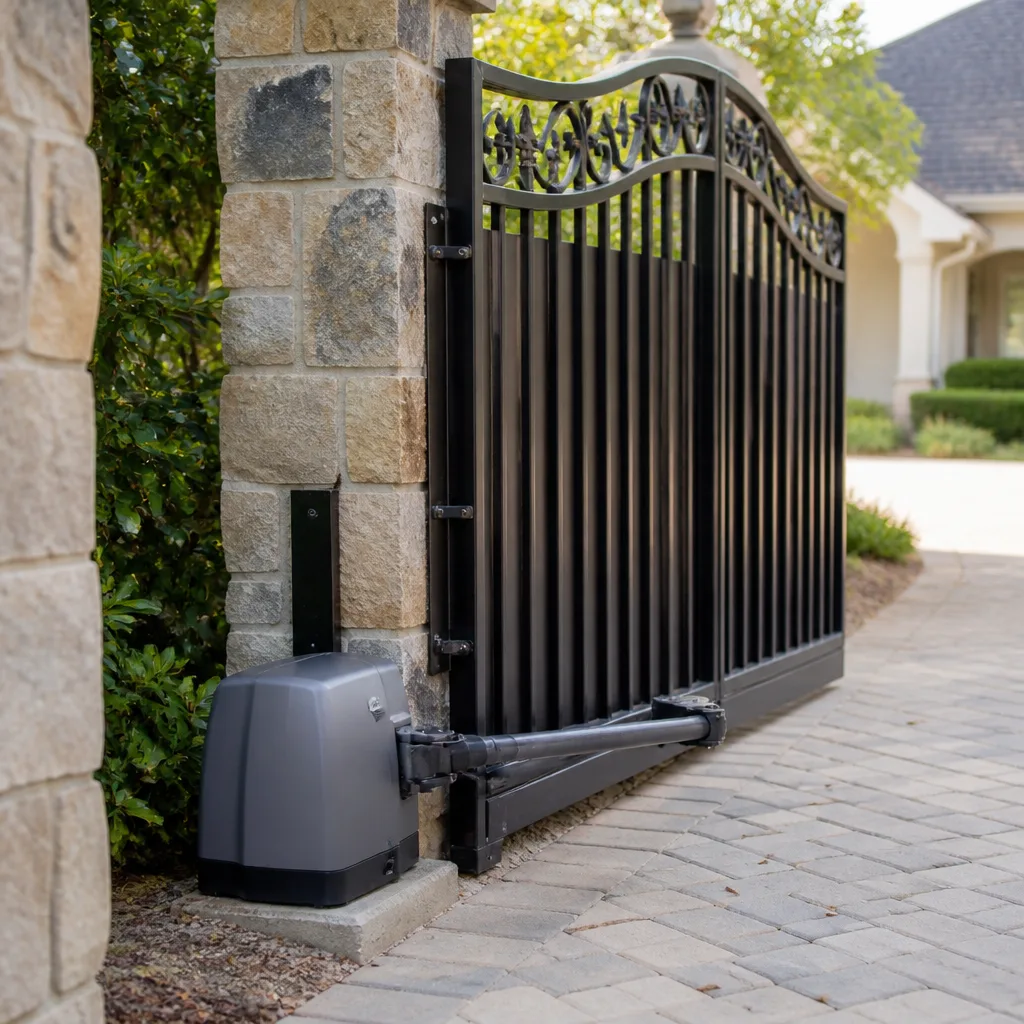 LiftMaster operators
Free on-site gate assessment - hinges, posts, and your LiftMaster or Nice gate operator checked before anything is quoted
The assessment is free and the quote is the invoice.
Get your free estimateGate Repair Warning Signs Every Homeowner Should Know
The gate that “just stopped working one day” almost never did. In our experience across Sunrise Manor, the failure was usually six months in the making – three or four small things the homeowner wrote off as the gate being a little finicky. A hesitation on the opener. A latch that needed an extra shove. A drag that only showed up in the cool of the morning. Gates send warnings long before they quit, and the homeowner who learns to read them usually spends half what the one who waits does. This guide walks through each warning stage, a 90-second inspection you can run yourself, and the point where you should stop using the gate entirely.
Quick Answer
The clearest gate repair warning signs are intermittent hesitation on the opener, a gate that drags or needs an extra push at the latch, rust streaking from weld points, and any visible crack at a weld or a post that rocks when pushed. Early signs mean schedule a repair within weeks; a cracked weld, a rocking post, or a roller off its track means stop using the gate today and call a professional.
Styles & brands we work with
- Wrought iron
- Wood & steel frame
- Farm & ranch
- Sliding driveway gates
- LiftMaster operators
Table of Contents
- The Early-Warning Signs Most Homeowners Dismiss
- The Mid-Stage Signs That Mean Weeks, Not Months
- The Critical Signs That Mean Stop Using the Gate Today
- The 90-Second Visual Inspection
- Why Ignoring the Small Signs Gets Expensive
- Sunrise Manor Weather and What It Does to Gates
- Common Mistakes to Avoid
- When to Call a Professional
The Early-Warning Signs Most Homeowners Dismiss
The first stage is the quietest, and it’s where the cheapest fixes live. These are the things people tell us they noticed “for a while” before anything actually broke. Caught here, most are adjustments and a little on-site welding – not replacements.
- Intermittent hesitation on an automatic opener. The gate stutters, pauses, then completes the cycle as if nothing happened. That pause is usually a binding hinge, a tired roller, or a control board starting to struggle. On a LiftMaster or FAAC operator, a brief hesitation often traces back to a limit switch or a worn gear before it ever reaches the motor itself.
- Slight ground drag that only shows up in the morning. Cool air tightens things up, and a gate that clears the ground at noon may scrape at 6 a.m. That’s a hinge or post settling, and it’s telling you the geometry has shifted.
- A latch that needs a little extra push. When you have to hip-check the gate to get it to catch, the gate has moved off its alignment. That’s a hinge-post problem, not a latch problem – and it’s the number-one sign people misread.
- A new rattle or squeak on the swing. New noises are new. Metal that has run quiet for years doesn’t start complaining on its own.
A gate sags in the hinge post, not in the middle – and that’s where we start looking. If you catch the drag or the latch push at this stage, you’re dealing with an adjustment and maybe a weld, not a rebuild. In Sunrise Manor, where the summer heat cycles metal hard, these early signs show up faster than newcomers expect.
The Mid-Stage Signs That Mean Weeks, Not Months
Stage two is where the timeline compresses. These signs mean the gate is actively degrading, and you have weeks – not months – before something fails outright. This is the window where a real repair still makes sense and a replacement still doesn’t.
- Visible rust streaking from weld points. Rust bleeding out of a seam or weld isn’t cosmetic. It means moisture has gotten inside the joint, and the weld is thinning from the inside out. That’s the beginning of a crack, even if you can’t see the crack yet.
- A gate that swings past its stop. If the gate travels further open or closed than it used to, a stop has worn or the post has shifted. Left alone, the gate starts stressing the frame every time it cycles.
- A motor that runs but doesn’t move the gate. You hear the opener working, but the gate sits still or creeps. On a Mighty Mule or Elite operator, that’s often a stripped gear, a slipping chain, or a failed clutch – all repairable, none of them a reason to replace a good gate.
- Hinges that have visibly pulled away from the post. If you can see daylight or a gap where the hinge meets the post, the fasteners are losing their grip. That’s a weld-and-reinforce job while it’s still small.
Show us a gate closing on its own and we’ll show you where it’s failing – a gate that drifts shut without help is usually running on a slope it didn’t have before, which means a post has moved. Sunrise Manor gates on sloped driveways show this one early.
The Critical Signs That Mean Stop Using the Gate Today
Stage three is the stop sign. These aren’t “schedule it soon” problems – they’re “operate it manually or leave it open and call someone today” problems. Pushing a gate past this stage is how a two-hundred-dollar repair becomes a full frame replacement, or worse, an injury.
- A visible crack at a weld. Any crack in a weld seam means that joint has lost its strength. Keep cycling it and the crack walks. Stop using the gate.
- A post that rocks when you push on it. Push the gate gently at the latch end. If the post moves in the ground, the foundation has failed. That’s a structural problem, and a heavy gate can come down on a person or a vehicle.
- A roller that has come off its track or a wheel that’s cracked. A gate running on a broken roller is a gate looking for a reason to jump the track entirely.
- Any sparking, burning smell, or repeated tripping at the opener. That’s an electrical fault. Stop and call – don’t keep resetting it.
Here’s the safety caveat we give every homeowner: gate openers and their wiring carry real current, and a heavy gate under tension can cause serious injury if it drops or swings unexpectedly. Don’t try to re-weld a cracked joint or rewire an operator yourself. This is work for someone trained to do it safely.
The 90-Second Visual Inspection
You don’t need tools to catch most of these. Run this once a month – it takes about a minute and a half – and you’ll spot problems while they’re still cheap. Work it in this order:
- Walk the full swing or slide with the gate in manual. Disengage the opener and move the gate by hand. It should move smoothly with light effort. Any binding, grinding, or heavy spot is a finding.
- Push gently on the latch end and watch the post. Any movement in the post itself, not the gate, is a red flag.
- Look at every weld and hinge for rust streaks or cracks. Get eye level with the joints. Rust bleeding from a seam is a warning even without a visible crack.
- Check the rollers and track (or the hinges, on a swing gate). Rollers should sit fully in the track; hinges should be tight against the post with no gap.
- Cycle the opener once and listen. Note any hesitation, new noise, or spot where the gate seems to fight itself.
- Test the safety edges and the auto-reverse. If the gate doesn’t stop and reverse when it meets an obstruction, that’s a safety failure – stop using it and call.
If two or more of these turn up something, that’s your cue to get a set of eyes on it. A quick look now beats a driveway full of broken gate later.
Why Ignoring the Small Signs Gets Expensive
The math on gate repair is unforgiving in one direction: the longer you wait, the more of the gate you have to pay to replace. A warning sign caught early is almost always a repair. A warning sign ignored long enough becomes a replacement, because the failure spreads from the part to the structure around it.
Take a rust streak at a weld. Caught early, it’s a clean-up and a re-weld on site – the gate stays in your driveway and you’re back in business. Ignored until the weld cracks, that same joint starts stressing the frame every time the gate moves. Now you’re not fixing a weld, you’re repairing or replacing the frame that weld held together. The part didn’t get more expensive. The scope did.
The same pattern shows up on openers. A hesitation on a LiftMaster operator that traces to a limit switch is a small fix. Let it run until the gear strips, and you’re into a gear replacement or a new operator. Fix the panel without the post and you’ll fix it twice – that’s the whole lesson of this guide in one line. The cheapest gate repair is always the one done at the first sign, and the reason we push repair-first is that most of what we’re called out to “replace” didn’t need replacing. It needed catching sooner.
If you’re weighing repair against replacement right now, our Gate Repair in Sunrise Manor page walks through how we decide, and a Gate Motor & Opener in Sunrise Manor service call can tell you whether your operator is salvageable before you spend on a new one.
Sunrise Manor Weather and What It Does to Gates
Gates in Sunrise Manor live a harder life than gates in milder climates, and the warning signs arrive on a local schedule. The summer heat is the big one – metal expands and contracts through triple-digit days, and that cycling works welds and fasteners loose faster than most homeowners expect. A gate that ran quiet through spring can start rattling by July.
Then there’s the dust and the dry wind, which work grit into hinges, rollers, and tracks. Grit is abrasive. It grinds down a roller a little at a time until the gate is running on a flat spot and dragging – and the drag is the first thing you notice, long after the wear started. The monsoon season flips it the other way, dumping rain that finds every seam and every weld that was starting to fail. That’s why rust streaks show up in a burst after a storm rather than gradually.
What this means for you: inspect more often here than the “once a season” advice you’ll read elsewhere. Monthly is right for a Sunrise Manor gate, and right after the first big monsoon rain is a good habit to build. If you’re adding a new gate and want it built for this climate from the start, our Gate Installation in Sunrise Manor page covers how we spec posts and welds for the local heat and dust.
Common Mistakes to Avoid
- Treating a latch that needs a push as a latch problem. It’s almost always a hinge-post alignment issue. Fix the latch and you’ll be back in a month – fix the post and you’re done.
- Greasing everything and calling it maintenance. In Sunrise Manor’s dust, the wrong lubricant turns into a grit magnet that wears rollers faster. Use the right product, sparingly, on the right parts.
- Replacing the opener when the gate is the problem. A motor that “runs but doesn’t move the gate” is often a binding gate, not a dead operator. Replacing the opener fixes nothing and costs plenty.
- Painting over rust streaks at welds. Paint hides the warning. It doesn’t stop the weld from thinning from the inside. Treat the joint, don’t mask it.
- Letting a “handyman” re-weld a cracked gate joint without knowing the load. A gate weld carries the weight of the whole gate. Sloppy work there is how a gate comes down. We see this left behind more than we’d like.
- Ignoring the auto-reverse and safety edges. A gate that doesn’t reverse on contact is a safety failure, full stop – especially with kids or pets around. Don’t wait on it.
- Waiting for “one day” to become “today.” The single most expensive mistake is the one this whole guide is about: writing off a warning sign as normal wear until the gate quits.
When to Call a Professional
Call when you hit any stage-three sign: a cracked weld, a rocking post, a roller off its track, or an opener that sparks or trips the breaker. Stop using the gate and call. Call sooner if two or more stage-two signs show up together, if the gate won’t reverse on contact, or if you simply aren’t sure what you’re looking at – a free second opinion on any written estimate costs you nothing and tells you whether the job is a repair or a replacement. There’s also no shame in calling at stage one: an adjustment now is the cheapest repair you’ll ever buy.
Gatewood Fence & Gate Sunrise Manor offers free estimates in Sunrise Manor – call (844) 761-8729. A live person answers, day or night, and every job carries our 90-Day Done Right Promise in writing.
See the difference
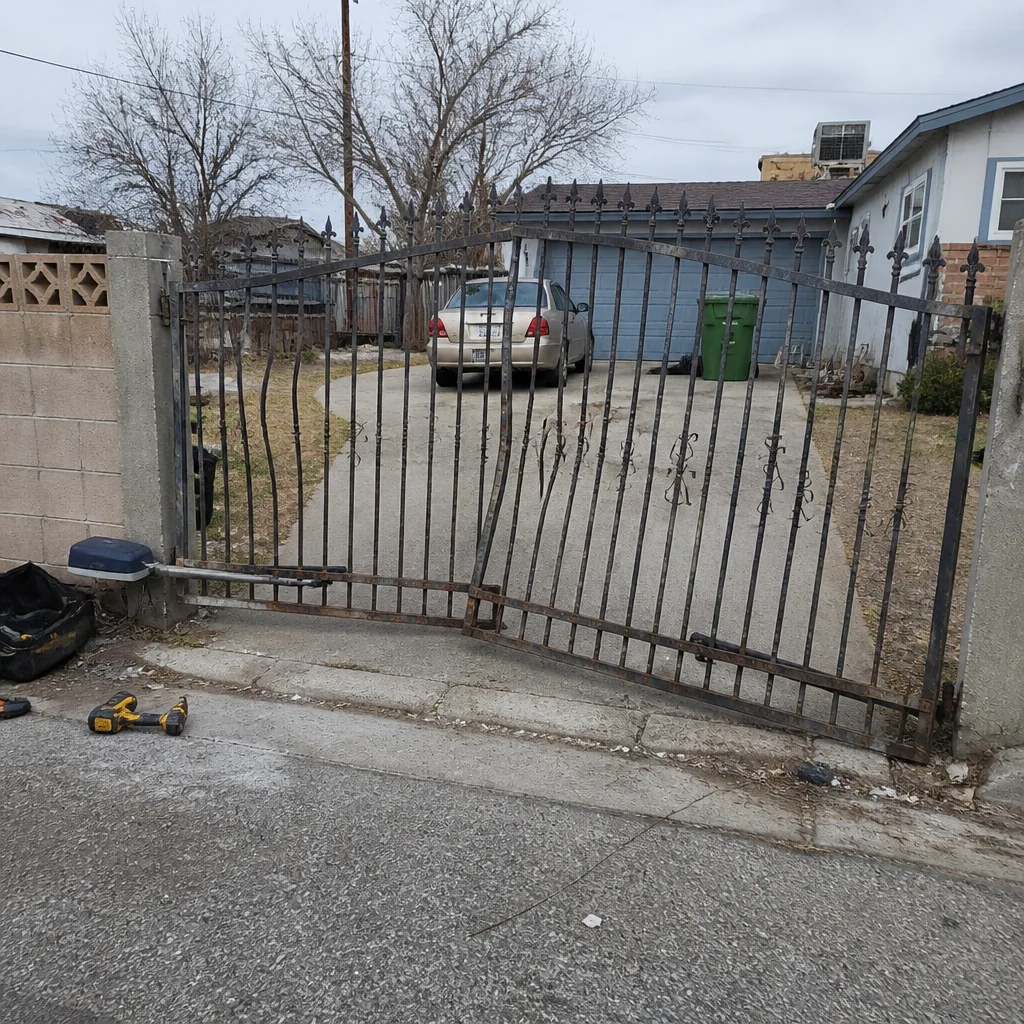 Before
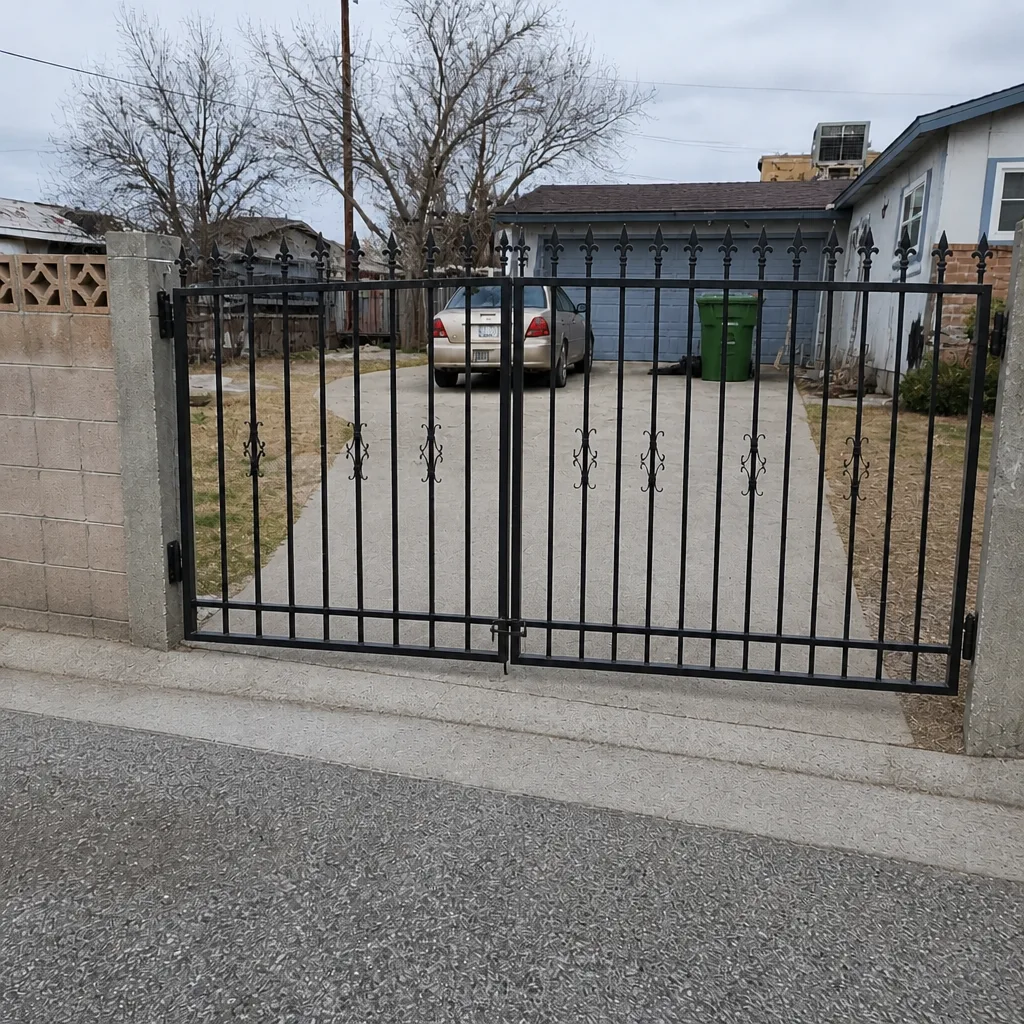 After
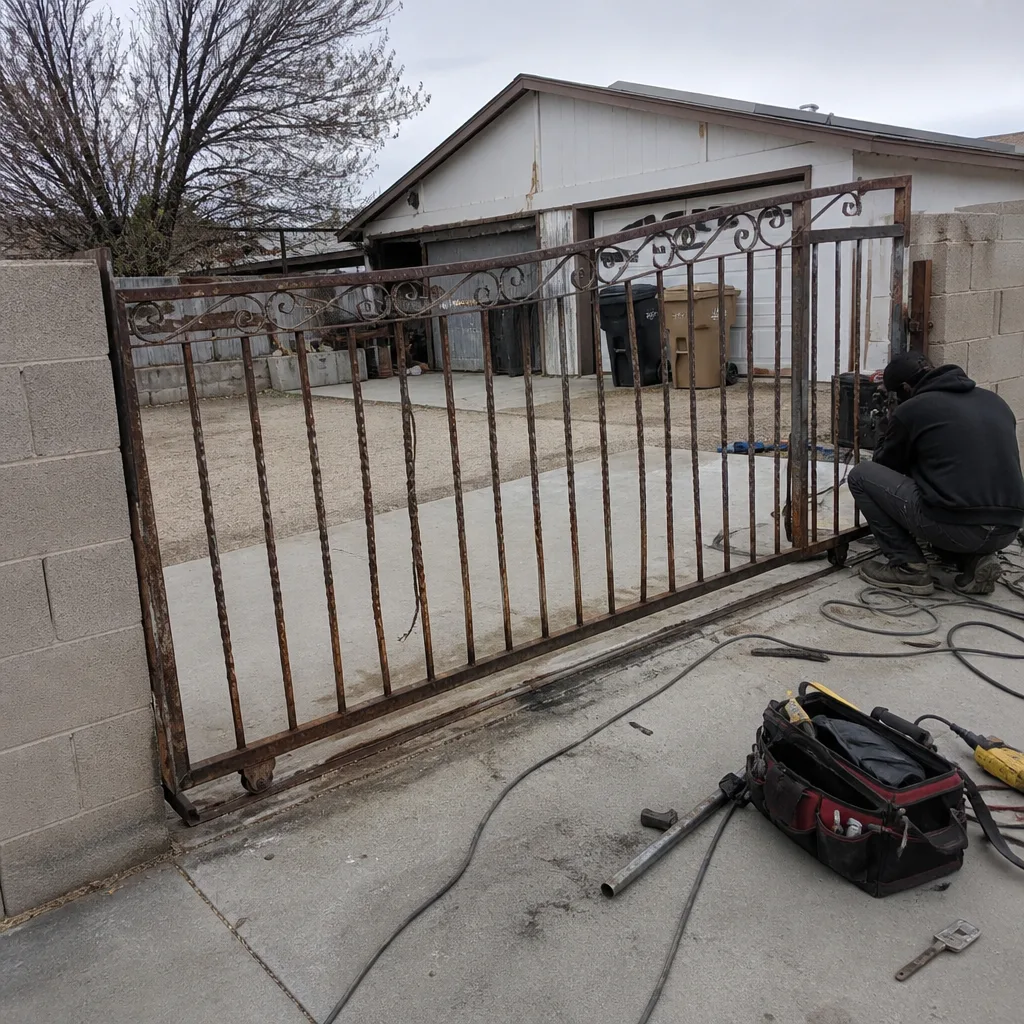 Before
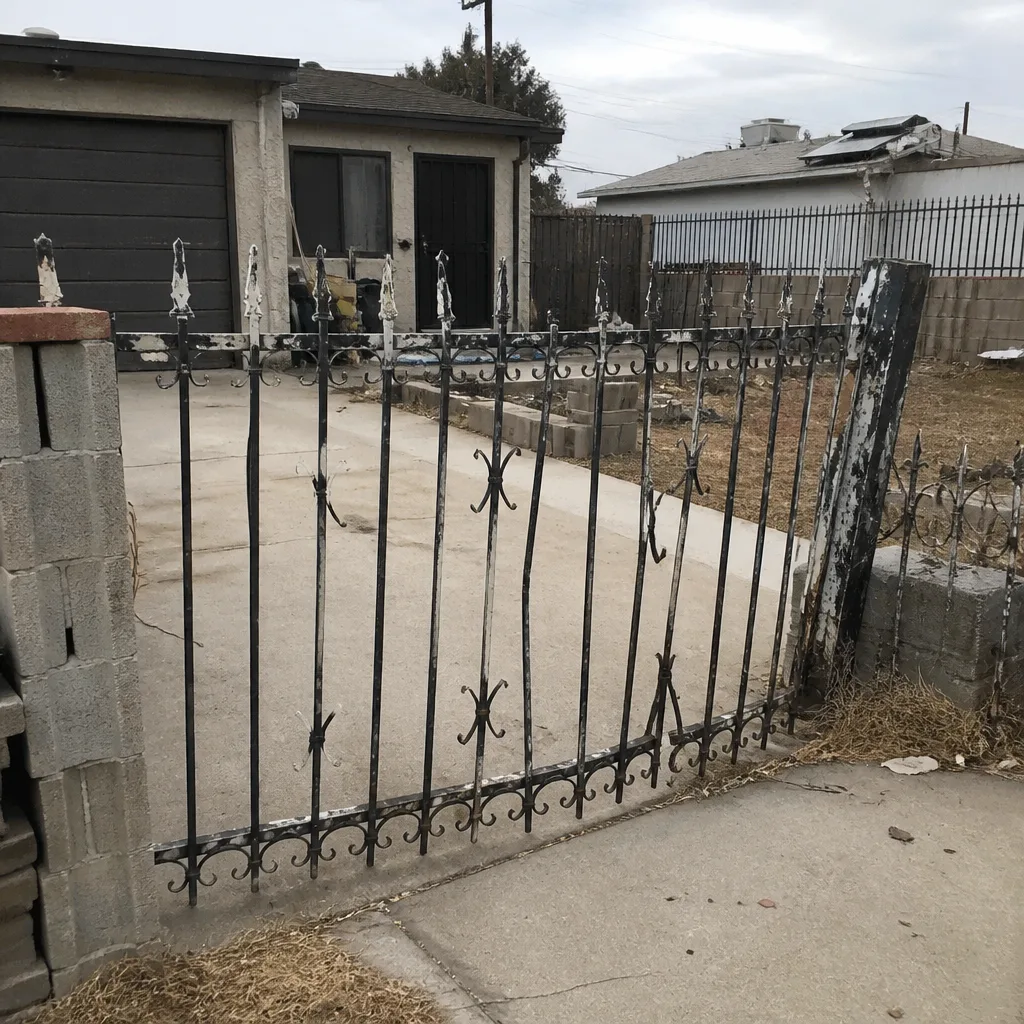
 After
 Before
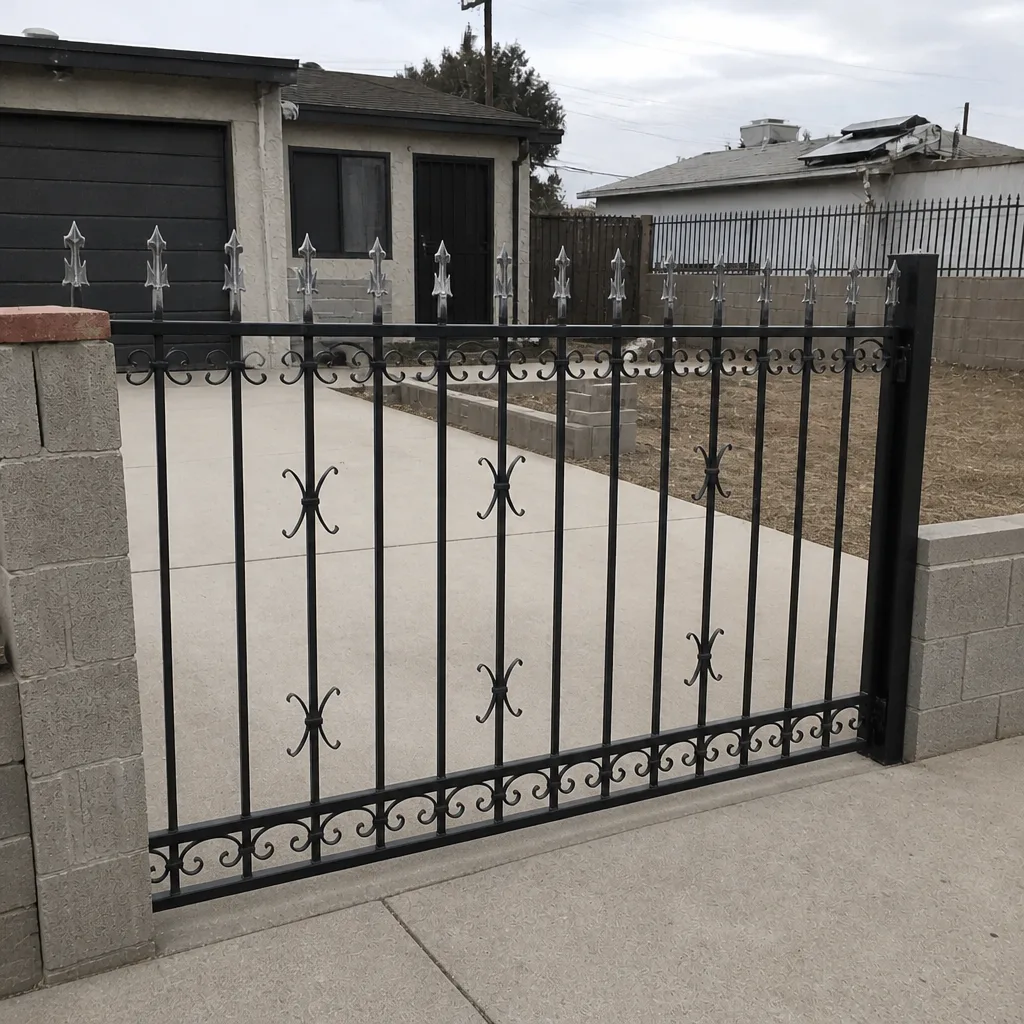 After
Frequently Asked Questions
The first signs are usually intermittent hesitation on the opener, a slight ground drag that only shows up in the morning, and a latch that needs an extra push. These are all adjustment-stage problems – catch them here and most are fixed with a hinge tweak or a small weld rather than a replacement.
No – a cracked weld on a gate should be handled by a professional. That joint carries the weight of the entire gate, and a bad re-weld can cause the gate to fail and injure someone. Stop using the gate and call someone trained and equipped to do it safely.
If the opener runs but the gate doesn’t move smoothly, or hesitates and drags, the gate is usually the problem – a binding hinge, a worn roller, or a shifted post. If the opener is silent or trips the breaker, the operator or its wiring is the issue. A service call sorts out which in a few minutes.
Monthly is right for Sunrise Manor’s heat and dust, plus a look after the first big monsoon rain. The summer heat loosens welds and fasteners, and dust grinds down rollers – so wear shows up faster here than in milder climates. A 90-second walk-around catches most of it.
Most adjustment and weld repairs fall into a modest range, while a post or frame repair costs more – and the difference between catching a sign early and waiting is roughly the difference between a repair and a replacement. We quote the price and agree on it before any work starts, so there are no surprises at the door. Call (844) 761-8729 for an exact quote – estimates are free.
Yes – if your gate has a cracked weld, a rocking post, or a roller off its track, call and we’ll get a live person on the line right away and work to get eyes on it the same day where we can. Safety failures don’t wait for a scheduled appointment. Call (844) 761-8729 and tell us what you’re seeing.
The Bottom Line
Gates don’t fail suddenly. They give you a sequence of warnings – a hesitation, a drag, a latch that needs a push, then rust streaks and a gate swinging past its stop, and finally a cracked weld or a rocking post that means stop. The homeowner who reads the second sign spends roughly half what the one who waits for the fifth does, because early signs are repairs and late signs are replacements. All it takes is a 90-second look once a month. Start there, and when something shows up, call (844) 761-8729 for a free estimate. The name is on the shop, and the shop is down the road – that’s the oldest accountability there is.
Written by the team at Gatewood Fence & Gate Sunrise Manor.