
Last updated November 18, 2026
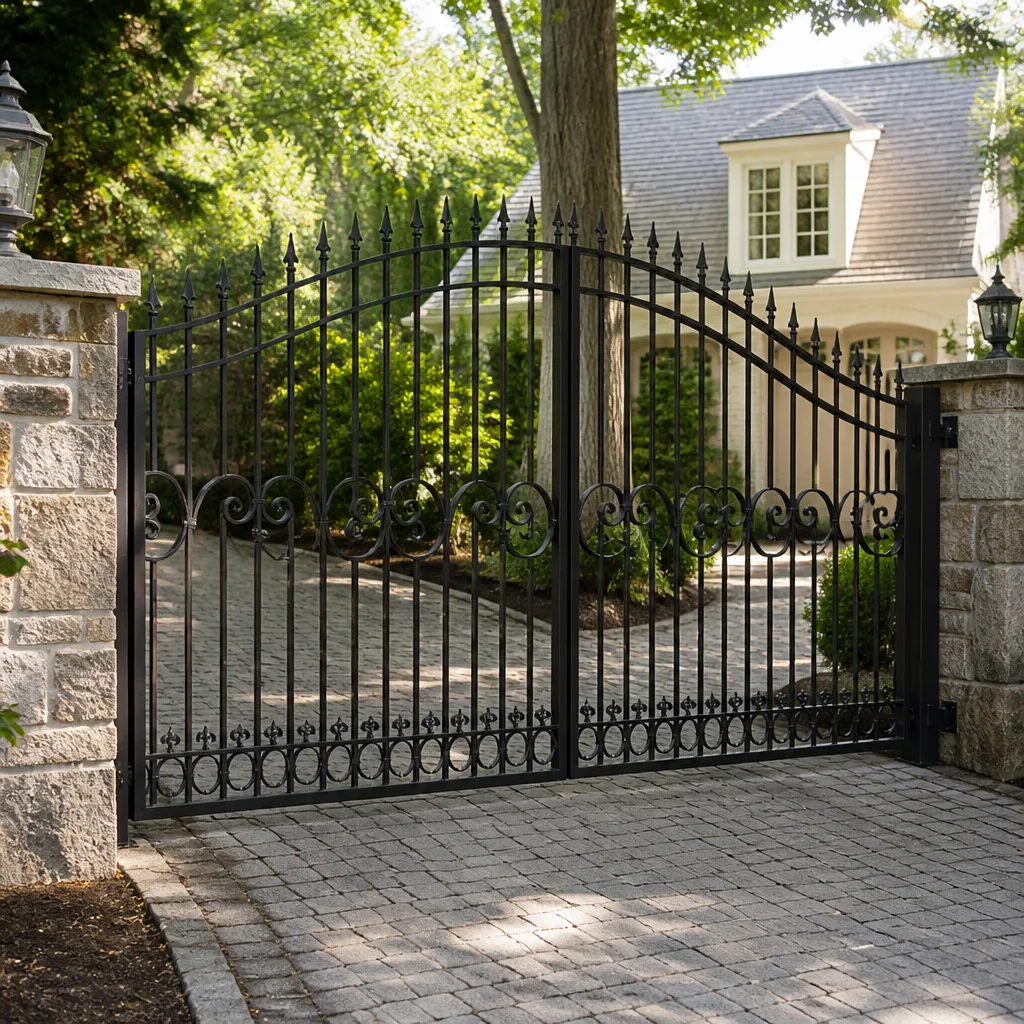 Wrought iron
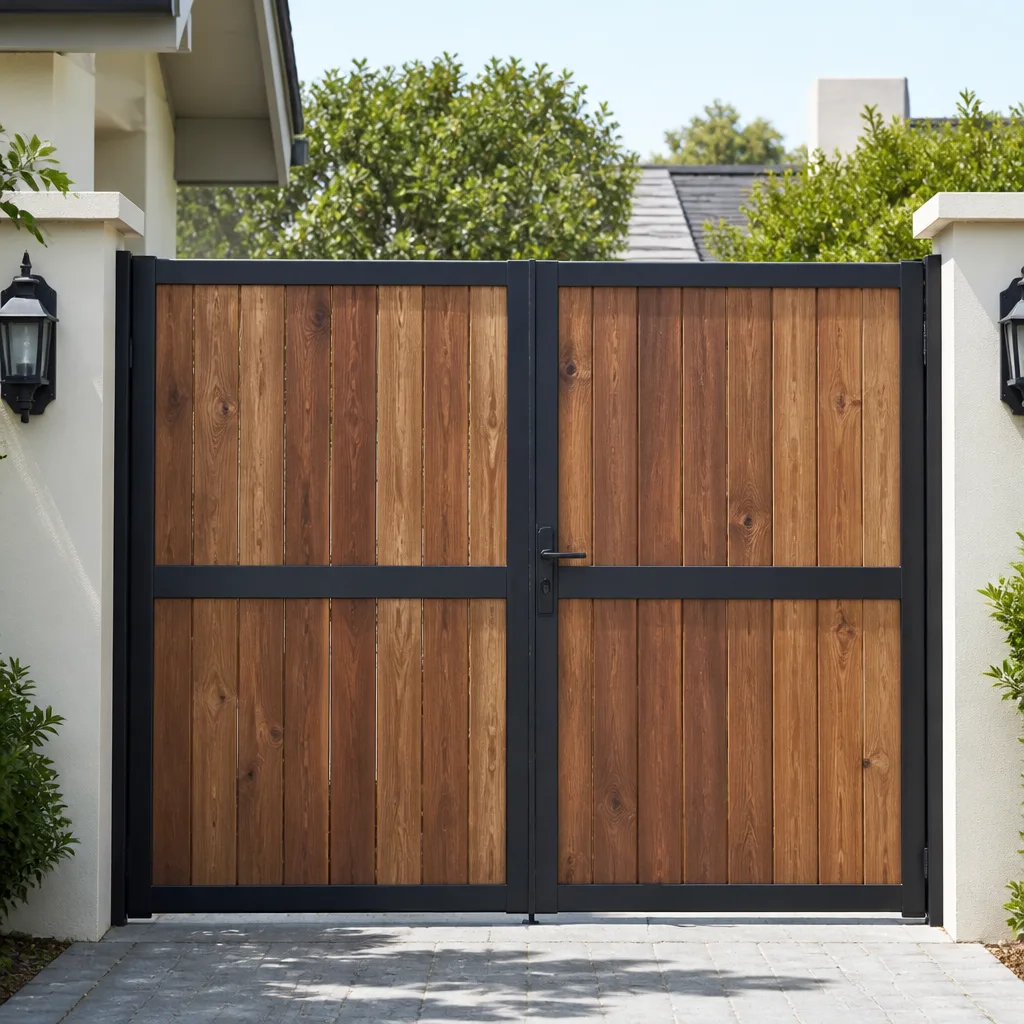 Wood & steel frame
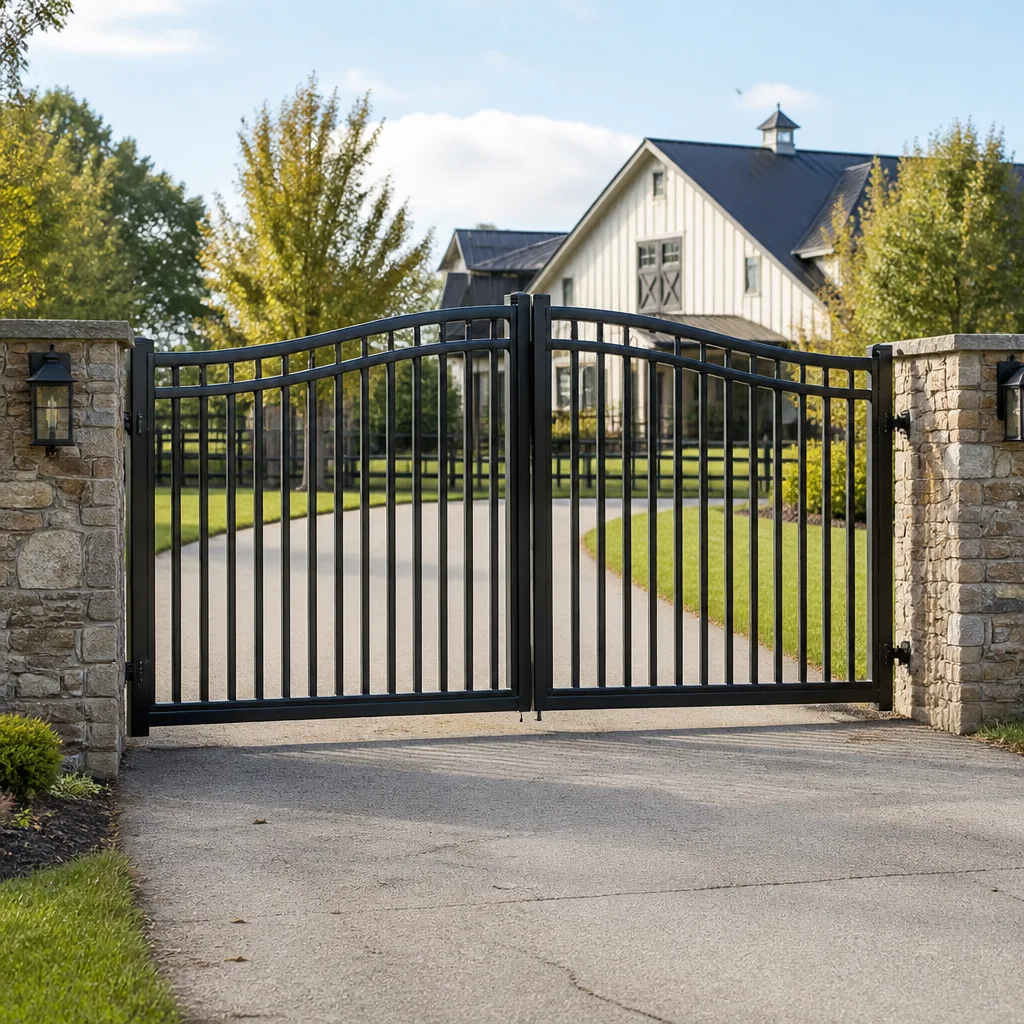 Farm & ranch
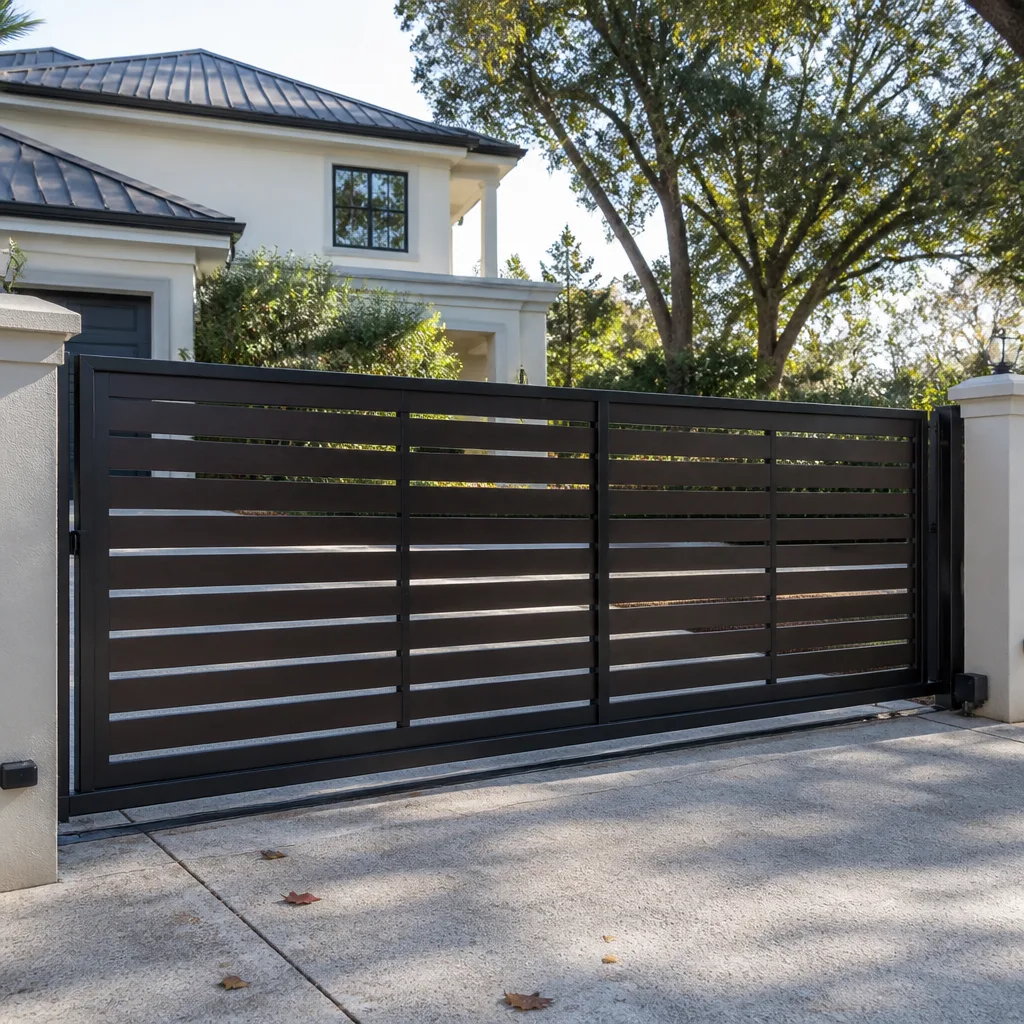 Sliding driveway gates
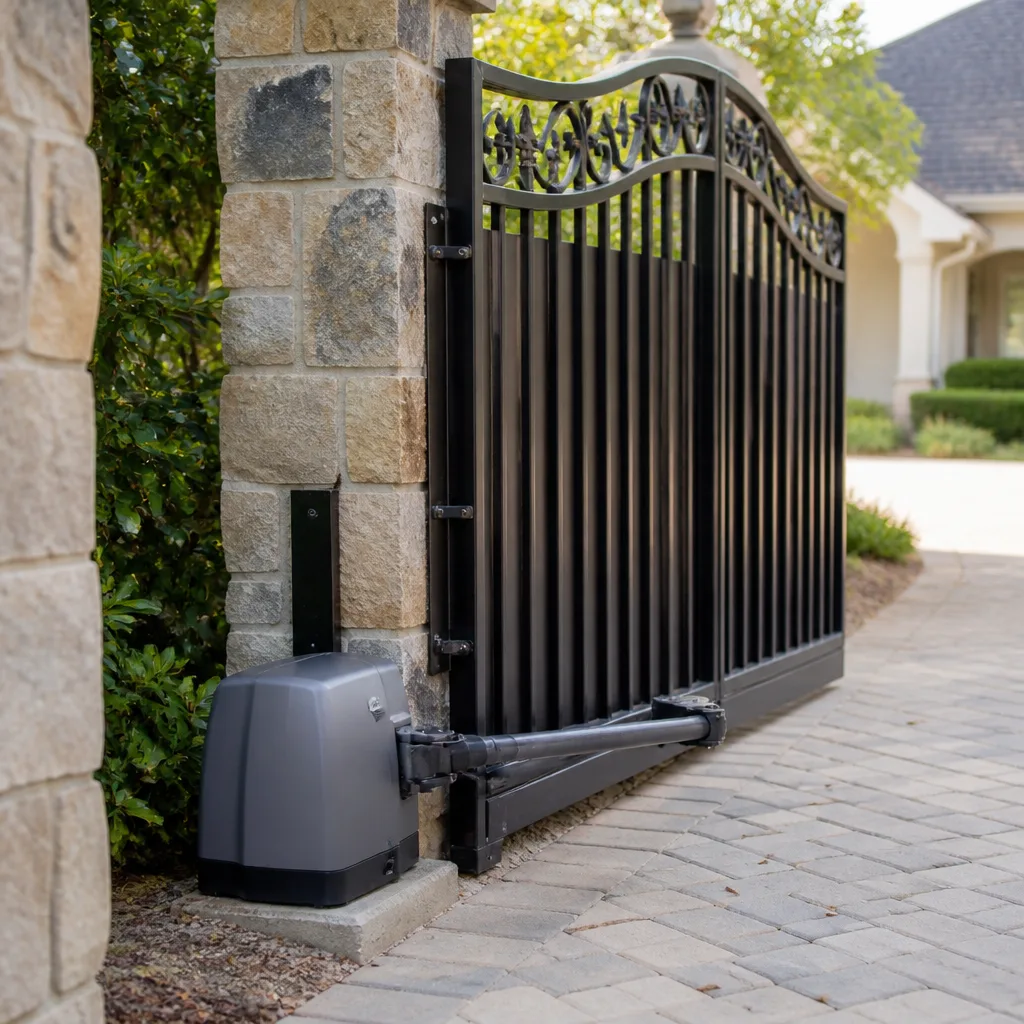 LiftMaster operators
Free on-site gate assessment - hinges, posts, and your LiftMaster or Nice gate operator checked before anything is quoted
The assessment is free and the quote is the invoice.
Get your free estimateSeasonal Gate Repair Care for Sunrise Manor: Year-Round Homeowner’s Guide
The gate calls we dread most come in late September. The monsoon has just ended, the hardware has expanded and contracted for ninety days straight, and nobody has checked anything since April. What shows up in our inbox is a gate that’s been dragging for weeks, a hinge post that’s started leaning into the caliche, and a homeowner asking whether it can be fixed by Friday. Almost always, the answer is yes. But almost always it costs more than it would have in February.
Sunrise Manor doesn’t have the four seasons most gate care guides assume. We get a long, brutal heat cycle from May through September, a monsoon window that runs July into September, and a mild winter that lulls people into skipping the one inspection that actually matters. This guide lays out a year-round schedule built for this valley, not a national template, and it takes under two hours total across four checkpoints. Read on and you’ll know exactly what to look at, when, and why.
Quick Answer
Seasonal gate maintenance in Sunrise Manor revolves around four checkpoints that match the local climate: a late-spring hardware pass before the heat cycle starts, a mid-monsoon drainage and post check, a winter fatigue-crack inspection between November and February, and a spring prep in March before temperatures climb. Homeowners who do all four catch roughly 80% of the failures we’d otherwise be called out to fix at 9 pm in July.
Styles & brands we work with
- Wrought iron
- Wood & steel frame
- Farm & ranch
- Sliding driveway gates
- LiftMaster operators
Table of Contents
- Why Sunrise Manor Gates Don’t Follow a Standard Schedule
- Summer: Why Sunrise Manor Is the Highest-Stress Period for Metal Gates
- Monsoon and Caliche: What Happens Around Your Post Bases
- The Winter Inspection Window You Shouldn’t Skip
- Spring Prep Timed to Sunrise Manor’s Climate
- The Four-Checkpoint Annual Calendar
- Opener and Automation Care Through the Year
- What to Fix Now vs. What Can Wait
Why Sunrise Manor Gates Don’t Follow a Standard Schedule
Most seasonal gate guides are written for temperate climates with four roughly equal seasons. Sunrise Manor doesn’t work that way. Summer surface temperatures on black or bronze metal gates routinely push well past 140°F, and interior gate hardware – hinges, latches, strike plates – cycles through expansion and contraction every single day of the summer, not just across the year. That daily cycle is what opens weld seams, loosens hinge bolts, and cracks bushings in gate motors. It’s a different failure mode than the freeze-thaw damage most national guides warn about.
The soil underneath your gate is its own story. Much of the east valley, including the Sunrise Manor neighborhoods north of Charleston and out toward the Nellis corridor, sits on caliche – that cemented calcium-carbonate layer that does a great impersonation of concrete when it’s dry and turns to a mushy, expanding mess when it’s saturated. Caliche gives up water slowly, which means a monsoon hit in early August is still moving soil in mid-September. When you see a hinge post that seems two degrees more crooked than it was in the spring, caliche is usually the culprit.
And the winter is mild enough that gates just don’t get checked. No snow load, no obvious freeze damage, nothing that screams “you should have looked at me.” That’s the trap. Winter is actually the best window to catch hairline cracks and weld fatigue before the summer heat cycle reopens them into real breaks. For a broader perspective on how these failures show up year-round, our gate repair in Sunrise Manor page covers the common repair scenarios we see most.
- Heat: daily expansion cycles from May through September, with hardware and welds doing the most work.
- Monsoon: July through September, driving water into caliche and stressing post bases.
- Mild winter: no freeze damage, but plenty of accumulated fatigue on metal gates.
- Spring wind: March and April gusts push on already-stressed hinge posts and operator arms.
Summer: Why Sunrise Manor Is the Highest-Stress Period for Metal Gates
June through September is the toughest stretch a gate in Sunrise Manor will see all year. Metal surfaces hit temperatures that make bare skin contact dangerous, and the constant expansion cycle does real work on every weld seam. What looks like a small crack in July is often a hairline stress line from March that finally let go in the afternoon heat. Gate operators aren’t spared either: a LiftMaster or Linear slide operator working in direct afternoon sun runs hotter, cycles harder, and wears its motor brushes faster than one that does the same work in a shaded part of the valley.
The right move is to get ahead of the heat cycle before June hits. Once the metal is hot and gates are swinging daily for fifteen hours straight, small issues compound. Our gate motor and opener page covers operator-specific care, but the short version is: late spring is when you want the operator inspected, the motor cover wiped clean, and the emergency release tested.
Before June arrives, do these five things:
- Wipe down and inspect every hinge. Look for rust bloom, missing pins, or bolts that aren’t fully seated. Tighten what’s loose with a wrench, not a screwdriver.
- Check the operator’s motor cover. A dirty fan or vented cover is the single easiest way to overheat a gate motor in summer heat. A shop vacuum and a cloth solve most of it.
- Test the manual release. If you ever need to disengage the operator in a power outage, you want to know the release works now, not when it matters.
- Walk the track. Sliding gates ride on a track – check for pebbles, sand, and metal shavings that can jam a wheel in the heat when everything expands.
- Look at the photo-eye alignment. Summer sun at a low angle can blind a misaligned safety eye and cause the gate to reverse mid-travel. Adjust or clean before the problem escalates.
If you’re not comfortable with a step – particularly anything involving the operator’s electrical internals – don’t take the cover off. Gate operator wiring carries real voltage and a wrong move can be genuinely dangerous. Call a pro. Our Gatewood Fence & Gate Sunrise Manor home page is a good place to start if you want to schedule a spring pass.
Monsoon and Caliche: What Happens Around Your Post Bases
The monsoon window in Sunrise Manor runs roughly July into September, and the way it hits a gate is specific. Heavy, brief rain events drench the caliche under and around your gate post footings, which swell slightly, then dry and shrink back. Over a season of that oscillating, the soil loosens its grip on the post. The gate itself usually looks fine at first – it’s the post that starts to shift.
By August and September, the warning signs of post movement show up in a predictable pattern:
- Gate drags or scrapes at the latch side. The post has likely moved a fraction of an inch, and the gate isn’t sitting square anymore.
- Visible gap between the post and the surrounding soil. A crescent or ring of open ground next to the post means water is flowing past it, not draining away.
- Gate sags at the hinge side. A sagging gate almost always traces back to the hinge post – not the middle hinge, not the gate panel. That’s where our diagnosis starts.
- Latch doesn’t line up without a lift or shove. The gate frame isn’t the problem; the alignment is.
- Water pooling at the base of the post after rain. This is a grading problem that will keep stressing your post until it’s addressed.
One thing to understand: adding concrete around an already-moving post rarely solves the problem long-term, and we’ve seen plenty of gates where a previous company packed fresh concrete against a failing post and called it fixed. Fix the panel without the post and you’ll fix it twice. If you’re seeing post movement in a Sunrise Manor neighborhood like Hollywood or Winslow, the monsoon window is when it worsens – fall is when it should be corrected, before the ground dries hard again.
The Winter Inspection Window You Shouldn’t Skip
November through February is the best window of the year to catch fatigue cracks and weld seams that are just barely holding on. Why? Because the metal is cool, relaxed, and stable. A hairline crack in a weld seam that’s impossible to see in July heat is visible in January – and if it’s caught at that stage, a five-minute pass with a welder in your driveway closes it for good. If it’s missed, it opens up in June and becomes a mid-month emergency call.
On-site welding is genuinely the right fix for most fatigue cracks, and it’s the reason we work the way we do. Hauling a gate off for repair is slow, expensive, and often unnecessary when the metal just needs a proper weld and a stress relief. You can learn more about that approach on our gate installation page – we take the same care with new gates that we take with repair welding, because the underlying metal and hinge placement determine whether a gate survives its first summer here.
Your winter checklist:
- Walk the perimeter of the gate frame with a flashlight held at a low angle. This is the technique that finds hairline cracks – direct overhead light won’t show them.
- Look at every weld seam by eye. If a seam has a rust line running through it, that’s a crack in progress.
- Open and close the gate by hand. Any point where it hesitates, jumps, or binds is a spot to look at more closely.
- Check the operator for oil seepage or odd noises. Cool weather masks motor strain, so listen carefully – grinding or clicking in winter means real wear by summer.
- Look for looseness in the hinge post. Rock the post by hand. Any movement is worth a closer look before spring.
Spring Prep Timed to Sunrise Manor’s Climate
Spring prep in Sunrise Manor isn’t a “spring cleaning” checklist borrowed from a national guide – it’s a specific countdown to the heat cycle, and it should be done by mid-April, not May. Wind gusts in March and April push on already-stressed hinge posts, and by the time you’re in the high 90s you’ve lost the easy window to repair them. Get it done before the first week of consistently hot days.
What spring prep actually looks like here:
- Re-torque all hinge bolts. Metal that’s been cool and stable all winter needs a snug check before summer heat loosens it again.
- Clean and lubricate the operator. Use the lubricant the manufacturer specifies – LiftMaster and Linear have different requirements – and recheck the chain or belt tension.
- Clear the gate’s swing path. Spring growth in landscape beds near the gate is the number one cause of “my gate is stuck” calls in April.
- Check the gate opener’s battery backup. If you have one, spring is when we see backups that haven’t held a charge since the last time they were tested.
- Inspect weld seams one more time. A winter-visible crack that wasn’t fixed becomes a summer-separated seam. Catch it now.
If your gate uses a FAAC or BFT operator, spring is also when we recommend verifying the encoder or limit switch settings, since heat-related travel drift is the most common summer complaint we get on those brands.
The Four-Checkpoint Annual Calendar
The schedule we recommend to every Sunrise Manor homeowner fits into four checkpoints across the year, totaling under two hours of your time. Each one takes thirty minutes or less, and each one catches a different failure mode before it becomes expensive.
| Checkpoint | When | Focus | Time |
|---|---|---|---|
| 1. Late Spring Hardware Pass | April to mid-May | Hinges, bolts, operator, photo-eyes, track | 25-30 min |
| 2. Mid-Monsoon Check | August | Post bases, drainage, latch alignment, visible post movement | 20 min |
| 3. Winter Fatigue Inspection | November-February | Weld seams, hairline cracks, hand-cycle test, operator noise | 30 min |
| 4. Spring Prep | March to mid-April | Re-torque, lubricate, clear swing path, battery backup, final weld check | 30 min |
Do all four and you will prevent roughly 80% of the emergency repair calls we’d otherwise field – not because the gate is indestructible, but because the failure modes in this climate are predictable and the warning signs are consistent. The only real variable is whether anyone looks.
Opener and Automation Care Through the Year
A gate operator working in Sunrise Manor is doing harder work than the same operator in a milder climate. From June through September the motor is pushing against a gate that’s slightly expanded, on a track that’s slightly tighter, in ambient temperatures forty degrees above what the motor was rated for at peak. That’s why operator life here tends to run shorter than the national averages – and why automation care deserves its own place on your calendar.
A few brand-specific notes from the field:
- LiftMaster operators tend to be forgiving of heat but will trip their thermal cutoff if the motor cover is dirty. Keep that cover clean and the unit runs on schedule.
- Linear slide operators are reliable but their chain tension matters more when the gate frame expands in July. If the chain has slack in the spring, it’ll slap in the summer.
- FAAC and BFT swing operators are sensitive to encoder drift in high heat, which shows up as the gate stopping short of fully closed or reversing at the end of travel.
- Access control keypads and entry systems get baked in direct sun and often need a gasket or cover refresh every two to three years.
We’re certified to service nine major gate brands, which means when your operator starts acting up in July, we’re not reading the manual for the first time in your driveway.
What to Fix Now vs. What Can Wait
Not every issue needs attention this week. Knowing the difference keeps you from overspending on cosmetic problems while ignoring the ones that will cost more if they wait.
Fix now – these get worse fast:
- Any hinge post movement, however small. Caliche and monsoon water compound the problem.
- A visible crack in a weld seam on a structural part of the gate.
- Any gate that closes on its own, drags, or needs a lift to latch. Show us a gate closing on its own and we’ll show you where it’s failing.
- Photo-eye or safety edge failures. These are a safety issue, not a convenience one.
- Motor grinding, clicking, or oil seepage.
Can wait until the next checkpoint:
- Cosmetic surface rust on a painted gate that isn’t at a weld seam.
- Squeaks that stop after a proper hinge lubrication.
- Minor paint or finish wear that doesn’t expose bare metal to the elements.
- Keypad battery replacements, if the system is still reading codes reliably.
Common Mistakes to Avoid
- Applying a national four-season checklist to a two-season-plus-monsoon climate. If your schedule says “winterize in October,” it wasn’t written for Sunrise Manor and you’re missing the two checkpoints that matter most here.
- Packing concrete around a moving post. This is the single most common “fix” we undo. It hides the symptom for one monsoon season and makes the eventual repair bigger.
- Ignoring the operator because the gate still moves. A gate that moves fine can still have a motor grinding toward failure. Listen for changes, don’t just watch for stuck gates.
- Greasing every hinge and calling it maintenance. Lubricant helps, but it also attracts dust, which accelerates wear in a desert. Clean, then use the right lubricant, not the other way around.
- Skipping the winter weld inspection because the gate works. Working gates fail too, and a crack visible in February is a several-hundred-dollar repair; the same crack in July is a much bigger one.
- Replacing a gate because a hinge is failing. Nine times out of ten, the panel is fine and the post or hinge is the problem. Fix the actual failure point.
- Not testing the manual release. In a power outage or emergency, the release is the only safe exit your gate offers. Test it once a year.
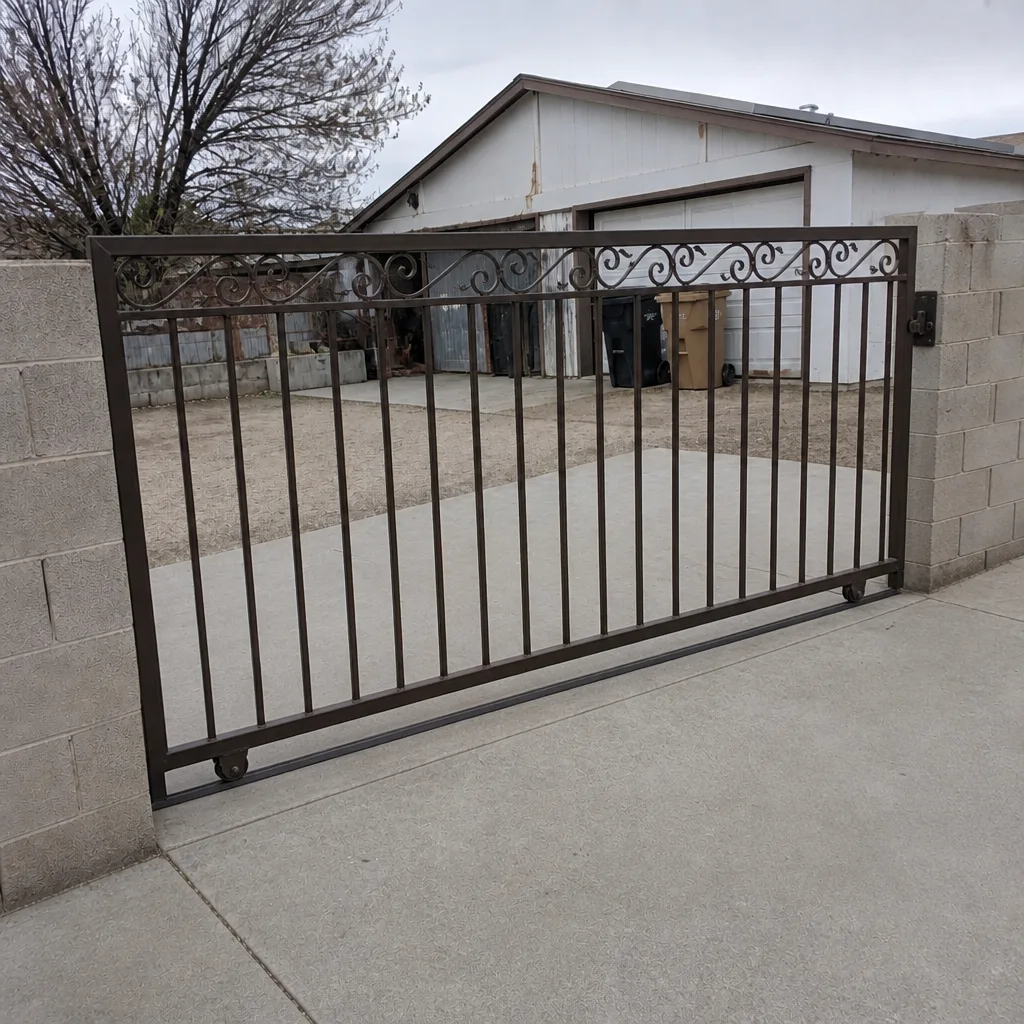
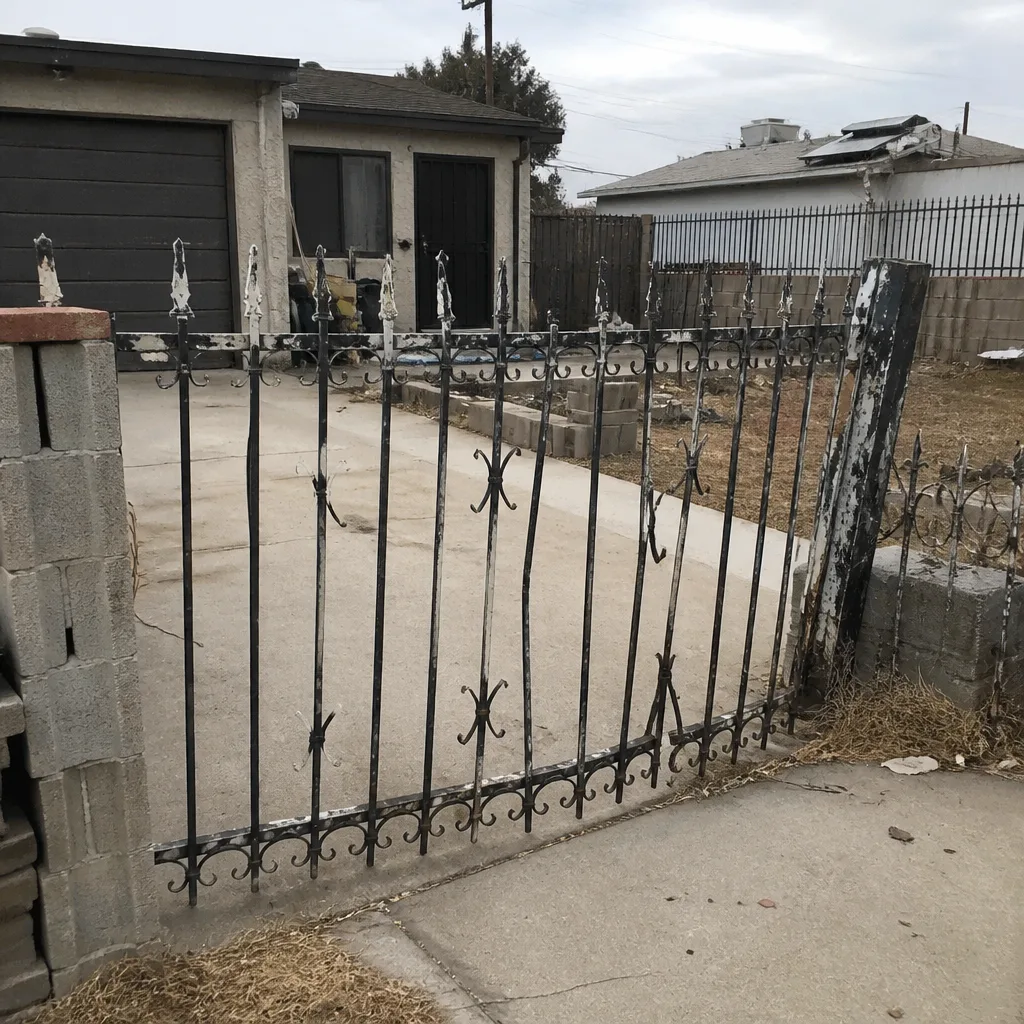
See the difference
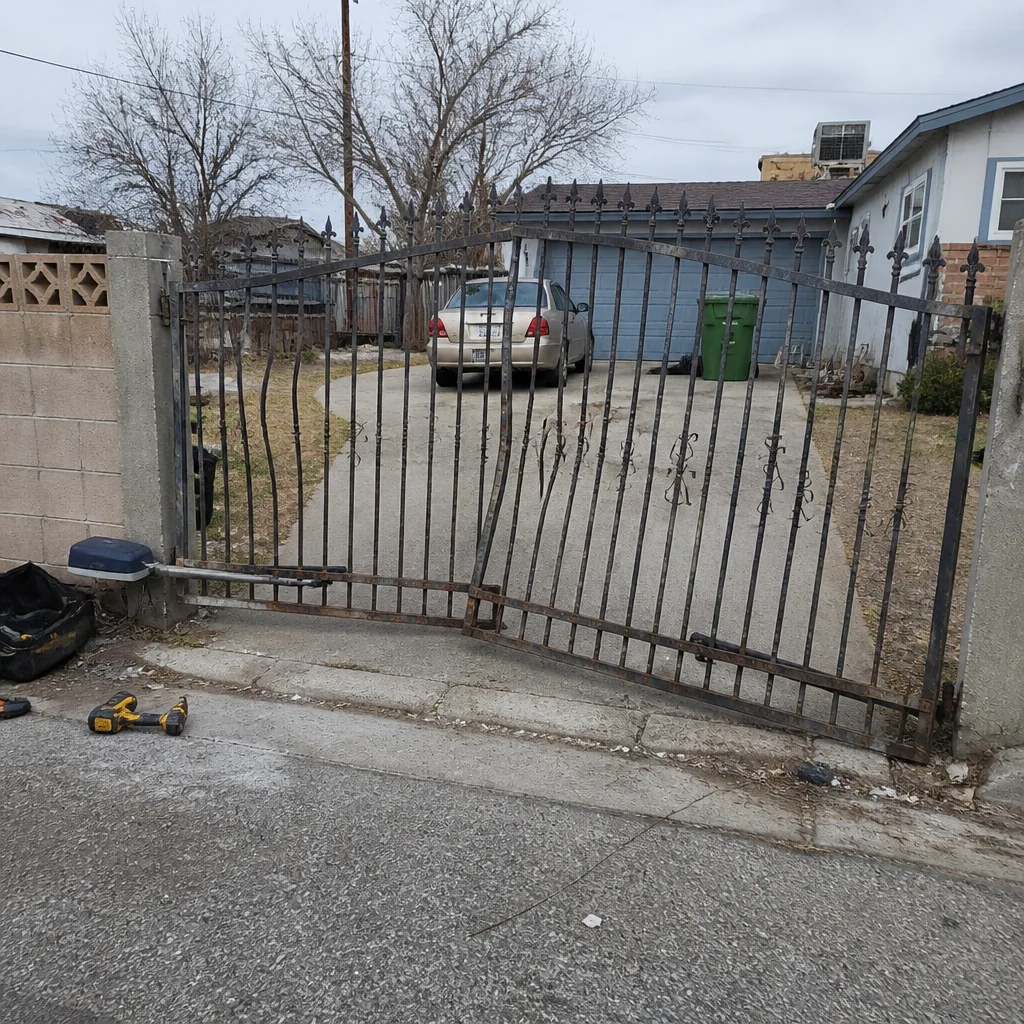 Before
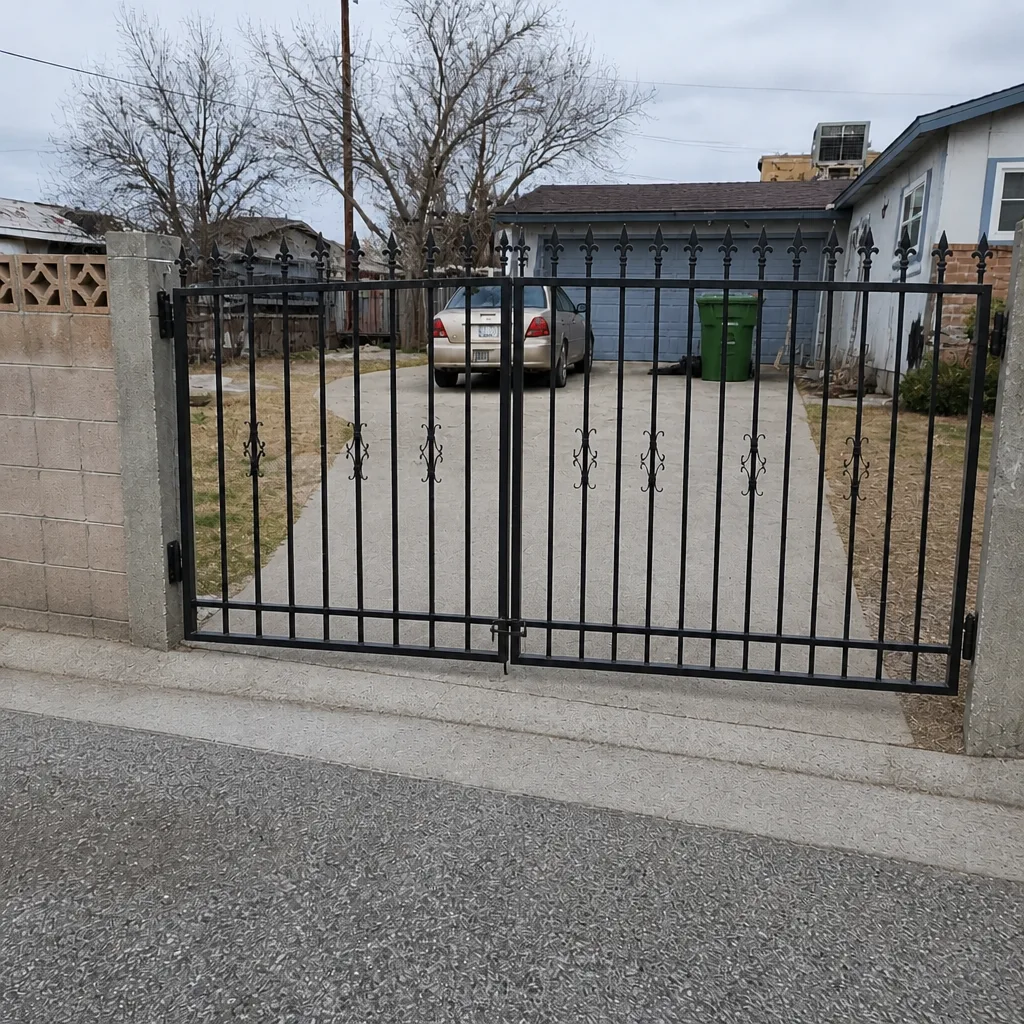 After
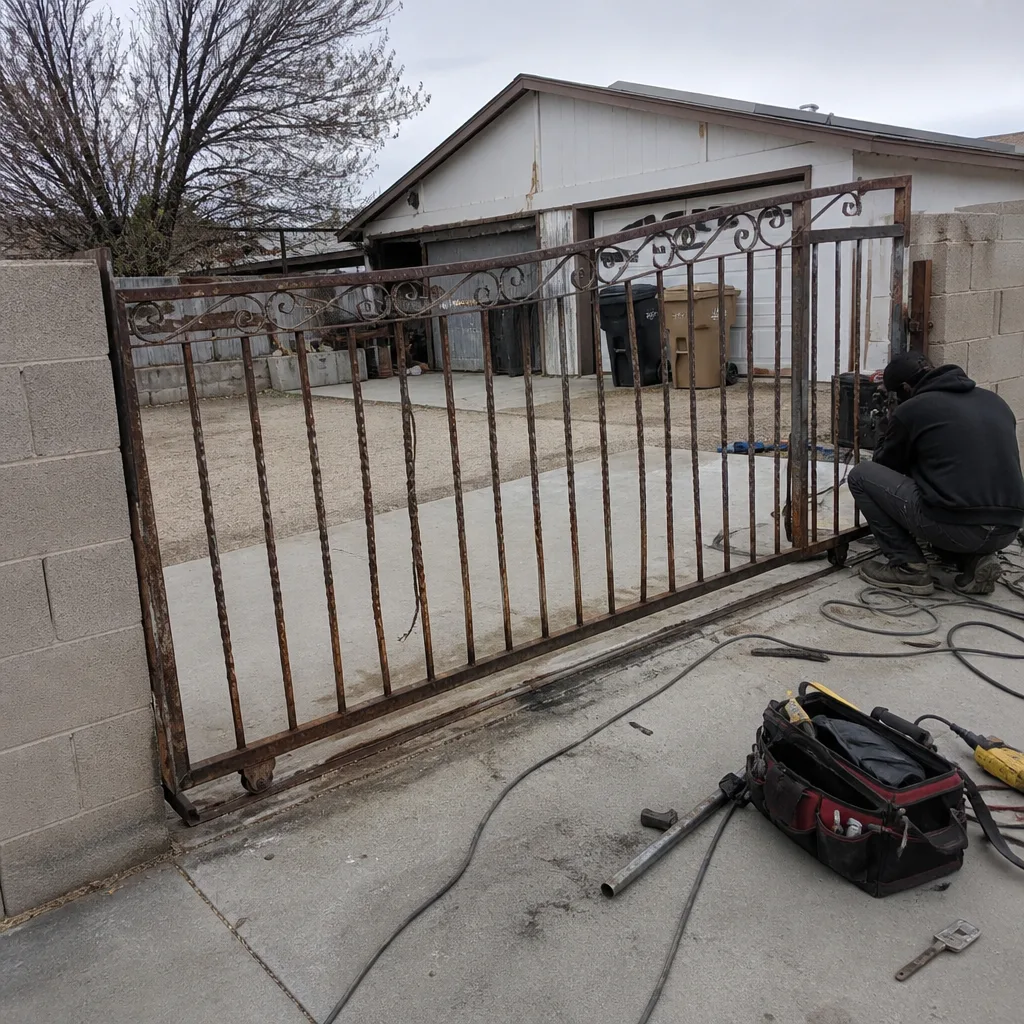 Before
 After
 Before
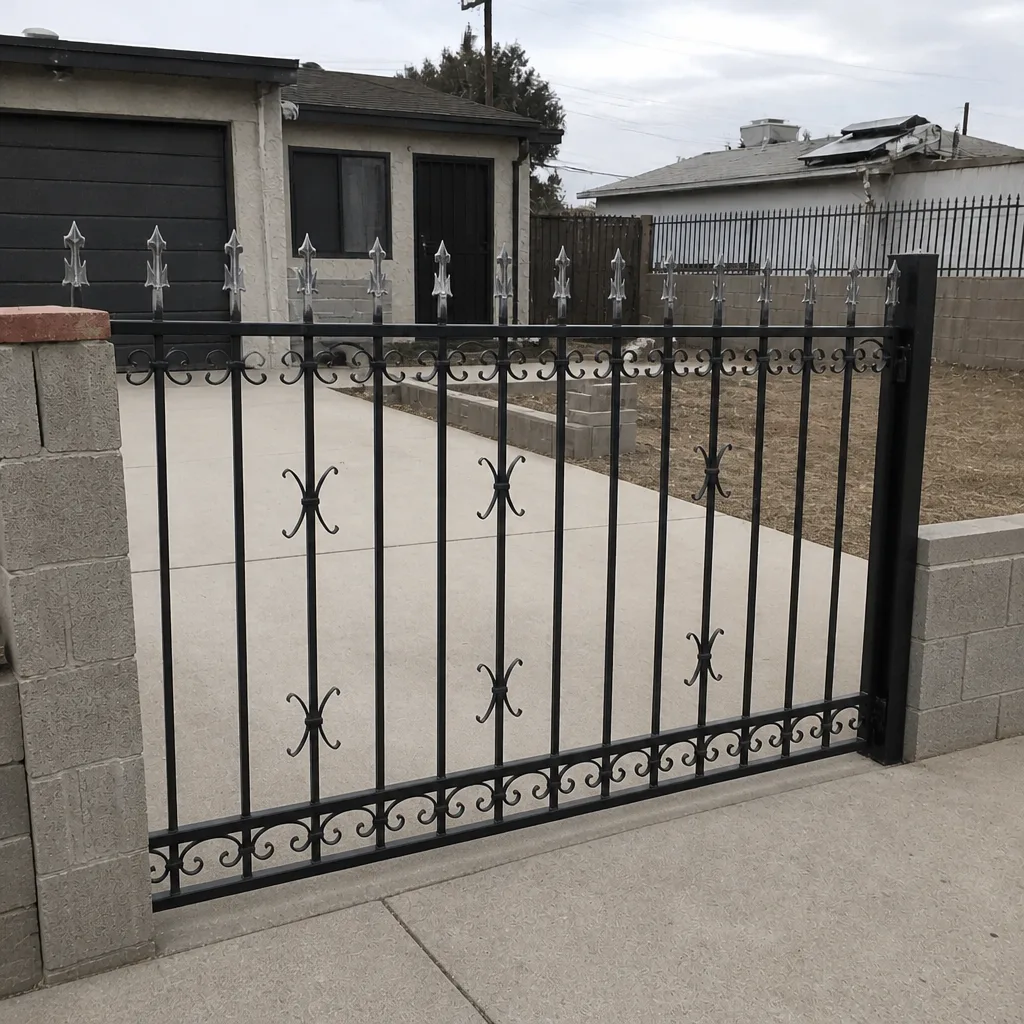 After
When to Call a Professional
Some of the items above are well within reach for a careful homeowner with a wrench and a flashlight: hinge tightening, photo-eye cleaning, operator cover dusting, walk-through inspections. Others genuinely need a trained eye. Call a pro if you find hinge post movement, a visible crack at any weld seam, an operator that grinds or leaks, a safety edge or photo-eye that keeps failing, or any wiring issue inside the operator housing. Gate operator wiring runs on mains voltage and the springs and counterbalances on swing gates store enormous force – both are dangerous to work on without training, and both are worth handing to someone who does this for a living.
Gatewood Fence & Gate Sunrise Manor offers free estimates in Sunrise Manor – call (844) 761-8729. We carry the 90-Day Done Right Promise in writing, and our standing offers include $40 off any repair over $200 and a free second opinion on any written estimate.
Frequently Asked Questions
Four times a year, timed to the local climate: late spring before the heat cycle, mid-monsoon in August, winter for the crack inspection, and early spring prep in March or April. That’s about two hours of total time annually, and it catches most failures before they become emergency calls.
Metal expands in the heat, and the hinge bolts and post footing do the most work. If your gate is already at the edge of its tolerance in cool weather, summer heat pushes it past that edge. Most summer sagging traces back to hinge post movement or loosened hinge bolts, and it’s usually fixable without replacing the gate. Call (844) 761-8729 for a free estimate if you’re not sure which it is.
Yes, but not in the way most people expect. The direct rain rarely hurts the gate. The damage is underneath – monsoon water saturates the caliche under your post footings, which swells and shrinks and slowly loosens its grip on the post. By the time a gate visibly drags in August or September, the post has been moving for weeks. Call (844) 761-8729 if you see a gap between the post and the surrounding soil.
We strongly recommend against it. Gate welding involves structural loads – a swing gate panel can weigh hundreds of pounds, and the safety edges and operator wiring run right alongside the metal. A poor weld on a structural seam can fail catastrophically. On-site welding is what we do; the gate stays in your driveway, and the weld gets done right. Call (844) 761-8729 for a free second opinion on any written estimate.
The heat cycle. From June through September, the operator motor is working harder against a gate that’s slightly expanded, in ambient temperatures well above its rated peak. Keeping the motor cover clean, testing the manual release, and checking the chain or belt tension in spring significantly extend operator life. We’re certified to service nine major gate brands, including LiftMaster, FAAC, BFT, and Linear, so brand-specific care isn’t a guess. Call (844) 761-8729 for an operator inspection.
Usually, yes – often by a factor of two or three. A hairline weld crack caught in winter is a quick repair; the same crack that opens in July heat is a bigger, more urgent job. Packing fresh concrete against a moving post that could have been reset in spring turns into a full post replacement by fall. Call (844) 761-8729 for a free estimate – estimates are free and the price is quoted and agreed before any work starts.
The Bottom Line
Sunrise Manor doesn’t have four seasons, but it has a four-checkpoint maintenance schedule that maps to the way gates actually fail here: late spring hardware pass before the heat cycle, August check on post bases and caliche movement, winter weld inspection while the metal is stable, and spring prep before the first hot week. Total time is under two hours a year. Do all four and you prevent roughly 80% of the emergency repair calls we field. Skip them and the failure modes are entirely predictable – the question is only when. The name is on the shop, and the shop is down the road. That’s the oldest accountability there is. Call (844) 761-8729 for a free estimate in Sunrise Manor.
Written by the team at Gatewood Fence & Gate Sunrise Manor.